Music archive for the on-chain age.
Crypto history, blockchain culture, memes, crashes, and digital rebellion turned into songs.
Listen. Verify. Remember.
The Crypto Record archive is now online.🐸
Songs from the on-chain age.
Records, visualizers, archive notes, and YouTube embeds.
Not price.✅
Not hype.✅
Just records.✅
Every chain has a sound🎧
Explore the archive:
https://t.co/IXhz1NwZJ1
To everyone investing in crypto assets,
Some will look at today’s price and feel anger.
Some will feel disappointment.
Some will give up and sell.
But do not let the present moment take control of your mind.
I believe the age of crypto is still ahead of us.
The real story has not even begun.
As the cracks in the current economic system become harder to ignore, we should be asking a bigger question:
What kind of world should we build next?
At some point, alternative systems will not be optional.
They will be necessary.
Remember the early days of the internet.
People called it suspicious.
They said it was dangerous.
They asked what anyone would ever use it for.
Now look at the world.
The internet is no longer optional.
It became infrastructure.
Crypto, stablecoins, tokenized assets, and decentralized rails may be moving through that same uncomfortable stage.
Confusion comes first.
Resistance comes next.
Then utility appears.
Then adoption becomes inevitable.
Look at the timeline.
Do not be trapped by today’s candle.
The future is not built by those who panic at every drop.
It is built by those who can see beyond the noise.
Have you ever felt something
reach the deepest part of you?
Not just emotion.
Something that shakes the soul
before the mind can name it.
I have not.
Not yet.
Maybe it is not something
we are meant to find by searching.
Maybe it arrives quietly,
falling from somewhere above us,
when the heart is finally ready to receive it.
I do not know.
But someday,
I want to be struck by something so beautiful
that I can no longer hold back my tears.
KEI // The Recorder
@cb_doge DOGE asked for just one simple thing:
If taxpayer money is sent abroad as aid, verify who received it, what it was used for, and that it was not stolen or misused.
If that is considered extreme, something is deeply wrong.
For exchanges, custodians, RWA platforms, stablecoin issuers, and public companies seeking to operate in the United States, it could be a major step forward.
If businesses can move beyond having their entire strategy shaped by uncertainty over SEC enforcement, that clarity could meaningfully accelerate institutional participation.
A key benefit is that it would reduce tax uncertainty for node operators, validators, and staking participants in the United States, while easing the pressure for businesses to move overseas.
The key concern is the final definitions. It will matter whether the bill also covers individual staking, liquid staking, delegated staking, and DeFi rewards.
If it only protects mining and basic staking while leaving DeFi behind, it would still be an incomplete reform.
What people rely on
is not built once and left alone.
It is maintained, tested, and repaired.
Quietly,
by people who care about what keeps everything connected.
That is how infrastructure earns trust.
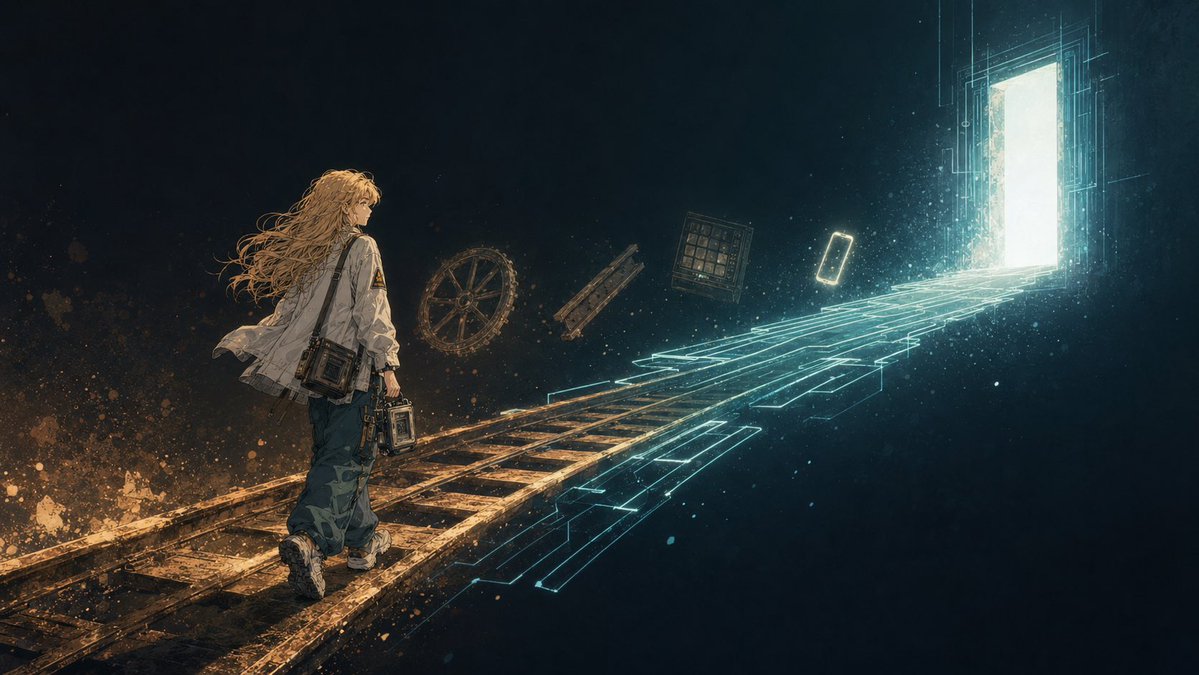
When people encounter new technology, it does not spread simply because it is better.
Firearms. Railways. The internet. Mobile phones.
At first, the reaction is almost always the same:
It is dangerous.
It is suspicious.
What we have now is enough.
But then a small group starts using it and its practical value becomes visible. More people adopt it. Institutions and daily life begin to integrate it. Eventually, not using it becomes inconvenient, slow, or disadvantageous.
People do not accept technology because they fully understand it.
They accept it when they feel that not using it puts them behind.
Common patterns look like this:
Discover it → become cautious → ignore it
Discover it → try it → fail or get disappointed → leave
Discover it → see others using it → adopt it later
Discover it → are forced to use it → reluctantly adapt → eventually normalize it
Convenience, trust, social proof, institutions, and habit all need to come together before a technology truly enters everyday life.
AI, crypto assets, and stablecoins are moving through the same process today.
AI is in the stage of: It is useful, but can it be trusted? Will it take jobs?
Stablecoins are moving from tools for a small group of crypto users toward real use cases in remittances, payments, and corporate treasury management.
Blockchain will see broader adoption when ordinary people no longer need to think about how it works, because it is quietly operating behind banking, payments, and verification systems.
People do not use new technology simply because they understand it.
They use it when not using it feels slower, more inconvenient, more costly, or like being left out.
No one can know exactly what the future will look like.
But innovation happens because there are people willing to look toward what is new.
I want to keep moving toward that future with curiosity and excitement.
Taking time to rest allows the mind to settle.
Do you have room to breathe?
Or has the busyness of life taken over?
Keeping your inner world calm and fulfilled
may be one of the quiet secrets to success.
How is your heart today?
Sound is frequency.
When it reaches you and feels right,
it is because that frequency resonates with something in you.
It is real.
It is simply invisible.
To everyone in the world.
There is so much noise.
Markets move.
Systems change.
People are divided.
But do not forget the things that matter.
Look up at the sky sometimes.
Protect the people you love.
Keep building the future you want to see.
You are more than a number on a screen.