BREAKING: A cyberattack hit 178 major organizations, including Zoom, CNN, BBC, Fox News, HSBC, Ledger, Equifax, Salesforce, IKEA and Air France-KLM, by loading malware on the Optimizely Web platform, exposing visitors to scripts built to steal payment data and exploit iOS devices, per security firm Report URI.
Banking and finance was the hardest-hit sector, with 32 organizations affected, including the UK's HSBC across multiple markets such as the US, Hong Kong, Mexico, Singapore, Australia and the UAE.
Crypto has been under intense selling pressure the last few weeks.
While crypto fundamentals have been mostly positive (many banks announcing use of crypto and blockchains), price not followed.
Here are some reasons we see potentially behind weakness:
- AI/semi/$NVDA selloff triggered margin calls (particularly Asia retail)
- coming @AnthropicAI IPO a supply shock for equities (selling ahead so investors fund IPO purchase)
- $ANT to have heavy retail allocation @RobinhoodApp $HOOD (selling crypto to fund)
- funds from recent $6.3B hack recently released to account holders
- these account holders converting holdings to cash/ stables
Secondary factors:
- Anthropic roadshow talk about AI ‘breaking’ everything, all cyber defense and every company
- creates existential fears of anything technology or digital
- DoJ/ USA 🇺🇸 scrutinizing chip sales to Asia/China 🇨🇳 triggers concerns of crackdowns
- crypto sells off on fears of more bad Asia headlines
Our take:
Crypto remains the future of finance
- the settlement layer for transactions
- digital assets transform capital markets
- adds up to a ‘supercycle’ for crypto
- bigger than past cycles
The headwinds 💨 shall pass
$ETH is the future of finance
BREAKING: Dutch spies hacked Jared Kushner's iPhone and watched him access a Dubai bank account holding hundreds of millions funneled from Azerbaijan, part of at least $2 billion MBS and MBZ placed for him after he promised to push their agenda with Trump, per a Vanity Fair excerpt.
"Jared was looking for shortcuts in his diplomacy. He promised MBZ that he'd push their agenda with Trump if they participated in a fund. He wanted normalization with Israel so that business could take off," a source who knew the arrangement said.
The money was meant to redraw the region's map and lock in normalization with Israel. Roughly $1 billion of it was deposited in Israel's Central Bank for Kushner, with Netanyahu requiring dual-key approval on any transfers.
The two royals initially discussed more than $10 billion for a shared slush fund. That narrowed to roughly $2 billion deposited into accounts Kushner could access, including roughly $750 million at First Abu Dhabi Bank under a UAE charity used as cover for covert operations.
The reveal comes as Kushner is deeply involved in Iran war diplomacy, where Iran has accused him and Steve Witkoff of pocketing $9 billion through market manipulation, using insider knowledge of the talks to trade oil futures, energy stocks, and prediction markets.
I don’t think Europeans fully appreciate what is happening to the European Union right now.
The EU is under an extraordinary, multi-front assault, both from outside and from within. And I struggle to think of another period in its history when so many powerful actors had an interest in weakening it simultaneously.
Russia has spent years waging hybrid warfare against Europe. Weaponised migration, sabotage, cyberattacks, coordinated disinformation campaigns, bot networks and political interference. The objective is clear: undermine trust in democratic institutions, deepen social divisions and weaken European unity.
China has different motivations, primarily economic and geopolitical. A fragmented Europe is easier to pressure, easier to negotiate with individually and less capable of defending its economic interests.
And then there is the United States. Perhaps the most disturbing development of all.
Under Trump and MAGA, a country that helped rebuild the old continent and then spent decades supporting European integration now has an administration openly hostile to much of what the EU represents. Its own National Security Strategy even calls for cultivating resistance to Europe’s current political direction.
Think about that for a moment.
Meanwhile, within Europe, parts of the far right and far left amplify these divisions, whether through ideological alignment, political opportunism or outright sympathy for authoritarian regimes.
This doesn’t mean Russia, China and MAGA are all following some jointly coordinated master plan. They don’t have to. Their interests increasingly overlap, and Europe’s internal divisions make their work considerably easier.
What makes this particularly alarming is what is actually at stake.
For all its flaws, the EU remains one of the world’s most consequential projects built around liberal democracy, the rule of law, individual freedoms and cooperation between nations.
At a time when authoritarianism is gaining ground and even longstanding democracies are showing disturbing tendencies, that matters enormously.
Europe is far from perfect. Its bureaucracy, indecision and inability to act decisively are real problems. But the answer cannot be to retreat into 27 competing nation-states, each too small to meaningfully influence a world increasingly dominated by continental powers.
Quite the opposite.
Europe needs deeper integration, stronger common institutions, genuine strategic autonomy and the political courage to defend its interests and values.
Because fragmentation is precisely what so many external actors want.
And perhaps that’s the central irony of our time: people are being deliberately manipulated into believing that the reverse is true — that national identity and sovereignty can only be protected by weakening European cooperation. In reality, a divided Europe is less sovereign, less secure and far easier for outside powers to pressure. Therefore the very thing that will make Europe stronger is the thing its adversaries are working hardest to prevent.
A united Europe is a geopolitical power. A divided Europe is a collection of countries waiting to be played against one another.
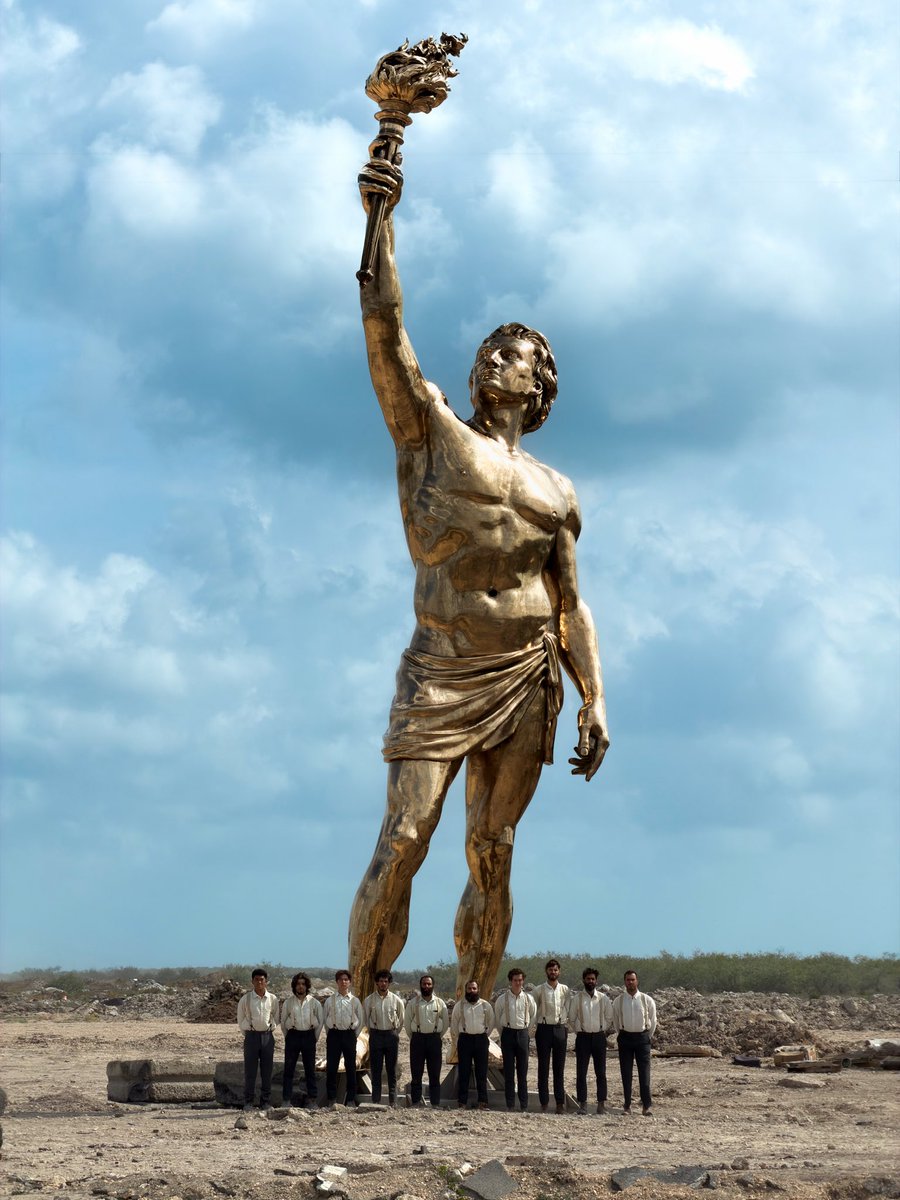
The statue of Prometheus is finally finished.
It was cast in Paris, crossed the Atlantic, and was assembled at Starbase. It took us 100 days to go from nothing to this.
People of the West, we have lived through an era devoid of dreams, devoid of destiny.
But the time has come to reclaim our dream of antiquity.
In a few months, we will start building a new city. It will be the most magnificent city in all of history.
After all, the great dream of the West has always been to rebuild Rome.
Come walk beside us in this endeavor. The world is waiting.
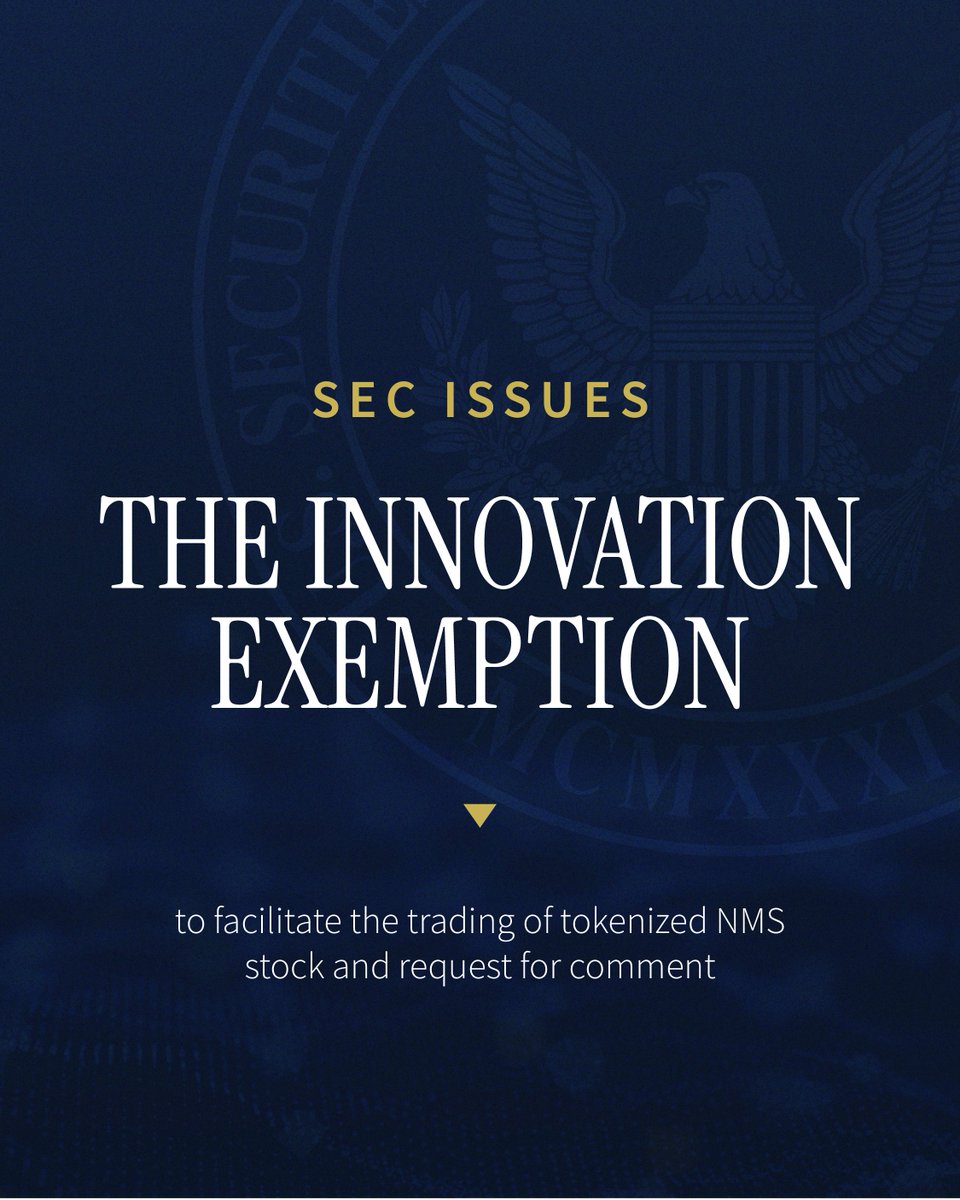
🚨 TODAY: The SEC issued an order granting temporary, conditional exemptive relief to Tokenized Securities Venues from the definition of “exchange” in the Exchange Act to trade tokenized NMS stock using innovative permissioned automated market makers and liquidity pools.
SUMMARY OF FED DECISION (9/16/2026):
1. Fed hikes interest rates by 25 bps for first time since July 2023
2. The decision was made in a 12-0 unanimous vote
3. Fed says the decision will support a "timelier" return to 2% inflation
4. Median Fed forecast shows one more 25 basis point rate hike in 2026
5. Fed says job gains are strong and the unemployment rate has "changed little"
6. "The Committee will deliver price stability," the Fed's statement says
Higher for longer is back.
LMAO they're already sending a message: "we don't give a fuck that you shot down Clarity, we're bull posting crypto anyway".
It's all gonna be ok my friends.
Now that Clarity is off the table, expect the SEC & CFTC to move quickly & aggressively in issuing addn’l guidance on crypto…
Will be regulation by innovation for at least the next two & a half years.
15 years ago, if you did the responsible thing & bought $10,000 of 'risk-free' long-term Treasuries, you'd have $11,072 today.
If instead you spent $9,995 on drugs & $5 on bitcoin, you'd have $42,778 today.
Qivalis is coming to Ethereum.
@qivaliseu is a consortium of European banks building a regulated euro stablecoin under MiCA.
Qivalis at a glance:
→ 37 banks across 15 countries
→ 1:1 euro backing
→ EMI licence pending with the Dutch central bank
→ Target launch H2 2026
While some other bank consortia have kept their tokenised money on private networks, Qivalis is issuing on a public chain, where the liquidity, the users and the DeFi markets already are.
Dollar-pegged stablecoins are ~99.5% of the ~$300B stablecoin market. Europe is building its answer on @ethereum.
Currency debasement is back in focus for investors:
The word "debasement" appeared in 1,533 Bloomberg articles last week, the highest weekly count since January 2026.
This was also the 3rd-highest number of weekly mentions on record.
This figure more than doubled from the prior week and surged +750% in 2 weeks.
By comparison, the weekly record in January 2026 was ~1,680 mentions.
The surge comes as investors are increasingly moving toward gold and Bitcoin amid US Treasury intervention in the bond market.
Own assets or be left behind.
The bear case for Bitcoin on a long time horizon is that govt officials limit spending.
We put modern day Thomas Edison in a role to try and immediately people started fire bombing the storefronts of one of his businesses and accused him of killing people. Good luck with that.
Total US public debt topped 40 trillion dollars on Wednesday. The 30 year yield had hit its highest level since 2007 the day before. Two weeks after publishing its quarterly buyback schedule, Treasury tore it up and doubled the operations.
Mid quarter changes to that schedule are uncommon. This one arrived at 10 in the morning.
The mechanics are narrower than the headlines suggest. Treasury will at least double liquidity support buybacks in the 10 to 20 and 20 to 30 year sectors, from 2 billion dollars an operation to at least 4 billion, effective 9th September and running to 4th November. It buys older bonds and issues new ones. Total debt does not shrink. This changes maturity and liquidity, not the amount owed.
It worked for a day. The 30 year fell about 9 basis points to 5.196 percent, the 10 year to 4.647.
Now the part worth sitting with. Three forces have been driving the long end since June, and one of them is not fiscal at all. Term premium is rising. Energy prices are elevated because of the Iran war. And AI related dollar bond issuance is estimated at up to 1.5 trillion dollars this year.
The United States Treasury is now competing for the same thirty year dollars as the datacentre buildout.
Evercore's Krishna Guha put the limit plainly. The operation can crowd in buyers and discourage large short positions, but it changes almost nothing fundamental, given the unchanged need to finance a tidal wave of hyperscaler debt on top of very large government deficits.
Scale confirms it. The increase is 2 billion dollars against a 32.2 trillion dollar Treasury market and roughly 5.5 trillion of outstanding 20 and 30 year bonds.
The transmission is already in households. The 30 year fixed mortgage reached 6.75 percent on Tuesday. Before the Iran war began in late February, the 10 year traded below 4 percent.
The thesis fails if the long end stays calm without enlarged operations, or if Treasury buys well below its new ceilings.
For forty years the sovereign was the price setter in duration. This week it doubled its bid, and the competition was private capital building computers.