Hot take: crypto payments failed businesses, not the other way around.
Too technical. Too slow. Too many moving parts nobody asked for.
CryptoCadet is what crypto payments should've been from day one.
Add a button to your site. Get paid in crypto. Done.
No devs. No middlemen. No setup. Just money moving the way it should.
That's the whole product.
CryptoCadet, is a decentralized payment router that permits the integration of custom tokens with a plugin that works on virtually any platform (GMail, Wordpress, Shopify, Squarespace, etc.) with no coding involved.
#web3 #payments #CryptoTools
For the last few months, we've been rebuilding CryptoCadet from the ground up.
Not to redesign the dashboard.
Not to add another payment button.
But to prepare for a different future.
One where payments aren't triggered by people.
They're triggered by software.
CryptoCadet V4 is built around that idea.
Instead of making developers spend time clicking through dashboards, we're bringing the experience directly into the terminal with a CLI.
Because that's where automation starts.
The goal isn't just accepting crypto anymore.
It's making payments programmable.
For AI agents.
For automated workflows.
For businesses that need to move funds quickly without unnecessary friction.
Existing CryptoCadet users won't be affected. Everything remains backwards compatible.
But V4 marks a shift in where we're heading.
The future of payments isn't another prettier checkout page.
It's infrastructure that software can trust and use autonomously.
We're getting close.
Stay tuned.
Every product makes a promise.
Not in its marketing.
In its interface.
Some products promise:
"You'll figure it out."
Others promise:
"We've already figured it out for you."
That difference determines whether people come back.
Trust isn't built through branding.
It's built through repeated moments where the product keeps its promises.
#CryptoPayments #virałpost
We use the word "user-friendly" too casually.
Friendly isn't making someone read documentation.
Friendly isn't asking them to switch networks.
Friendly isn't telling them to try again later.
Friendly software protects people from complexity they didn't create.
Anything less is just software being polite while making someone else do the work.
Technology has an ego.
It wants to show you how clever it is.
Great products don't.
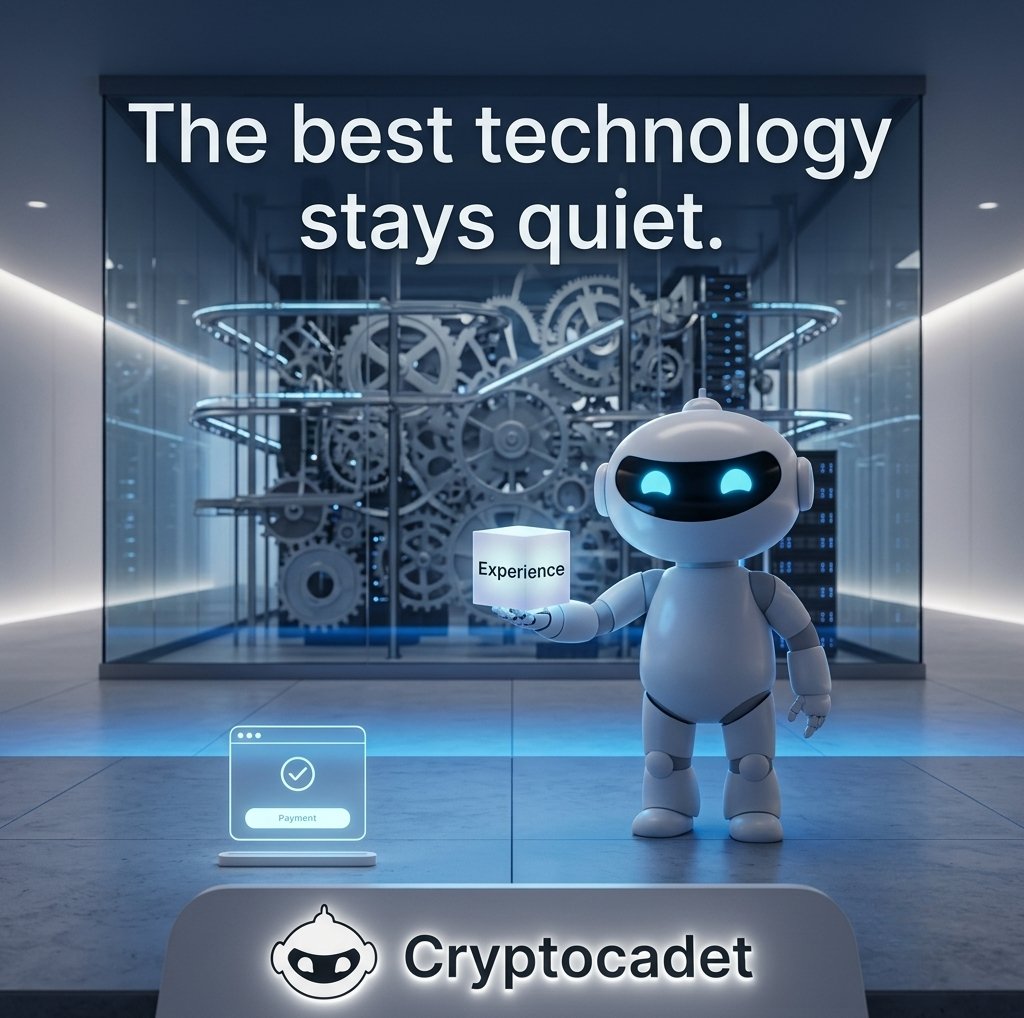
They quietly absorb complexity until the user barely notices it exists.
That's why people remember experiences more than architectures.
Nobody recommends a product because its backend is elegant.
They recommend it because it felt effortless.
The most sophisticated technology often looks the simplest.
Nobody has ever said:
"I wish paying was a little more complicated."
Yet software keeps making that wish on behalf of users.
Every additional confirmation.
Every unnecessary choice.
Every tutorial.
Every screen that asks users to understand what the software should understand for them.
They're all asking for the same thing:
More effort.
Somewhere along the way, product teams started measuring success by what software could do.
Users measure success by what they don't have to do.
That's a very different metric.
crypto's biggest UX mistake:
treating friction as normal.
network switching isn't normal.
failed transactions aren't normal.
confusing setup isn't normal.
we've just become used to it.
crypto's biggest UX mistake:
treating friction as normal.
network switching isn't normal.
failed transactions aren't normal.
confusing setup isn't normal.
we've just become used to it.
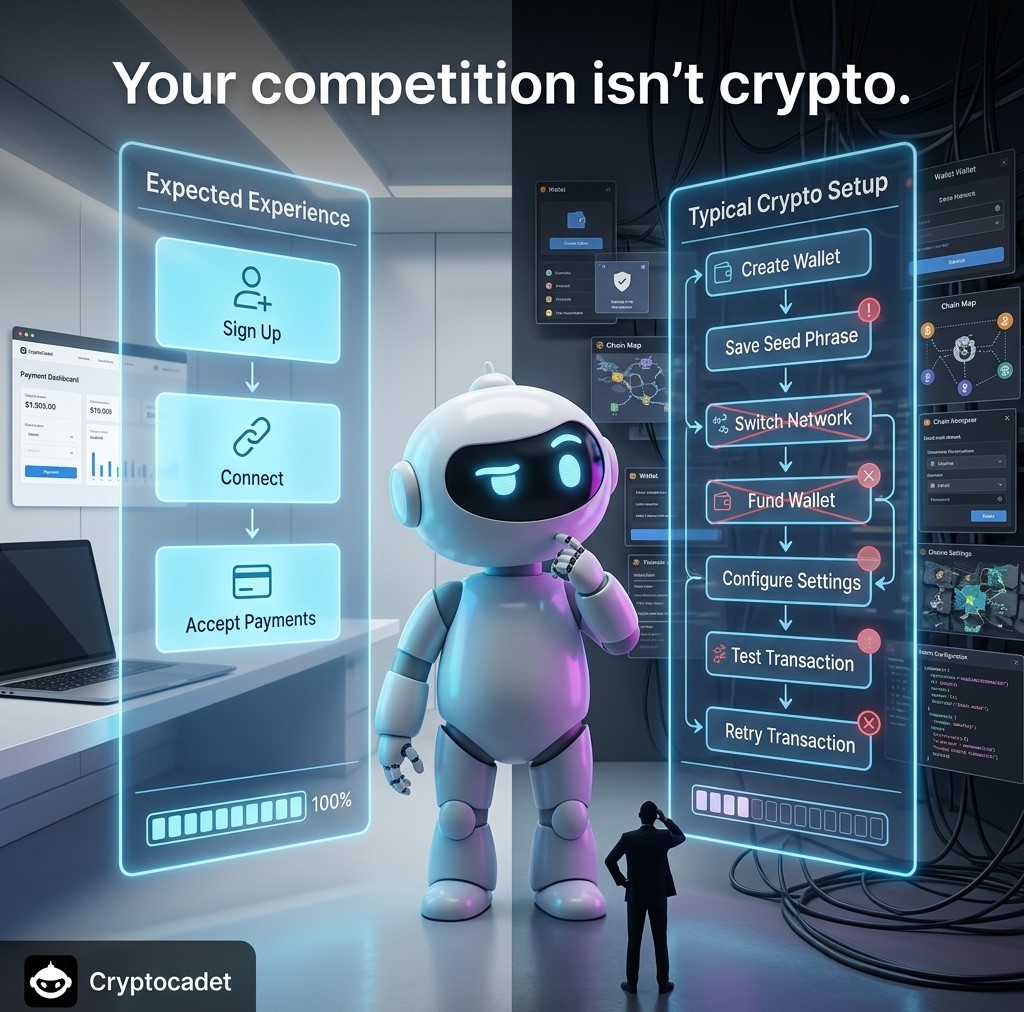
crypto isn't competing with crypto.
it's competing with the easiest payment experience people have ever used.
that's the benchmark.
not other blockchain projects.
crypto isn't competing with crypto.
it's competing with the easiest payment experience people have ever used.
that's the benchmark.
not other blockchain projects.
"Free" is one of the most expensive words in crypto.
If you're not paying with fees,
you're probably paying with:
• settlement delays
• forced conversions
• hidden spreads
• loss of control
the cost doesn't disappear.
it just moves somewhere else.