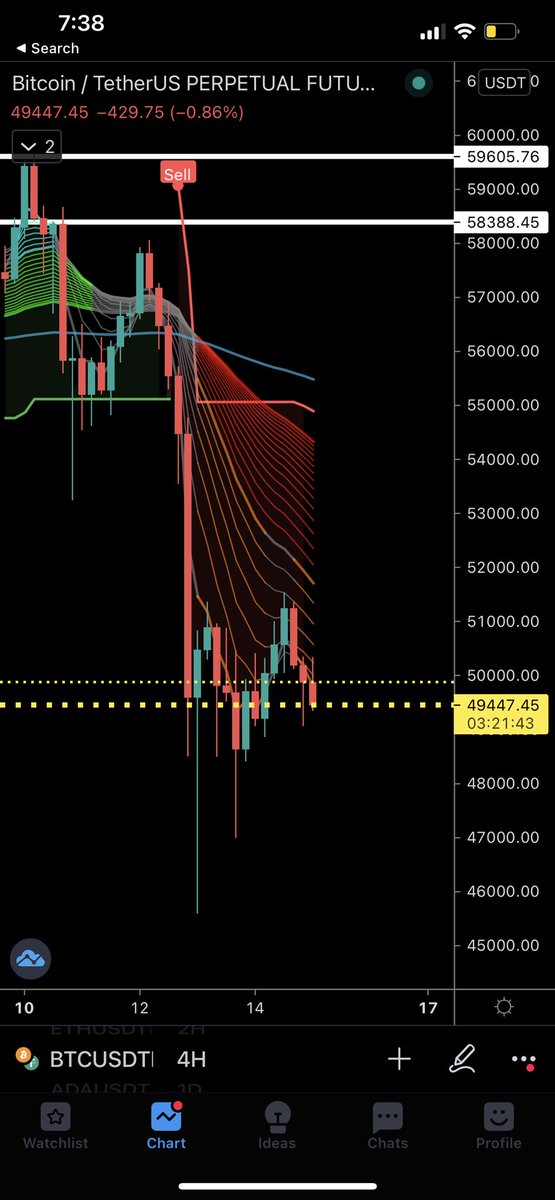
@Bitcoin according to my technical analysis BTC looks like is under bearish market on 1 hr chart and 4hrs and reaching towards on DAILY chart for bearish move currently on grey.
👀 Something BIG is being built on @XPRNetwork…
What if launching your own online store was as simple as:
🎨 Your brand
🌐 Your domain
👕 Your products
💳 Your checkout
🔐 WebAuth + XPR Network
💳 Stripe + PayPal payments
🛒 Physical + digital products
🖼 NFTs
👑 Memberships
🎁 Gift cards
One platform. Your storefront. Your community.
Introducing Bloxshop by Bloxprod ⚛️🛍️
https://t.co/LXXOL6VaHP
And this image? It’s only scratching the surface. 👀
LAUNCHING SOON
🔁 Repost if you want to see what Bloxshop is actually building.
Drop a comment below if you’d launch your own shop.
#XPRNetwork #Bloxshop #Web3 #BuildOnXPR
🚨 BREAKING:
INSIDERS ARE MASSIVELY DUMPING RISK ASSETS RIGHT NOW
ALMOST EVERY SINGLE INSIDER IS SELLING BILLIONS:
11 BUYS. 264 SELLS. $1.38B IN VOLUME.
LOOKS LIKE A HUGE DUMP IS COMING TOMORROW...
The LOAN Line: When Your Stake Becomes Your Credit Limit
“Loan Protocol establishes a line drawn not in sand, but in metal.”
-Jupiter
#Metallicus is creating a new credit model: a Metal Pay credit card tied to $XMD, where a user’s credit line can be influenced by staked @LOAN_Protocol.
The unanswered question is how that system gets measured. A tiered model is one practical answer.
A potential model we can explore could weigh staked $LOAN value, staking duration, wallet age, repayment behavior, verified credit credentials, utilization rate, and institution risk rules.
The deeper tiers would decide how much weight each user carries.
Tier 1: Stake Weight Tier
The first tier would measure how much LOAN backs the credit line.
A smaller stake creates a smaller line. A larger stake creates more borrowing potential. The system could possibly use a this for that issuance instead of giving dollar-for-dollar credit.
A $1,000 LOAN position chould not automatically unlock $1,000 in credit. The line could be a smaller percentage of the stake based on market risk, liquidity, and issuer rules.
This tier exists because credit needs a base measurement.
The more LOAN a person commits, the more weight their credit profile carries.
Tier 2: Time Weight Tier
The second tier would measure how long the user has kept LOAN staked.
A person who stakes for seven days should not receive the same treatment as someone who has stayed committed for twelve months.
Time reduces uncertainty. Longer staking history shows patience, consistency, and lower flight risk.
This tier could reward users with higher limits, better repayment windows, or stronger borrowing ratios.
The stake shows value. Time shows conviction.
Tier 3: Behavior Weight Tier
The third tier would measure how cleanly the person uses the credit line.
Low utilization, on-time repayment, stable wallet activity, and responsible spending could improve the user’s profile.
Constant maxed-out balances, or unstable behavior could reduce access.
This tier exists because stake alone does not prove discipline.
A user may have LOAN, but repayment behavior shows whether they can carry credit without abusing the system.
Tier 4: Yield Support Tier
The fourth tier would measure how much passive income the user’s ecosystem position can generate.
A person lending or staking $Metal Blockchain, $XPR Network, and $MetalDAO assets could have rewards flowing beside the credit line.
Those rewards could help support repayments, offset balances, or reduce principal over time.
Marshall also pointed toward interest-free lending with a negative-rate structure.
What if the negative-rate line has multiple a funding sources: staking incentives, merchant rebates, card rewards, issuer subsidies, protocol incentives, or liquidity-market yield.
Example: a user owes $500. Card rewards and staking-linked credits produce $8. That $8 reduces principal. When rewards exceed interest and fees, the effective rate turns negative.
Economic activity gets routed back into repayment.
Tier 5: Institution Layer
For banks and credit unions, this system could look very different from a normal crypto app.
The user sees a card. The institution sees underwriting, fraud controls, repayment rules, credit exposure, stablecoin settlement, and member behavior.
A credit union could set lending limits, collateral ratios, repayment windows, and risk caps. A bank could decide how much weight to give staked LOAN versus traditional credit data.
The protocol supplies new signs. The institution still manages risk. LOAN staking becomes the credit dynamics. XMD handles spending and repayment through @metalpaysme.
What People Could Actually Experience
Stake LOAN. Connect Metal Pay. Receive a line. Spend with the card. Repay in XMD. Watch the credit line adjust over time.
Hold longer. Repay cleaner. Use less of the line. Build stronger terms.
Stake. Spend. Repay. Upgrade. Repeat.
@CryptoCranium0 Bro I have been saying this we Muslim are the most racist fanatic human ever. While our prophet left last speech to diminish sick things and we have gone backwards! Muslims are so racist to point when you mention the country you are from socially Arabs they get disappointed!
@austinahilton Bro you got people into that shotry meme coin and endorsed that shitty frog coin .. I forget the name but you should own up and pay ppl who lost thousands