i spent a lot of 2020 and 2021 glued to the charts, constantly feeling like i was going to miss something if i logged off
over time, i've learned that trading 24/7 can become a trap, even when you're making money
there are periods where being extremely active makes sense, and others where stepping away is the better decision
having a life outside of trading is important bc knowing when to switch off is just as valuable as knowing when to trade
I see many people treating memecoins like gambling.
That’s why most never scale.
I trade memecoins with structure, not hype .
I use 3 setups only.
They require capital $1,000+ and experience. Not for beginners.
1) Newly launched coins with real narratives.
I wait for the first pump, a clean pullback, and clear reversal confirmation.
2) Coins that survive 48 hours to 7 days. Dumped 80–90%, and built real volume + holders.
Those are the ones I study deeply and buy during consolidation.
3) Network plays.
Early access through trader relationships, still traded with rules and exits.
Time, trust, and reputation.
This works for me because I’ve spent years losing, studying, and refining execution.
If you don’t understand risk, position sizing, and patience, this won’t work for you.
Okay I have the craziest story ever.
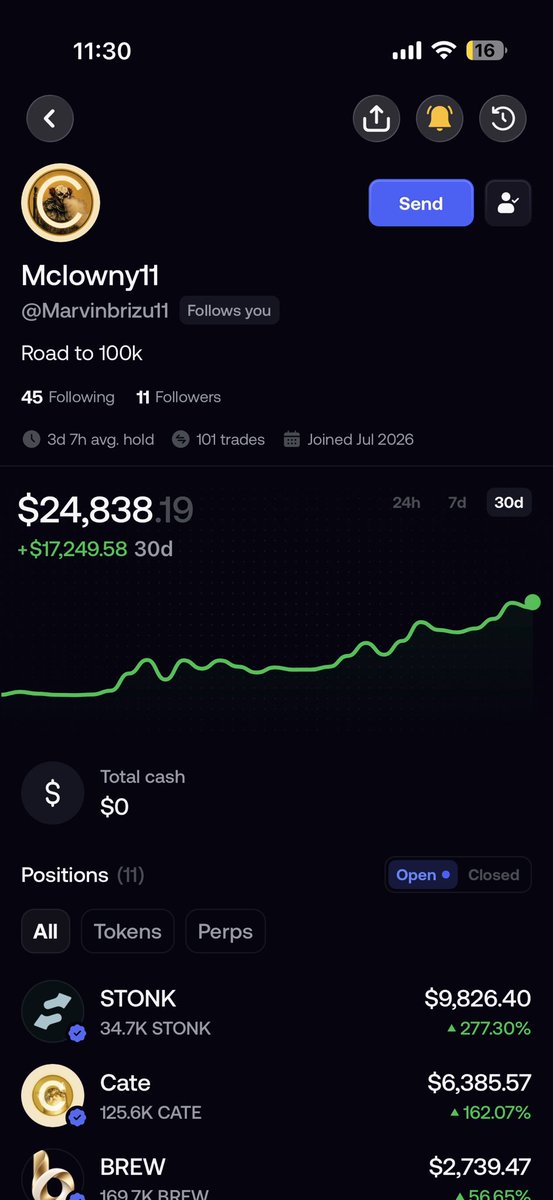
Went to carbone for dinner and my waiter recognized me, and he started shilling me Cate.
He said biggest community ever, I had never been shilled a memecoin irl at a restaurant lol.
And then he showed me his pnl. He’s up over $20k this month.
He’s hit Stonk, Cate, Brew, etc.
He’s a new trencher and it made me so happy to see this honestly.
@PoorGoat_ you’re doing something crazy lol. Send him some extra CATE! For bagworking. 😎
Risk Management That Actually Keeps You in the Game
Crypto can move fast enough to feel like opportunity. It can also move fast enough to wipe a careless account. The difference is rarely “being right.” It’s how much you risk when you’re wrong.
Here’s a clearer, more useful version of the rules.
1. Never bet the farm on one trade.
Your capital is the only thing that lets you take the next trade. One oversized loss can end the game before your strategy has time to work. Preserve the account first. Profits come second.
2. Risk a small, defined slice of your balance per trade.
Most disciplined traders risk about 0.5%–2% of total capital on a single idea. That way a losing streak is painful, not fatal. Position size is not a vibe. It’s math.
3. Don’t park everything in one coin, one narrative, or one signal.
Concentration feels confident until the thesis breaks. Spread risk across uncorrelated ideas so one bad project, one failed listing, or one influencer call doesn’t take the whole book with it.
4. Decide the exit before you enter.
A stop loss (or a written invalidation level) is not pessimism. It is the price at which your idea is wrong. Trading without an exit plan is hoping. Hoping is not a strategy.
5. Fear, greed, and panic are not analysis.
The market does not care how you feel. Chase because you “missed it,” hold because “it will come back,” or revenge-trade after a loss, and you are no longer executing a plan. You’re reacting.
6. Patience is an edge.
FOMO entries after a vertical move usually offer worse risk-to-reward. Waiting for your setup is boring. Boredom is cheaper than chasing hype.
7. Timing is part of risk.
An early, planned entry near a level you understand often gives a tighter stop and a cleaner target. Late entries force you to risk more for less. “Better late than never” is a terrible trading motto.
8. Take profits on purpose, not on greed.
Targets exist so you don’t turn a winner into a breakeven or a loser. Scale out if that fits your plan. Leaving a runner is fine. Refusing to bank anything because “it might go higher” is how winners evaporate.
9. Split capital into buckets and treat each trade as its own risk unit.
Don’t mentally merge positions into “I’m still up overall.” Manage each one: size, invalidation, thesis. One good trade should not justify sloppy risk on the next three.
10. Only trade money you can afford to lose.
Crypto is volatile. Leverage, gaps, liquidations, and overnight news can do damage even to careful traders. If a total loss would change your rent, tuition, or peace of mind, the size is already too big.
Too many pnls on the timeline.
I am starting a tradition. Every Sunday we will post a Loss or a fumble (or both) to keep ourselves tied to reality
show me some of yours