3/
always the conversations around the demo — engineers, clinicians and fellow exhibitors asking what the model sees, and what it doesn't.
Thanks to everyone who came by, and to Kangwon Province, Wonju City and WMIT for the event 🙏
#GMES2026#RetiCare#FundusAI#MedicalAI
2/
Our demo was the simple one: fundus photography, with AI-powered "RetiCare" returning a structured reading seconds after capture.
Sit down → non-mydriatic image → your own retina on the screen beside you. For most visitors, a first.
👁️ From fundus cameras to AI agents.
Crystar Vision presented at the 2026 AIoT Best-Practice Seminar, hosted by the Korea AIoT Association.
Our talk: From Fundus Cameras to AI Agents — Building an AIoT-based care-linkage platform for chronic eye disease."
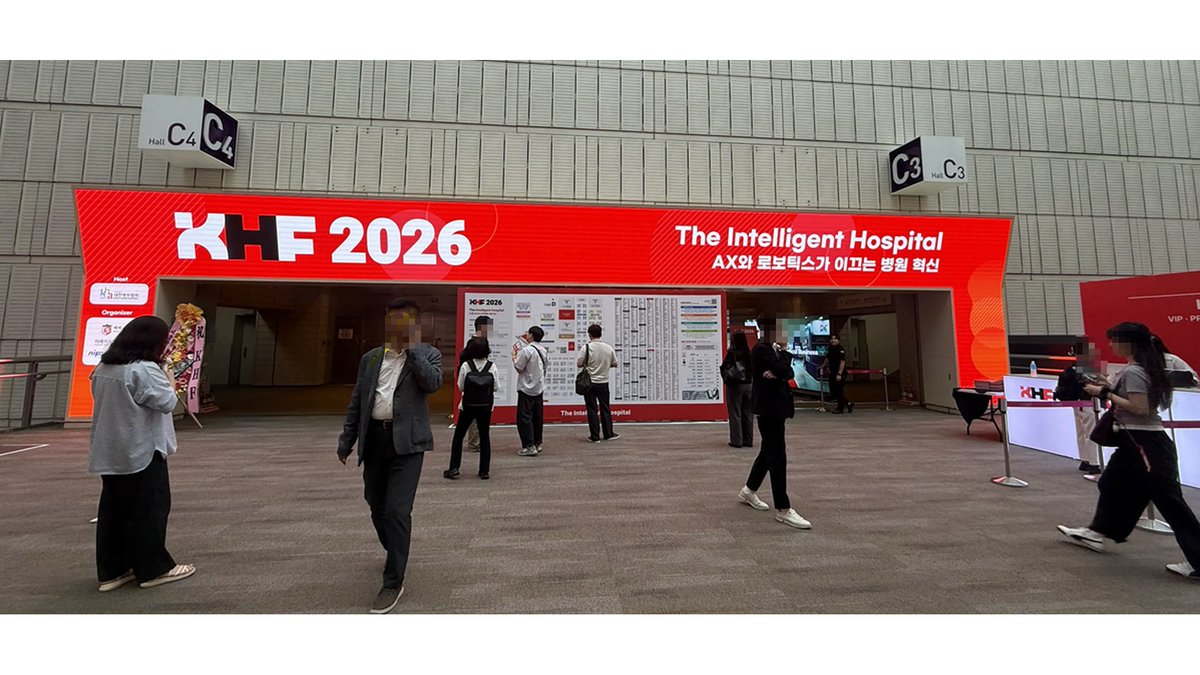
That's a wrap on KHF 2026 — the K-HOSPITAL + HEALTHTECH FAIR 👁️
3 days at COEX Seoul, Booth B22 — AI-powered "RetiCare" returning a structured reading seconds after capture.
Three genuinely fun days. Thanks to everyone who came by 🙏
#RetiCare#FundusAI#MedicalAI
CrystarVision to lead Project ARGOS — a national AI demonstration for chronic disease management with regional and partner public institutions in Gangwon-do and Gyeonggi-do, Korea
We're proud to share that CrystarVision has been selected as the lead organization for a national demonstration project under the AI Applied Product Rapid Commercialization Support Program, driven by Korea's Ministry of Health and Welfare (MOHW) and the Korea Health Industry Development Institute (KHIDI) — an initiative we've named Project ARGOS.
At the kickoff meeting held on June 25 at the Wonju Medical Industry Institute of Technology (WMIT), our consortium came together to launch a demonstration centered on AI-based chronic disease management across public healthcare institutions in the Gangwon region, together with Seongnam Citizens Medical Center in Gyeonggi-do.
Ophthalmology is at the core of this project. Chronic eye conditions — such as diabetic retinopathy, age-related macular degeneration, and glaucoma — require continuous monitoring, yet regular follow-up is often difficult in areas with limited access to specialized eye care. Project ARGOS aims to build and validate AI-powered ophthalmic chronic disease management models in real-world clinical settings, and to develop models that can scale to other public medical institutions.
Consortium partners: INFINITT Healthcare, Kangwon National University Hospital, Gangwon Yeongwol Medical Center, Gangwon Gangneung Medical Center, Pyeongchang County Health & Medical Center, Seongnam Citizens Medical Center, Heuron, and Walk1o1.
CrystarVision brings Reticare, an AI diagnostic-support solution that screens major ophthalmic diseases — such as diabetic retinopathy, age-related macular degeneration, Epiretinal Membrane , Retinal vein occlusion and glaucoma suspect — from fundus images. Reticare is designated as an MFDS Innovative Medical Device (Integrated No. 128) and integrates naturally into clinical workflows through PACS·EMR linkage.
"Project ARGOS is a meaningful demonstration where public medical institutions and companies in Gangwon come together with government support. We will work closely with our partners to build an AI healthcare service model that makes a real difference in regional care."
— Sujeong Song, CEO, CrystarVision
\#DigitalHealth #MedicalAI #Ophthalmology #ChronicDiseaseManagement #HealthcareInnovation #PublicHealth #CrystarVision #ProjectARGOS #AIinHealthcare
Crystar Vision selected as lead organization in South Korea's national AI healthcare initiative — bringing ophthalmic AI agent to underserved regions
As part of the 'AI Application Product Rapid Commercialization Support Project' led by 11 government ministries, the Ministry of Health and Welfare is investing in six projects focused on chronic disease management and referral linkage.
Crystar Vision has been selected as the principal organization for the PACS-track project within this initiative:
"Building an AI-PACS-EMR-based Ophthalmic Chronic Disease AI Agent Platform and Gangwon Region Demonstration"
Together with Kangwon National University Hospital, Yeongwol Medical Center, Gangneung Medical Center, Pyeongchang Medical Center, and Infinite Healthcare Co., Ltd.- a globally renowned PACS solution provider. Crystar Vision will build and validate an AI platform that connects automated ophthalmic image interpretation with a structured care-loop workflow — integrated directly into existing hospital PACS and EMR systems.
The clinical model:
Yeongwol, Gangneung, and Pyeongchang Medical Centers — regional hospitals with limited ophthalmic infrastructure — will use RetiCare's AI-based fundus image auto-reading to screen and identify chronic ophthalmic disease at the point of primary care. Patients who require specialist intervention are then referred to Kangwon National University Hospital, where ophthalmologists provide definitive care.
Why this matters:
Gangwon Province has long faced a shortage of ophthalmic access outside of major centers. Conditions like diabetic retinopathy progress silently and are often caught too late in underserved regions. By embedding AI-powered screening into the existing workflows of regional medical centers — and connecting findings to a reliable referral pathway — this platform creates a functioning ophthalmic care continuum across the province.
We are proud to lead this initiative alongside our clinical and technology partners, and committed to making reliable ophthalmic AI accessible wherever patients receive care.
## 관련 기사
- [올 하반기 도입할 환자 의뢰·회송 AX 점검, 연속 진료 보장 및 의료비 절감 기대 (보건복지부 보도자료)](https://t.co/IplY6MZpVB)
- [보건복지부, AI 기반 환자 의뢰·회송 체계 도입 (보사뉴스)](https://t.co/rofIP7qZKY)
- [Korea's Ministry of Health launches Healthcare AI Transformation Sprint Project (아시아경제 EN)](https://t.co/zPIIi0Lrb8)
#RetiCare #FundusAI #Ophthalmology #MedicalAI #ChronicDisease #AIAgent #PublicHealth #KoreaMedTech #CrystarVision #GangwonHealth
강원창조경제혁신센터
���2026 바이오헬스케어 육성사업 창업공모전」에 최종 선정 !
We are honored to be selected for the 2026 Bio-Healthcare Startup Support Program Startup Competition hosted by the Gangwon Center for Creative Economy & Innovation (Gangwon CCEI) in Gangwon Province, South Korea.
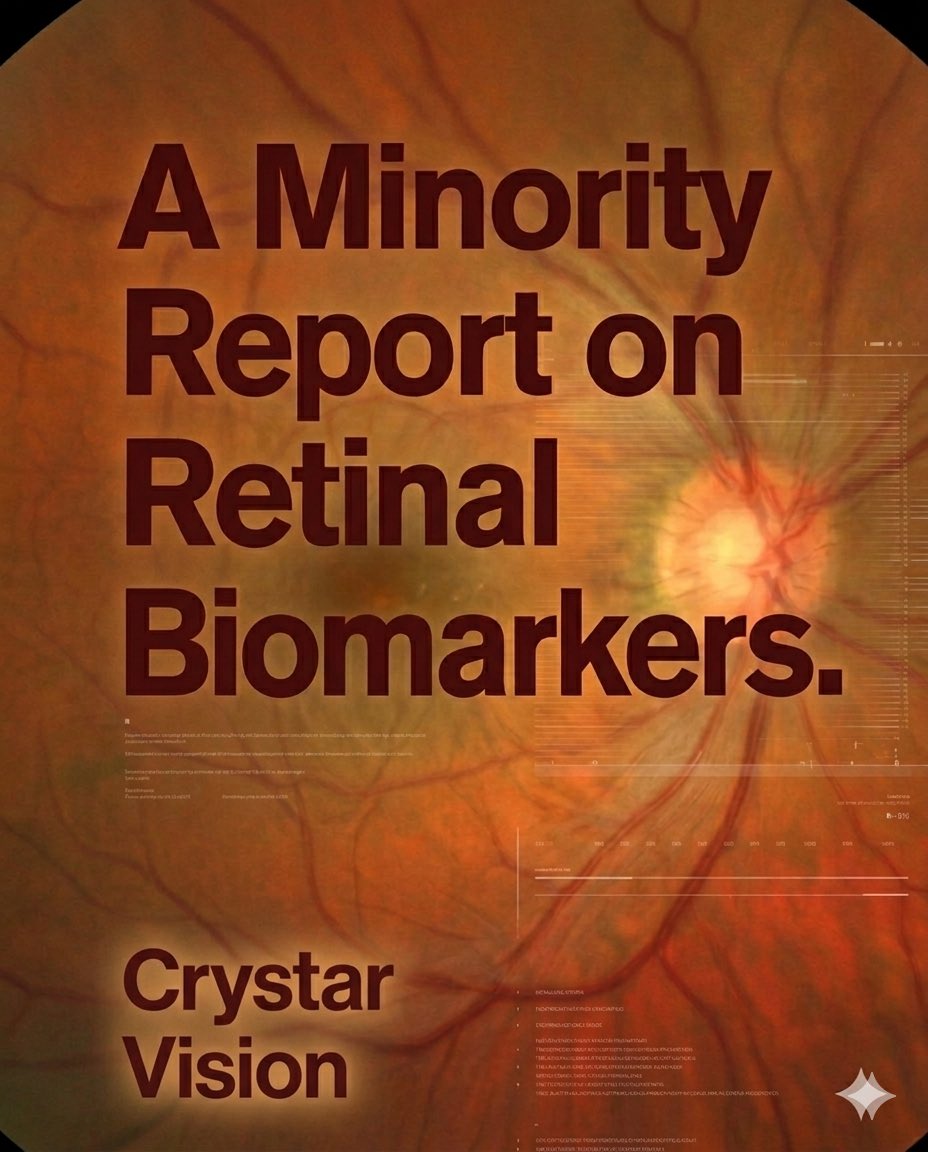
A minority report on retinal biomarkers.
The case for them is genuinely compelling. Proponents argue — rightly — that this is where AI stops being a glorified image classifier and starts doing something clinically profound: predicting cardiovascular risk, detecting early neurodegeneration, flagging systemic disease from a non-invasive snapshot of the fundus. The eye as a window to the body. Real AI. Real medicine.
I don't dismiss that framing. The science is real and the ambition is right.
Some go further: fundus AI could eventually replace coronary calcium scoring. Cheaper, no radiation, more accessible. Plausible in theory — but coronary calcium scoring comes with decades of validated thresholds and clear clinical guidelines. That infrastructure doesn't yet exist for retinal risk prediction, and that absence has consequences.
Imagine a patient with no symptoms. Their fundus photo flags moderate-to-high cardiovascular risk. They're referred to an internist.
Now what?
There are no established guidelines for what to do with an AI-derived retinal risk score. The internist presents the options: further workup, or watchful waiting. The patient has to choose — without a clear framework, without a definitive diagnosis, and often without the financial or psychological resources to navigate that uncertainty cleanly.
For patients who can't afford further testing, or who simply don't feel sick enough to justify it, that risk score doesn't disappear. It just sits there. Quietly.
This is the part of the conversation that's largely missing from the literature: not whether the model predicts well, but what happens to real patients after the prediction. The anxiety it generates. The clinical limbo it creates. The downstream decisions it forces without adequate support structures.
Prediction without an actionable clinical pathway isn't precision medicine. It can be a burden we hand to patients and call innovation.
The minority view — that we should be building AI which fits within existing clinical workflows rather than creating new ones patients have to navigate alone — deserves more serious attention.
Curious whether others in medical AI share this concern — or think the downstream problem is being adequately addressed.
SJ Song
#MedicalAI #OphthalmicImaging #RetinalBiomarkers #AIinMedicine
Strategic MOU with INFINITT Healthcare
Crystar Vision have signed a Memorandum of Understanding (MOU) with INFINITT Healthcare, a globally recognized medical imaging and PACS company from Korea.
INFINITT Healthcare has extensive experience in medical imaging infrastructure and PACS-based clinical workflows across domestic and international healthcare institutions.
Through this collaboration, Crystar Vision aims to integrate Reticare AI, its AI-based ophthalmic diagnostic solution, with hospital imaging and PACS workflows.
This partnership represents an important step toward bringing ophthalmology AI into real-world clinical infrastructure and making AI-powered eye care more accessible in everyday clinical practice.
We look forward to working with INFINITT Healthcare to advance practical, safe, and clinically meaningful AI solutions for ophthalmology.
pleased to share that CrystarVision’s UWF-FOCUS technology was featured in ChosunBiz.
UWF-FOCUS is an AI-based image enhancement technology designed to improve the clinical readability of key retinal structures, including the macula and optic disc, in ultra-widefield fundus imaging.
https://t.co/rgaG10y6ZA
Overwhelmed by the questions after our UWF-FOCUS presentation at #ARVO2026 on May 5th.
Thank you to everyone who stopped by, pushed back, and dug deeper — your curiosity is exactly what drives this work forward!
The Hard Path Is the Right Path: Building AI That Earns Its Place in Medicine-
Imaging AI is not an easy path. It requires high-quality clinical data, rigorous validation, regulatory review, workflow integration, and a clear path to reimbursement.
But that is exactly why this work matters.
In medicine, AI should not be judged only by how easily it can be deployed or monetized. It should be judged by whether it can create proven clinical impact, improve decision-making, and help patients receive the right care at the right time.
For us, retinal AI is not just about detecting disease from an image.
It is about building clinical intelligence that can support referral decisions, reduce false reassurance, and connect patients to appropriate eye care.
It is a difficult path, but it is the path we believe healthcare AI must take.
#RetinalAI #Ophthalmology #MedicalImaging #EyeCare #RetinaHealth




- [보건복지부, AI 기반 환자 의뢰·회송 체계 도입 (보사뉴스)](https://t.co/rofIP7qZKY)
- [Korea's Ministry of Health launches Healthcare AI Transformation Sprint Project (아시아경제 EN)](https://t.co/zPIIi0Lrb8)
#RetiCare #FundusAI #Ophthalmology #MedicalAI #ChronicDisease #AIAgent #PublicHealth #KoreaMedTech #CrystarVision #GangwonHealth](https://pbs.twimg.com/media/HJ43VpcaoAARNyR.png)