Northern geographer, Himalayan PhD, HoD, Head of Middle School , Dendrophile, UN Climate Change teacher, maps, wild places, litter collector, own views.
Geography teachers... Shall we have a David Attenborough day and all show it to all our pupils? We could then follow it up with emails /letters to local MPs and post pictures of it being shown in classrooms all over the UK 😊 #geographyteacher
https://t.co/jfDf7pbfpT
Glyphosate has no place in our gardens and growing spaces 🛑- so sign and share Garden Organic’s petition today to ban this dangerous herbicide for amateur and urban use 👉 https://t.co/mHwbHgXOVT.
#GrowersAgainstGlyphosate#GardenOrganic
Britain built the world’s first commercial Maglev line.
Birmingham Airport, 1984.
A driverless train floated above the track between the airport and railway station.
Then we shut it down in 1995.
Shanghai now does 30km to its airport in around 8 minutes.
Britain has no commercial Maglev line.
We didn’t miss the future.
We built it first, then walked away.
Dragonfly nymphs live underwater for months or years before they ever fly. They cling to the underside of submerged rocks, breathing through gills, eating mosquito larvae and small aquatic insects.
Move the rock out of the water, the nymph either suffocates as its gills dry out, or it sits in the open and is eaten by the first fish that finds it.
Mayfly larvae, stonefly nymphs, caddisfly larvae, blackfly larvae, snail eggs, and salamander eggs are all on those same rocks. All gill-breathers. All die the same way.
Every nymph that dries out on a cairn is one fewer adult dragonfly hunting mosquitoes over the water this summer. The riverbank you stacked rocks at is now slightly more bug-bitten because of it.
Leave the rocks where the river left them. Take a photo of the river instead. The cairn is the only part of the picture that doesn't belong.
We’ve shared this photo of one of our red squirrels at penrhos before but it’s truly beautiful in our eyes .
Take a good look at each photo which appeals more to you ? An iconic endangered Red Squirrel or a generic prefabricated wooden and glass building ? We know what we prefer , we don’t understand how anyone could want to replace the habitat of a red squirrel with that !
📸David Jones
It's #EndangeredSpeciesDay
Red squirrels are close to extinction in England. Time is running out.
In Cumbrian dialects, 'con' and 'swirrel' is red squirrel; and in folklore it's lucky to have them nesting near your home.
📷 @terrybnd
Everywhere you turn at Penrhos there is a plant,a bird ,or a folly to discover,But for how long? Why destroy a place that brings tourists into the area ? They come because of the wildlife, beauty and tranquility! Let’s protect our best assets!
A few jobs won’t ever be worth the destruction of penrhos !
📸Karen Sparrow,Pauline Hardman and Tim Owen .
Please Be Kind To Moles.
They are beneficial to soil health, acting as natural aerators and pest control by consuming lawn-damaging grubs, beetles, and larvae.
They do not eat plants, and their removal often leads to new moles occupying the vacant tunnel system, making it a futile effort.
Apart from that, it is CRUEL!
Who doesn’t adore a Bumblebee. Keep a look out for these furry pals. Grow plants that they love, create habitats that feel like home and they will reward you with their beautiful array of stripe jumpers. 💚
Retweet ❗️
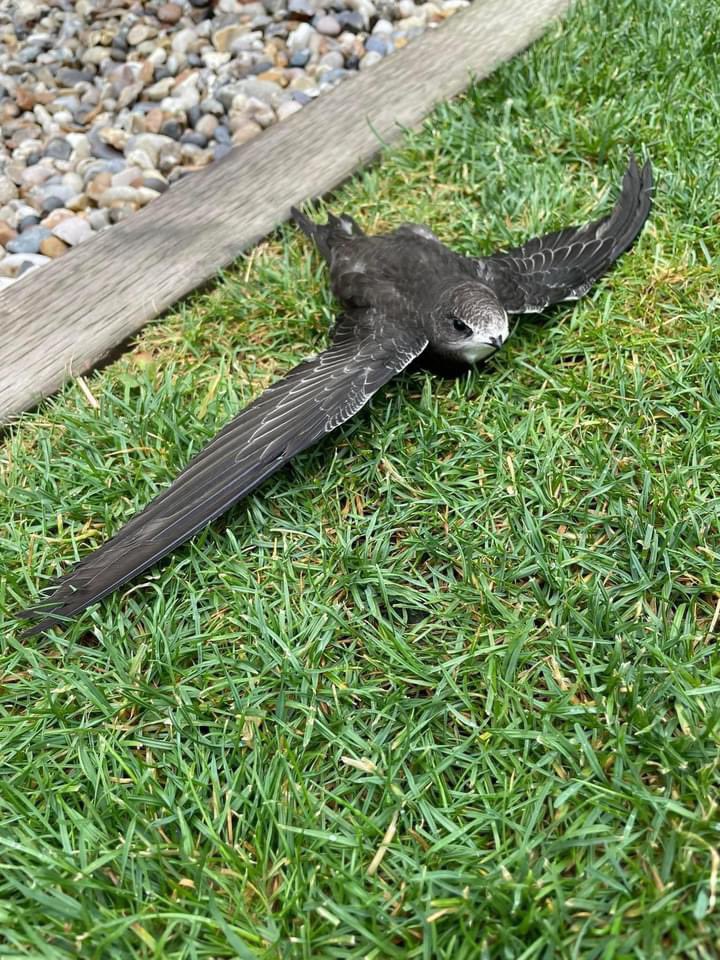
This is a Swift. sometimes they can end up on the ground. This is where they need YOUR help!
Swifts arrive back to the UK from April/May to nest. 🪺 (A THREAD)
Please god people will listen and take David Attenborough’s most important warnings seriously. He is not exaggerating. We are in the most unimaginable trouble.
Over the last 18 months or so an independent filmmaker has followed the save campaign to make a short film here is his introduction to the film :
timbekir My short film The Last Wild Place has been
selected to screen at the BAFTA short film, BAFTA Cymru and BIFA qualifying Carmarthen Bay Film Festival. Thanks to everyone @cbffwales it's an honour. And huge thanks to Hilary, Sharon & Lisa for letting me tell their story:
On the island of Holyhead, Wales, three women lead their community in fighting to save the last area of precious woodland from development. Everything is on the line as a 14 year campaign reaches a decisive moment in deciding the fate of Penrhos Nature Reserve.
Produced & Directed by @timbekir
Cinematography & Editing @timbekir
Music @simonpittmusic
Colour grade @ivan.michael.colour
Sound mix @dom_purdie
#CBFF2026 #nature #woodland #shortfilm #savepenrhos
https://t.co/c2vWyOmJAW
🚨 IMPORTANT ANNOUNCEMENT: Action Needed! 🚨
The Administration team has officially submitted a planning application to Anglesey Council on Thursday April 16th, and we need your voice to help protect our environment.
No matter where you live, you can make a difference. Whether you are a LOCAL RESIDENT or NOT or a FREQUENT VISITOR, who loves this area, you have the right to object to this application.
Why should we object?
The environmental impact of this proposal is significant. We are concerned about:
1. Potential loss of local biodiversity and wildlife habitats.
2. Increased carbon footprint and traffic congestion.
3. Strain on natural resources and the unique landscape of Anglesey.
4. Total Loss of our free amenity. Original plans allowed the public 75 acres of PENRHOS . Now it’s zero!
📢 What happens next?
Stay tuned to this page! We will shortly provide the specific link to the Council portal and the exact application reference number. We will also be sharing a detailed list of environmental facts to help you draft your objections effectively.
Please share this post to spread the word. Let’s protect Anglesey together! 🌿
Today is the day - #NoMowMay is here! 🌱🌼
Help nature and let your lawn grow this May and beyond. You’ll be creating a buzzing lifeline for wildlife while saving time and reducing your carbon footprint. 🐝
Make the No Mow May pledge today 👉 https://t.co/NFxLbg0wsJ
That cute rock stack by the creek just killed a bunch of mosquito killers.
Dragonflies spend most of their lives underwater, sometimes up to five years, clinging to rocks while they grow.
A single dragonfly larva eats hundreds of mosquito larvae before it ever flies.
But dragonflies are just one species. The rocks in a healthy stream are also covering caddisfly larvae, mayflies, stoneflies, water beetles, salamander egg clutches, and the freshwater snails that fish depend on.
Eastern Hellbenders, an endangered giant salamander species, lay their eggs specifically under flat stream rocks. Moving the rock kills the clutch.
When you pull a wet rock out of the water and stack it on the bank, everything clinging to that rock dies. They desiccate within minutes in the sun.
A single rock pile is dozens of small lives lost. Most stream cairns are stacks of fifteen to twenty rocks.
If you see stacked rocks at a creek, knock them over. The stream rebuilds itself faster when rocks are scattered the way water put them.
Leave no trace isn't an aesthetic preference. It's real habitat protection.