In a blood spatter unit, students hit a fake blood soaked sponge with different objects to see which ways the blood traveled and determine the Angle of Impact of the spatter.
https://t.co/Wp3HypBUgz
In our Emergency Management class, we speak about being resilient. Yesterday, Mrs. Graber, a holocaust survivor, came to our virtual class to talk about her experience and how her family was RESILIENT in surviving and succeeding after the war.
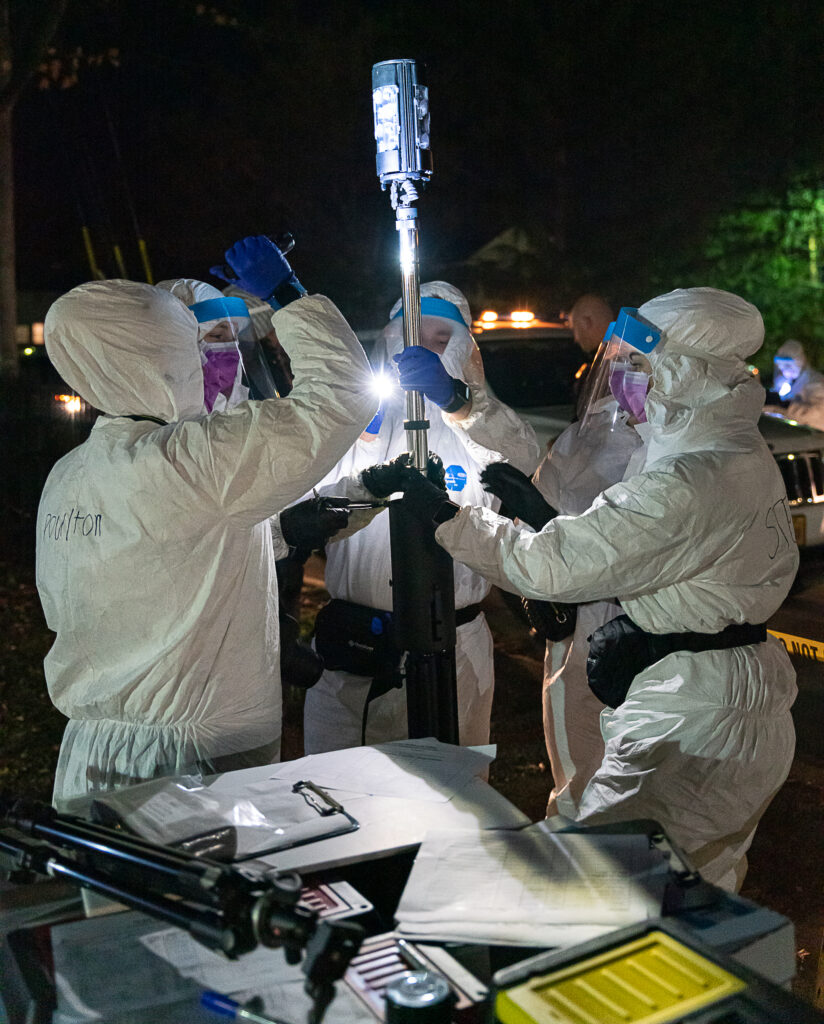
Jordan Newton graduated out of the DCTC Homeland Security program in 2017, is a senior at WVU. Last night she supervised other students who were investigating a mock crime scene that turned into three crime scenes. The effort took them from 10PM to 7AM this morning. Well done!
Kirsten and Alexis brought in items today that would be hard to fingerprint and tested methods by which they might be able to lift a print. They both met with success.
Today we used magnetic fingerprint powder to develop latent prints on glass, aluminum and paper. This powder is easier to clean up. Deputy Twilley joined us and worked with the kids this morning.
Using red fingerprint powder Friday morning to develop latent prints on dark colored surfaces. It is hard to use because it is so powdery but the students did well with it this morning.
AM Students today began to learn how to develop and left latent (invisible) fingerprints from flat glass using black powder. They did a great job on day one. We will work with other colors of powders as we move on as well as other surfaces.
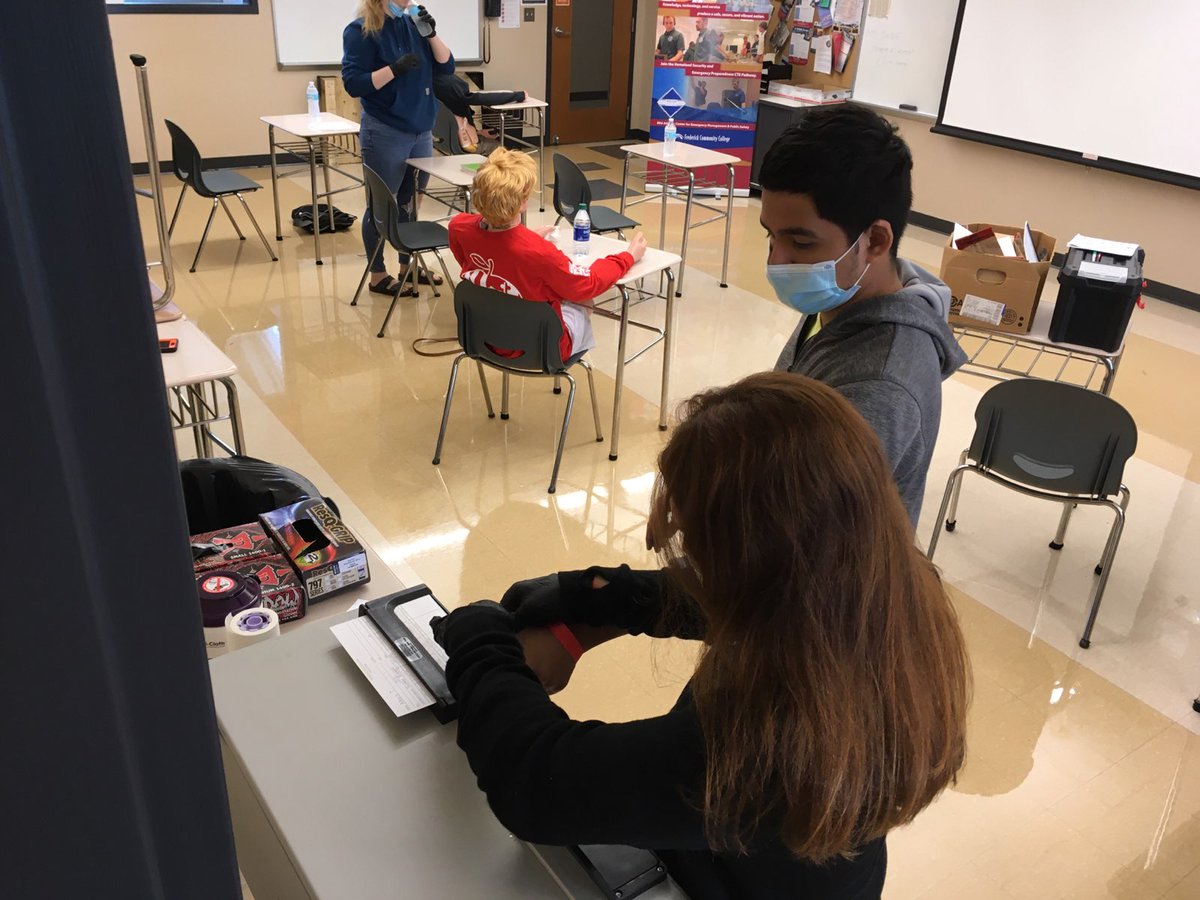
We began a unit on Fingerprints today. Here, Kirsten is fingerprinting Alexis. It's hard to do from a distance, as shown here, but they did a good job. Later, the determined if their prints were Arches, Loops, or Whorls. Do you know what you have?
Senior students Kirsten, Rebecca and Alexis taking a practical crime scene final. They will investigate this case throughout the semester as they gain more knowledge about evidence they collected today. They will look to develop a suspect by semester's end.
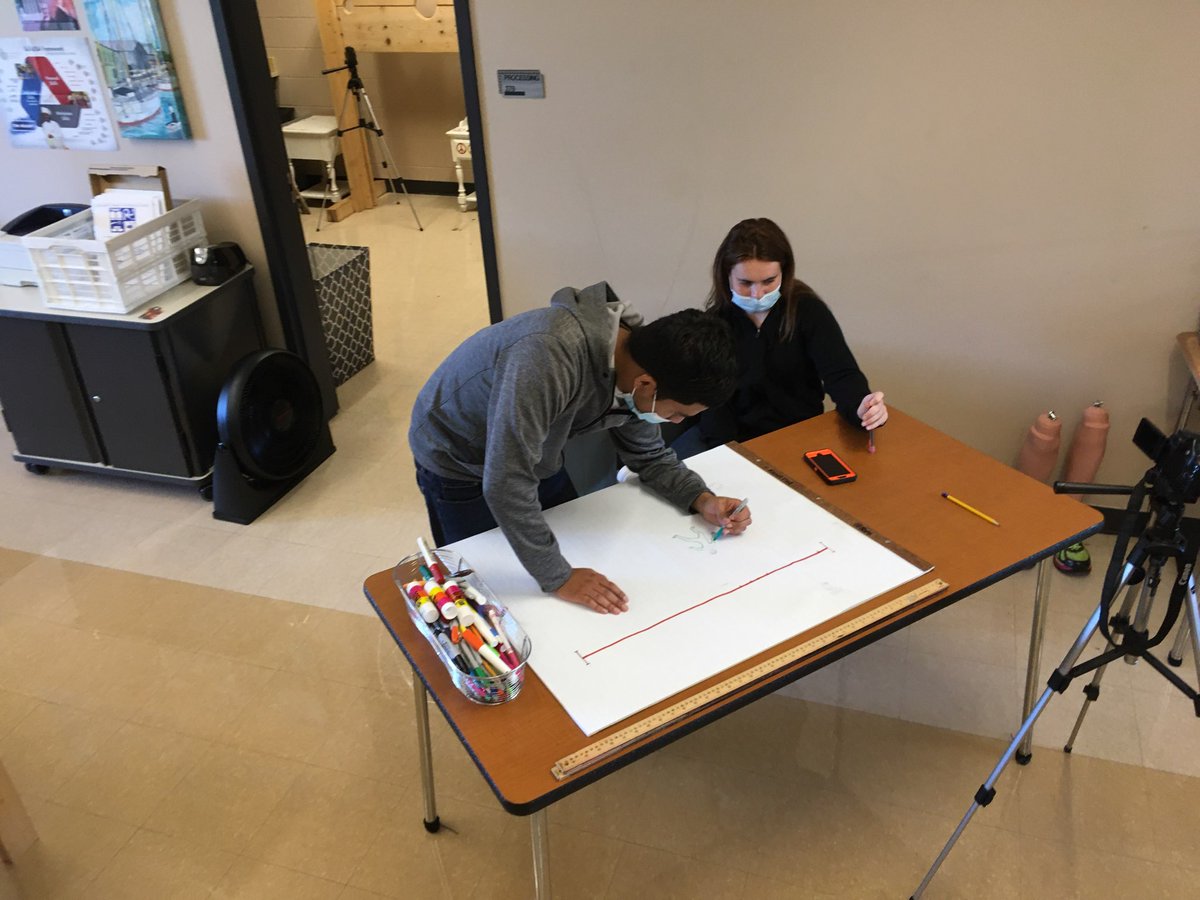
Rough crime scene sketches sometimes get enlarged into to scale drawings for the benefit of other investigators or a jury. Here, Seniors Kirsten and Alexis work on just such a sketch.
Crime scene sketches are sometimes used to recreate a crime scene for a jury or by a cold case investigator. Here, Rebecca and Alexis recreate a crime scene from a sketch drawn a few years ago. it emphasizes the importance of making an accurate sketch that someone else can use.
https://t.co/HC2opBC4Ah
Superintendent Bromwell using DCTC as a backdrop to clarify our reopening plan. We are looking forward to serving our students here again soon.
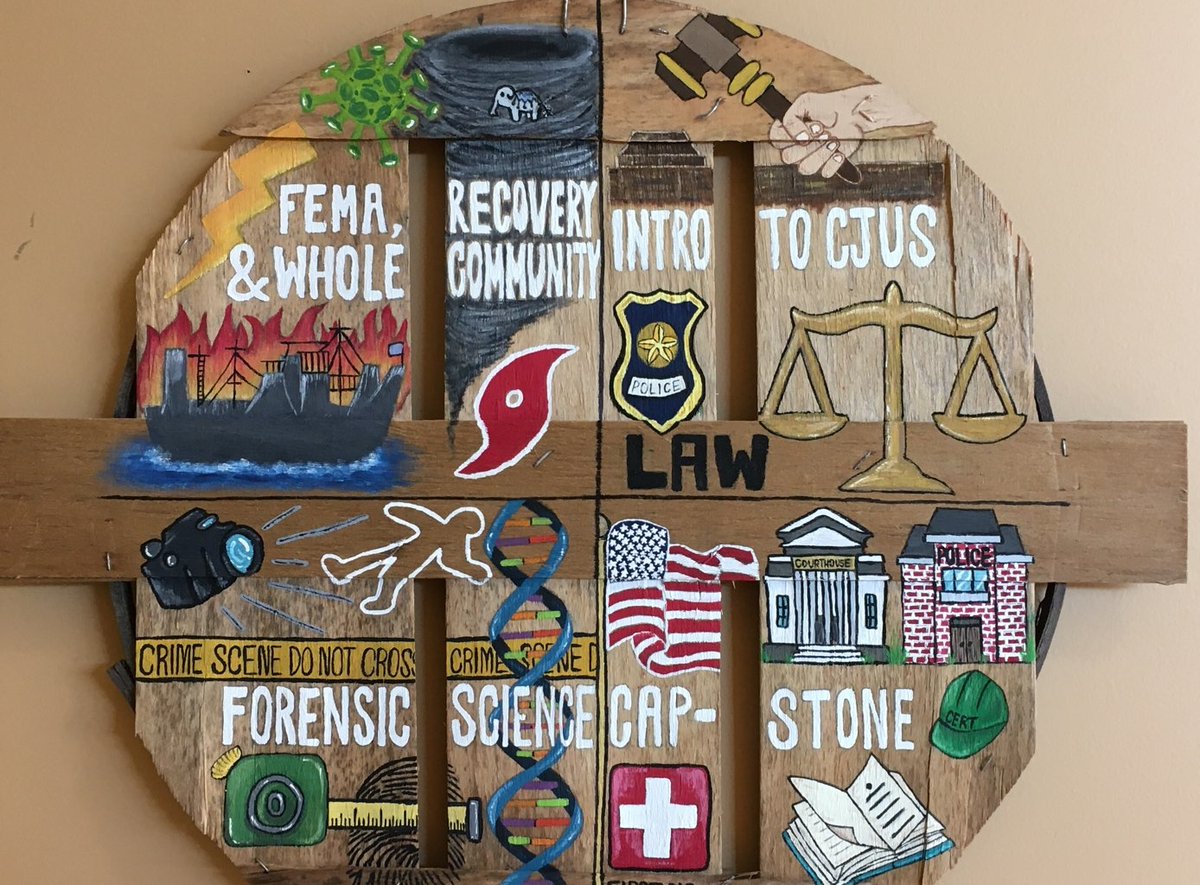
Recent graduate Abby Robinson and her sister Lauren turned this crab basket lid into a summary of the Emergency Management and Forensic Science pathway.