Vendemos Cubos Rubik, Spinners y otro tipo de juguetes para entretener y agilizar tu mente. We sell Rubik's cubes, spinners and other toys to speed up your mind
Have you ever noticed we live in a country where a 95-year-old man can walk into a mud pit in Chicago, call his band The Fuckers, and start reciting “Enter Sandman” like he’s giving a TED Talk from the afterlife?
William Shatner. Ninety-five. Riot Fest. Douglass Park. Thirty-five minutes. Spoken-word heavy metal. In the mud. With people cheering like this is normal.
It is not normal. It is magnificent.
He did “Crazy Train.” He did “Ace of Spades.” He did Metallica. Not sang them. Talked them. Like Captain Kirk got trapped in a guitar amp and decided to negotiate with Satan instead of the Klingons.
Behind him: actual musicians. Marcus Nand. Phil Soussan. Grown men who have paid rent with real notes while a nonagenarian stands there going, “What the F is heavy metal?” and somehow makes it a question worth answering.
Brian May is on the record. Tony Iommi is on the record. The album is called *What the F Is Heavy Metal?* which is the most honest title in music since someone first admitted most of it is just louder complaining.
The crowd ate it up. Of course they did. We will watch a man old enough to remember radio as furniture stand in wet dirt and dare death to tap him on the shoulder. Death probably took one look, said “I’m not dealing with this today,” and went to find someone easier.
You’re never too old to live out your dreams. That’s the line they always use. The real line is: most people quit the second it gets embarrassing. Shatner waited until embarrassing became the whole act, then sold tickets.
Follow @wickedsmaahht before the rest of the timeline figures it out.
#WilliamShatner #RiotFest #WhatTheFIsHeavyMetal #NeverTooOld #SpokenWordMetal #LiveLongAndGetLouder #CaptainKirkHasEnteredTheChat
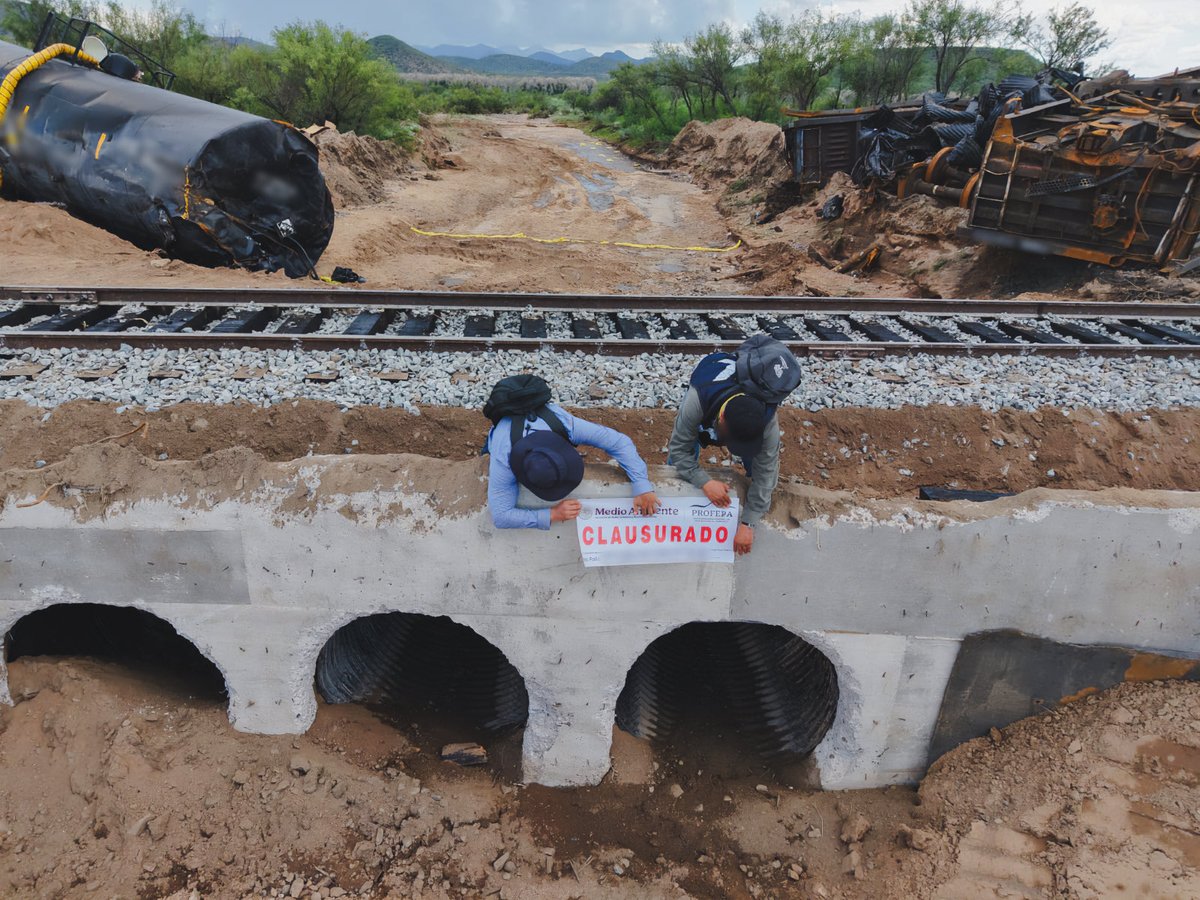
Fallece el primer afectado por derrame de Grupo México en Sonora: ¿cuándo va a transparentar el gobierno de Sheinbaum el daño?
Luis Arturo Ozuna Vázquez, de 53 años, murió después de permanecer alrededor de mes y medio hospitalizado, después de que quedó expuesto al derrame del 25 de julio en Naco, Sonora.
Cuando el descarrilamiento de un tren de Ferromex, filial de Grupo México, provocó que más de 70 mil litros de hidrosulfuro de sodio terminaran en un arroyo.
Luis Arturo Osuna trabajaba como guardia de seguridad a unos tres kilómetros del accidente y al día siguiente caminó cerca de la zona contaminada para llegar a trabajar.
Horas después comenzó con dolor intenso de cabeza, mareos y náuseas, su salud se deterioró hasta ser hospitalizado con neumonitis química, edema cerebral y lesión neurológica.
La neumonitis química es una lesión de los pulmones causada por la inhalación de sustancias tóxicas. El hidrosulfuro de sodio puede liberar sulfuro de hidrógeno, un gas tóxico que afecta pulmones y sistema nervioso.
Luis Arturo Ozuna murió el 14 de septiembre, sin embargo no fue el único afectado, otras doce personas quedaron expuestas.
PROFEPA con Mariana Boy, informó que tomaríanmuestras de suelo y del arroyo para determinar hasta dónde llegó el químico y cuánto tendrá que remediar Grupo México.
Pero aún no hay resultados públicos.
Alicia Bárcena, que “lidera” SEMARNAT, se ha mostrado tibia frente a Grupo México y ya hay una persona muerta, comunidades afectadas y una contaminación cuya magnitud completa sigue sin hacerse pública.
Hasta ahora, el gobierno de Sheinbaum ha sido más protector con Grupo México que con las personas afectadas.
💔 SEIS AÑOS PIDIENDO LO QUE POR LEY LE CORRESPONDE: EL ROSTRO DE UNA MUJER QUE YA NO PUDO MÁS
Este es el rostro de una mujer que lleva más de seis años esperando una pensión que, asegura, le corresponde por derecho tras el fallecimiento de su esposo, quien durante más de 30 años trabajó en Aduanas.
Seis años.
Seis años de acudir a oficinas, entregar documentos, cumplir requisitos y tocar puertas. Seis años de vueltas, trámites y esperas.
Y mientras el tiempo pasa, ella envejece.
Es una mujer de la tercera edad y vive con una discapacidad. No está pidiendo un favor. No está pidiendo caridad. Está reclamando la pensión que dejó su esposo después de décadas de trabajo.
Según su testimonio, cumplió con los requisitos establecidos cuando su esposo falleció. Sin embargo, el trámite no ha llegado a una solución definitiva y la espera se ha convertido en una verdadera pesadilla.
Lo más doloroso es que, ante su desesperación, tuvo que salir a la calle y sentarse en medio de la vía como protesta, intentando que alguien finalmente escuchara su voz.
Una mujer que debería estar disfrutando de su vejez terminó protestando para exigir que una institución pública atienda su caso.
Ella afirma que durante sus visitas al ISSSTE ha recibido un trato que considera humillante, y que algunos empleados y personal de la institución incluso se habrían burlado de su situación, aprovechándose —según señala— de que por su edad y discapacidad le resulta difícil defenderse por sí misma.
¿Cuánto más tiene que esperar?
No son seis días.
No son seis meses.
Son más de seis años.
Seis años en los que una persona adulta mayor ha tenido que vivir con la incertidumbre de saber cuándo llegará aquello que considera suyo por derecho.
Su historia no debería ser solamente la historia de una pensión.
Es la historia de una mujer que pide ser escuchada.
Es el rostro de una persona que, después de toda una vida, hoy tiene que salir a la calle para decir:
“No quiero que me regalen nada. Solo quiero lo que le corresponde a mi esposo y lo que por ley me corresponde a mí.”
Hoy, detrás de ese rostro, hay cansancio, tristeza y desesperación.
Pero también hay una pregunta que merece respuesta:
¿Quién va a escuchar finalmente a esta mujer?
Seis años son demasiado tiempo para cualquier trámite. Pero para una persona de la tercera edad, cada día de espera pesa todavía más.
😡Diseñador brilló en pasarelas, mientras dejó sin pago a las artesanas que tejieron las prendas.
14 artesanas tsotsiles de Aldama y San Juan Chamula finalmente acudieron ante la Fiscalía de Justicia Indígena de Chiapas para denunciar al diseñador Alberto López Gómez por los presuntos delitos de fraude y abuso de confianza.
Las mujeres aseguran que entregaron huipiles, rebozos, vestidos, gabanes y otras prendas para que fueran comercializadas, pero los pagos nunca llegaron por completo. El adeudo denunciado asciende a aproximadamente 572 mil 800 pesos.
Algunas llevan tres o cuatro años reclamando. Otras hablan de hasta cinco o seis años esperando su dinero.
Lo más indignante es que, según sus testimonios, confiaron en él porque hablaba su misma lengua y conocía perfectamente la realidad de sus comunidades.
Mientras ellas seguían preguntando cuándo les pagarían, Alberto López Gómez aparecía en exposiciones, proyectos, pasarelas y espacios nacionales e internacionales hablando del arte textil tsotsil y del trabajo comunitario.
¿Y quienes elaboraron muchas de esas prendas? Esperando.
Las artesanas aseguran tener recibos, documentos de crédito y compromisos de pago. También denunciaron que habrían firmado documentos que limitaban que hicieran pública la situación, algo que ahora corresponderá investigar a las autoridades.
Después de años de llamadas, mensajes y promesas incumplidas, decidieron dejar de esperar y acudir ante la justicia.
Alberto López Gómez tiene derecho a defenderse y será la Fiscalía la que determine responsabilidades. Pero si las pruebas confirman lo denunciado, no basta con reconocer el “arte indígena” en pasarelas y discursos.
Hay que empezar por algo bastante más básico: pagarle a quien hizo el trabajo.
Porque el bordado indígena no es decoración para discursos ni una escalera para construir prestigio personal.
Es trabajo, tiempo, conocimiento heredado durante generaciones y ese trabajo se les tiene que pagar
#Alerta #Indignante #Justicia #Chiapas
The music you loved between the ages of 13 and 18 will stay with you for the rest of your life, and no music you hear after that will ever hit the same way. A 2017 study in Frontiers in Psychology mapped the listening patterns of every generation and found that preferences formed in adolescence are the strongest and most durable of any age.
Carol Krumhansl at Cornell University analysed the listening habits and emotional responses of thousands of people across multiple generations and found a consistent pattern: the songs that produce the strongest emotional response are the ones you heard during your teenage years. Not childhood. Not your twenties. The narrow window between roughly 13 and 18.
The researchers called it the reminiscence bump, a term borrowed from memory research. The brain during adolescence is undergoing rapid development in the regions that handle emotion and reward, and music that arrives during that window gets encoded with an intensity that later music cannot match. The same song heard at 15 and at 35 produces a stronger neurological response at 15, and the memory of that response is what makes the song feel like yours forever.
This is why classic rock fans feel physically different when they hear the opening of their song than when they hear something new. The brain built a room for that music during a period of heightened sensitivity, and the room is still there, unchanged, decades later.
The study also found that each generation has a bump centred on the hits of their teenage years, and the bump is remarkably consistent. The music industry has known this for decades: the audience you capture at 15 is the audience you keep for life. https://t.co/xWGnuvS9N7
VOYAGER 1 JUST CAME BACK FROM THE DEAD
Something thought to be broken for more than 20 years has suddenly come back to life on a spacecraft more than 15 billion miles from Earth.
NASA’s Voyager 1, launched in 1977, recently faced another problem that could have threatened its ability to communicate with us. Engineers needed backup roll thrusters to help keep the spacecraft’s antenna precisely aimed at Earth. But those thrusters had been considered unusable since 2004 after their tiny heaters stopped receiving power.
Then NASA engineers took another look at the old failure. They suspected the heaters might not actually be dead, but stuck in the wrong electrical state.
So they sent a carefully planned command into deep space.
The signal took more than 23 hours to reach Voyager 1. There was no instant response and no way to intervene if the spacecraft reacted badly. Engineers had to wait.
Then, more than a day later, the telemetry arrived.
The temperature had risen.
The heaters were working.
A system believed to be lost for two decades had been brought back to life from billions of miles away.
The timing matters. Voyager’s working thrusters are slowly becoming less reliable as fuel residue builds up inside their narrow tubes. Meanwhile, the spacecraft’s nuclear power source loses about four watts every year. NASA has already been forced to shut down instruments to conserve its shrinking supply of electricity. Only two science instruments remain operating.
And Voyager 1 is still heading farther into interstellar space.
In November 2026, it is expected to become the first human-made object to reach a distance of one light-day from Earth — about 16.1 billion miles away.
A spacecraft built nearly half a century ago is still whispering information back to Earth from the darkness between the stars.
And somehow, every time it seems ready to fall silent, engineers find another way to keep it talking.
Source: NASA/JPL
@Cyr1acus@hell_line0 Or he did kill them and incriminated her to make things easier for him. She was the one more believable to do so. It has not been proven she did it didn’t. Everything is based on what he says. Very suspicious to me.
@BlaireWhite The difference is that she asked for help many times and the doctors just messed up with her brain. And her husband allowed her to be alone with the kids many times. Instead of making sure they were safe and she was institutionalized until she overcame her mental issues
@BotDe20Millones Si se confirma que ella los mató aunque esté mal mentalmente debe pagar en un psiquiátrico o lo que sea. Para mí lo importante es tener certeza de que si fue ella y no que el papá acomode todo para culparla. Eso no se ha demostrado fehacientemente
@BotDe20Millones Yo creo que si existe duda de que ella los haya matado y el papá quede sin rastros de duda razonable. Todo se basa en lo que él ha dicho. No hubo análisis de nada porque él dijo que así pasó todo. Nadie confirmó
Existen muchas inconsistencias