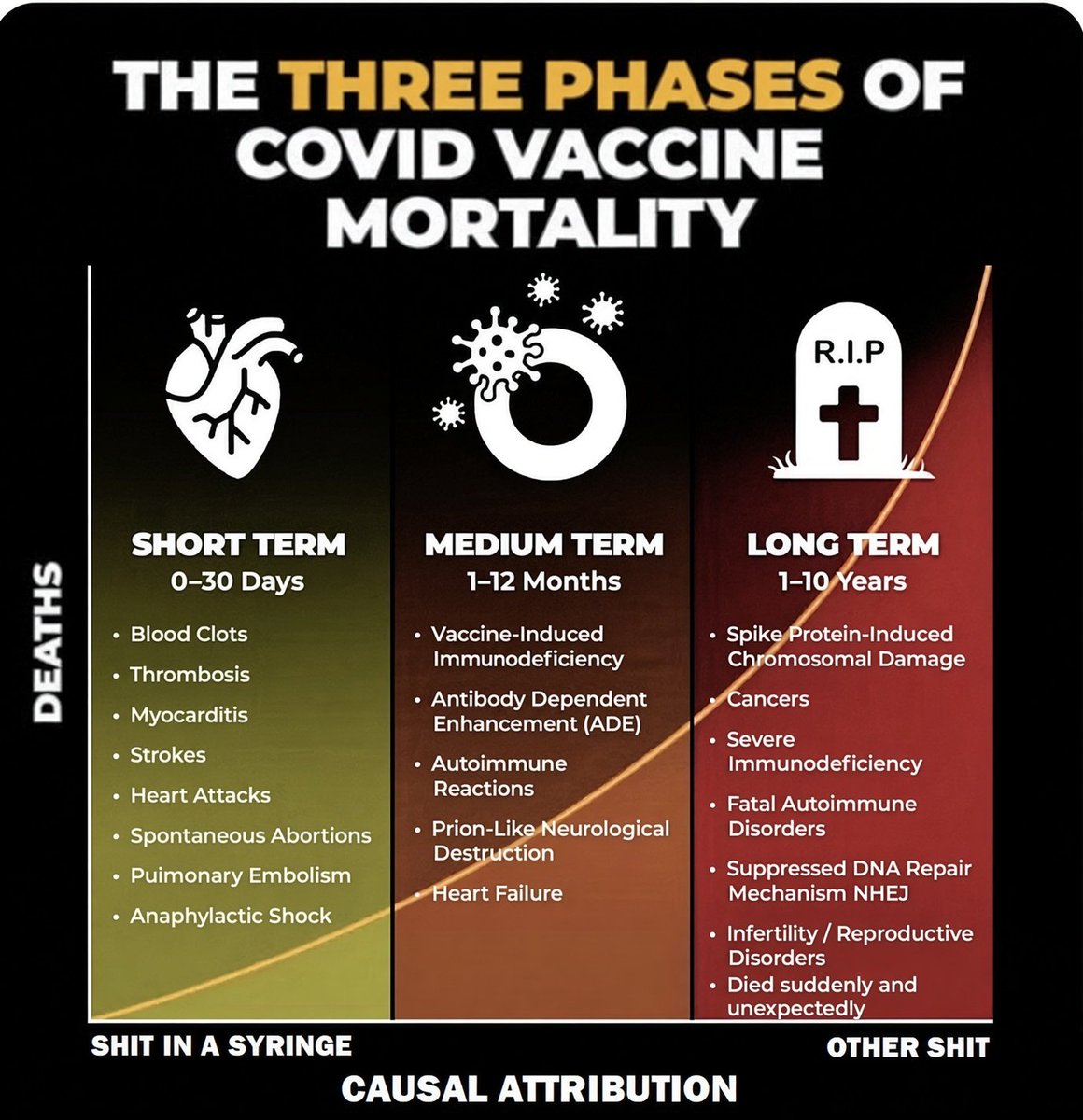
Some people call it a vaccine mmmm I call it a Sling Blade, I like french fried pataters and mustard, ICD-10 Z28.310 Homosapien Originalis Electrolyte addict
And
**The Club of Rome’s *The Limits to Growth* (1972) is the clearest and most influential modern extension of Malthusian ideas into a systems-based, global neo-Malthusian framework.**
### Background
The Club of Rome was founded in 1968 by Italian industrialist Aurelio Peccei and Scottish scientist Alexander King. It is an informal network of scientists, economists, industrialists, and policymakers focused on the long-term “predicament of mankind”—interconnected global problems of population, resources, environment, and development.
In 1970 it commissioned an MIT team (led by Dennis Meadows, with Donella Meadows, Jørgen Randers, and William Behrens) to build a computer model of the world system. The result was *The Limits to Growth*, based on the World3 system-dynamics model. It examined five interacting variables: population, industrial output (capital), food production, non-renewable resource consumption, and pollution.
### Direct Cross-References to Malthusian Tenets
| Malthusian Core Tenet | Club of Rome / *Limits to Growth* Parallel |
|-----------------------|--------------------------------------------|
| Population grows geometrically (exponentially); food/subsistence grows arithmetically | Exponential growth in population, industrial capital, and resource use on a finite planet inevitably collides with limits. Technology is assumed to expand resources only linearly or with delays. |
| Population expands to the limit of subsistence → Malthusian trap / crisis | “Overshoot and collapse”: growth continues past sustainable levels due to delays in feedback, then industrial output, food, and population decline sharply. |
| Positive checks (famine, disease, war, misery) | Resource depletion, pollution, and food shortfalls raise mortality and cut production; population eventually falls via higher death rates or lower birth rates. |
| Preventive checks preferred (moral restraint / delayed marriage) | Deliberate stabilization of population and industrial growth (a “stabilized world” or equilibrium scenario) is presented as the path that avoids collapse and maintains high welfare. |
| Pessimism about perfectibility / endless improvement without restraint | Explicit challenge to the dominant paradigm of unbridled economic and population growth. Technology alone is not sufficient to postpone limits indefinitely. |
The shared foundation is the **finitude of natural resources** combined with the superior power of exponential growth. Both see a risk of a “Malthusian catastrophe” if growth is left unchecked.
### Key Expansions Beyond Classical Malthus
- **Multi-variable systems dynamics**: Not just population vs. food, but feedback loops among five (and later more) sectors. Delays, non-linearities, and pollution as a new limiting factor are central.
- **Scenarios rather than a single prediction**: The World3 model produced multiple runs. The “standard” (business-as-usual) run showed overshoot and collapse within roughly a century. Other runs showed that early, coordinated limits on population and material throughput could produce a sustainable equilibrium.
- **Neo-Malthusian orientation**: Unlike Malthus (who rejected contraception as immoral), the Club of Rome and later neo-Malthusians accept family planning, policy intervention, and deliberate control of growth rates. They also emphasize global coordination.
- **Steady-state / equilibrium goal**: The report argued it is possible to design a global equilibrium in which material needs are met and opportunities are more equal, but only if growth trends are altered soon enough.
Main conclusions from the 1972 report (paraphrased from the text):
1. If present growth trends continue unchanged, the limits to growth will be reached within the next hundred years. The most probable result is a rather sudden and uncontrollable decline in both population and industrial capacity.
2. It is possible to alter these trends and establish a condition of ecological and economic stability that is sustainable far into the future.
3. The sooner the world begins working toward the second outcome, the greater the chances of success.
### Reception and Later Developments
The report sold tens of millions of copies and helped launch modern environmentalism, but it was sharply criticized by economists (e.g., for underestimating technological progress and price signals) and others who called it neo-Malthusian alarmism. Resource prices did not rise as steeply as some readers expected, and absolute collapse has not yet occurred on the timeline of the most pessimistic runs.
Updates (*Beyond the Limits*, 1992; *The 30-Year Update*, 2004) and independent data comparisons (including work by Gaya Herrington and others) have found that observed trends still track relatively closely with certain World3 scenarios, particularly those involving pollution or resource constraints leading to eventual declines in industrial output and welfare. The Club of Rome has continued related work (e.g., Earth4All initiatives), often shifting emphasis toward consumption inequality and planetary boundaries while retaining the core concern about physical limits.
In short, the Club of Rome took Malthus’s basic insight—that exponential growth in human demands will eventually outrun the capacity of a finite Earth—and translated it into a quantitative, multi-factor systems model that remains a reference point in debates about sustainability, population, and economic growth.
**Malthusians** follow the population theory of the English economist and demographer Thomas Robert Malthus (1766–1834), mainly from his 1798 work *An Essay on the Principle of Population*.
### Core Tenets
The central claim is that **population tends to grow geometrically (exponentially) while the means of subsistence (especially food) grow only arithmetically (linearly)**.
- Unchecked population roughly doubles every 25 years (1, 2, 4, 8, 16…).
- Food supply increases more slowly (1, 2, 3, 4, 5…).
This mismatch creates a permanent tendency for population to press against the limits of subsistence. Any temporary improvement in living standards is typically offset by higher birth rates and lower death rates, returning per-capita resources toward subsistence level. This equilibrium is known as the **Malthusian trap** (or Malthusian catastrophe/crisis).
Malthus grounded the argument in two basic postulates:
1. Food is necessary for human existence.
2. The “passion between the sexes” is strong and roughly constant.
From these he derived that population power is indefinitely greater than the earth’s power to produce subsistence.
### Population Checks
Balance is restored by two kinds of checks:
- **Preventive checks** (reduce birth rates): Primarily “moral restraint”—delayed marriage and celibacy until people can support a family. Malthus (an Anglican clergyman) regarded contraception, abortion, and related practices as immoral “vice.”
- **Positive checks** (raise death rates): Famine, disease, war, and misery. These act when preventive checks fail.
All checks ultimately resolve into misery or vice. Societies that ignore moral restraint face the harsher positive checks.
### Policy Implications
Malthus opposed the English Poor Laws and other forms of relief for the poor. He argued that such aid encourages earlier marriage and higher fertility among those least able to support children, ultimately worsening poverty and misery without expanding the food supply. He favored measures that encouraged prudence and delayed marriage.
### Neo-Malthusianism
Later **neo-Malthusians** retained the concern about population growth outstripping resources but diverged from classical Malthusianism. They generally endorsed contraception, family planning, and (in some cases) more active population-control policies. They also expanded the focus beyond food to broader resource limits, environmental degradation, pollution, and carrying capacity (e.g., influences on 20th-century environmentalism and works such as *The Limits to Growth*).
### Historical Context and Critiques
Malthus wrote against optimistic Enlightenment views of human perfectibility (e.g., Godwin and Condorcet). His framework influenced classical economics (including elements of Ricardo’s wage theory) and later biological thought (Darwin acknowledged the influence of Malthus on his ideas about struggle and selection).
Critics note that the Industrial Revolution, agricultural advances (including the Green Revolution), and sustained technological progress allowed many societies to escape the classical Malthusian trap, with living standards rising even as population grew. Modern debates continue over whether resource constraints, environmental limits, or distributional issues revive Malthusian concerns in modified form.
Mark my words. They're going to push siRNAs (small interfering RNA) as a means to counter vaccine damage by silencing genes for Spike, Prion, and Amyloid, but if you stop taking them, the illness recurs. In other words, they force you to subscribe to life itself, which requires maintaining a bank account, digital currency, digital ID, et cetera. If you're cut off from money and services, you lose the siRNA drugs. If you lose the siRNAs, you die. They're trying to turn us into Jem'Hadar from Star Trek.
We are ready to bring mRNA with personalized gRNA vaccine kiosks
Coming to a mall near you
These will be an extension of our Genome Update Centers franchises