The shaman of Bad Dürrenberg are the remains of a 25–35 year old woman, who was buried 8,600 to 9,000 years ago in Germany. Around her were the remains of an extraordinary headdress, made from the bones and teeth of different animals such as deer, wild boar, crane, and turtle.
Discovered in 1934 near Bad Dürrenberg, Germany, the burial dates to around 7000 BC during the Mesolithic period. The woman was interred with an elaborate headdress and a wide range of animal remains, suggesting she held an important ceremonial or spiritual role. Archaeologists believe the objects symbolized a connection to the natural world, with different animals likely carrying specific spiritual or cultural significance. Recent scientific analysis indicates she may also have had a congenital physical condition, which in many prehistoric societies could have contributed to her special status within the community.
In 2024, researchers reconstructed the woman's face using her skull and DNA analysis. The reconstruction provided one of the most detailed glimpses yet of a European Mesolithic individual and renewed interest in the role of women as ritual specialists in prehistoric hunter-gatherer societies.
#archaeohistories
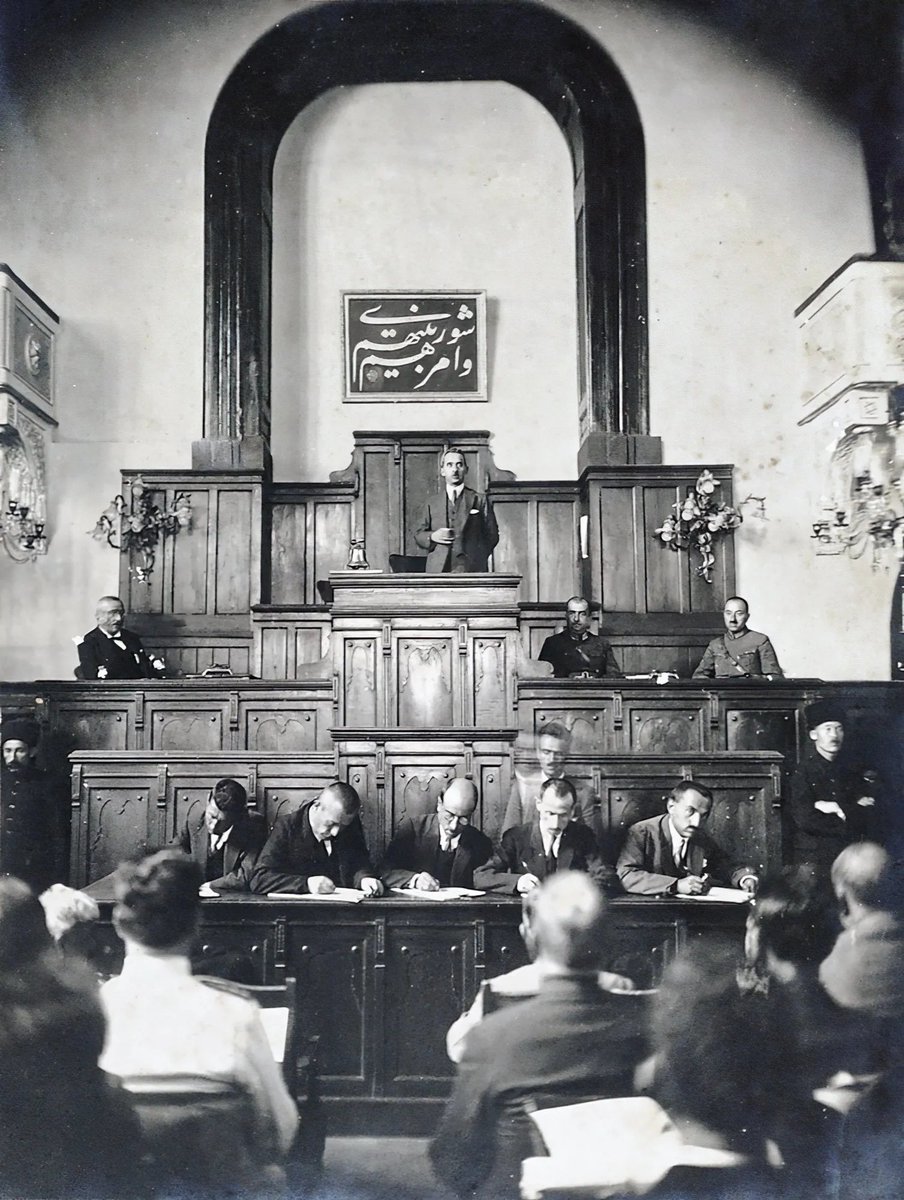
TBMM ilk açıldığı gün Meclis’in kürsü arkasındaki duvarına Şûrâ suresinin 38. ayetinde geçen ve “İşlerini istişare ile yürütürler” anlamına gelen “Ve emruhum şûrâ beynehüm” kelâmı işli bir hat tablosu asılmıştır.