Advancing precision medicine through translational research, AI, and scientific collaboration to bring new hope to patients with cancer and neurological disease
Advancing Science. Sharing Stories. Building Hope.
Our November newsletter highlights cancer research, scientific collaboration, CureTalks, and the people driving progress.
Stay informed. Subscribe to CureScience today!
https://t.co/M4hj4UOlk1
#CureScience#CancerResearch
“I would have never told her to come clean my place.”
In CureTalks Ep. 2, Part 3, Janice Armbrust shares why a specific offer of help mattered.
#CancerSupport#CureTalks
Subscribe to CureTalks by CureScience on YouTube: https://t.co/DIP2aT0WCU
Some of the most important voices in cancer research are those who have lived through the disease. GBM survivor and Greg’s Mission founder Greg Cantwell brings that perspective to @CureScience as an Advisor—helping keep patients and families at the center of the work.
Building CureScience for the long term takes strong leadership.
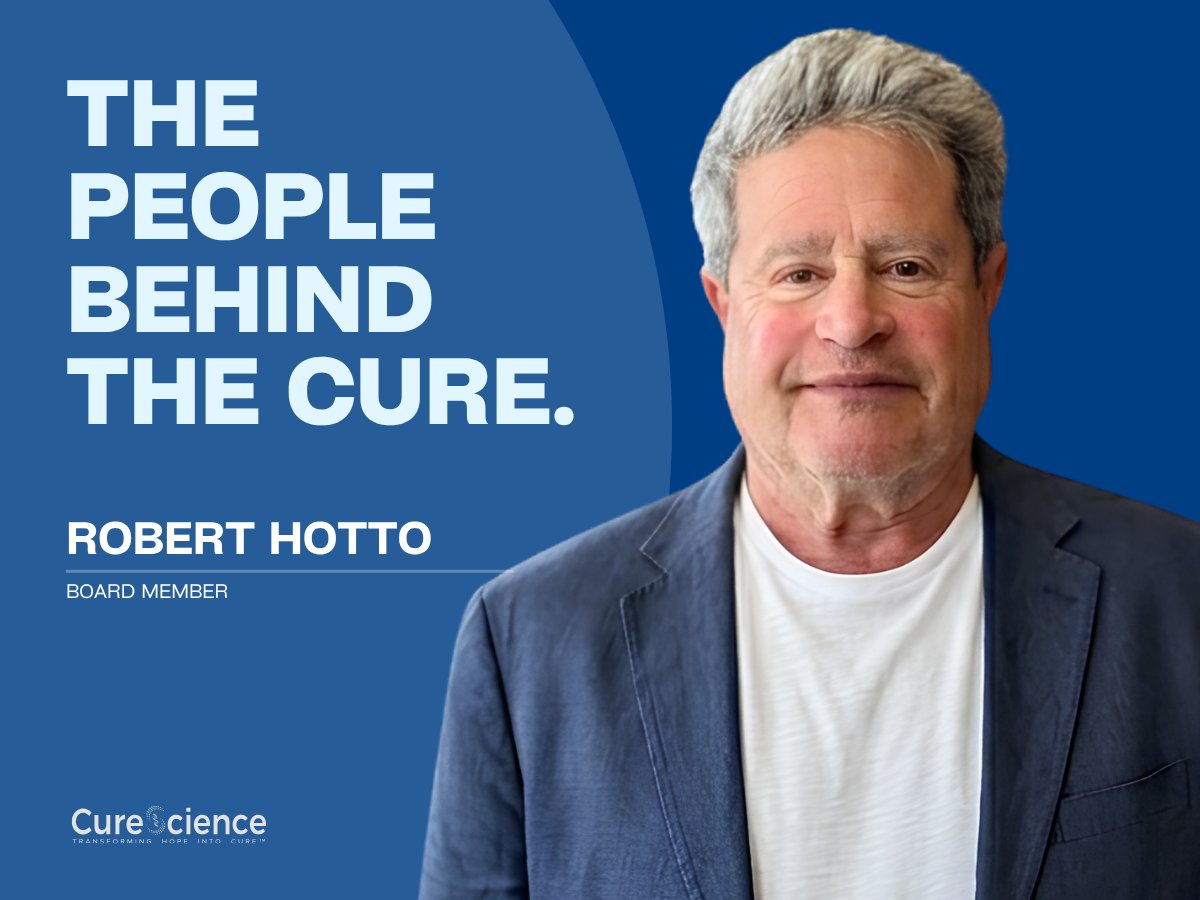
Robert Hotto serves on our Board of Directors, helping guide responsible growth, strong partnerships, and our continued work in translational research and precision medicine. We’re grateful for his commitment.
Precision oncology starts with the individual patient.
At CureScience, we combine genomic and molecular data, bioinformatics, AI, and research to better understand each cancer and help inform personalized treatment strategies.
#PrecisionOncology#CureScience#CancerResearch
Rare cancers can mean less data, fewer trials, and fewer treatment options—but every patient’s cancer still has a biology worth understanding.
At CureScience, we use translational research, AI, bioinformatics, and immunology to help uncover new possibilities.
#RareCancerDay
Dr. Linda Strause brings 35+ years of clinical development experience in oncology, along with a deeply personal connection to GBM as a caregiver to her husband. That perspective helps strengthen CureScience’s focus on patients, families, and research. #CureScience#GBM
Michael J. Fox’s Emmy recognition was a powerful reminder of what focused research can achieve.
At #CureScience, that same determination drives our work in precision oncology and personalized medicine.
https://t.co/OmuYS8YLc2
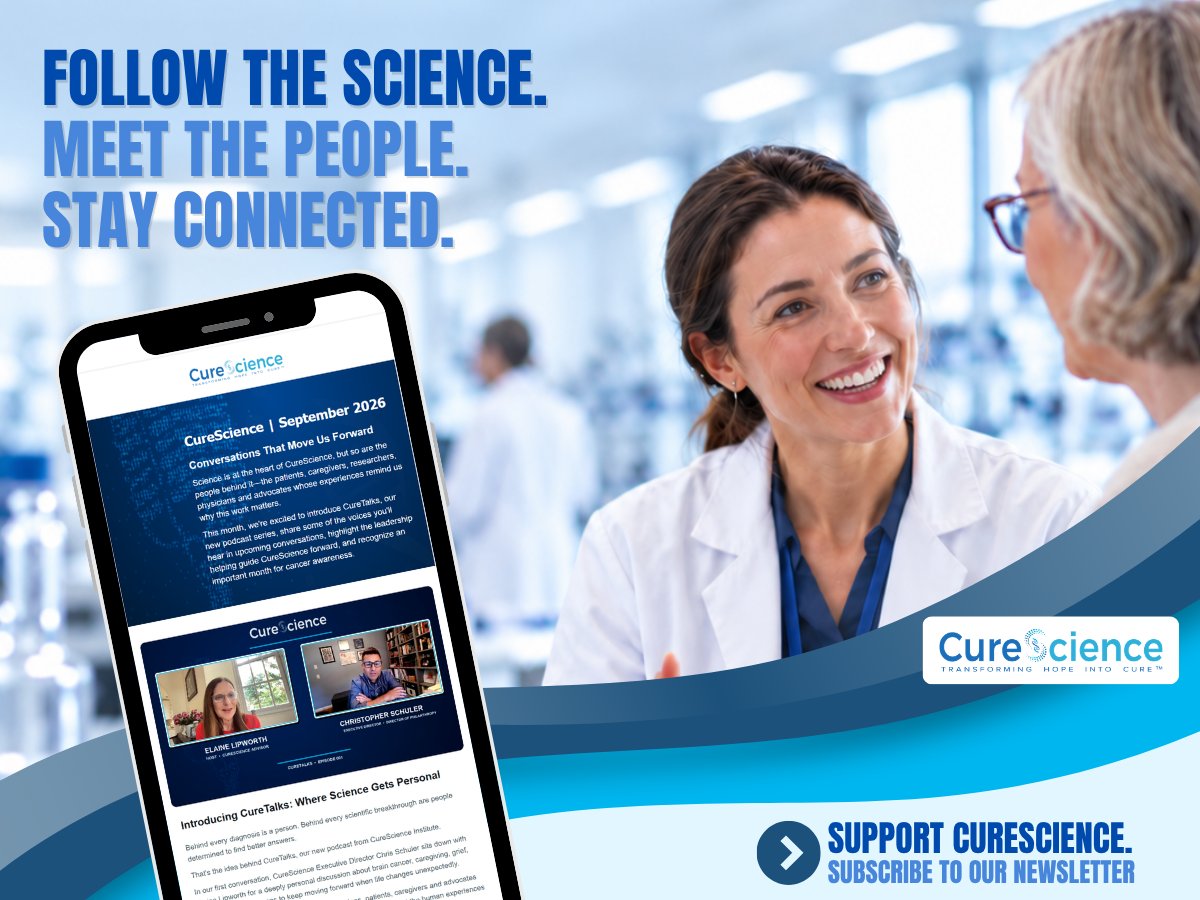
Stay connected to the science—and the people behind it.
The CureScience newsletter brings you research updates, patient and caregiver stories, CureTalks conversations, and new developments in precision medicine.
Sign up: https://t.co/0VsCZBl1nR
#CureScience
The @CureScience team is together today in San Diego—bringing scientists, clinicians, bioinformatics and AI experts, staff, Board members and advisors talk about what’s next.
Collaboration is how we move promising science closer to patients.
#CureScience#CancerResearch
Find Joy. Don’t Forget You’re Alive.
Chris Schuler reminds families facing illness to make room for joy and stay present, even inside grief.
Watch CureTalks: https://t.co/DIP2aT0WCU
#CureTalks#CureScience
Why This Work Is Personal
When a mission becomes personal, it carries a different kind of urgency. Elaine Lipworth shares the story behind her connection to CureScience and why CureTalks begins with lived experiences and hope. Learn more at our YouTube channel. @CureScience
Cancer research creates enormous amounts of data. Dr. Igor Tsigelny’s expertise in computational biology, bioinformatics, molecular modeling, and drug discovery helps CureScience better understand disease biology and explore new therapeutic possibilities. #CureScience
Fifteen years after a brain cancer diagnosis, Brett Oubre’s story is a powerful reminder of why hope and continued research matter.
Watch Brett’s story:
https://t.co/8q7s68HxJh
#Glioblastoma#GBM#BrainCancer#CureScience
Fifteen years after a glioblastoma diagnosis, Brett Oubre’s story is a powerful reminder of why hope and continued research matter. Watch Brett’s story:
https://t.co/uUidESY4l9
#Glioblastoma#GBM#BrainCancer#CureScience
My cancer case is n=1. I'm not holding it up as a model, because most of what I did is not specifically replicable or scaleable. But it is a proof of concept that fully personalized medicine, built around one patient's own biology, is viable in ways it simply wasn't a few years ago. I have lived a version of the future of cancer care that I think is worth aspiring to more broadly.
Many of the tools that made this future possible for me are getting better, faster, cheaper, and more accessible every year. I think what we need next is the infrastructure to deploy these tools, and the community willing to build this infrastructure, one patient at a time.
I want to help that future arrive faster. I wrote an article in The Cancer Letter https://t.co/ejel0unTvr for the physicians and researchers closest to the patients who could benefit most from this approach, who also believe in this future. If you are working towards building the systems and practices that will make personalized medicine operationally real, we want to collaborate with you too.
@CureScience Institute is honored to have Dr. Sheldon Jordan as an Advisor. With 40+ years in neurology, neuroimaging, regenerative medicine, and brain health, his insight helps guide our work in translational research precision medicine. #CureScience#BrainHealth
More cancer data only helps if we can put it to use.
At @CureScience, we're working to turn genomic and molecular data into actionable insights for individual patients.
For our Executive Director, Chris Schuler, that mission is personal. 👇
#PrecisionOncology#CureScience
Scientific progress often starts with a conversation. CureScience recently hosted a discussion on hydralazine, drug repurposing, proteomics and bioinformatics, bringing scientists and collaborators together to exchange ideas that may help advance patient care. #CureScience