Breaking 🚨 Iran has raided the home of the most senior and powerful Mossad agent in Tehran. the footage clearly shows that the largest amount of dollars was recovered from his residence. Don't remove my video X Twitter
Z.P.G. ZERO POPULATION GROWTH (1972): Directed by Michael Campus and starring Ollie Reed, this dystopian sci-fi depicts a world so overpopulated that the act of giving birth is punishable by death. Real children have been replaced by these horrors...
Favorite books in the order of how many times I've re-read them. Some moments I like:
Maria Wyeth cracking a hardboiled egg on her steering wheel on the highway,
PKD raving about Trader Joes wine,
Too many carrots in iDeath,
Burgess predicting DC cannabis laws,
Cendrars predicting the pandemic,
Flannery O'Connor predicting Moral Orel,
Burroughs Jr amusing himself in prison,
Pynchon making fun of the Beatles,
Klaus Kinski's little house in Marin County
🚨UNIPHICS🚨: Quantum entanglement isn’t spooky action — it’s synchronized waves staying in phase across distance 🧨
Physicists have long described quantum entanglement and tunneling as mysterious or purely probabilistic phenomena that seem to defy everyday intuition, with no clear physical picture of how correlations persist or how particles can “borrow” energy to pass through barriers.
Uniphics provides a direct, physical account based on spin waves in the ξM-field. An electron is not a point particle surrounded by virtual photons but a Gyrotron whose spin quanta generate coherent spin waves that propagate through the unbound energy sea. Quantum tunneling occurs when these spin waves briefly extend into a classically forbidden region, effectively borrowing energy from the field for a short time before the wave collapses back — exactly as a water wave can momentarily crest over a low barrier. The probability is modulated by local time flow, which stretches or compresses the effective duration the wave can persist. Entanglement arises when two electrons’ spin waves remain phase-locked even after the particles separate. Their correlations are not abstract probabilities but synchronized oscillations in the ξM-field that continue to influence each other’s measurement outcomes. The Bell parameter S emerges naturally from the overlap of these spin waves, and time flow between source and observer slightly adjusts the observed value, producing the precise experimental results (including small predictable skews) without invoking non-locality as a fundamental mystery. Negentropy favors the maintenance of these coherent patterns because they represent lower-energy, organized states within the field.
This replaces the Standard Model’s virtual-particle bookkeeping and purely probabilistic interpretation with a concrete wave picture in which both tunneling and entanglement are ordinary consequences of spin-wave dynamics.
How might treating entanglement as persistent spin-wave phase-locking and tunneling as brief energy borrowing from the field change the way we design quantum sensors or interpret future entanglement experiments over long distances?
A Theory of Everything should be able to answer everything.
Uniphics Explained Simply PDF: https://t.co/4avUqgeZjN
Chapters 1–10 free: https://t.co/Yj07QnrM9p
Grokipedia https://t.co/QP4L8WuZpu
#Uniphics #QuantumEntanglement #SpinWaves #Tunneling #QuantumMechanics @grok @xAIMemphis
This guy showed how his brother makes $18,400 a month using just a Mac Studio and a $20 Claude subscription. He doesn't have a powerhouse dev team. No VC funding. No computer science degree.
He built a "micro-SaaS factory" powered by multiple collaborating AI agents → a system his 10-year-old blogger brother calls “lobster farming.”
The system works like this:
1 business hypothesis → Cursor Next.js initialization → Claude writes a B2B copywriting engine → Vercel deploys a live link → Guerrilla DMs automatically convert Shopify sellers while he sleeps.
3 recurring revenue streams from a weekend project:
> $29/month Starter plan
> $79/month Pro plan
> $149/month Unlimited package
> Paid directly via Stripe
> Total build time: 48 hours
He just feeds the AI a hypothesis. Everything else → from the first line of code to the final integration into the Shopify App Store → is handled by tokens. As one 10-year-old school kid put it perfectly: Tokens are the hard currency of the AI era.
Why were we never taught about portals? 🌀
Einstein’s wormholes are real math. Ancients described stargates everywhere. 👁️⚡️
Schools stayed silent. 🤫
Why?
🔻 DISNEY WORLD HAS 47 MILES OF TUNNELS. THEY WEREN'T BUILT FOR EMPLOYEES.
Every Disney fan knows about the "utilidors" — the underground tunnels beneath Magic Kingdom that cast members use to move between lands without breaking the illusion. Disney admitted to those in 1971. 9 acres of underground corridors. Logistics. Trash removal. Costume changes.
That's the story. That's what the tours show. That's what the documentaries cover.
But a former Imagineer — 31 years with the company, Level 7 security clearance that Disney publicly denies exists — filed a 189-page affidavit with the military tribunal last week. The affidavit describes a second tunnel system. Below the utilidors. Deeper. Older. Not built in 1971.
Built in 1966. The year Walt Disney died. The year the Florida property was still being secretly acquired through shell companies. A year before any construction permit was publicly filed.
They built the deep tunnels first. Then they built a theme park on top to explain the construction activity.
⟁
The second system spans 47 miles. Not 9 acres — 47 miles. Connecting all four Disney World parks, both water parks, Disney Springs, and 14 resort hotels. With branches extending beyond Disney property to three locations that are not owned by the Walt Disney Company.
The Imagineer's affidavit identifies those three locations by coordinates. All three are within 20 miles of Disney World. All three are properties owned by trusts that trace back to names in the Epstein files.
The tunnels connecting Disney to those properties have vehicle access. Full-size vehicles. The Imagineer personally witnessed transport vans — unmarked, windowless — entering the deep system from a concealed ramp behind a maintenance building near Animal Kingdom.
In 31 years, he never saw those vans return empty.
⟁
The affidavit describes what he calls "Club 33 Underground" — not the exclusive restaurant in Disneyland, but a reference to a private level of access that only 33 individuals worldwide possessed. Access to rooms in the deep system that no cast member, no executive below C-suite, and no Imagineer below Level 7 knew existed.
The rooms were serviced by a staff that entered and exited through the external tunnel connections. Staff that were never on Disney's payroll. Staff that wore no name tags. Staff that the Imagineer saw exactly once — when he made a wrong turn in 2003 and found himself in a corridor that wasn't on his clearance map.
He was transferred to a different division the next day. His access was reduced. His NDA was upgraded to one with criminal penalties. He was told: "You saw a storage area. There is nothing else to discuss."
A storage area doesn't require an NDA with criminal penalties.
⟁
The military operation at Disney World began 6 weeks ago. Disguised as "infrastructure upgrades." The park's overnight closure schedule increased from 2 nights per month to 4 nights per week. Construction barriers appeared around 7 locations that have no visible construction.
The barriers aren't hiding construction. They're hiding access points.
47 miles of tunnels. 31 years of silence. 189 pages of testimony. And a military team that is now mapping every inch of what lies beneath the happiest place on Earth.
The Imagineer's final line in the affidavit: "I built rides that made children laugh above ground. I cannot live with what I suspect happened below it."
CODE: DISNEY-47 / DEEP-SYSTEM / CLUB-33-UNDER / EXTRACTION-ONGOING
The magic was above. The horror was below. The military is in both now.
♟
28 million children visit Disney World every year. Share this for every single one of them.
Mr Pool
This is WILD!
MIT just solved one of the hardest unsolved problems in robotics (Save this).
For decades, the fundamental problem with soft robots and wearable exoskeletons has not been compute or AI, it has been actuation.
The moment you try to give a soft robot meaningful strength, you run into the same wall every engineer has hit since the field began, fluid-driven systems require external pumps, hydraulic reservoirs, and heavy infrastructure that makes the entire thing impractical to wear or embed into fabric.
MIT's new Electrofluidic Fiber Muscles solve that problem by eliminating external infrastructure entirely.
The key insight is electrohydrodynamic pumping using electric fields to generate pressure directly from electricity, with no moving parts, no motors, and no external fluid reservoir.
The fibers are less than 2 millimeters thick, can be woven into fabric like ordinary textile, and operate in complete silence because nothing physically moves inside them, it is just ions propelling fluid through a closed circuit.
The performance numbers published in Science Robotics are not conceptual, they are empirical results from actual hardware.
These fibers achieve a power density of 50 watts per kilogram, matching skeletal muscle, with a contraction strain of 20% and a response time of 0.3 seconds.
A single bundled configuration lifted 4 kilograms, 200 times its own weight while a separate configuration drove a robotic arm through a 40-degree bend compliant enough to safely complete a human handshake.
Another configuration launched objects in under 100 milliseconds, which is faster than a human flinch reflex.
The design mirrors biological muscle architecture in a way that prior artificial muscle approaches never achieved.
The fibers are organized into antagonistic pairs, one contracts while the other extends, exactly like biceps and triceps and because the system runs in a closed loop, the relaxing fiber serves as the fluid reservoir for the contracting one, which is what allows the whole system to operate untethered with no external tank.
The applications are not hypothetical but rather are the exact use cases the industry has been waiting years for the hardware to catch up to.
Exoskeletons for physical labor, prosthetic limbs that move with the natural compliance of biological tissue, assistive garments for patients with motor disorders, and soft robots capable of safe physical contact with humans are all immediately unlocked by a muscle technology that is silent, lightweight, and weavable into clothing.
The deeper significance is what this technology does when it meets the AI robotics wave that is already underway.
Every major humanoid robot program, Figure, 1X, Boston Dynamics, Tesla Optimus is currently bottlenecked by the same hardware limitations these fibers address, actuators that are too rigid, too loud, too heavy, or too dependent on infrastructure to operate naturally alongside humans.
Electrofluidic fiber muscles do not just solve a materials science problem but rather they remove one of the last physical barriers between robots that live in labs and robots that live in the world.
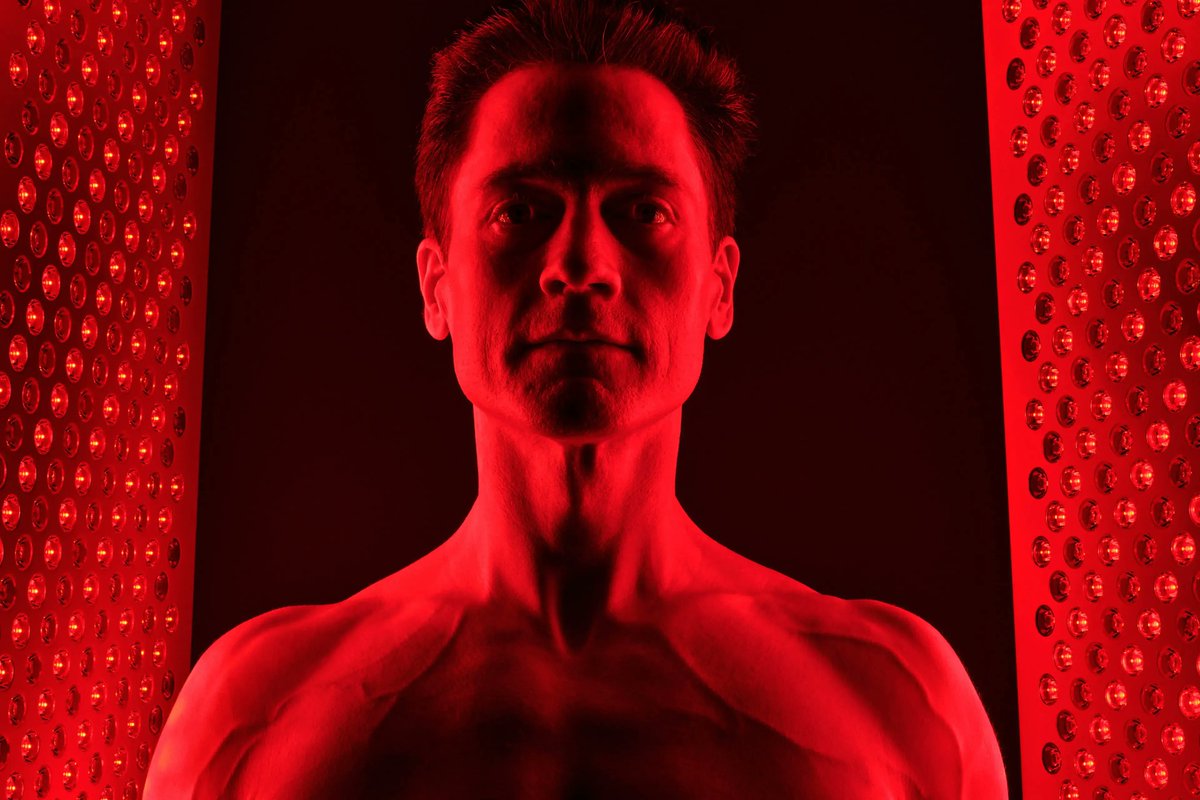
A Russian biophysicist spent 30 years proving that shining red light on a cell could double its energy, and almost nobody believed her until a tech billionaire named Bryan Johnson made her work the most searched biohack on the internet.
Her name was Tiina Karu.
She worked in a Moscow lab through the 1980s and 1990s, and the discovery she defended for decades sat in journals nobody read while the rest of medicine ignored her.
The whole thing started by accident.
In 1967, a Hungarian doctor named Endre Mester was trying to use a new device called a laser to burn tumors out of mice. His laser was broken. It did not have enough power to burn anything. He used it anyway. The mice grew their hair back faster than the control group. Their wounds healed faster too. He had no idea why.
Tiina Karu picked up his work and asked the question that mattered. Why does this happen.
She ran experiments for 20 years. Different wavelengths. Different doses. Measuring what happens inside the cell when red light hits it. The answer she landed on was almost too specific to be true.
The thing in your body that responds to red light is one enzyme. Cytochrome c oxidase. It sits inside your mitochondria.
Mitochondria are the part of your cell that makes energy. They take oxygen and food and turn it into a molecule called ATP, which is the fuel your cells run on. Your body makes 40 to 70 kilograms of ATP every single day just to keep you alive. If your mitochondria slow down, you age faster, heal slower, lose hair, lose muscle, and get inflamed easier.
Cytochrome c oxidase does most of the work. It contains copper and iron atoms. Those atoms happen to absorb light at very specific colors. Red light at 630 to 670 nanometers. Near-infrared light at 810 to 850 nanometers.
Other colors do almost nothing. Blue does not work. Green does not work. The biology is locked to those two windows because that is what the metal inside the enzyme can physically catch.
When a red photon hits that enzyme, three things happen.
The enzyme runs faster. ATP production jumps 30 to 40% within minutes.
Nitric oxide gets released. Blood vessels widen. More oxygen and nutrients flow in.
A small stress signal goes off inside the cell that tells it to repair itself. The same signal it gets after exercise.
Red light is not adding anything to the cell. It is just unlocking work the cell was already trying to do.
For 30 years almost nobody outside her field cared. Red light therapy lived inside dental clinics for mouth ulcers and physical therapy offices for tendonitis. Medical schools did not teach it. The science sat in obscure journals.
Then the evidence started piling up.
A 2024 review of 18 trials confirmed red light speeds up wound healing.
Another 2024 review found it lowered inflammation markers by 38% over 4 weeks.
Athletes using red light before training had 45% less muscle soreness the next day.
Seven separate trials on hair loss showed visible regrowth in every single one.
A 2024 study found 15 minutes of red light before a meal cut blood sugar spikes by 27.7%.
In March 2026, Nature published a 4,000 word feature on red light therapy. The most respected scientific journal on Earth officially admitted there was real biology under the hype. That was the moment the field crossed from fringe to mainstream.
Bryan Johnson is the reason the average person now knows any of this exists. He uses a red light cap on his scalp for 6 minutes daily and a full-body panel three times a week. He posted his hair regrowth photos and his skin scans, and the algorithm did the rest. Red light masks went from biohacker forums to Sephora shelves in two years.
Tiina Karu died in 2019. She did not live to see Nature validate her. She did not live to see a billionaire turn the enzyme she identified into a billion dollar industry.
Every red light mask, panel, cap, and bed on the planet right now is just a way to deliver the photons she proved mattered.
The wavelengths were always there. The enzyme was always there. The biology was always real.
It just took a Hungarian doctor with a broken laser, a Russian scientist nobody listened to, and one tech billionaire willing to stand in front of a glowing panel for the world to finally pay attention.
Hoy una industria entera dejó de tener sentido.
Un tío publicó en GitHub un repo que convierte cualquier foto en un mundo 3D explorable: meshes con físicas, splat del fondo, audio ambiente. Todo.
Una imagen entra. Un mundo sale. Cinco minutos.
La gente que se pasó diez años aprendiendo Blender lleva todo el día mirando esto en silencio.
Se llama image-blaster.
They literally 3D-printed an eyeball. And the blind guy can see again.
Not a chip. Not a sensor. A full living human eye — retina, cornea, lens, optic nerve — built layer by layer in a printer.
Bioengineers at KAIST in South Korea pulled it off.
The whole thing took 6 hours to print. Living retinal cells stacked in precise layers with their own blood vessels. A hydrogel lens that auto-focuses.
Biocompatible polymers shaping the white of the eye. And an optic nerve scaffold designed to guide fresh nerve growth straight to the brain.
Then they put it inside a 31-year-old man who lost his sight 7 years ago in an industrial accident.
Three weeks later, his brain started decoding the signals.
He's now seeing at 20/60. Reading. Recognising faces. Naming colours.
This is the first time a complex organ made of multiple tissue types has been printed AND successfully wired into the human nervous system.
Science fiction quietly clocked out. Science just clocked in.
A MIT professor gave a 1-hour lecture in 2019 that has 18 million views.
He died 5 months after recording it.
It was his final gift to the world.
Patrick Winston taught at MIT for 50 years. The smartest engineers on earth sat in his classroom. And he spent his last lecture teaching them the one skill their degrees never covered.
How to speak.
15 lessons that will change how you communicate forever:
1. Never open with a joke. Your audience is not ready to laugh yet. Open with a promise of what they'll know by the end.
2. Your ideas are like your children. You're too close to them. What's obvious to you is invisible to everyone else. Explain the obvious.
3. The 5-minute rule. The first 5 minutes of any talk decide whether people listen for the next 55. Spend more time on your opening than anything else.
4. Repeat your most important idea 3 times in 3 different ways. Once is never enough.
5. Build a fence around your idea. Tell people what it is NOT before you tell them what it IS.
6. Verbal punctuation. Pause. Let the idea land before moving to the next one.
7. Ask questions nobody will answer. Then wait 7 seconds. The silence isn't awkward. It's processing.
8. Never read your slides. Your audience can read. They can't listen and read simultaneously.
9. Use the board not the slides. Writing forces you to slow down. Slowing down forces clarity.
10. Inspire before you inform. Nobody learns from someone they're not inspired by.
11. End with a contribution not a summary. Tell them what you gave them. Not what you said.
12. Never say thank you at the end. It's weak. End with something that lands.
13. Stories make ideas stick. Data makes ideas understood. You need both. In that order.
14. The quality of your communication determines the quality of your ideas in the eyes of the world. Not the ideas themselves.
15. Practice is not preparation. Practice IS the skill.
Patrick Winston understood something most people spend their entire careers missing.
Your ideas are only as powerful as your ability to transfer them into someone else's mind.
You can be the smartest person in the room and be completely invisible.
Or you can master communication and make average ideas feel like breakthroughs.
He chose to spend his last lecture teaching this.
Watch it tonight. Bookmark this first.
Follow @codewithimanshu for more lessons from the people who built the future.