🚨HOLY CRAP!!!!
An 18-wheeler out here in Western North Carolina just got stuck in the snow...
...and of course three good-ol'-boys show up with their trucks and haul him to safety
I LOVE THIS!!!!!!!
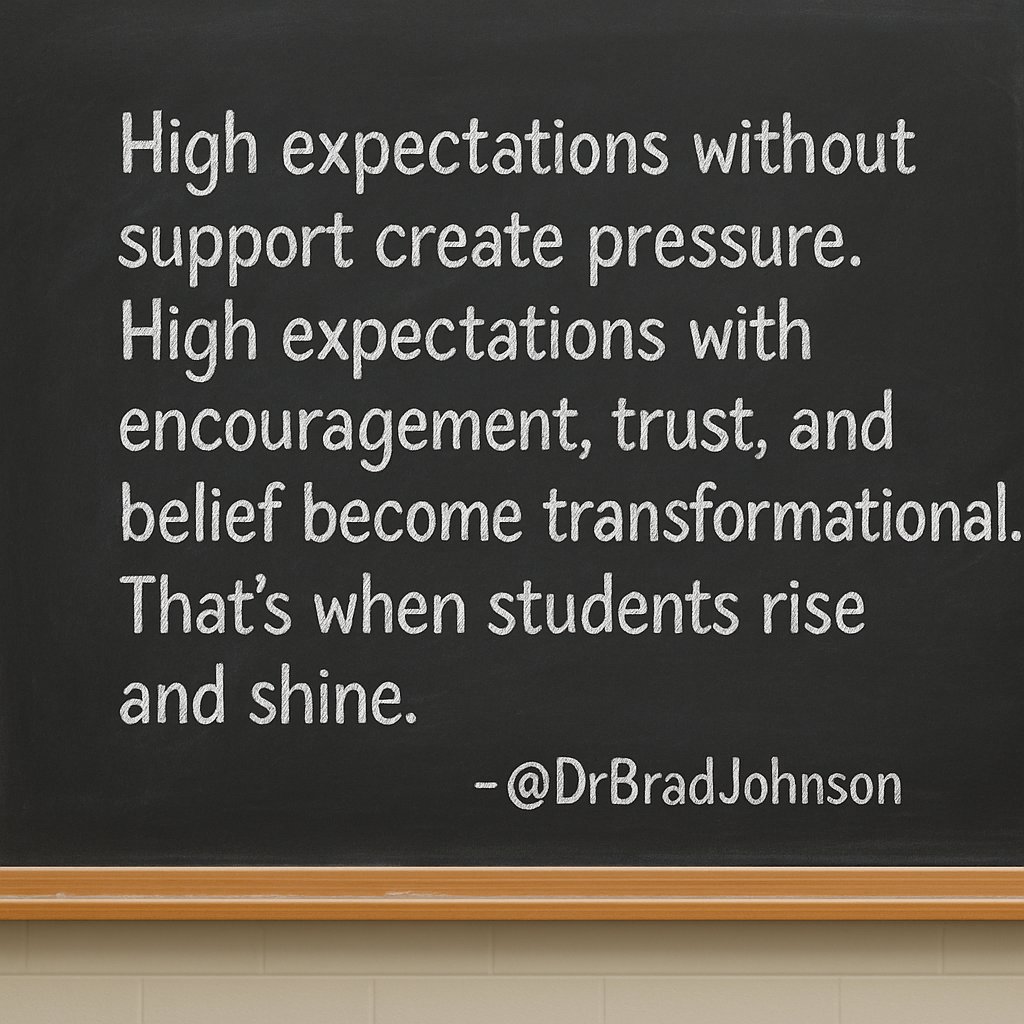
EVERY student, staff, and admin needs support and encouragement, even the ones that seem to have it all together. Because we all need to know we have someone on our side when the tough days come.
‼️Every coach and leader should listen to this.
📢The success Indiana has achieved has not been an accident.
💪This is a 45 second synopsis of how you become elite.
School taught us that C is average.
Straight A’s mean you’ll be successful in life.
Not necessarily.
Some of the most prepared people for adulthood were C students.
Not lazy.
Not incapable.
Just navigating a system that rewarded compliance more than capability.
Grades are great at measuring one thing:
How well you do school.
They are terrible at predicting:
Who can adapt
Who can recover
Who can communicate
Who can lead when there’s no rubric
C students learn those skills early—because they have to.
They fail sooner.
They adjust sooner.
They stop waiting to be told what “good” looks like.
Psychologists call it desirable difficulty.
Life calls it preparation.
And before someone says it, yes, many A students are wildly successful.
This isn’t A vs. C.
It’s a metrics problem.
Grades correlate with success in structured systems.
They don’t cause success in an unstructured world.
Some A students succeed because they also have:
resilience
relational intelligence
risk tolerance
adaptability
Those traits, not grades, help them succeed.
And many C students excel because they’ve been practicing those skills their whole lives.
In fact, two of the most successful investors on Shark Tank—a show built entirely around real-world success—were not top students.
Daymond John was an average student and dyslexic.
He didn’t do great in school.
He did great with people, timing, and opportunity.
Barbara Corcoran was a straight-D student and dyslexic.
School didn’t play to her strengths.
Failure didn’t break her.
It built confidence, persuasion, and grit.
None of them lacked intelligence.
They lacked alignment.
This isn’t anti-school.
And it’s not anti-achievement.
Because life doesn’t ask:
What was your GPA?
It asks:
Can you adapt?
Can you communicate?
Can you recover when things don’t go as planned?
Can you lead without being handed the answers?
A lot of C students already can.
And that might be the most underrated preparation of all.
It’s not over when it looks dark. The valley has a comma, not a period. Surely goodness and mercy shall follow you.
Full message: https://t.co/4MOR5Uv0gF
We always had SEL, we just didn’t teach it in worksheets.
We lived it on the playground.
And research backs it up — kids learn empathy, resilience, and self-control through play and real interaction, not packets and prompts.
No worksheet ever taught what a game of tag or a playground argument could.
Classes like art, music, and PE aren’t extras — they’re essentials.
For some students, they’re the reason they come to school.
Let’s start valuing them that way.
Book Giveaway! To celebrate #Room212 being a #1 new release for two straight weeks, lets give away 2 books! Just retweet for a chance to win! and dont forget to leave a review if it inspires you! Winners announced Monday night! https://t.co/hkA90rLIen
The ultimate ball don’t lie moment -
Since this Clemson fumble was called back…
They’ve won 0 playoffs game
Made just 2 of the last 5 playoffs
Now Heading for their third loss before October
“Behold, I am doing a new thing; now it springs forth, do you not perceive it? I will make a way in the wilderness and rivers in the desert.” Isaiah 43:19
If every child came ready to be taught, teaching would be easy. But some need food. Some need supplies. Some need love. Some need nurturing. Some need patience and some to be seen. Teachers meet them where they are as they enter their classroom, and that is most honorable.
Our students need more recess, unstructured play, Physical Education, all the Arts, and extracurricular activities! That's how they learn to regulate emotions and interact with each other more positively.