What if you could think like a hacker… and stop one?
Cybersecurity isn’t just another tech skill, it’s the line between being exposed and being protected.
At Cyber Defense Academy, you’ll learn how to defend systems, detect threats, and respond to real-world attacks using practical tools.
You’ll gain hands-on experience in:
• Ethical Hacking
• Web Security
• Cryptography
• Incident Response
• Blue Team Defense
We’re offering 30% off for the first 50 people on our waitlist.
If you’ve been looking for a way into tech that actually matters, this is it.
👉 Join the waitlist: https://t.co/QyoHfqgZna
Hackers don't always attack you directly.
Sometimes they target a trusted vendor, software provider, or update to reach thousands of victims at once.
That's called a supply chain attack.
One weak link can compromise an entire network.
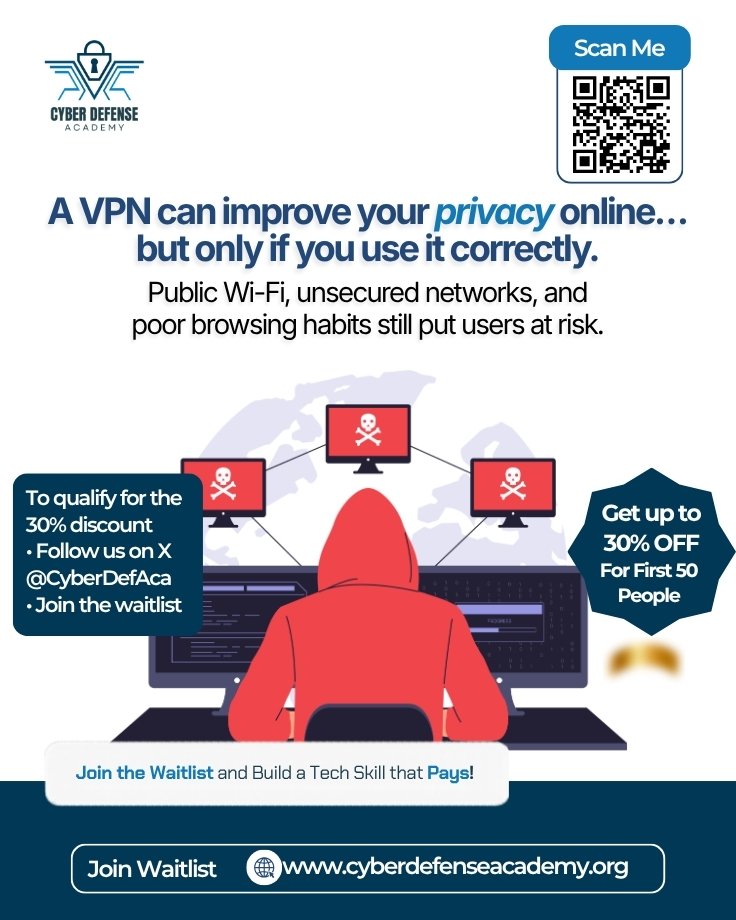
A VPN helps protect your privacy.
It does not make you invisible online.
Stay safer:
• Use a trusted VPN.
• Avoid free VPN apps.
• Enable MFA.
• Browse carefully.
Security is a habit, not a tool.
https://t.co/0AVaMJLcq1
30% off for the first 50 people.
Your identity is one of your most valuable digital assets.
Once compromised, attackers can access accounts, steal data, and impersonate you online.
Here’s how to protect yourself:
5. Avoid suspicious links and login pages
Fake websites are designed to steal credentials.
Good identity security isn’t complicated.
It’s consistent habits repeated over time.
When a security breach happens, the first response matters most.
Here are critical steps organizations should take within the first 60 minutes:
• Identify the affected systems
• Contain the threat quickly
• Disconnect compromised devices if necessary
• Preserve logs and evidence
• Notify the security team immediately
• Begin assessing the impact
Delayed response can turn a small incident into a major crisis.
Cybersecurity isn’t just prevention.
It’s also preparation and response.
Learn real-world cybersecurity skills:
https://t.co/QyoHfqgZna
30% off for the first 50 people.
Deepfakes are no longer just internet experiments.
AI can now generate realistic videos, voices, and images that imitate real people.
Here are a few signs content may be AI-generated:
• Unnatural facial movements
• Lip-sync delays
• Robotic or emotionless voice patterns
• Strange lighting or distorted details
• Suspicious or emotionally manipulative messaging
Before you believe or share content online, pause and verify.
In the age of AI, misinformation spreads faster than ever.
Learn how to stay secure in a digital world:
https://t.co/QyoHfqgZna
30% off for the first 50 people.
Cloud security isn’t just about storing data online.
It’s about configuring access properly.
Here are 5 common cloud security mistakes that put organizations at risk:
• Publicly exposed storage
• Weak access controls
• Misconfigured permissions
• Lack of encryption
• Poor monitoring and logging
Most breaches don’t happen because attackers are unstoppable…
They happen because someone overlooked a simple security setting.
Learn how modern systems are secured:
https://t.co/QyoHfqgZna
30% off for the first 50 people.
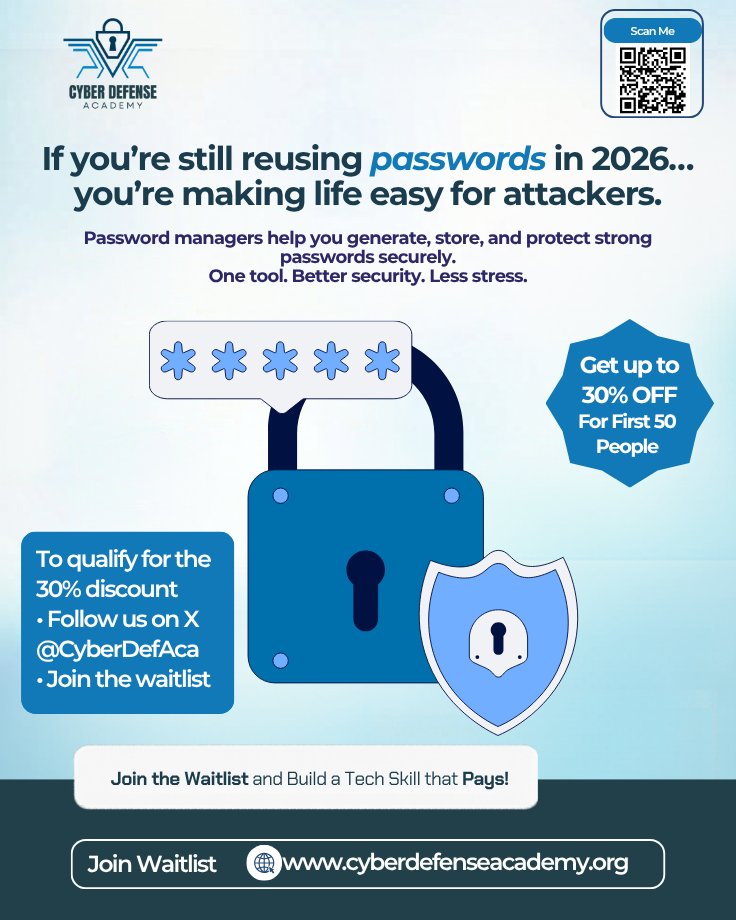
Most people use weak or repeated passwords because they’re easier to remember.
Attackers know that.
A password manager helps you:
• Create strong passwords
•Store them securely
•Avoid reusing the same password everywhere
•Reduce the risk of account compromise
Some popular options include:
• Bitwarden
• 1Password
• LastPass
Security starts with better password habits.
Learn how to protect your accounts properly:
https://t.co/QyoHfqgZna
30% off for the first 50 people.
Your phone holds your entire life.
Messages, banking apps, emails, passwords… everything.
Yet most people barely secure it.
Here are 7 simple ways to protect your phone:
1. Use a strong passcode or biometrics
2. Enable 2FA on your apps
3. Avoid public Wi-Fi for sensitive activities
4. Keep your software updated
5. Only download apps from trusted sources
6. Turn off Bluetooth when not in use
7. Lock your apps and sensitive data
It doesn’t take much to stay protected… just consistency.
Learn how to secure your digital life:
https://t.co/QyoHfqgZna
30% off for the first 50 people.
Trust is no longer a security strategy.
In today’s digital world, assuming anything is safe by default is how breaches happen.
Zero Trust flips the script:
Don’t trust. Always verify every user, every device, every access request.
Because one unchecked access point is all it takes.
Learn how to secure systems the modern way:
https://t.co/QyoHfqgZna
30% off for the first 50 people.
Cyber attacks are no longer just manual…
AI is now doing the work.
And it’s making scams faster, smarter, and harder to detect.
Here’s how attackers are using AI in 2026: