Cyberbit is proud to launch the Readiness Report 2026, the first SOC readiness baselines built on demonstrated performance, not course completion rates or self-assessment surveys.
Explore the key findings and download the full report here >> https://t.co/mRC94VGgsc
Courses, certificates, and training hours don't tell you whether your team is ready.
There is a moment in every incident between seeing the problem and acting on it.
We have been watching that moment closely and it's almost time to share our findings with the world.
How long does your SOC take to act after it spots an attack?
Most security leaders can tell you how many hours their team trained last quarter, but far fewer can answer this question.
We spent 18 months finding out the answer and soon we will share it with the world.
Trick or treat, SOC edition. 🎃
Welcome to this month's campaign, where we'll do things a little bit differently than usual!
Solve the Challenge with no hints, and you’ve earned the bragging rights!
Read more here >>
https://t.co/PrOpeuu3So
October is the season for things that hide in the dark, and this month’s OUT NOW release is full of them. 👻
See everything in this month’s release >>
https://t.co/6iMBhBxjQU
Security leaders know that attackers don’t always need a clever exploit.
Often they just need an opening left by a safeguard nobody kept up with.
Read more in the latest @Senior Executive feature >> https://t.co/UdrII71hvU
Too much U.S. cyber policy assumes harm is recoverable. A leaked identity isn’t a contaminated water supply.
Our CEO, David Etue, explains why, for lifeline infrastructure like water, healthcare, and energy, “availability” can’t just mean server uptime.
https://t.co/TAEhnFWz9t
Patching counts and closed alerts prove your team is busy.
They don’t prove your organization is any safer. To show risk is actually declining, you need metrics tied to exposure, not activity.
Read more here >> https://t.co/B3lpFa4SaJ
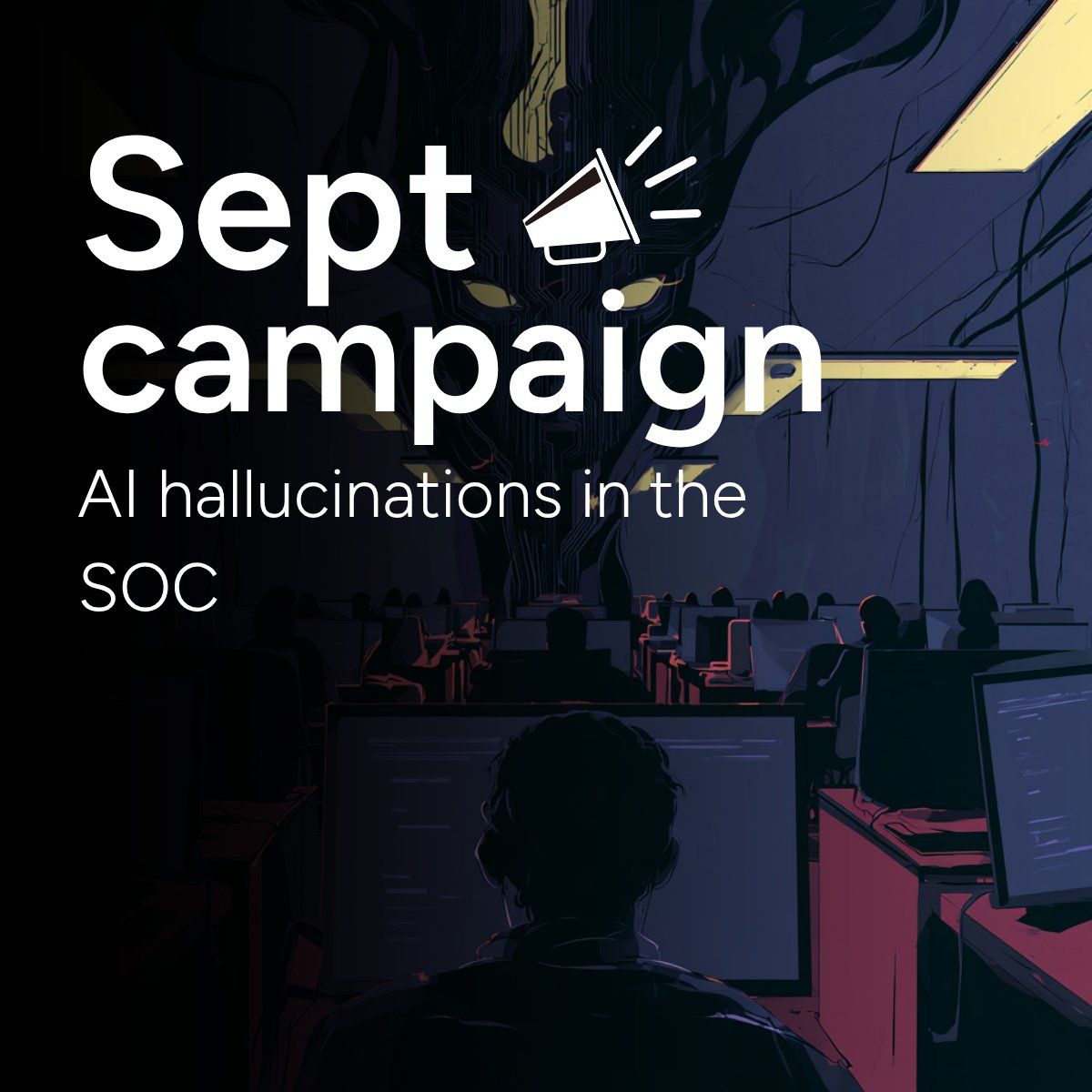
The SOC AI assistant is confidently wrong often enough to matter, and telling the difference is now part of the job.
It all comes down to the one simple rule to always treat AI output as a lead, not evidence.
Access this month's campaign here >> https://t.co/1gvsCgHUMJ
AI has become the SOC’s newest coworker.
And the throughline is the oldest rule in the SOC, now pointed at your own tools: verify before you act.
See everything that’s new in the latest OUT NOW release here >> https://t.co/ZNLBlhbbVO
Your board doesn't care if the team is trained. It wants to know if it's ready. Our CSO, David Etue, explains why security leaders should stop funding "training" and start funding readiness outcomes, in the Forbes Technology Council: https://t.co/RuqOgb2QB8
"Be secure" is a command. "Be trusted by our customers" is a mission.
And that's the point David Etue made in a new Forbes Technology Council Expert Panel on building security instincts beyond compliance.
Read the full panel on Forbes >> https://t.co/1YPuZubs91
"Hammers are good. Nails are good. You still need the construction worker."
That's Rebekah Skeete's, CEO of BlackGirlsHack, refreshingly practical answer when we asked her, how do SOC teams build readiness with AI taking over entry-level work?
https://t.co/B9gbDwdJv6
It would be naive of anyone these days to ignore the fact that most software is not written from scratch any more.
A typical install pulls in hundreds of open source packages, and every one runs with your privileges the moment it lands.
Learn more >> https://t.co/YbdwVZTvNu
This month's Cyberbit release comes down to one word: trust.
Attackers keep weaponizing the things security teams rely on without thinking twice.
Readiness starts with verifying what everyone else assumes is safe.
See everything that's new >> https://t.co/tSjP3VvzvU
The hardest part of building cyber readiness is rarely the technology but rather convincing everyone above you to fund it and everyone below you to use it.
Here are 6 tips that will get your readiness program approved and funded!
https://t.co/f8hi5PyebO
If your security program is built mostly around detection, it's always on borrowed time.
In this new Senior Executive feature, David Etue argues that detection is a mission-critical safety net, not the core strategy.
Read the full feature here >> https://t.co/5IHWLdabBy
When an incident hits, the first thing that breaks is rarely the playbook.
It's the assumption it was enough.
Our CEO, David Etue, explains why readiness lives in practiced coordination, not paperwork, in the Forbes Technology Council: https://t.co/0SOcFjrKbl
Attackers move across identities, endpoints, cloud, and networks. Siloed tools keep missing them.
Our CEO, David Etue, shares his thoughts on moving beyond detection-centric security to unified action, in Senior Executive: https://t.co/iGywiQHjPG
See how OpenAI’s o3 autonomously found a Linux kernel zero-day in ksmbd, and what AI-assisted CVE discovery means for red and blue teams in our latest campaign >> https://t.co/DlbVeKd9Ye