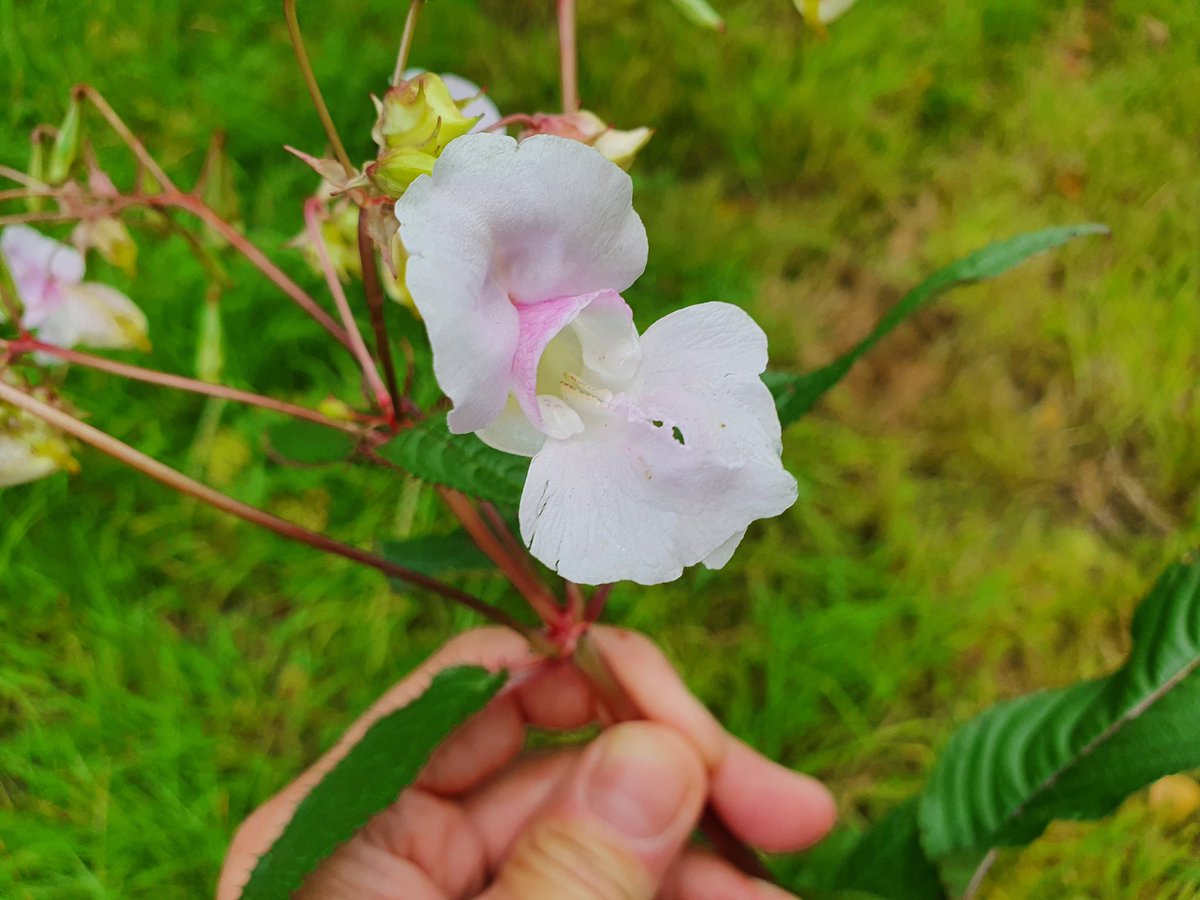
In a dense stand of homalayan Balsam we found a lot of fallen plants that looked to have been bitten or eaten. We wondered if this could be Muntjac and a possible approach for combating HB? Has this been noticed before @EssexWildlife? Bite marks too high for voles.
@EnidBarrie They are Enid but a) they are often hidden in dense nettles and b) we've pulled over 14,000 plants so far this Summer so some of them are quite large by the time we get to them.
We've been clearing Himalayan Balsam upstream of Cymbeline Meadow. If the seed pods burst, the river will carry the seeds into the park where they will quickly establish and proliferate - crowding out native vegetation which is more beneficial to native wildlife. #EssexWT
Otters like to leave their spraint (poo) in prominent places to mark their territory. This can call for a certain amount of agility. On top of the short wall at the end of the Farm Trail bridge has become a favoured place. #EssexWT#Otter
Regular visitors to the park may have noticed that trees have been felled, or storm damaged, and allowed to lie in the channel. This is deliberate as it creates a micro environment which can help biodiversity.
Reckon I caught these plants just before the seed pods ripened and released their seeds. Please don't try and remove them yourselves unless easily accessible. I got very muddy, stung all over and very nearly fell in the river. #EssexWildlife
I've said it before but please look out for these plants along any river and report to Essex Wildlife Trust. Look out for rhubarb-red stems, elongated and serrated leaves and pink orchid-like flowers. #EssexWildlife
@microbeEcology@EssexRiversHub Yes that's a good question Dave. I suspect the Trust would recommend burning them. I put them in a general waste wheelie bin or a litter bin in the hope that they will end up in an unsuitable environment to seed. My reasoning is that it's better than leaving them in situ.
Been over a month since I visited Cymbeline but straight into the action with 11 Himalayan Balsam plants needing to be removed. These are highly invasive plants. Never had more than two before. #EssexWildlife