the strongest way to evaluate a physical ai network is to inspect the evidence it produces.
that’s what makes the @vangrid_io explorer useful.
at https://t.co/Qizlj0W2NG, you can inspect captures anchored on base and see bounties that were accepted and settled in usdc through the protocol.
instead of treating the physical ai narrative as something you simply have to believe, the explorer gives the network an observable layer.
vangrid has been live on web and android since july 2026, with contributors collecting ground-level spatial data that can be reconstructed into 3d models.
the bigger idea is straightforward: if physical-world data is going to become infrastructure for ai and robotics, there needs to be a way to inspect where that data came from and verify its onchain record.
that’s the part of vangrid i find worth watching.
the part of @playonmint i keep coming back to isn’t just what happens during a session. it’s what those sessions can add up to over time.
there’s no public sale for $mntd. season 1 xp determines the first allocation, with leaderboard position influencing how much each participant receives.
the token also has a fixed 1 billion supply, with 30% allocated to community rewards. after tge, $mntd can be staked to build mint status.
so even a short session on https://t.co/PJGNCftLfX has another layer to it.
the result of today’s game is one thing. the activity you build before the snapshot is another.
that’s the reason i’m still playing instead of waiting for everything to be finalized.
your onchain history can be more useful than you think.
i was checking out @zerufinance again and noticed that you don’t necessarily have to build your profile from zero.
if you’ve already been active onchain, the wallets you connect carry a record of that activity. qualifying historical activity can contribute to metrics like zaps and zscore on zeru.
that makes the onboarding process pretty interesting.
instead of treating every new user as a blank address, zeru can look at what the wallet has actually done and use that history as part of the starting point.
i checked mine out of curiosity, and it’s a good reminder that transactions from months ago don’t necessarily become irrelevant just because they’re old.
your wallet history can still tell a story.
check yours here:
https://t.co/d53hbfKxcS
ufc markets are now live on @trylimitless, giving fans another way to engage with fight outcomes around ufc 332.
the interesting part is the market structure: users can trade against other participants without a traditional house edge, making the market itself central to the experience.
https://t.co/GrkJthaVyl
i’ve been treating @zerufinance zaps more like a scoring system worth studying than a number worth chasing.
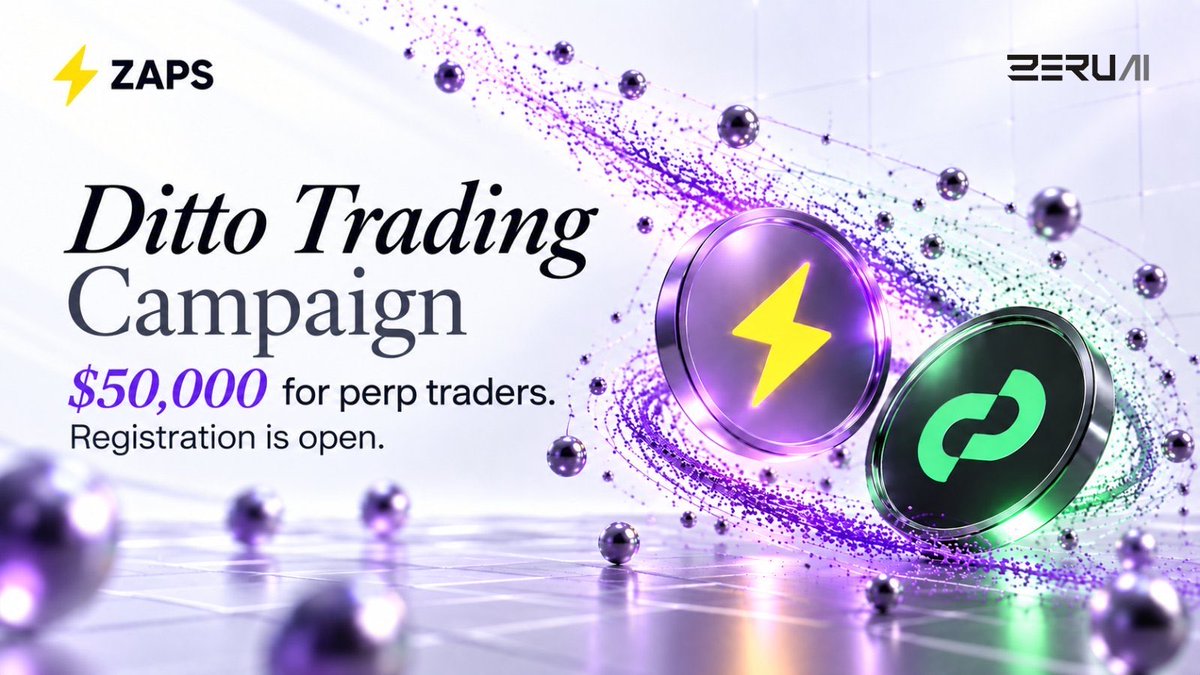
one thing i noticed while testing with a small btc position on ditto is that the timing and type of activity matter.
opening the position eventually reflected in my zaps, but closing it didn’t create another volume increase. switching direction can register differently because you’re opening a new side.
that detail changes how i look at the system.
if every open and close automatically counted as fresh volume, the scoring would be much easier to inflate. instead, the mechanics appear to put more weight on the actual opening activity.
i’m still testing with small positions and watching how different actions translate into zaps.
you can check your own activity here:
https://t.co/d53hbfKxcS
navi are back in action, and the next stretch matters with major qualification on the line.
epl s24 gives fans plenty to track, from match outcomes to the wider story around navi’s run. @trylimitless has markets for the action, plus packs and user-created markets.
https://t.co/jhHM7IgJ7A
bringing web2 data into onchain finance creates a difficult tradeoff: the information needs to be trusted, but making it verifiable should not require exposing the underlying private data.
@primus_labs approaches this through cryptography rather than relying on a trusted intermediary.
its network allows users or agents to prove the authenticity of https data and interactions, while private information can be encrypted before being processed through the primus fhe computing engine.
that creates an important separation between proving something is true and revealing everything behind the proof.
the same principle can apply to financial data. information can be verified for a specific requirement, while sensitive details remain protected during computation.
this is the kind of infrastructure needed if onchain finance is going to handle more institutional activity without treating privacy as an afterthought.
primus is building around that verification and privacy layer, connecting trusted web2 data with programmable onchain applications.
explore the primus xp tasks: https://t.co/8kF5col5jy
physical ai has an interesting new input primitive: human-collected ground truth.
with @vangrid_io on @arc, an agent can fund a bounty in usdc, have a person physically visit the requested location and capture it, then receive a reconstructed 3d model from that real-world observation.
the important part is the workflow.
the agent doesn’t need to own a camera fleet or deploy hardware across every environment it wants data from. it can request a specific physical task, pay for its completion, and receive the resulting spatial data onchain.
that creates a bridge between software agents and places they cannot physically reach themselves.
for physical ai, this matters because useful intelligence depends on understanding environments as they actually exist, not just relying on static or indirect representations of them.
human movement becomes the sensing layer, while agents become the requesters of the data they need.
building on aptos gets much easier when the right tools are in place.
with move sdk support and ai coding tools, developers can spend less time fighting setup and more time shipping onchain applications.
insights from @devntellxyz and @averyching make the developer path even clearer.
@aptos
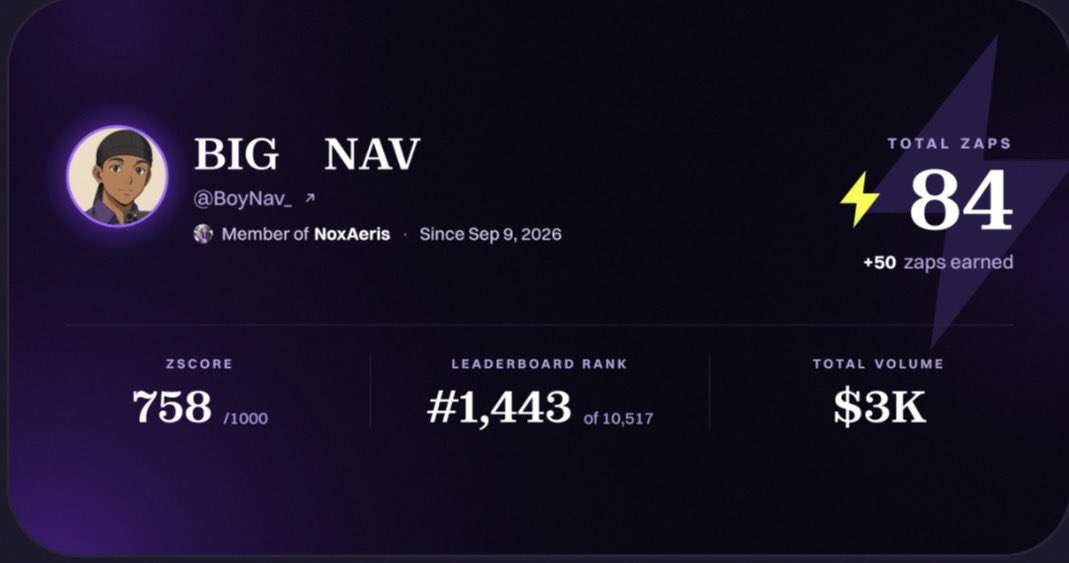
i checked my @zerufinance dashboard again and the numbers are starting to tell a different story.
84 zaps
758 zscore
$3k traded volume
ranked #1443 out of 10,518
the jump from 50 to 84 zaps is what caught my attention most.
what makes the system interesting is that your wallet history can already give you a starting position. you aren’t necessarily building reputation from a blank slate just because you’re new to the platform.
then, activity on zeru can continue adding to that profile through qualifying actions, trading campaigns and the clan system.
so the dashboard isn’t just showing a static points balance. it’s gradually reflecting more of your onchain activity and participation.
i’m currently sitting at 84 zaps, but now i’m more interested in seeing how far that number can move.
if you have an active wallet, you can check what your existing activity translates to here:
https://t.co/d53hbfKxcS
2,472 participants and 2.39m+ usdc committed to the @axisrobotics community sale.
that is a pretty clear signal of how much attention the project has built around its approach to physical ai data.
what stands out to me is that this is not only about the sale itself. axis is building a data engine that depends on diverse contributions at scale, and that requires an active global community behind the infrastructure.
the community sale has now ended, with allocations being settled pro-rata and recorded on-chain once the settlement process is complete. any unaccepted usdc will be automatically refunded within 48 hours.
and with the team teasing special surprises for participants, there is clearly more coming beyond the sale.
the next phase of @axisrobotics looks worth watching closely.
https://t.co/EAkDGLWLTF
the interesting part here isn’t the headline call on bitcoin, it’s the gap between what different parts of the market are pricing.
altcoin spot volume sitting far above btc, alongside a rising altcoin season index, suggests risk appetite has been spreading beyond the largest asset.
at the same time, @trylimitless traders are pricing a 90% chance of btc closing green today.
that creates a useful market to watch because the underlying signals are pointing in different directions.
https://t.co/EX51IkliJy
prediction markets become a lot more interesting when the question isn’t limited to crypto.
@trylimitless is now letting users create their own markets around everyday events, share them with friends, and let everyone take a side.
you also control the resolution, which turns a simple group chat debate into an actual market with an outcome.
create your own question and see where your group lands:
https://t.co/wNUh8fwJDp
prediction markets become more interesting when the questions extend beyond charts and match results.
while exploring the predictions section on @playonmint, i noticed how broad the categories have become.
there’s crypto, sports, economy, gaming and even culture, with the culture section built around events and trends happening in the wider world.
that gives the predictions tab a different scope.
instead of only asking where an asset moves or who wins a game, the markets can cover different types of events people are already following.
the interesting part for me is seeing how these categories develop over time and what kinds of questions eventually get listed.
the more i explore @playonmint, the clearer it becomes that predictions are becoming a much bigger part of the platform than i initially expected.
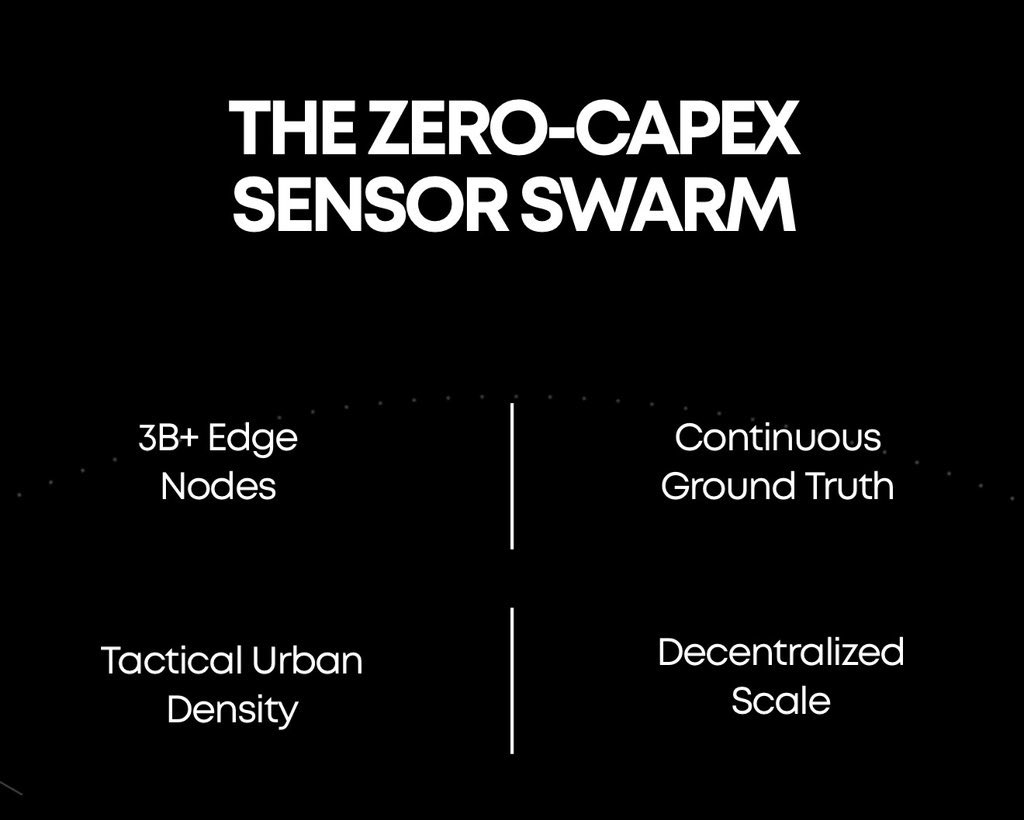
the interesting thing about a 3 billion+ edge node network is that the hardware already exists.
smartphones are constantly moving through places that traditional mapping systems rarely capture in detail: offices, malls, warehouses, apartment buildings, airports and everyday streets.
@vangrid_io is building around that reality by turning ordinary phones into tools for collecting ground-level spatial data.
a contributor can walk through a location, record it, and submit the capture to a specific bounty. those individual observations can then become part of a much larger dataset representing how physical spaces actually look.
and physical environments are not static.
store layouts change, buildings get renovated, construction alters pathways and spaces evolve over time.
instead of requiring a new sensor network to be installed everywhere, vangrid can tap into devices people already carry through the world every day.
the scale comes from the number of devices already at the edge, not from manufacturing billions of new ones.
video production is becoming another service agents can deliver through @termix_ai.
give a video agent the brand, message, creative direction, logo and copy, and the workflow can turn that brief into a finished promo film.
one prompt can move the process from concept to visuals, music and final cut, without requiring the buyer to manage every production step manually.
this is the kind of workflow that makes an agent marketplace more practical: a specialized agent is not just listed, it can receive a brief, perform a defined service and deliver a usable creative result.
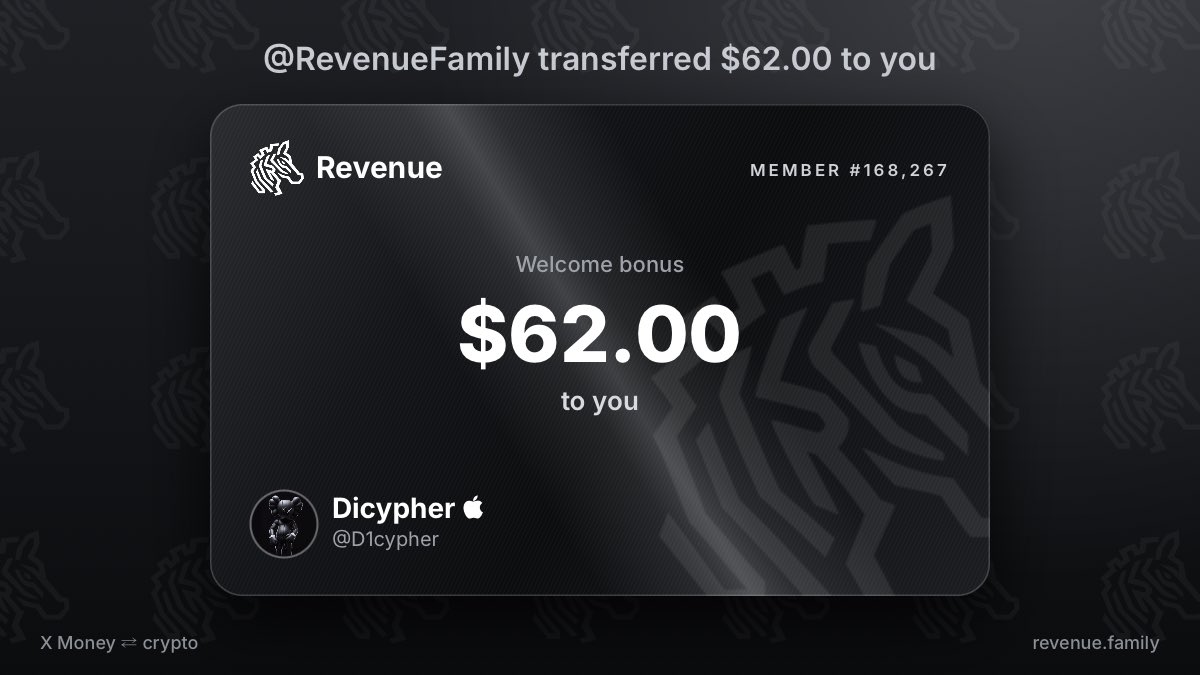
FAMILY, CHECK YOUR PORTFOLIOS 👀
Your welcome bonus is waiting. Check your balance and see when it unlocks.
A little something from us to get you started.
https://t.co/wCWZV0Ia9x