Still don't know what I was waitin' for & my time was runnin'wild.. Ch..ch..ch..ch..changes..turn and face the strange ch..ch..changes Time may change me ..
A tenant farmer in the Cairngorms says land that sold for £500 an acre a few years ago now goes for £5,000. He is being moved off ground his family has worked for generations, because he cannot outbid the people buying it. The buyers are corporations, and they have no intention of farming a single acre of it.
Here is how the trick works. A company keeps emitting carbon exactly as before. Same factories, same flights, same supply chain, same product. Then it buys a Scottish hillside, plants some trees, and announces to the world that it is now carbon neutral, or, if it is feeling brave, carbon negative. The emissions never fell. It simply bought a landscape to point at.
Take BrewDog. In 2020 it bought a 9,300-acre Highland estate, propped up with public grant money, and promised a million trees and the crown of the world's first carbon negative beer business, removing twice the carbon it emitted, forever. By 2023 roughly half of the 500,000 trees it had managed to plant were dead, killed by drought, with critics noting the planting was drying out the peat and releasing carbon of its own. The advertising regulator ruled its carbon-negative claims misleading. In 2024 it quietly dropped the badge and dismissed the entire carbon credit market as a flood of cheap schemes whose benefit was "questionable, maybe even non-existent." Then it sold the estate to a firm whose actual business is selling carbon offsets.
That is the whole model in one story. Public money in. Dead trees out. A green halo worn for four years and then dropped. The farmer who used to be on that land, gone. The hillside passed to a company that exists purely to sell other people the right to keep polluting.
This is no fringe case. In one recent year, half of every estate sold in Scotland went to investment funds, corporations and charitable trusts rather than anyone who would farm it. A third of the deals for plantable land are now done off-market, in secret, precisely so the local community never gets the chance to bid.
So this is what net zero looks like on the ground. A man who produced food is priced out of his own glen. A corporation that produced emissions buys the glen, calls itself a force for good, and sells the carbon. The land stops feeding anyone. Nobody's emissions actually went down by a gram.
The food was real. The farmer was real. The carbon saving is a line in a slide deck.
And we have somehow decided the villain in all this is the man with the sheep.
"Education shapes the minds of future generations and, with that, shapes the world we live in." 🚜
Holly Atkinson is backing a campaign started by Soil.Ed to put food, farming and sustainability on the national curriculum.
She believes helping young people better understand where their food comes from, how it is produced and the role agriculture plays in everyday life is vital for the future.
Farmers Guardian is proud to support the campaign.
READ MORE: https://t.co/14fdM5XRHn
Few professions carry a burden as heavy as farming.
Farmers feed everyone.
Every single person.
Every child heading to school.
Every worker beginning a shift.
Every patient in a hospital bed.
Every athlete, business owner, artist, scientist, and leader.
All depend on food.
And food depends on farmers.
Yet many farmers today feel unseen.
They watch costs rise.
They watch regulations grow.
They regularly get punished by governments.
They watch weather deciding the fate of their crops.
They work every single day of the year.
They watch family farms disappear after generations of hard work.
Still they continue.
Not because it is easy.
Because it matters.
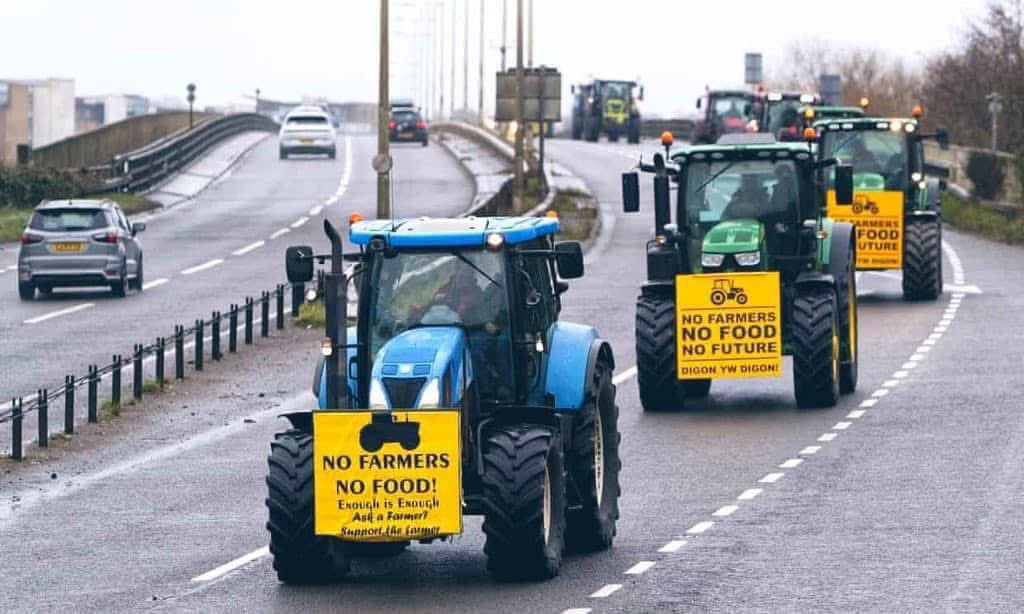
Because No Farmers, No Food.
A farmer dies in April 2026.
His son inherits the farm. The farm has been in the family since 1847.
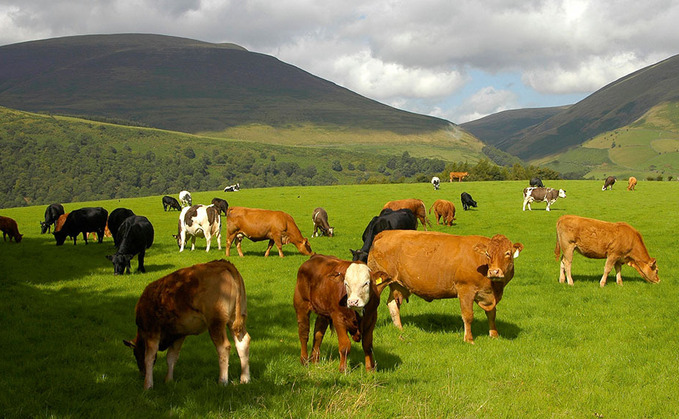
The farm consists of: 300 acres of grazing pasture, a farmhouse built in 1892, a barn, a milking parlour, two tractors of varying ages, a Land Rover that runs about 70% of the time, and a herd of 180 Hereford-cross cattle.
On paper, the farm is worth approximately £3.2 million. This is because land near him has been bought recently by a London hedge fund looking for carbon credits, which has dragged the comparable value of every field within forty miles upward to a number nobody local can justify.
In cash, the farm produces a profit of about £28,000 a year in a good year. In a bad year it loses money. The son also works as a fencing contractor three days a week to keep the operation viable.
The inheritance tax bill on a £3.2 million estate, even at the reduced 20% rate, comes to approximately £140,000 after the increased threshold is applied. The son does not have £140,000. The son has never had £140,000. The son has £4,200 in his current account and an overdraft.
The son sells 60 acres to a developer to pay the tax. The developer puts solar panels on the 60 acres. The remaining herd cannot be sustained on the reduced land. The herd is sold. The barn becomes a holiday let.
A different family eats Brazilian beef this Christmas without knowing why the price went up.
The Treasury collects £140,000.
The land never produces British food again.
👑 Prince William tells Yorkshire farmers: “You have got a lot on your plates at the moment”
The Prince of Wales discussed drought concerns, diversification and the financial pressures facing upland farms during a visit to North Yorkshire this week.
Do the Prince's comments help put farming issues higher on the national agenda?
READ MORE: https://t.co/PjkGLAAzXy
🗣️ "The reality is that the next generation of farming will not come from a single route."
Founder of the campaign to get farming on the school curriculum, Olivia Shave says agriculture must move beyond the debate of being either 'from farming' or 'new to it'.
"We need to move beyond identity debates and focus instead on pathway design."
READ MORE: https://t.co/n7DXZKCkNO
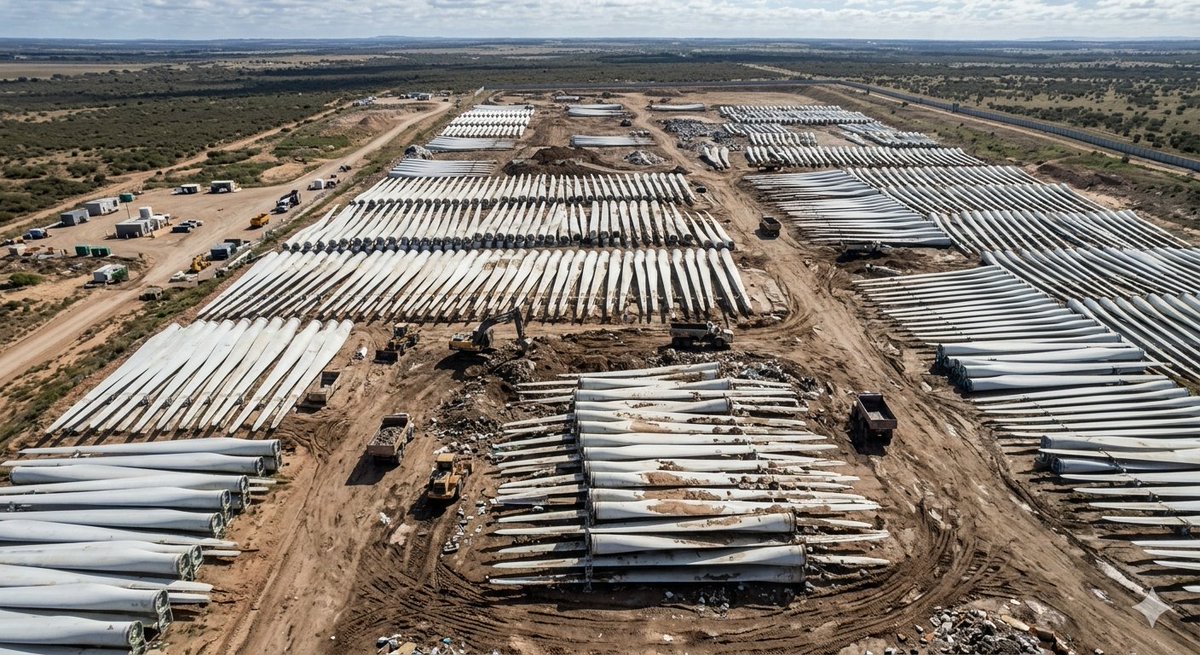
The world will have to deal with 43 million tons of decommissioned wind turbine blades by Net Zero in 2050.
To put that in perspective, it’s the equivalent weight of 215,000 locomotives. These blades are made of high-strength composites designed to survive decades of brutal weather, and they are notoriously difficult to recycle. They were built to last, but they weren't built to disappear.
Every turbine standing today will likely be decommissioned and replaced at least once before 2050. Without a cost-effective way to recycle fibre-reinforced polymers, the majority of these massive blades are destined for eternity - buried forever in turbine graveyards.
China, Europe, and the US will account for the vast majority of this waste, creating a mountainous industrial heartache that many Net Zero models simply haven't priced in.
But 43 million tons of purely composite blade waste every 20 years is a colossal physical reality.
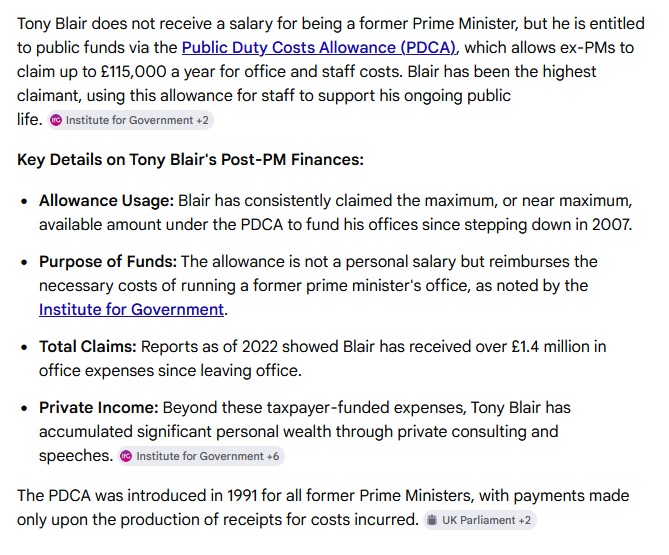
Tony Blair thinks the elderly in our country don't deserve a state pension as it's 'unaffordable'.
He himself has claimed the near maximum allowance of up to £115,000 a year as a former PM since 2007. That's a total of around £2 mil, despite having significant personal wealth.