Official account of the South African Department of Basic Education. A like or retweet is not an endorsement. Email: [email protected] | Callcentre: 0800 202 933
#DRAM| Did you know that recognising a learner's individual needs can make a meaningful difference in their educational journey?
The Screening, Identification, Assessment and Support (SIAS) framework provides schools with a practical approach to understanding learning challenges and determining the assistance each learner requires.
From identifying barriers that may affect classroom participation to facilitating access to suitable resources, services and interventions, the framework strengthens inclusive education and creates opportunities for all learners to thrive.
#EveryLearnerMatters #EducationZA #GovZAUpdates
Growing Opportunities from the Classroom to the Farm
In the North West, the impact of the Mathematics, Science and Technology (MST) Conditional Grant is evident at Hoërskool School Zeerust, where access to improved resources and practical learning opportunities is transforming the teaching and learning experience.
In this latest episode of our MST video series, we visited Hoërskool School Zeerust, a 105-year-old school that is embracing the opportunities created through the MST Conditional Grant to strengthen its Mathematics, Science and Technology offering, including the expansion of its agricultural subjects.
From well-equipped science laboratories and hands-on experiments to thriving agricultural programmes, learners are gaining practical experience that brings classroom concepts to life. The grant has also supported teacher development, improved learning resources and strengthened the school’s capacity to plan for sustainable growth.
Through practical science experiments, poultry farming, egg production, crop cultivation and animal husbandry, learners are developing valuable skills while discovering the excitement of learning by doing.
The story of Hoërskool School Zeerust demonstrates how investing in resources, teacher capacity and practical learning environments can unlock opportunities, inspire curiosity and equip learners with skills for the future.
#MSTEducation #MSTGrant #StrongFoundations #EducationZA #GovZAUpdates
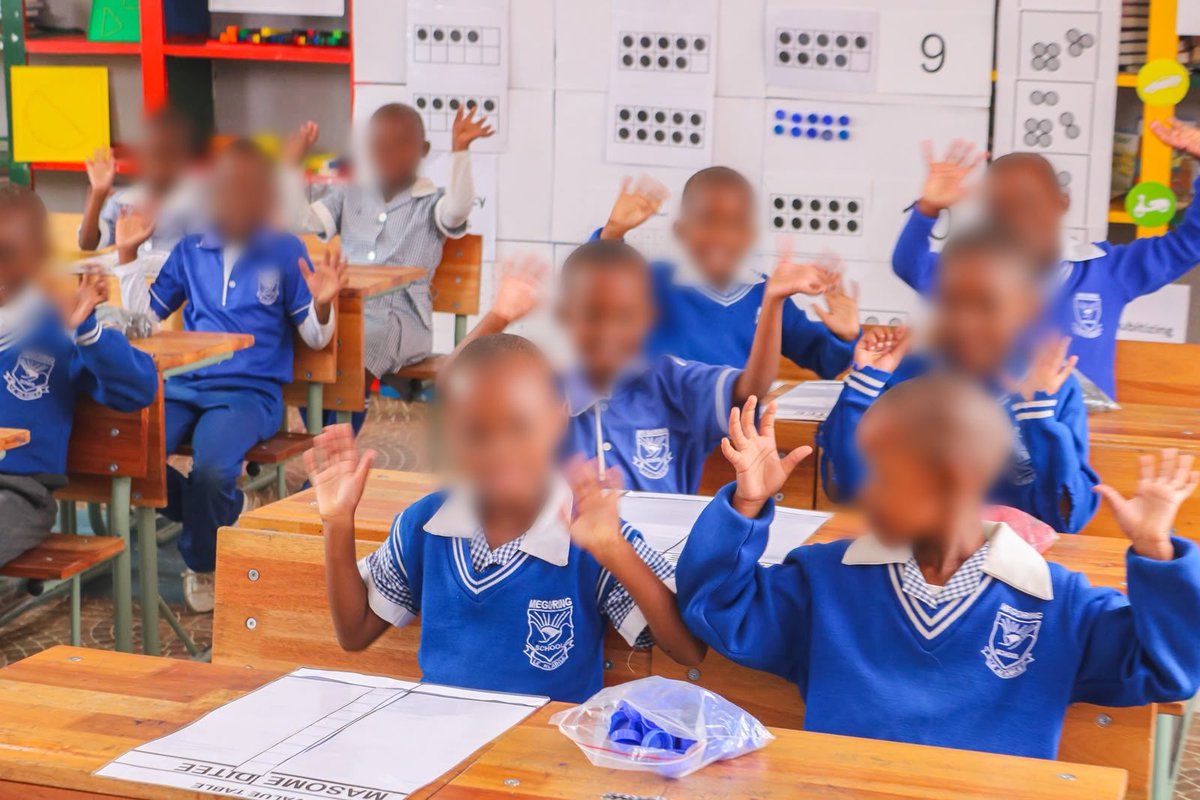
#MIP| The National Mathematics Improvement Programme (NMIP) continues at Megoring Primary School in Limpopo, focusing on the development of Learning and Teaching Support Materials (LTSM) through mother-tongue video content to support effective Mathematics teaching and learning.
The instructional content focuses on developing mental Mathematics skills among Foundation Phase learners in Grades 1–3, with an emphasis on number sense, counting fluency, pattern recognition and mathematical problem-solving.
Through practical, visual, and written activities, learners are supported to recognise quantities without counting individually, participate in counting routines, identify number patterns up to 25, and solve addition problems using a 100-square.
The initiative promotes the development of engaging and contextually relevant teaching resources that support understanding of mathematical concepts and strengthen foundational numeracy through mother-tongue instruction.
#EducationZA #MathematicsEducation #GovZAUpdates
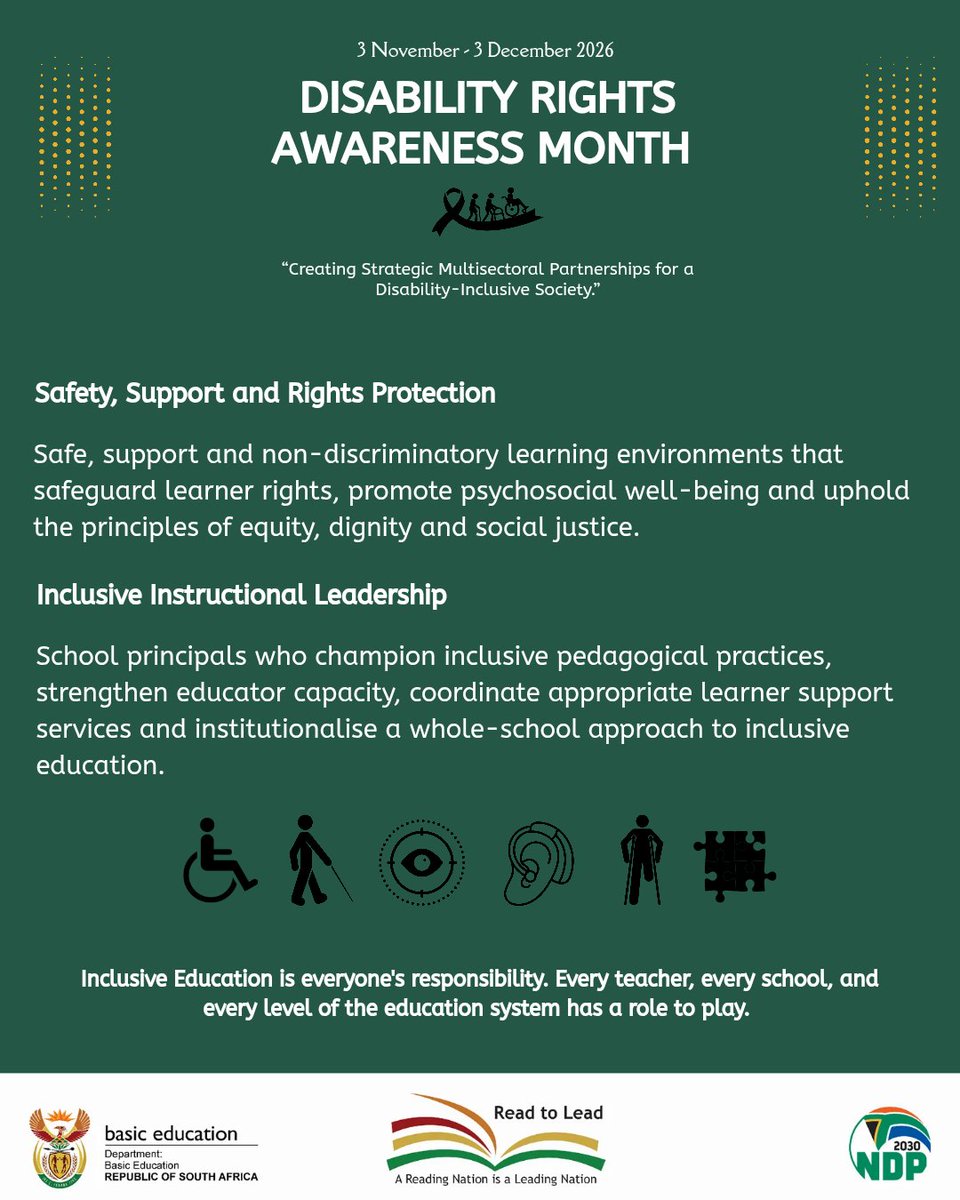
#DRAM2026| An inclusive education system plays a critical role in building a society in which diversity is recognised, barriers are addressed, and every learner has the opportunity to realise their potential.
Achieving this requires sustained commitment, strong partnerships, and coordinated action to embed disability inclusion in education planning, policy implementation, and service delivery.
#EducationZA #GovZAUpdates
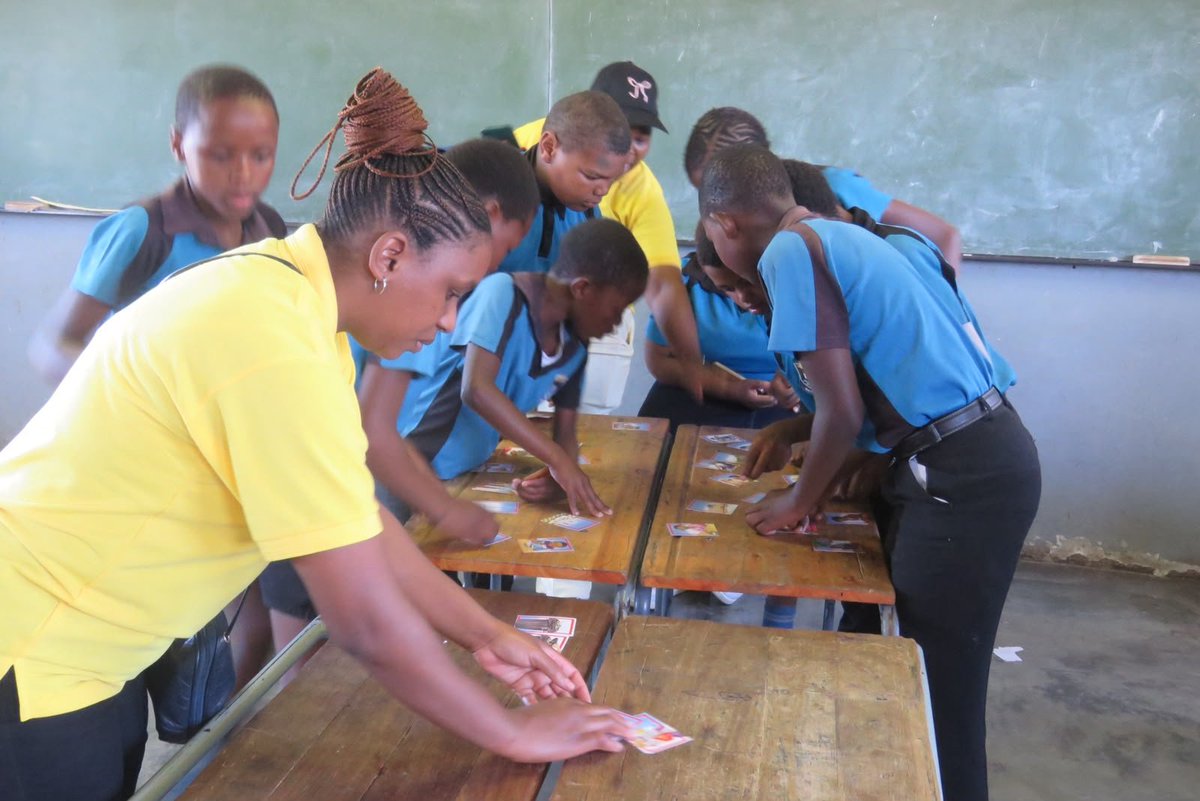
#NMIP| The National Mathematics Improvement Programme is underway at Megoring Primary School in Capricorn South District, Limpopo, focusing on Learning and Teaching Support Materials (LTSM) content development.
The initiative seeks to develop engaging, relevant, curriculum-aligned educational resources that simplify mathematical concepts, strengthen learners’ knowledge and skills, and help teachers enhance classroom instruction.
This forms part of ongoing efforts to strengthen Mathematics teaching and learning and improve educational outcomes in schools.
#EducationZA #GovZAUpdates
Strengthening MST Education | Building Skills, Expanding Opportunities, Shaping Futures
Mathematics, Science and Technology (MST) education remains central to South Africa’s efforts to equip learners with the knowledge, skills and competencies required to thrive in an increasingly technological and innovation-driven world.
Through theMST Conditional Grant , the Department of Basic Education continues to strengthen teaching and learning, im prove access to essential resources and expand opportunities for learners, particularly in historically disadvantaged communities.
In our new video series , we take a closer look at the MST Grant, unpacking its objectives, celebrating its successes and exploring the key areas of implementation that are making a difference in schools across the country.
From strengthening teacher capacity to improving learning environments and expanding access to practical learning opportunities, the series showcases the work being undertaken to build a stronger foundation for South Africa’s future scientists, engineers, innovators and problem-solvers.
Follow the series as we take you closer to the work, the progress and the impact of MST education in action.
#MSTEducation #MSTGrant #StrongFoundations #EducationZA #GovZAUpdates
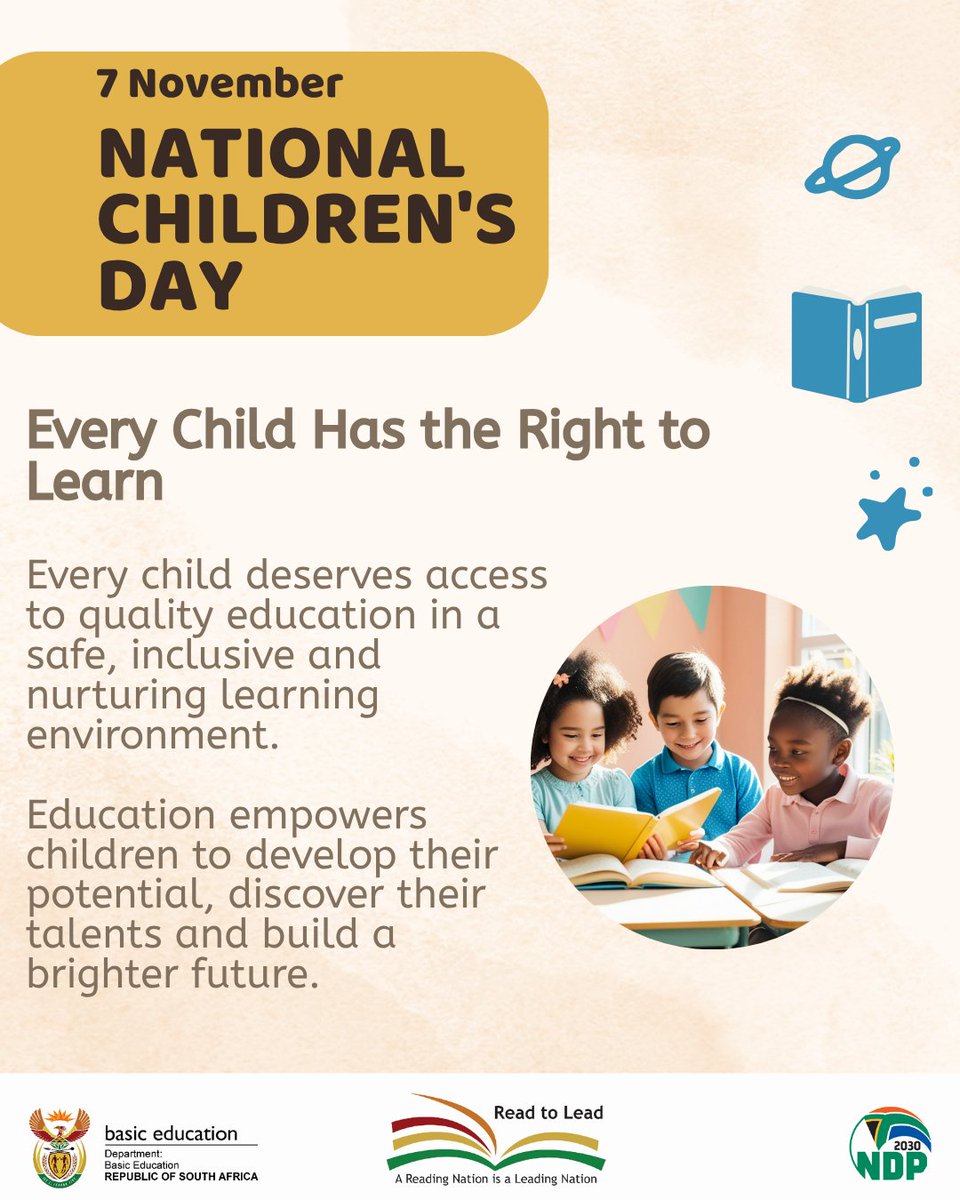
#NationalChildrensDay | Every child deserves the chance to learn, explore new possibilities, and realise their potential.
Quality education equips children with the knowledge, skills and confidence to pursue their aspirations. When learners have access to supportive, safe, and inclusive schools, they can better develop their abilities, discover their strengths, and participate meaningfully in their communities.
Upholding every child's right to education means creating opportunities for all learners to grow, succeed and contribute to a brighter future.
Empowering children through education today builds a stronger generation for tomorrow.
#EducationZA #GovZAUpdates
#DRAM2026| As Disability Rights Awareness Month continues, the importance of ensuring equitable access to quality education for all learners remains a key focus. Every learner, including those with disabilities, should have opportunities to engage in learning, develop their abilities and achieve their full potential.
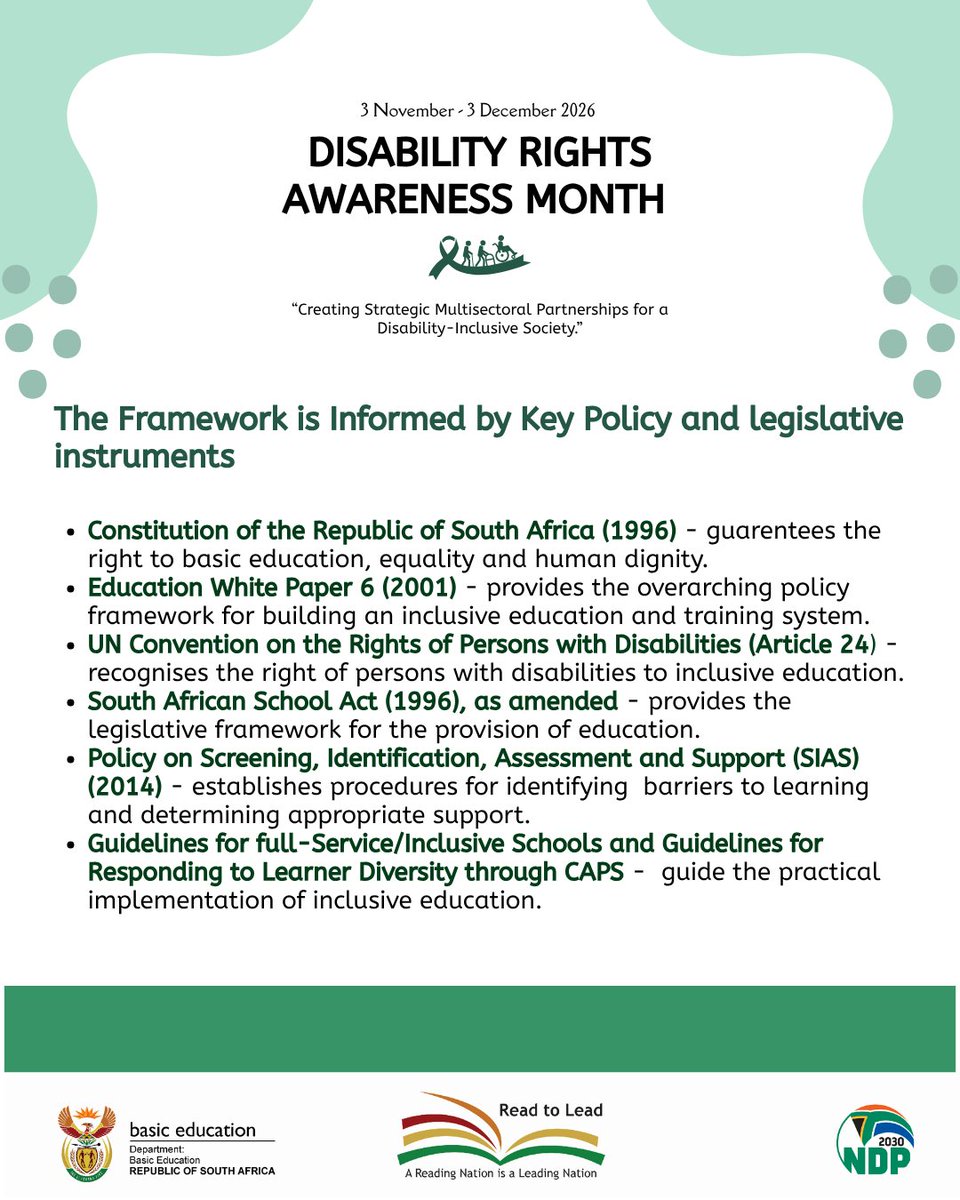
The implementation of inclusive education in South Africa is guided by a range of policies and legislative frameworks that uphold every learner's right to education. These include the Constitution, Education White Paper 6, the South African Schools Act, the Policy on Screening, Identification, Assessment and Support (SIAS), and the UN Convention on the Rights of Persons with Disabilities.
These frameworks guide efforts to identify and address barriers to learning, strengthen learner support and promote accessible teaching and learning environments that respond to diverse educational needs.
For more information, visit our website 👇
https://t.co/Xc6gijR1FU
#InclusiveEducation #EducationZA #EveryLearnerMatters #GovZAUpdates
#NSCExams2026 | Message to the #ClassOf2026
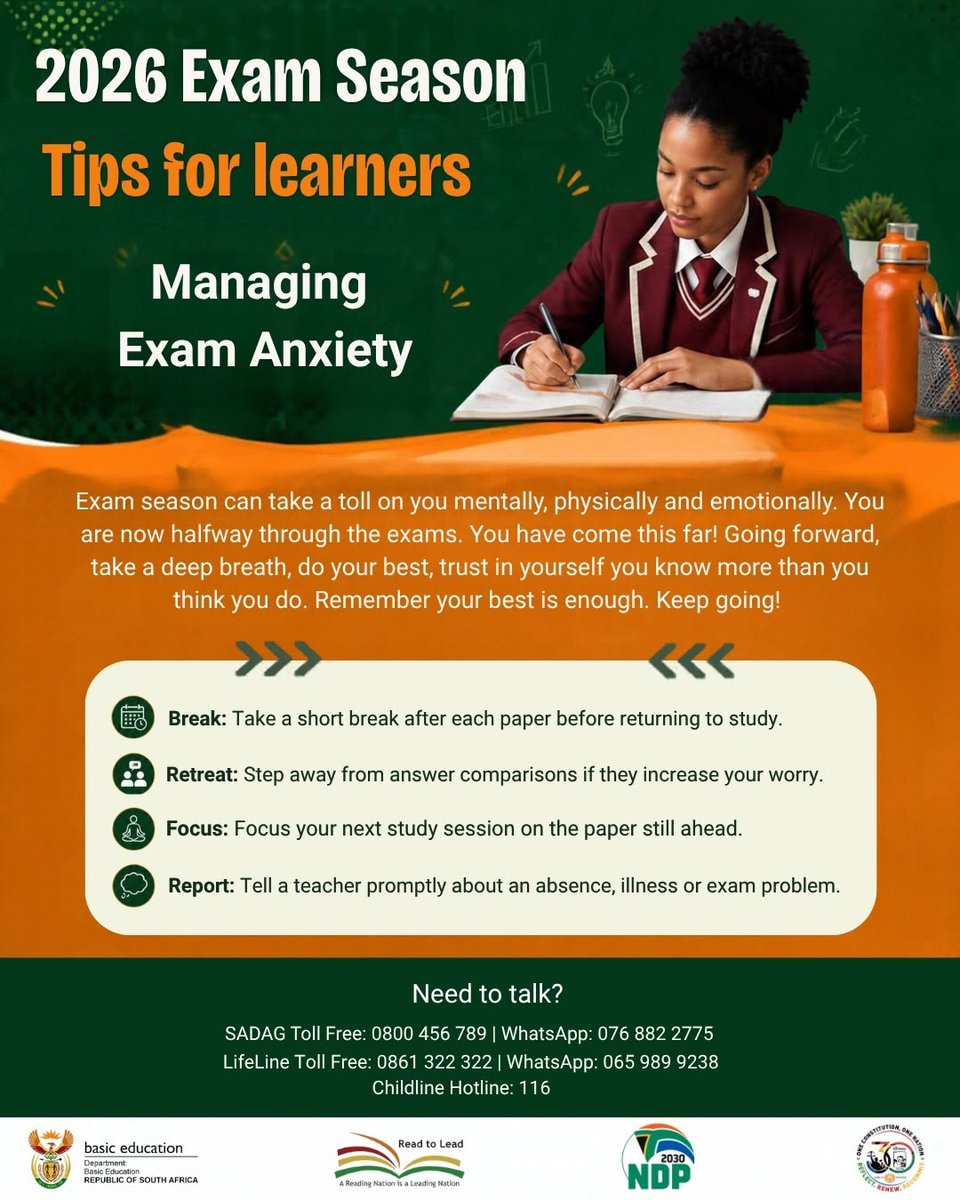
You are now more than halfway into your matric exams. Exam season can take a toll on you mentally, physically and emotionally. Use these 3 days before your next exam paper to also rest and reset.
#Matric#2026ExamSeason#EducationZA
KZN Education MEC, Mr Sipho Hlomuka, was also at the #NNW2026 celebrations at Nhlonhlweni, where he lent a hand in some school maintenance activities. He also joined Grade R learners for their National School Nutrition Programme feeding session.
#NNW2026 #SchoolNutririon #DBE #EducationZA #GovZAUpdates
The DBE, @DBE_KZN, @kznhealth and participating partners are joining forces for National Nutrition Week 2026 in Ladysmith, KwaZulu-Natal, under the theme "Creating Healthy Food Environments for Better Nutrition."
Today's commemoration at Nhlonhlweni Primary School connects nutrition education with practical action, promoting healthier choices in schools and communities.
#NNW2026 #SchoolNutrition #GovZAUpdates #EducationZA
The Department of Basic Education wishes to caution the public against content currently circulating on social media, which is being presented as an ongoing incident and is grossly misleading.
Members of the public are encouraged to exercise caution when engaging with such content, verify information through official departmental platforms and avoid sharing material that may create unnecessary confusion or concern.
#PublicNotice #Misinformation #FakeNews #GOvZAUpdates
“What we are handing over today is a school building. But what we are really investing in is possibility: the possibility that a child from Humansdorp can begin their education in a safe and welcoming environment, learn to read with understanding, become confident with numbers, and discover talents that may change the course of their life.”
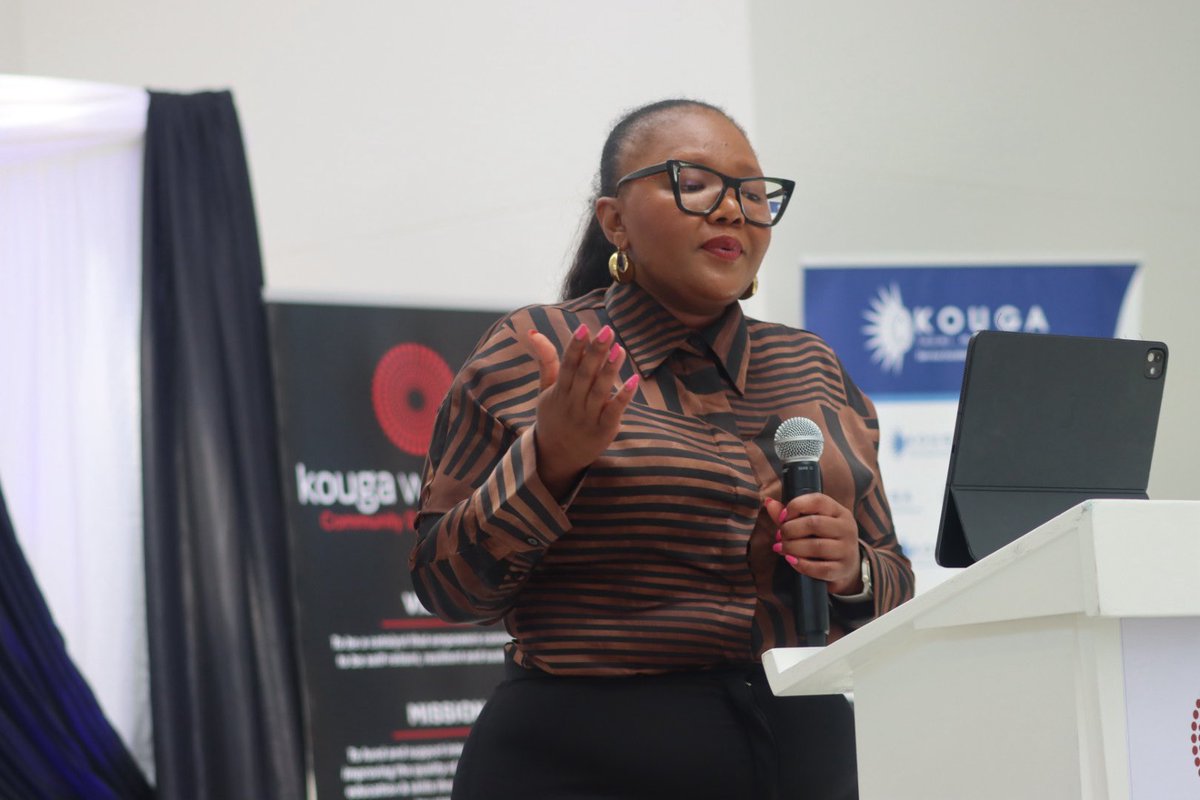
Delivering her address at the official handover of Humansdorp Primary School, Minister of Basic Education, Ms Siviwe Gwarube, spoke about the importance of building strong educational foundations and creating opportunities for every learner to reach their full potential.
She highlighted the value of partnerships in strengthening education, acknowledging the Kouga Windfarm Community Development Trust, which has invested more than R165 million in education and skills development over the past four years.
The Minister also called on teachers, parents, government and the wider community to take collective responsibility for ensuring that the new school becomes a place of excellent teaching, discovery and opportunity.
Addressing the learners, she encouraged them to remain curious, embrace learning, ask for help when they struggle and never allow their circumstances to determine how far they can go.
She concluded with a reminder of the shared responsibility that comes with this investment:
“Today, we celebrate the vision. We honour the action. Now, together, we must deliver the impact.”
#SchoolInfrastructure #StrongFoundationsStrongFutures #PublicPrivatePartnerships #EducationZA #GovZAUpdates
A new chapter in the educational journey of Humansdorp begins.
Today, the Minister of Basic Education, Ms Siviwe Gwarube, together with Eastern Cape Education MEC, Mr Fundile Gade, will officially hand over the newly constructed Humansdorp Primary School in the Eastern Cape, in partnership with the Kouga Wind Farm Community Development Trust.
This milestone reflects what can be achieved when government and development partners work together towards a shared vision: ensuring that every child has access to quality education and an environment in which they can thrive.
#SchoolInfrastructure #PublicPrivatePartnerships #EducationZA #GovZAUpdates
Minister, Ms Siviwe Gwarube, conducted a walkabout of the newly constructed Humansdorp Primary School in the Eastern Cape, exploring the modern facilities designed to enhance teaching and learning. The visit also included the unveiling of a commemorative plaque to officially mark the handover of the school.
The school features dedicated Grade R and Intermediate and Senior Phase blocks, a library, science laboratory, computer facilities, administration offices, a school hall, cafeteria and sports facilities. These spaces are designed to nurture literacy, scientific exploration, technological skills and the holistic development of learners.
Made possible through a partnership between the Kouga Windfarm Community Development Trust, the Eastern Cape Department of Education and Kouga Local Municipality, the school represents an investment in better learning opportunities and stronger foundations for future generations.
#SchoolInfrastructure #StrongFoundationsStrongFutures #PublicPrivatePartnerships #EducationZA #GovZAUpdates
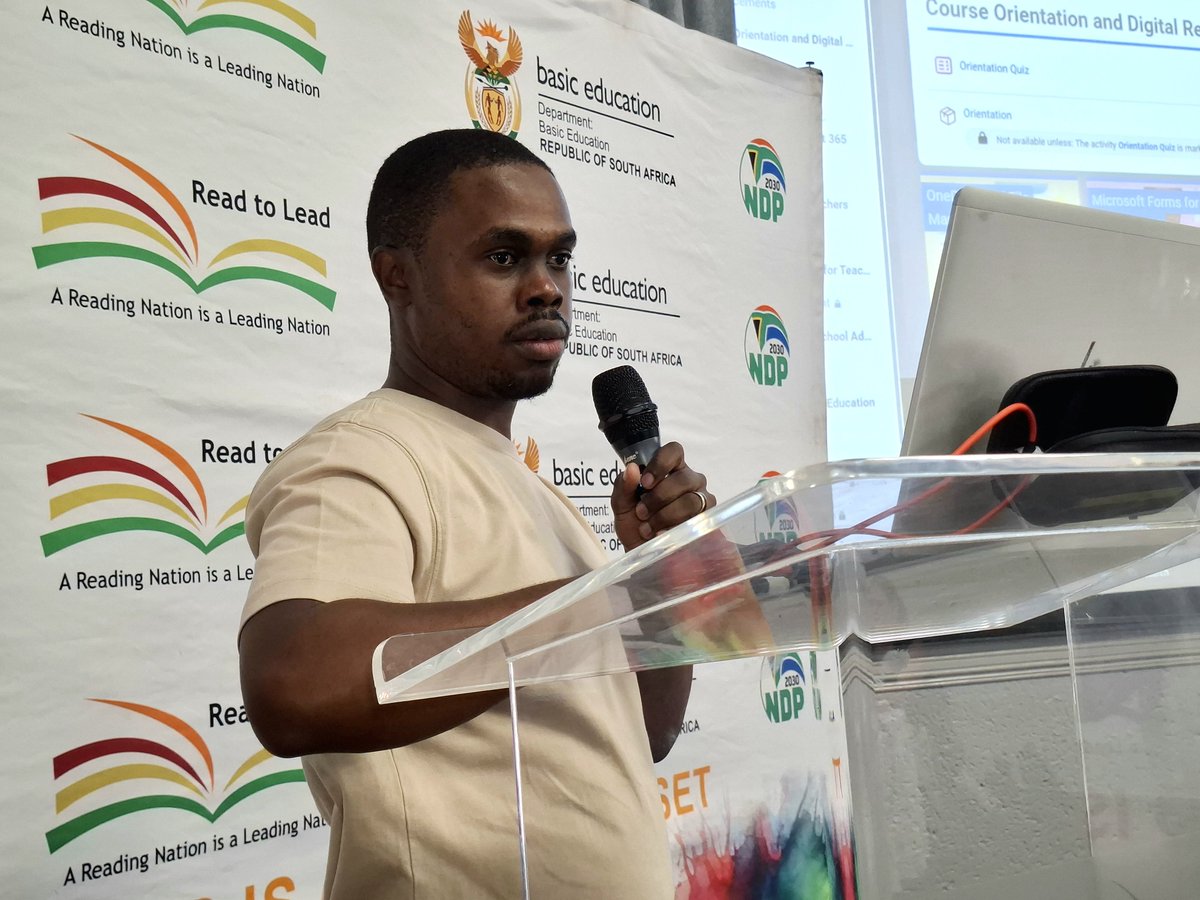
#DBECloud| The demonstrations highlight how participants structure courses around specific learning needs, incorporating welcome messages, learning objectives, content guides, pre-assessments and interactive presentations. One Grade 12 course, for example, introduces learners to the learning journey through a welcome section and course guide before using a pre-test to establish their existing knowledge.
Other projects explore Microsoft 365 applications for educators, including Word, OneDrive, Forms and OneNote, with quizzes, knowledge checks and reflection activities. A Physical Geography course uses HTML-based presentations, simulations and interactive assessments to explore tropical and mid-latitude cyclones.
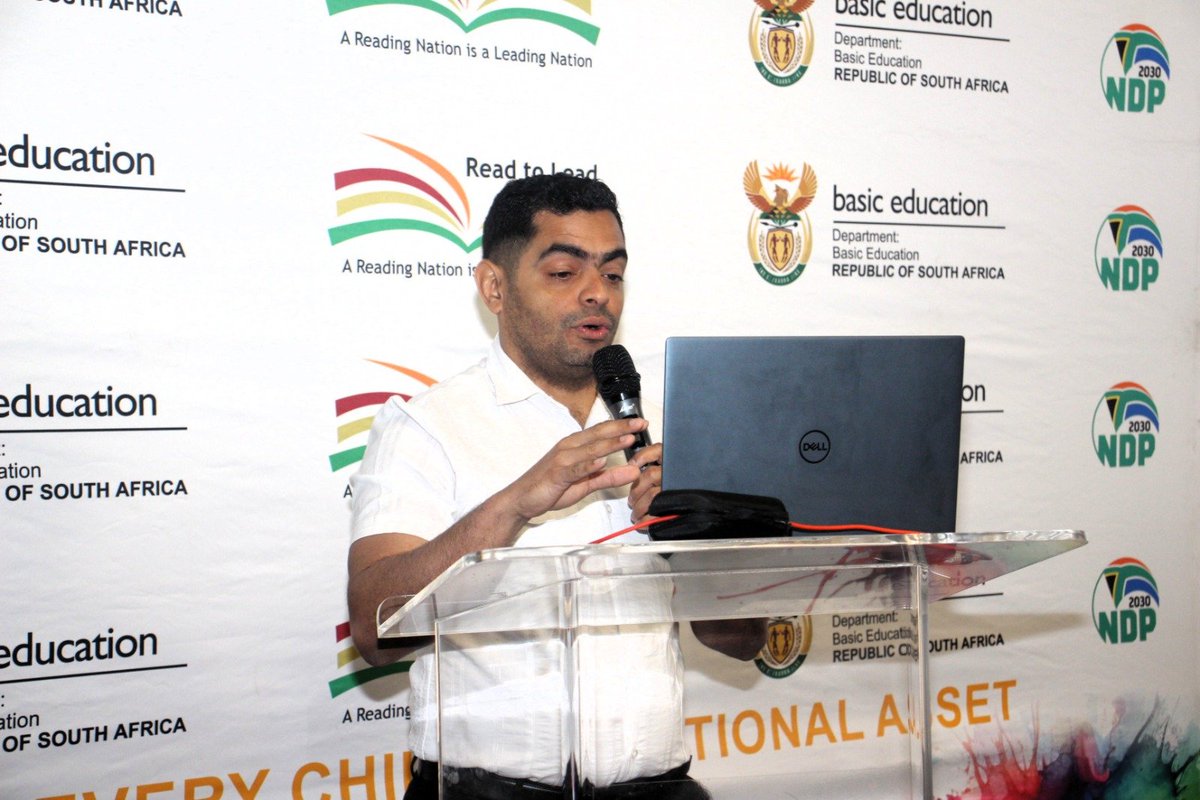
Participants also present an AI and Ethics course on the DBECloud platform, featuring video-based lessons, interactive activities and downloadable resources. The course addresses responsible AI use, effective prompting, fact-checking, information privacy, copyright and the importance of human oversight.
The presentations demonstrate the practical possibilities of Moodle and AI integration in developing relevant digital learning resources that support educators and create more interactive learning opportunities for learners.
#DigitalEducation #EducationZA #GovZAUpdates
#DBECloud | Today marks the final day of the DBECloud Train-the-Trainer Programme on eLearning Content Development and Artificial Intelligence (AI) Integration, bringing five days of learning, collaboration and practical skills development to a close in Boksburg, Gauteng.
Implemented by the Department of Basic Education (DBE), in partnership with the Sasol Foundation, the programme supports the department’s commitment to strengthening the effective use of Information and Communication Technologies (ICTs) in teaching and learning.
At the centre of this digital transformation is DBECloud, a national Moodle-based learning management system that provides a platform for developing, sharing and assessing digital learning content.
Over the past five days, education officials from across the country explored three key areas: subject-specific ICT integration, DBECloud content development and utilisation, and the responsible integration of AI in education. Through practical demonstrations, collaborative activities and provincial presentations, participants strengthened their capacity to develop curriculum-aligned, interactive and accessible eLearning experiences.
As the programme concludes, the focus shifts to applying these skills and cascading the knowledge gained to strengthen digital teaching and learning across the education sector.
#DigitalEducation #EducationZA #GovZAUpdates
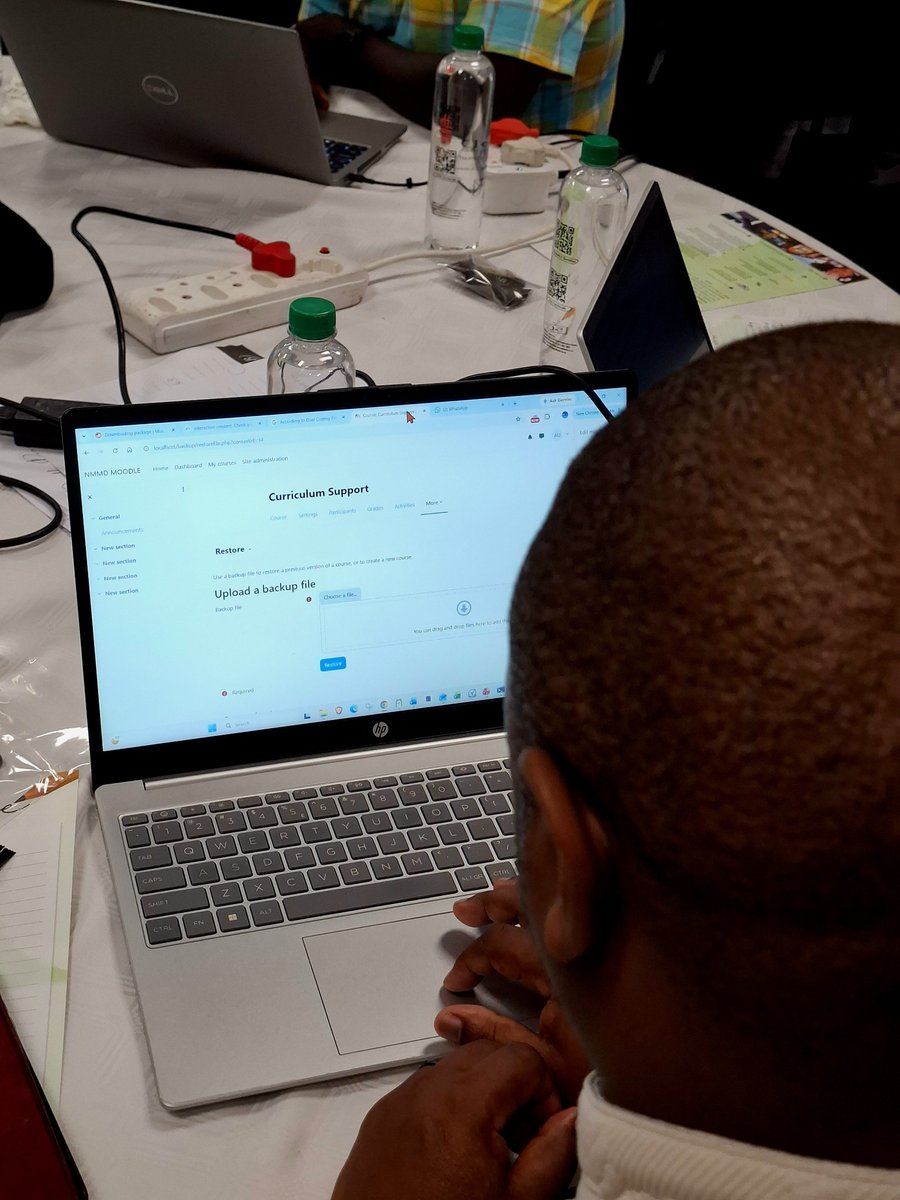
#DBECloud | Mr Heyner Lara, Deputy Director: MST, eLearning and Curriculum Innovation at the DBE. guides participants through the process of restoring their Moodle course backups.
He demonstrates how to navigate to the restore page and locate the User Private Backup area, where completed course backups are stored. Participants are also encouraged to conduct an early test backup and upload to verify file sizes, confirm access and identify the appropriate troubleshooting process should technical challenges arise.
The presentation is followed by a practical session, allowing participants to apply the demonstrated steps, practise navigating the Moodle platform and strengthen their skills in backing up, uploading and restoring eLearning courses.
#DigitalEducation #EducationZA #GovZAUpdates
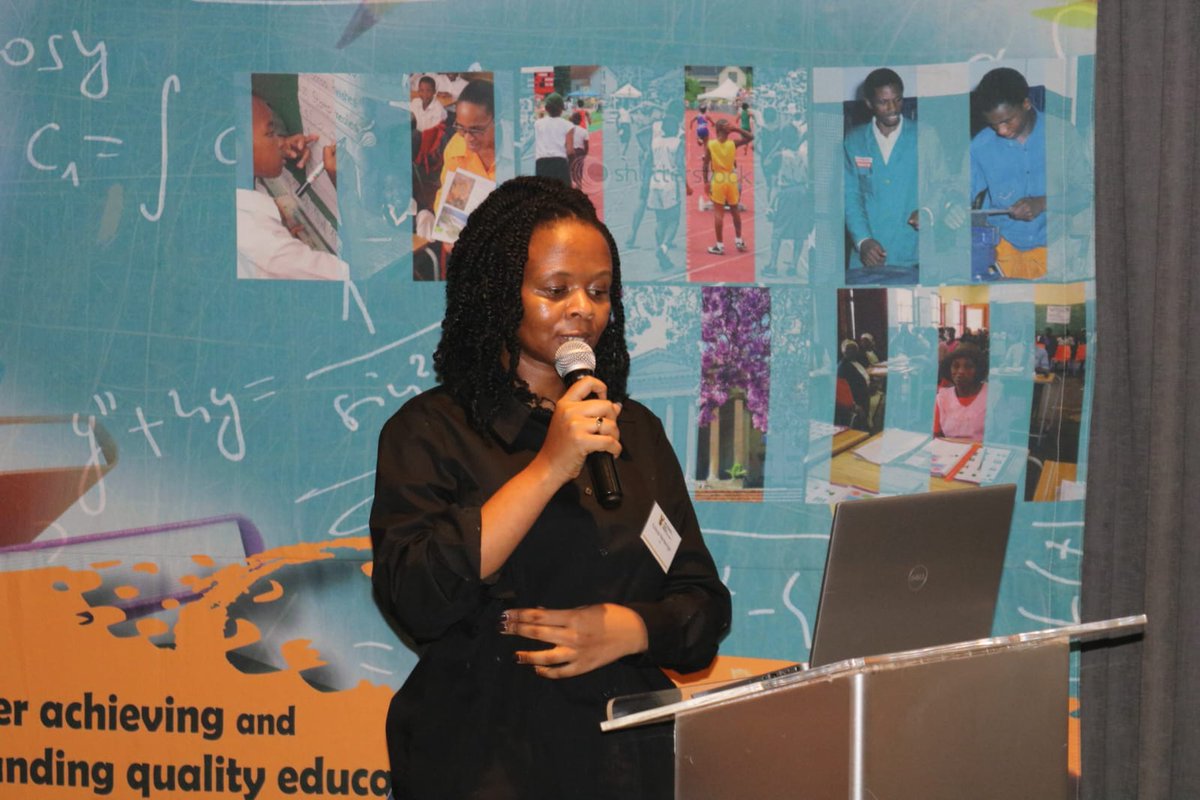
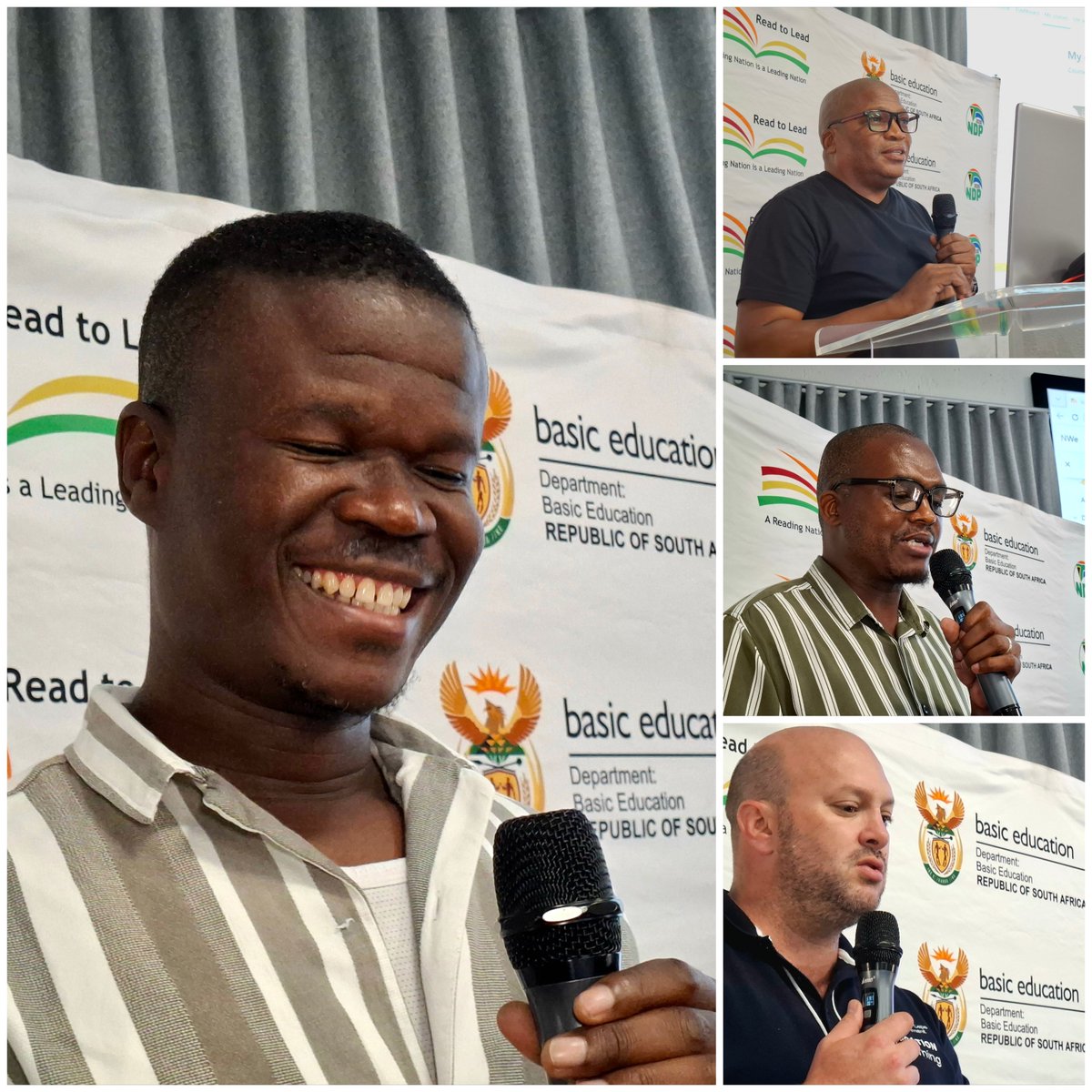
The second break-away session at the DBE Numeracy Roundtable focuses on research design for the implementation pathway of the National Mathematics Improvement Programme (NMIP). Participants explore research methods to assess the programme’s effectiveness, from teacher training and professional development to classroom practice, pedagogical shifts, learner engagement, achievement and long-term sustainability.
The discussions consider how quantitative assessments, classroom observations and real-time implementation monitoring can help determine whether teacher support translates into meaningful changes in teaching practices and measurable improvements in learner achievement.
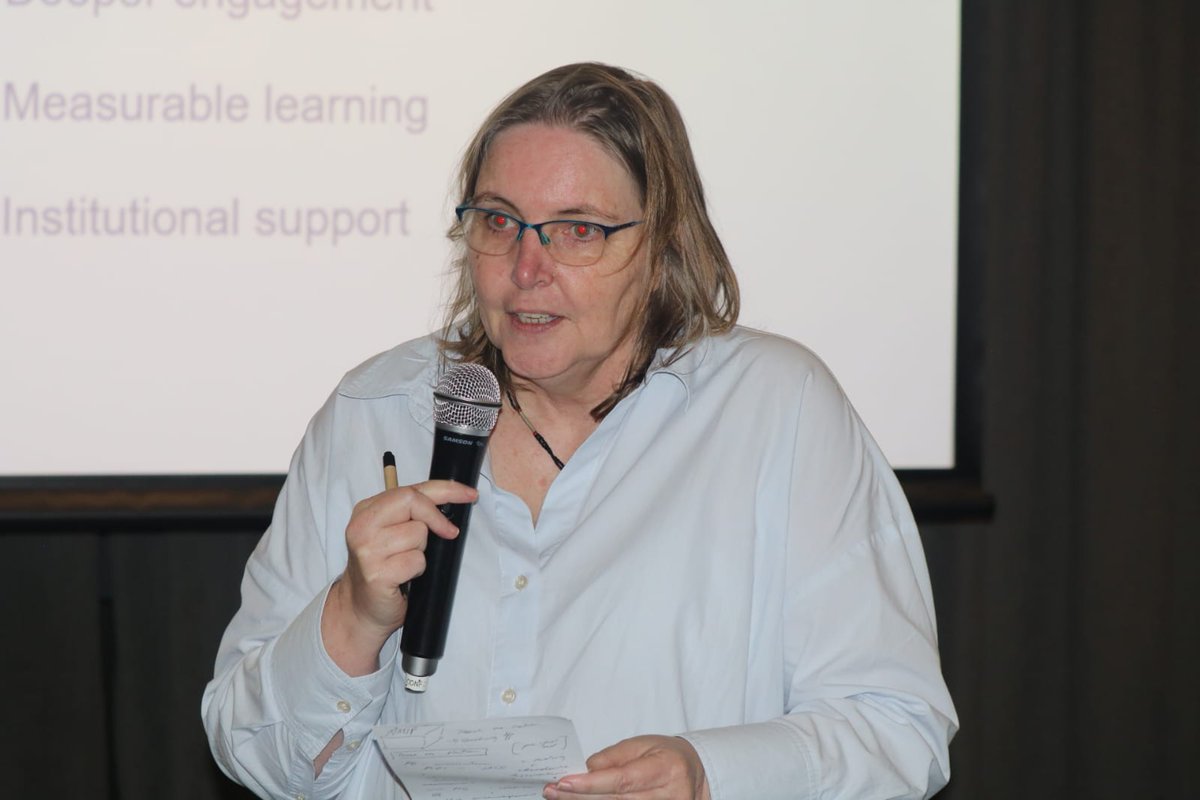
The session also features Ms Lesang Sebaeng, who presents on reading benchmarks and the importance of establishing clear measures to track learners’ literacy development. She highlights the need to identify early reading difficulties, strengthen foundational skills and provide targeted support to learners.
Ms Sebaeng explains the role of reading fluency, including accuracy, appropriate reading pace and expression, in developing comprehension. She also emphasises the importance of establishing evidence-based benchmarks that reflect South Africa’s multilingual context and help teachers identify learners who require additional support.
The presentations highlight the value of evidence-based research, appropriate assessment methods and clear performance benchmarks in strengthening foundational learning and informing interventions that improve learner outcomes.
#Numeracy #MathematicsEducation #NationalAssessment #FoundationalLearning #QualityEducation #GovZAUpdates
Today marks the second and final day of the DBE Numeracy Roundtable in Pretoria.
today attendees are participating in break-away sessions focused on identifying research priorities and promising approaches to strengthening the National Mathematics Improvement Programme (NMIP).
The sessions explore evidence-based practices from provincial education departments and non-governmental partners that can inform the programme’s implementation and impact. Discussions also examine different teacher support models, including coaching and training, components of the Learning Through Structured Mathematics (LTSM) package, and specific pedagogical approaches that can strengthen mathematics teaching and learning.
Participants further consider which grades should be prioritised for support and how alternative professional development and support models can translate into sustained changes in classroom practice and measurable improvements in learner achievement.
The break-away sessions provide an opportunity for stakeholders to exchange insights, share expertise and identify practical research priorities to inform the effective implementation and scaling up of mathematics interventions across the education system.
#Numeracy #MathematicsEducation #NationalAssessment #FoundationalLearning #QualityEducation #GovZAUpdates