🚺 Menstrual cycle & appetite response to exercise 🏃♀️
We tested women across 3 hormonal phases:
✅ Moderate-intensity running → no differences in appetite hormones, perceptions, or energy intake https://t.co/jsvqzrvmaQ
@_mccarthyseth@DBornath@Phil_M_phd@TamCohenPhDRD
Latest from our group exploring potential mechanisms involved in appetite regulation post-exercise. We show glucose/insulin are not involved as they changed similarly with MICT and SIT but with differential appetite responses. @_mccarthyseth@DBornath https://t.co/KwsGAFZqHe
Research Article from @_mccarthyseth et al. (@Laurier@UBC@hazelltj@DBornath) Greater lactate accumulation does not alter peripheral concentrations of key appetite-regulating neuropeptides 🍴
🔗https://t.co/UPSmD01cyY
Excited to share another PhD study. In collaboration with Dr. Rebecca MacPherson (not on X) we demonstrated that lactate accumulation due to exercise or peripheral injection does not alter central or peripheral appetite signaling 2 h post exer/inj.
https://t.co/vCslV8IB5s
Excited to get some work from my PhD published. We planned to use oral lactate ingestion to assess lactate's role in appetite regulation, however during piloting we found it ineffective at increasing blood lactate using a variety of dosages based on previous studies.
Latest from our group regarding the potential mechanisms involved in exercise-induced appetite suppression that were proposed nearly a decade ago. Here we provide an update on those mechanisms and highlight new advances in the field that should be the focus of future work.
Interesting results & latest from our group. Reducing exercise volume from 2 min (8x15 sec sprints) to 1 min (4x15 sec sprints) had similar effects on post-exercise metabolism. Viable “on-ramp” for those looking to build up to higher volume protocols?
https://t.co/8xK9MJZ79F
New meta-analysis from my lab! We have been interested in the role of the menstrual cycle on appetite-regulation for several years. Here we show the available data suggests a small yet important increase in energy intake in the LP compared to the FP. https://t.co/whGYTdJgKT
Happy to share that our Department of Kinesiology at Wilfrid Laurier University is hiring 2 tenure track positions: 1) applied movement/pedagogy and 2) clinical exercise physiology. Please see the link: https://t.co/NKctXsyUL3
Please share widely.
Interesting research from our lab demonstrating dysregulated appetite hormone responses post-exercise in males experiencing obesity compared to their sedentary normal weight counterparts @hazelltj@_mccarthyseth https://t.co/NyceYLpZ2h
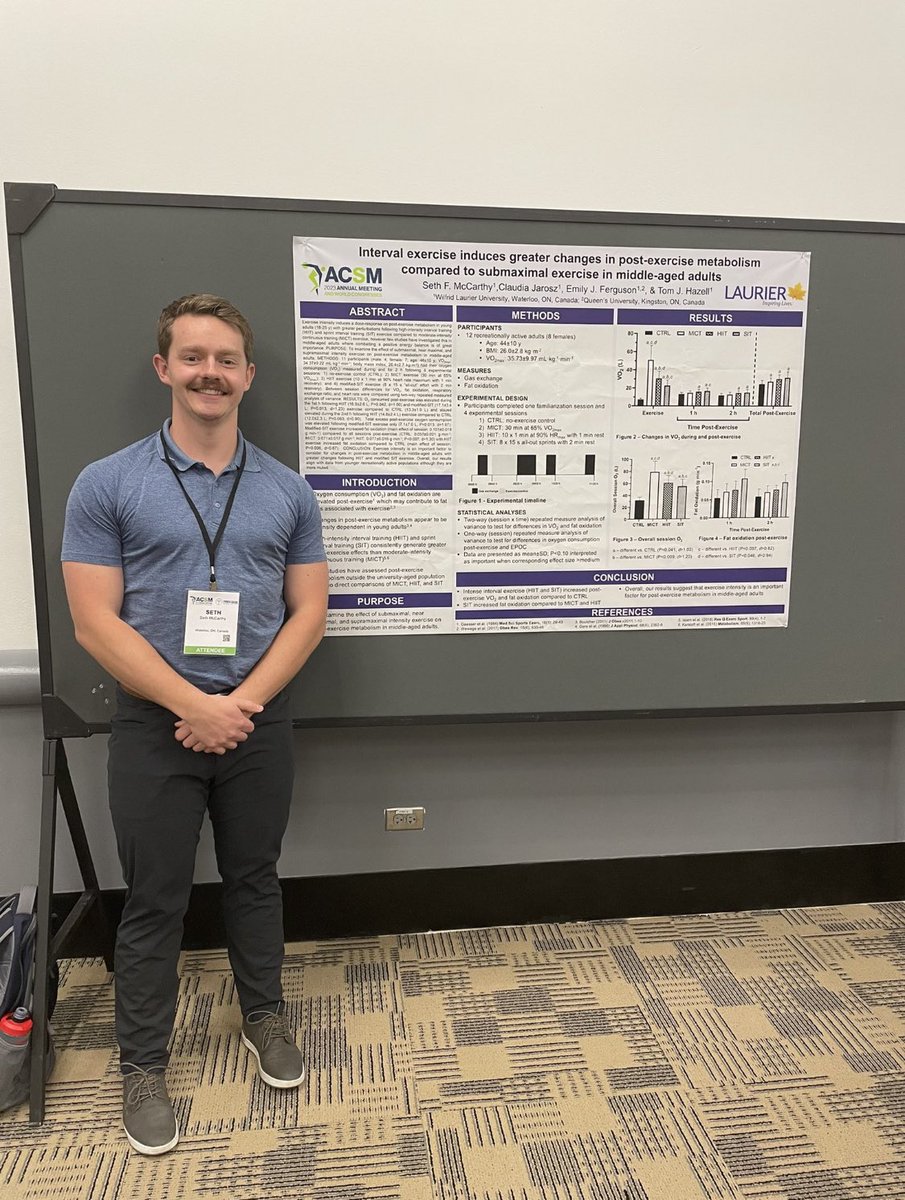
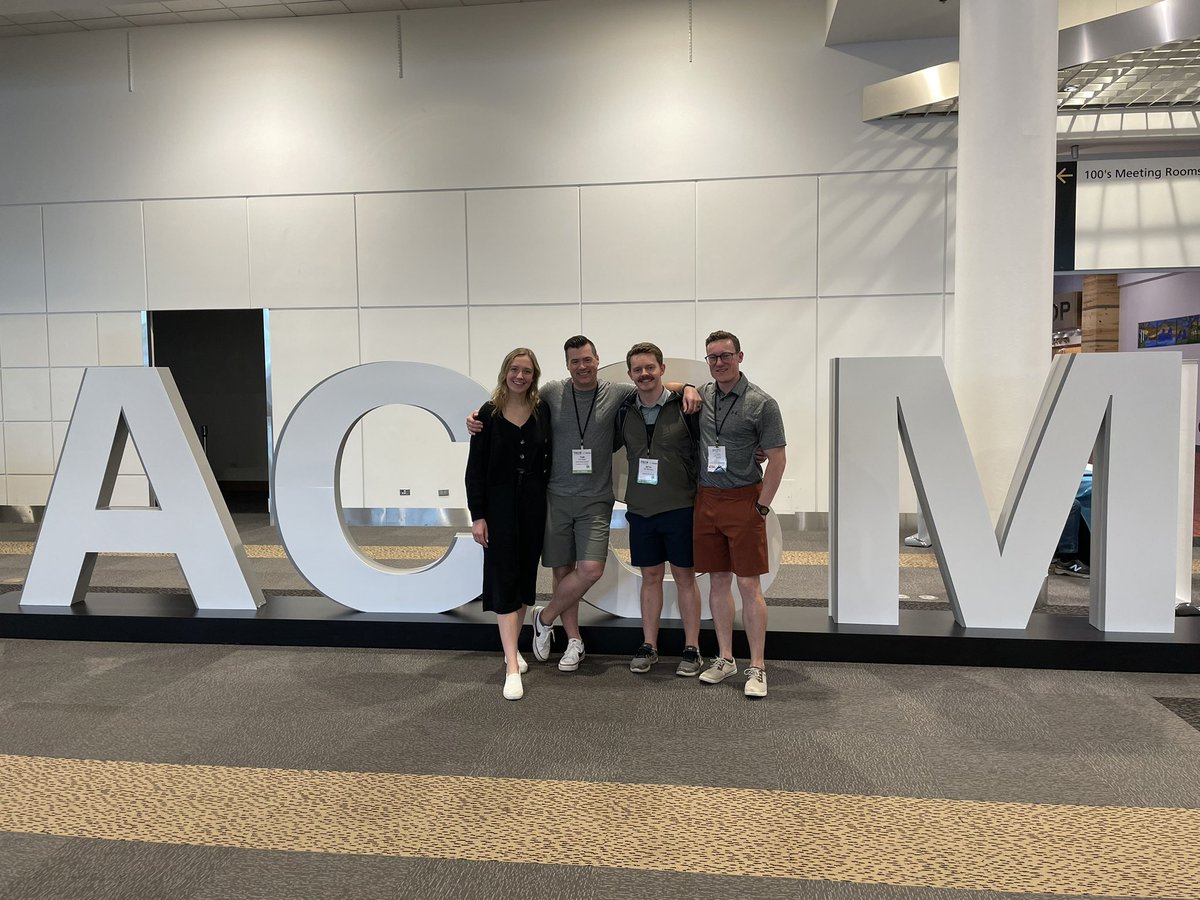
Fabulous time presenting and integrating former and current trainees with colleagues at #ACSM2023. Great feedback on our appetite regulation work and proud of this crew and all they are accomplishing @_mccarthyseth@DBornath@hashim90i Jessie Tucker not on Twitter yet
New study out from my PhD work with @MC_Devries! We found that TBC1D1 phosphorylation was higher in males compared to females following acute HIIE. We also found better glycemic handling in females when glucose was normalized for differences in body comp.
Our latest from @hazelltj lab out now in @japplphysiol : Intense interval exercise induces lactate accumulation and a greater suppression of acylated ghrelin compared to submaximal exercise in middle-aged adults
https://t.co/U9qFlamt4i
Interested in how exercise affects hunger? A former Masters student will chat about the role of the menstrual cycle in appetite regulation while I'll cover some of our work related to how exercise can affect appetite. @LaurierKin@LaurierResearch Session run by @LaurierAlumni
This one took a bit of time but pretty excited to have it out now! Interesting results suggesting the exercise-induced suppression of acylated ghrelin is blunted in the luteal phase of the menstrual cycle… https://t.co/P6kvEqoY7I @_mccarthyseth@Phil_M_phd@LaurierKin