Beyond “Personal Views”: Why Political Leaders Shape the Identity of Their Parties
When political organisations face controversy over comments made by senior officials, one of the most common responses is that the remarks represent only the “personal views” of the individuals involved and should not be interpreted as the position of the wider party.
There is some validity to this argument. Political parties are made up of individuals, and members—including executive officials—can hold opinions that differ from formal party policy. Not every statement made by a party member automatically becomes an official position. Policies are normally established through recognised party structures, such as executive decisions, conferences, and official statements.
However, the role of leadership creates a more complex reality.
Executive members are not ordinary supporters. They are entrusted with shaping strategy, influencing decisions, and guiding the direction and public message of the organisation. Because of their positions, their words carry a level of authority and influence that extends beyond personal expression.
Leadership shapes perception.
The public does not judge political parties only by their manifestos or official declarations. It also judges them by the conduct, language, and actions of those who lead them. A comment made by a senior executive member is naturally viewed differently from the opinion of a general supporter because leadership positions suggest involvement in the organisation’s thinking and priorities.
This does not mean every statement by a leader automatically represents official party policy. Political parties contain debate, disagreement, and different viewpoints. Leaders, like all individuals, may express personal opinions.
The key issue is whether those opinions reflect, influence, or reveal the broader thinking within the leadership structure.
Organisations are shaped by those at the top. In politics, as in business and other institutions, leaders establish culture, influence internal discussions, and help determine what ideas gain prominence. When senior figures repeatedly express certain views, those views can begin to shape the organisation’s identity, even if they never appear in a formal policy document.
This is why political parties emphasise message discipline. They understand that the public often connects the actions and statements of leaders with the institution they represent.
A party’s argument that comments were merely personal becomes stronger when it clearly rejects those views, explains its official position, and takes appropriate action if necessary. However, that separation becomes harder to maintain when the individuals involved hold influential positions, when similar views are shared by multiple officials, or when the organisation’s actions appear consistent with those remarks.
Political accountability requires acknowledging both realities: individuals can have personal opinions, but leaders do not speak in isolation. Their positions give their words weight.
Ultimately, executive members’ statements may not automatically become official party policy, but they inevitably contribute to the public understanding of the organisation. Leadership influences culture, shapes narratives, and affects public trust.
Those who hold positions of authority must therefore recognise that their words carry institutional consequences. Leadership is not only about holding a title—it is about the responsibility that comes with representing and shaping an organisation.
The average Caribbean/Jamaican citizen and electorate mightn’t consider the implications of our collectiveness but….
As geopolitical tensions deepen and nationalist politics gain traction in many parts of the world, the Caribbean faces a strategic question that extends beyond trade or diplomacy: can small island and coastal states safeguard their sovereignty by acting alone, or does their future depend on a stronger, more cohesive Caribbean Community?
Was the local representative(Councillor) for Black River informed of this? Because from my understanding, he is being left out.
https://t.co/awIP8d8KF1
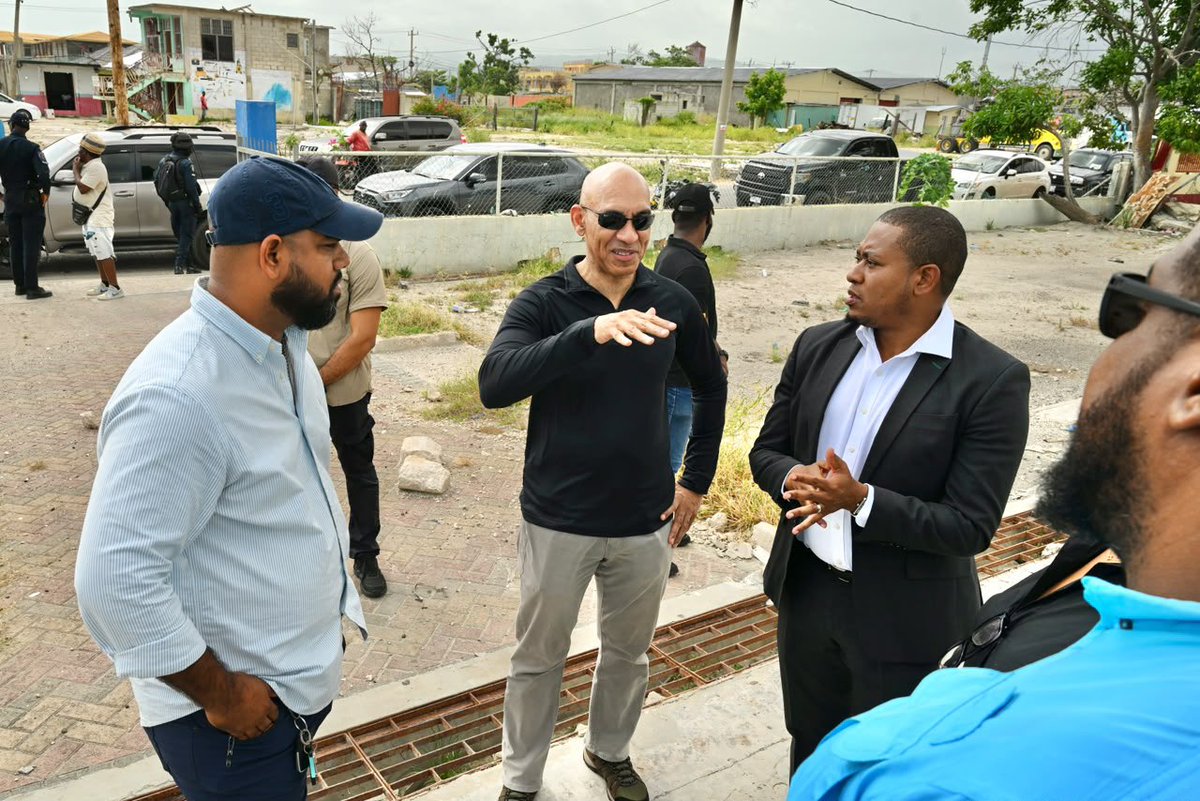
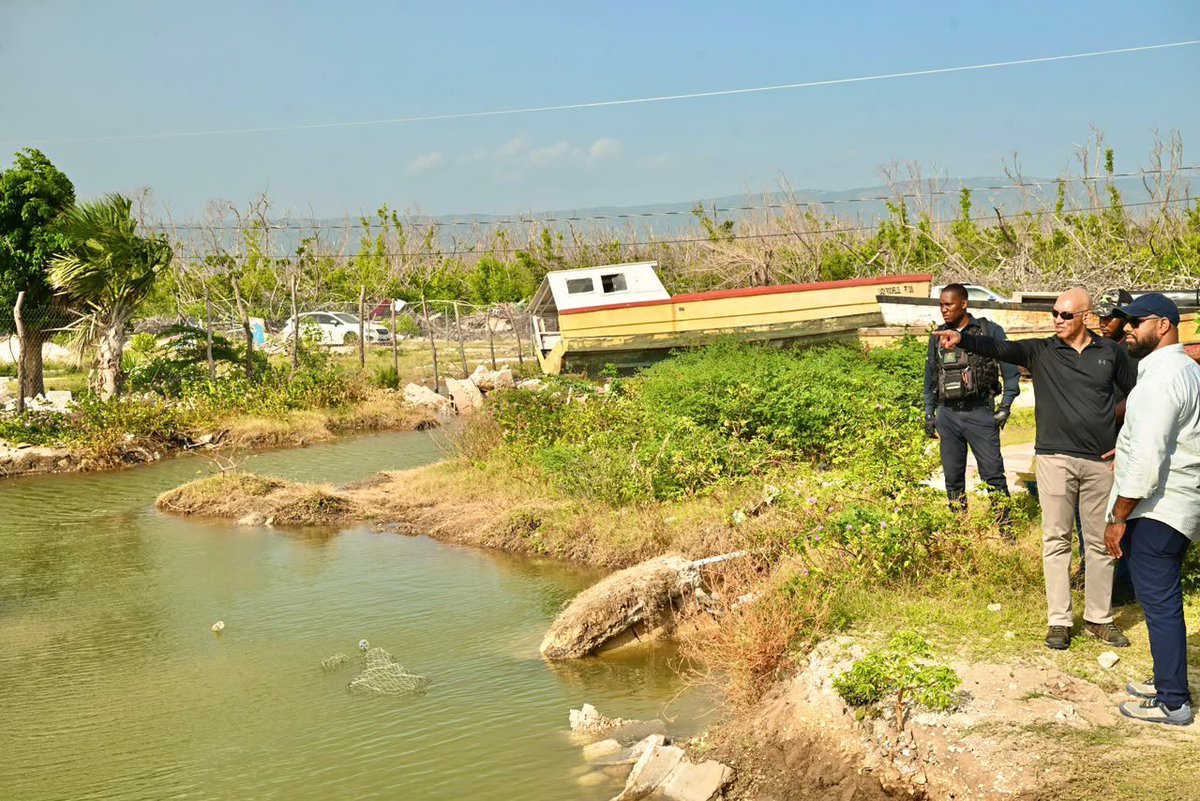
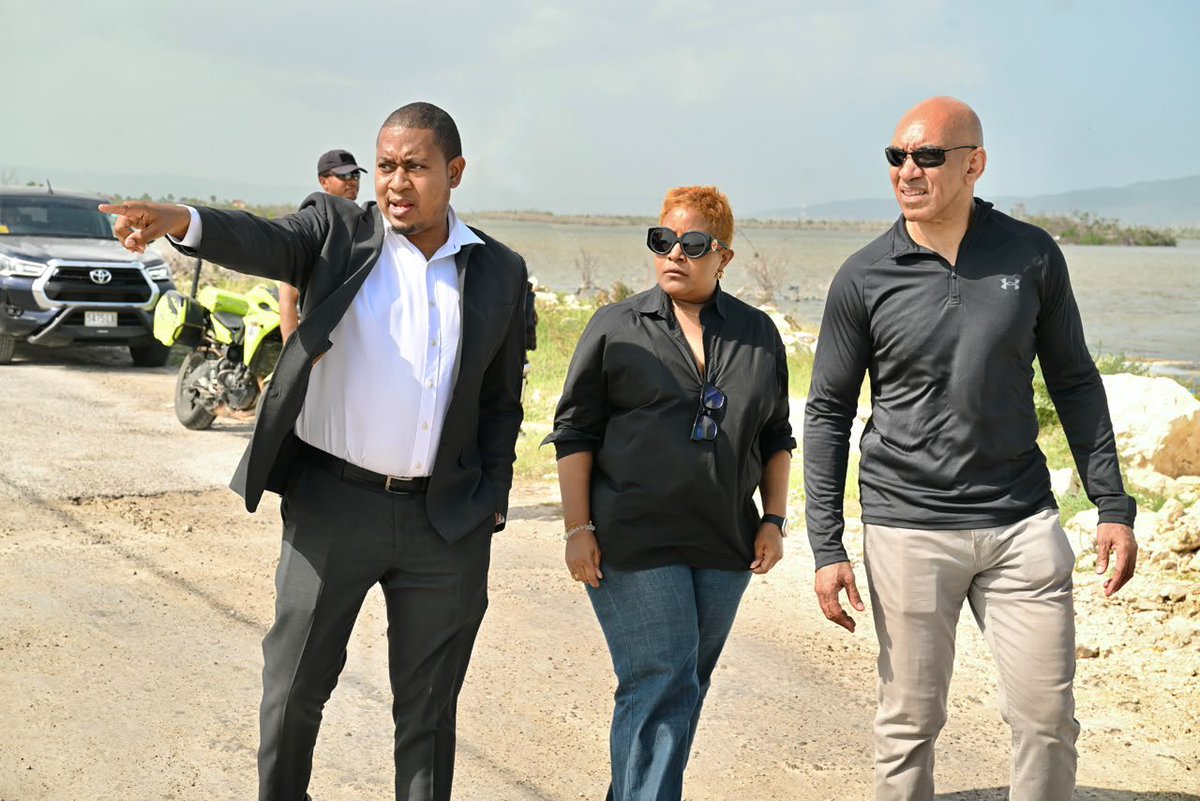
Yesterday afternoon, Ambassador Antony Anderson, Chief Executive Officer of the National Reconstruction and Resilience Authority (NaRRA), joined Minister Floyd Green on a visit to Black River, Parottee and surrounding communities in St. Elizabeth to review the progress of recovery and reconstruction efforts.
The visit was an opportunity to listen to community members, hear about the challenges they continue to face, and see the progress being made to restore homes, infrastructure and livelihoods. These conversations are an important part of ensuring that recovery efforts respond to the real needs of the people affected.
NaRRA was established to lead and coordinate Jamaica’s recovery and reconstruction after major disasters.
According to Salmon, apart from a single town hall meeting held shortly after the hurricane, there has been little direct engagement with residents or local representatives regarding the redevelopment plans.
“The people still have many questions about what is happening, and there has not been the level of dialogue they deserve,” Salmon said, adding that as the councillor for the division, he has not been meaningfully involved in planning discussions despite interacting daily with affected residents and business operators.
BLACK RIVER, St. Elizabeth — Mounting concerns over the pace and direction of Black River’s post-Hurricane Melissa recovery are being echoed not only by business leaders but also by the area’s elected local government representatives
Read More: https://t.co/8StdMC83cl…
From Resilience to Renewal: Can CARICOM’s Saint Lucia Summit Deliver the Caribbean’s Most Ambitious Implementation Agenda Yet
Gros Islet, Saint Lucia
For much of its 53-year history, the Caribbean Community (CARICOM) has excelled at forging regional consensus. Its communiqués have consistently articulated bold visions for integration, economic cooperation, climate resilience, and collective diplomacy. Yet the Community has also faced a persistent criticism: translating consensus into implementation has often proved far more difficult than reaching agreement around the conference table.
The communiqué issued after the Fifty-First Regular Meeting of the Conference of Heads of Government, held in Saint Lucia from 5–8 July under the chairmanship of Prime Minister Philip J. Pierre, suggests that regional leaders recognise this challenge. Rather than unveiling a dramatically new vision for Caribbean integration, the meeting focused on building the institutional architecture needed to implement priorities that have long appeared on the regional agenda.
https://t.co/cub6JhBzAg
Britain’s recent political turbulence reflects a country wrestling with Brexit, economic uncertainty, cultural division, global shocks, and changing expectations. No prime minister, regardless of talent, was likely to navigate those challenges without difficulty.
The real question is not why so many leaders have fallen. The real question is whether the system still possesses the capacity to correct itself when they do.
The answer appears to be yes.
Six prime ministers in ten years is not a picture of a democracy collapsing. It is a picture of a democracy refusing to accept poor performance as the price of continuity.
That may not be elegant. It may not always produce better outcomes. But it keeps power conditional rather than permanent.
And in a democracy, that is exactly the point.
The door of Number 10 will eventually open for a seventh prime minister. Whether that leader succeeds or fails remains to be seen. What matters is that neither Parliament, nor the public, nor the governing party is powerless to act if disappointment follows once again.
That uncertainty is not a flaw in the democratic system.
It is the democratic system.
The same Westminster system Jamaica operates under.
BUCK’s Opinion: Six Prime Ministers in Ten Years Isn’t a Sign Democracy Is Failing. It’s Proof It Still Works.
By any conventional measure, Britain’s recent political history looks chaotic.
Since 2016, the United Kingdom has gone through six prime ministers: David Cameron, Theresa May, Boris Johnson, Liz Truss, Rishi Sunak, and now Keir Starmer. None managed to establish the kind of long-term political dominance once associated with Margaret Thatcher or Tony Blair. Each departed office under pressure, whether from electoral backlash, internal party revolts, scandal, economic turmoil, or simple public disappointment.
To many observers, this revolving door at Number 10 is evidence that British democracy is broken.
I disagree.
In fact, Britain’s rapid turnover of leaders may be one of the strongest pieces of evidence that democratic accountability is still functioning.
Too often, political stability is confused with political success. We assume that a leader who remains in office for a decade must be governing effectively, while a country that changes leaders frequently must be in crisis. Yet history offers countless examples of long-serving governments that presided over stagnation, drift, and unresolved problems.
What exactly is the advantage of keeping a leader in power for ten years if little improves during those ten years?
If a country spends a decade under one ineffective prime minister, it arrives at much the same destination as a country that spends that decade cycling through several ineffective leaders. The difference is that in the second scenario, the public and political institutions retain the ability to say, repeatedly, “This is not working.”
That is not dysfunction. That is accountability.
Britain’s parliamentary system was designed around this principle. Prime ministers are not elected presidents with fixed terms. They govern only while they maintain the confidence of Parliament and their own party. When that confidence evaporates, they go.
That is exactly what happened to Cameron after the Brexit referendum. It happened to May when she could not secure support for her Brexit deal. It happened to Johnson after the scandals that undermined his authority. It happened to Truss after her economic programme triggered market panic. It happened to Sunak as voters lost confidence in a Conservative government that had been in office for more than a decade. And it happened to Starmer when public frustration and political pressures overwhelmed the promise that accompanied his landslide victory.
The common thread is not instability. It is accountability.
Critics argue that constant leadership changes prevent governments from “getting things done.” There is some truth in that. Frequent turnover disrupts policymaking, complicates long-term planning, and creates uncertainty for investors and international partners.
But there is another side to the equation.
The pursuit of stability at all costs can be just as damaging. Leaders who know they are politically secure often become insulated from criticism. Failed policies linger longer than they should. Governments become less responsive to changing realities. Stability can easily become stagnation.
The uncomfortable truth is that democracy was never designed to maximise efficiency. It was designed to limit power and make leaders answerable to the people they govern.
Authoritarian governments often boast of their stability. Their leaders remain in office for decades. Policies are implemented quickly. Decisions face fewer obstacles. Yet few democratic societies would willingly trade accountability for that kind of efficiency.
Democracy is slower, noisier, and frequently frustrating. Its strength lies not in guaranteeing good leaders, but in creating mechanisms to remove bad ones.
@NestaJA In the interest of safety-can you see if guard rails can be erected at the bridge at close to Tombstone, Lacovia, St.Elizabeth? Why do these thing take so long to be addressed? The Mayor, the MP, the councillor pass by everyday. Put it on your list of things to do.
Ivan (2004): Primarily domestic resources plus modest private grants and targeted international help. Buchanan’s ministry coordinated with limited external funding.
Buchanan’s 2004 model of practical cash aid and quick infrastructure fixes helped Jamaicans put their lives back together after Ivan. The Melissa response builds on that foundation but operates at a national-crisis level, relying heavily on global partnerships and pre-funded resilience.
The Rastafari Mansions and Organizations (RMO) are pushing back against statements made by Culture Minister Olivia Grange, who claimed that Rastafari rights are already protected under Jamaica’s Constitution.
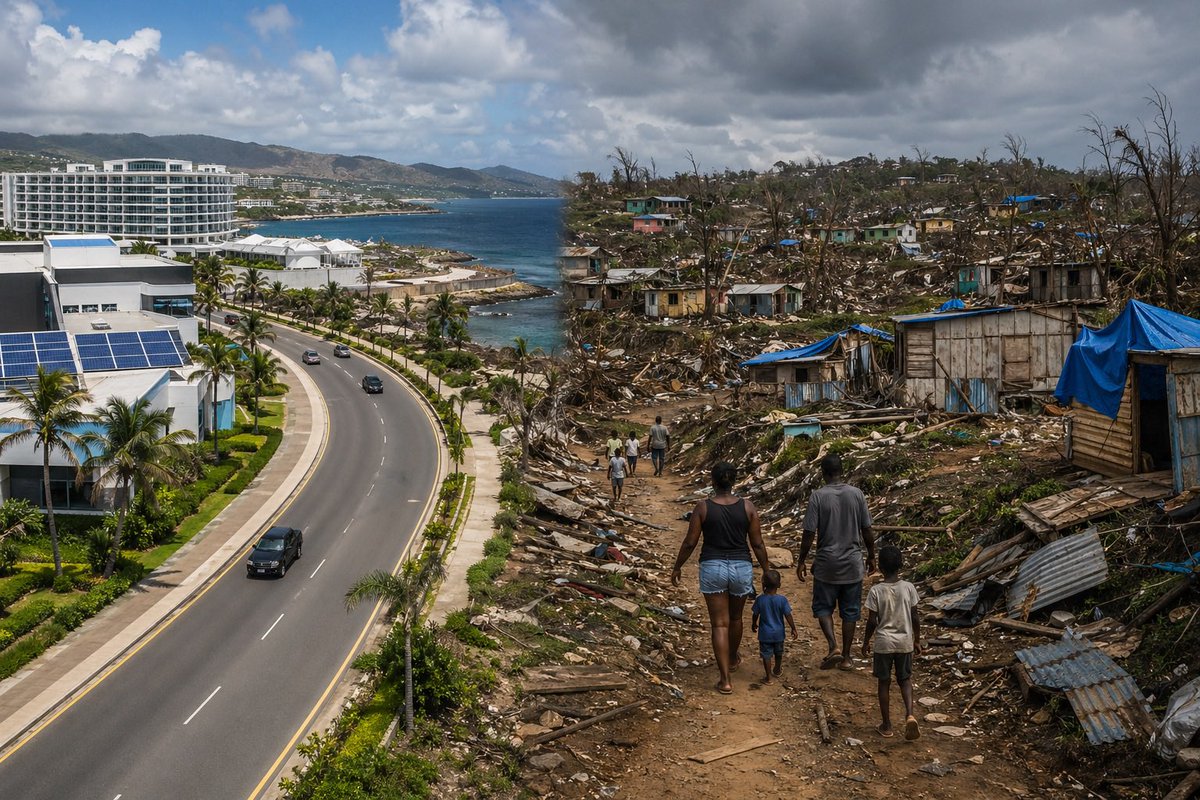
TWO JAMAICAS: FOLLOWING THE MONEY IN A POST-MELISSA RECOVERY AND WHO EXACTLY IS IT REBUILDING FOR
Six months after Hurricane Melissa devastated western Jamaica, the government says recovery is on track.
Read more: https://t.co/xQjk8YOqHS
The Speaker’s Chair Demands Unquestioned Impartiality – Time for a Change
In any mature Westminster-style democracy, the Speaker of the House of Representatives must stand above the fray – a neutral arbiter whose rulings command respect from both sides of the aisle. When that impartiality, or even the perception of it, comes under sustained challenge, the institution itself suffers. Jamaica’s Parliament is currently confronting precisely such a moment.
https://t.co/TsSoNHEJG4
In 1796, nearly 600 Maroons from Trelawney Town in Jamaica were exiled from their homeland and sent across the Atlantic to Halifax, Nova Scotia.
This film tells the story of their resistance, betrayal, survival, and enduring legacy.
Ht the link 👇🏾
https://t.co/d0hbW5YOmD
https://t.co/SGiKGedGhX
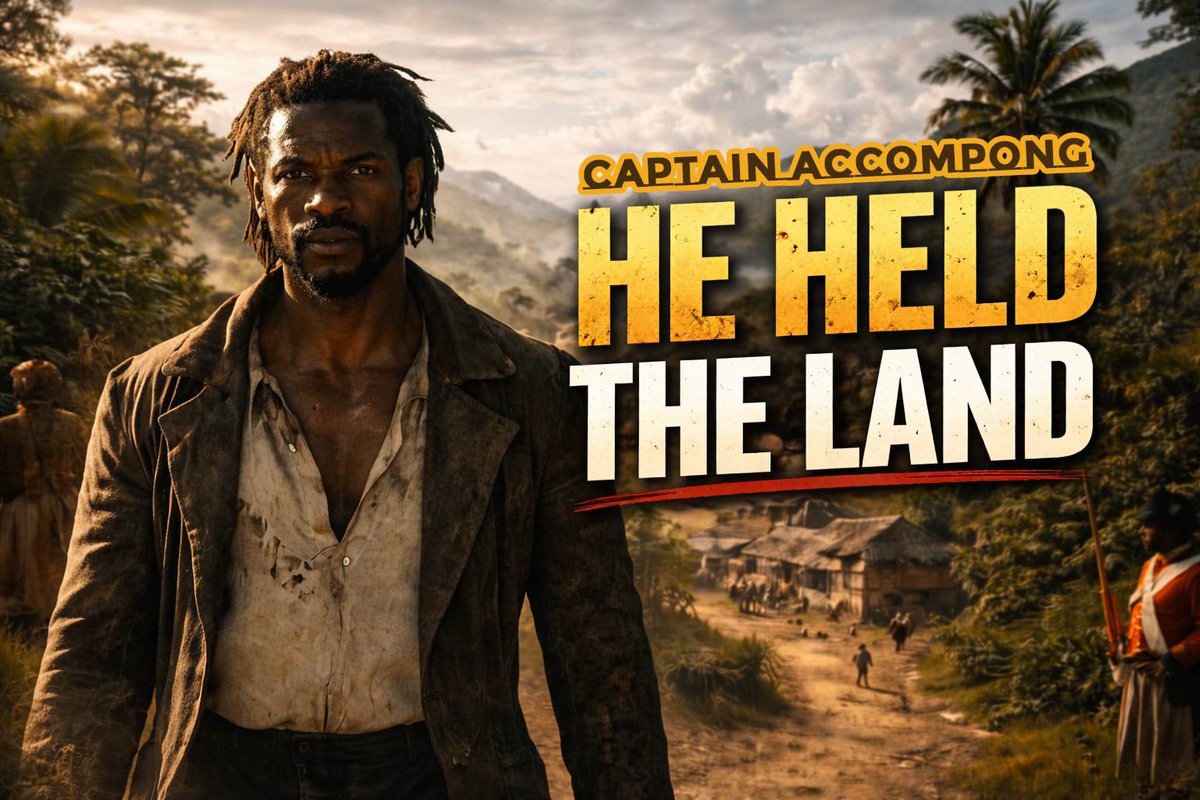
Captain Accompong is one of the most important, yet least understood figures in Jamaican history.
In the 1700s, as the British Empire tightened its grip on the island, a different power was rising in the hills of western Jamaica. The Maroons—freedom fighters, strategists, and survivors—had built a resistance the British could not break.
Among them stood Captain Accompong. He is widely recognized as the brother of Cudjoe, the leader of the Leeward Maroons, and is often linked by tradition to Nanny of the Maroons. Together, this lineage represents one of the strongest foundations of resistance in the Caribbean.