La literatura es una forma de insurrección permanente y ella no admite las camisas de fuerza. Todas las tentativas destinadas a doblegar su naturaleza airada, díscola, fracasarán. La literatura puede morir pero no será nunca conformista.
La literatura es fuego, Mario Vargas Llosa
Nadie que esté de acuerdo, reconciliado con la realidad, cometería el ambicioso desatino de inventar realidades verbales. La vocación literaria nace del desacuerdo de un hombre con el mundo, de la intuición de deficiencias, vacíos y escorias a su alrededor. MVLL.
SIN CENSURA Y FALSANDO SOY FILÓSOFO, ESCRITOR, POETA Y SONETISTA ORIGINARIAMENTE ZAMORANO, MICHOACANO Y MEXICANO SOLTERO COMO SIN HIJO ALGUNO ATEO, ANTICRISTIANO, IRRELIGIOSO Y LIBERAL HASTA MORIR ANTE ESTA INMORALIDAD PARA LA ÉTICA, CIENCIA SOCIAL: https://t.co/5IJtnmEXEV
Las mejores novelas son siempre las que agotan su materia, las que no dan una luz sobre la realidad, sino muchas. Mario Vargas Llosa, escritor peruano.
Take a minute to discover the woman behind this year’s peace prize: Navi Pillay
Explore the remaining Nobel Prizes in our complete video series: https://t.co/YXc23R8AdQ
Illustrations: Niklas Elmehed
The power of evolution is revealed through the diversity of life.
On 24 November 1859 Charles Darwin's book 'On the Origins of Species' was first published, arguably one of the most important books of the 19th century and a book with a massive impact on later scientific research.
Charles Darwin died in 1882 almost 20 years before the Nobel Prizes were first awarded - they are not awarded posthumously.
159 years after Darwin's book was published, the #NobelPrize in Chemistry was awarded to Frances Arnold, Gregory Winter and George Smith who took control of evolution and used it for purposes that bring the greatest benefit to humankind.
Enzymes produced through directed evolution are used to manufacture everything from biofuels to pharmaceuticals. Antibodies evolved using a method called phage display can combat autoimmune diseases and in some cases cure metastatic cancer.
Learn more: https://t.co/UFSvMtnP96
In 1928, Alexander Fleming discovered the mould he was working with produced a substance that could kill many common bacteria. He called this new, exciting substance "mould juice". Only after a couple of months did he name it penicillin.
#AntimicrobialAwarenessWeek#WAAW2026
”In my case, the main features came from a dinner table in the 1950s: a skeptical father who wanted to know what people really thought, a mother who told me that I could never understand the Great Depression, and a grandfather whose family history taught me that wars, riots, financial crises, and private money were things that really happened to people.
I am indebted to the giant macroeconomists of my youth for their idealism and purpose, for the high scientific standards they set, and for the problems they posed for my generation to work on.”
- economic sciences laureate Thomas Sargent on what inspired him as a young boy.
Sargent developed methods for examining the relationship between policy and economics. For example, he has shown how the effects of the permanent restructuring of economic policy can be analysed and how households and businesses have adjusted their expectations to match economic development.
Read his full biography:
https://t.co/RK49Tfntf3
Steven Chu shared the 1997 Nobel Prize in Physics with Claude Cohen-Tannoudji and William D. Phillips "for development of methods to cool and trap atoms with laser light." He will be sharing his thoughts on AI on 9 December for our Nobel Week Dialogue. Find out more: https://t.co/eWwfCzPgpZ
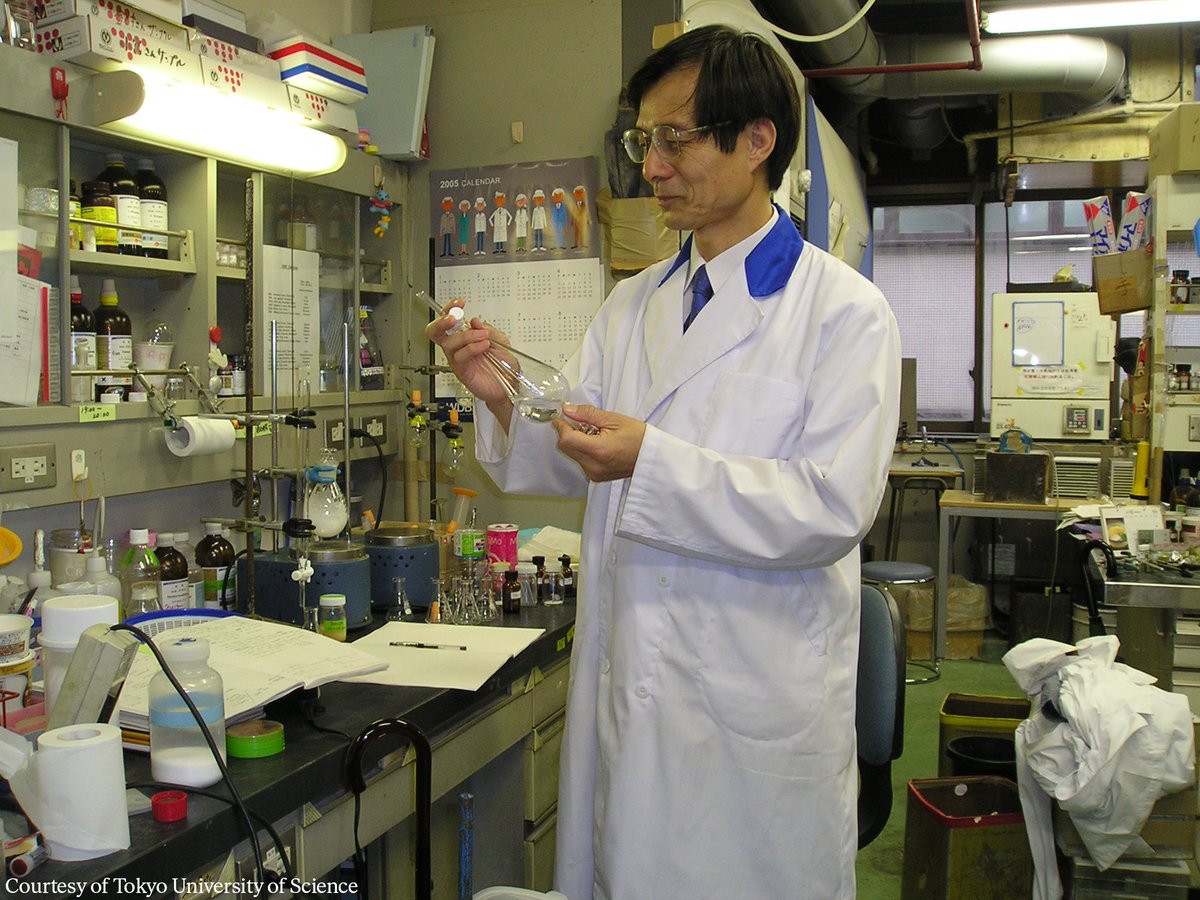
Molecules often exist as two mirror images – known as chiral molecules. In nature, often only one of these mirror images occurs, but scientists were unable to replicate this in the lab.
In 2003, this year's chemistry laureate Kenso Soai managed to create the first ever chemical reaction that was homochiral. In other words, he presented a reaction in which only one of the two possible mirror images was formed. Other than life itself, no one had previously achieved this feat.
Soai himself described it as if he and his team "made a little bit contribution to solve the homochirality problem." On 10 December, Soai will be receiving his Nobel Prize for his contributions.
Read more about the research behind the 2026 chemistry prize: https://t.co/QxTIp2kLVN
During our Nobel Prize Dialogue, physics laureate Brian Schmidt reflected on AI's impact in the field of mathematics.
Schmidt was awarded the 2011 physics prize “for the discovery of the accelerating expansion of the Universe through observations of distant supernovae.”
Watch the full event: https://t.co/rAsiygorBU
“An increase in the material means at the disposal of humanity may even present dangers unless it is accompanied by a corresponding spiritual effort.”
Philosopher and author Henri Bergson, awarded the 1927 Nobel Prize in Literature, reflected on the moral challenges of progress in his 1928 Nobel Prize banquet speech.
He noted that while the 19th century made tremendous technological advances – from steam to electricity – many assumed these inventions would automatically bring people closer and make society better. Instead, Bergson warned, without a matching effort toward moral and spiritual growth, technology can deepen divisions rather than bridge them.
His message still resonates today: our machines may connect us, but only our humanity can unite us.
#WorldPhilosophyDay
Abdulrazak Gurnah was born in 1948 and grew up on the island of Zanzibar in the Indian Ocean. He arrived in England as a refugee at the end of the 1960s.
In 1964, Zanzibar went through a violent revolution. Under then President Abeid Karume’s regime, there was oppression and persecution of citizens of Arab origin. Gurnah, as a Yemeni muslim, belonged to the victimised Arab group.
After finishing school, he was forced to leave his family and flee the country. He was only 18 years old. Gurnah finally returned to Zanzibar in 1984 at age 35, allowing him to see his father shortly before he died.
Gurnah has published ten novels and a number of short stories. The theme of the refugee’s disruption runs throughout his work. He began writing as a 21-year-old in English exile, and even though Swahili was his first language, English became his literary tool.
Gurnah’s upbringing in a diverse island shaped by global trade, slave trade and multiple colonial rulers, has had a profound impact on his writing. He rejects one-dimensionality and focuses on complex themes of identity.
In all his work, Gurnah strives to capture the breadth and nuance of the human experience. His stories explore how memories, names, and the sense of self are never static, through characters that are flawed and multifaceted. Gurnah’s novels are a passionate exploration of truth, that break stereotypes to invite us into a beautifully diverse East Africa.
Listen to our podcast, where he shares more about the role of displacement in his work: https://t.co/dg47Luv0cP
In medical school, Gerty Cori found two of her life’s passions: biochemistry and Carl Cori.
She and Carl met in anatomy class and became inseparable. They shared the 1947 Nobel Prize in Physiology or Medicine for uncovering the process of cellular energy storage and release.
#NobelPrize
"I will never forget that night. It is truly an amazing feeling when you know that you have built something that no one else ever has – and it actually works. There really is no excitement quite like it... except for maybe getting woken up at 5 in the morning because the Royal Swedish Academy of Sciences and the Nobel Foundation also think it was an exciting moment for the field of laser physics."
Pictured here is physics laureate, Donna Strickland, delivering her speech at the 2019 Nobel Prize banquet.
Click here to watch the full speech: https://t.co/K0XoQkqDsy
On 10 December 2026, our new laureates will be in Stockholm and Oslo, to receive their Nobel Prizes. Make sure to join us online for the celebrations.
"I know that African people everywhere are encouraged by this news. My fellow Africans, as we embrace this recognition, let us use it to intensify our commitment to our people, to reduce conflicts and poverty and thereby improve their quality of life. Let us embrace democratic governance, protect human rights and protect our environment. I am confident that we shall rise to the occasion. I have always believed that solutions to most of our problems must come from us."
In her Nobel Prize lecture, peace laureate Wangari Maathai spoke about democracy and the responsibility we have to take care of our planet Earth. Maathai was awarded the 2004 Nobel Peace Prize “for her contribution to sustainable development, democracy and peace.”
Hear her full prize lecture: https://t.co/AEYPcylF6a
“There is no greater violence than to deny the dreams of our children.”
Since his childhood, Kailash Satyarthi had always questioned the wrong and unjust. As a young child of five years, he was disturbed deeply when he saw a small boy working with his cobbler father shining shoes at the school gate on the first day of school. He could not understand why some children were different from him. It did not take Satyarthi much time to understand the stark contrast between his life and that of the cobbler’s son.
Satyarthi always felt very strongly that all children are born equal and therefore have the right to lead a good life. Public schooling was not free when Satyarthi was around eleven years old, so with the help of a few like-minded friends, Satyarthi started a football club to raise money for those who were unable to attend school. In the years that followed Satyarthi and his friends went ahead and put up snack stalls at fetes and fairs and were able to raise money towards school fees of underprivileged children.
This was just the start of a decades long journey in which Satyarthi has been working to end child labour and campaign for children's right to education. In 2014 he was awarded the Nobel Peace Prize for his efforts.
Read his full biography: https://t.co/r8eMpS1Krh
#WorldChildrensDay
"With no help or guidance except curiosity and the will to learn, my taste for reading developed and was refined."
Remembering Portuguese novelist and journalist José Saramago.
Despite his poor background, Saramago learned to read and write at an early age. He was a lifelong learner who was everything from a mechanic at a car repair shop to a journalist at different points in his life.
His writings are known for their blend of imagination, compassion and irony. He was awarded the Nobel Prize in Literature in 1998.
Learn more about him: https://t.co/3VCnKXOZJg