👀 Still sleeping on $XNT?
The community is growing.
The holder count is rising.
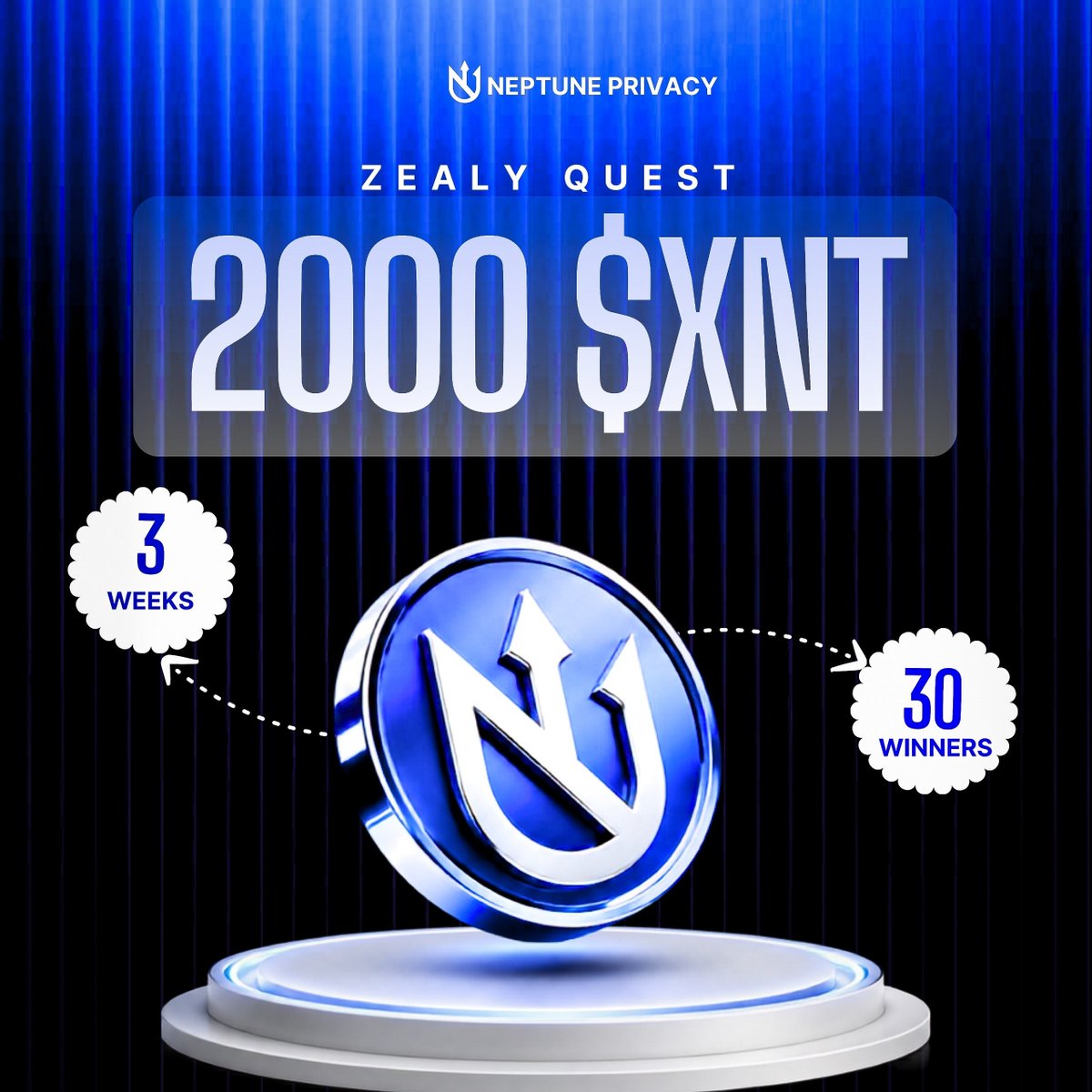
The Zealy campaign is live.
And rewards are being distributed to the most active supporters.
While most are waiting for confirmation, smart money is quietly accumulating.
Privacy isn't a trend.
It's a necessity.
Join the movement.
Become an XNT holder.
Climb the leaderboard.
🔥 Don't be the one buying after everyone else discovers it.
The easiest way to spot a disruptive technology?
The market doesn’t know how to categorize it.
Leviathan isn’t competing for a seat at the table.
It’s building a different table.
Private.
Post-quantum.
Scalable.
$XNT
Most blockchains will be obsolete the day quantum computers go mainstream.
Not because of hacks.
Not because of exploits.
Because the encryption they were built on was never designed to survive what's coming.
Neptune Privacy is.
Post-quantum cryptography isn't a feature on the roadmap, it's the foundation the entire protocol is built on.
When the quantum era hits, most chains scramble.
$XNT is already ready.
The quantum threat isn’t a future problem.
The countdown has already begun.
Governments, intelligence agencies, and well-funded actors are already collecting and storing encrypted blockchain data today, anticipating a future where quantum computers can decrypt it.
Most chains were not designed for that reality.
$XNT was built as if the threat already exists.
Privacy and post-quantum security built into the foundation from day one.
Thanks @firehustle_net for breaking it down👇
ALTCOIN REVIEW: $XNT 🔍
‣ Can zk-STARKs make Neptune Privacy quantum-resistant?
‣ Does the emissions fork improve long-term tokenomics?
‣ Is $XNT undervalued, or too risky for most investors?
Read More👇
https://t.co/cV2coiZ0Jb
Privacy matters.
Scalability matters.
The industry shouldn’t be settling for one or the other. It should be demanding both.
Leviathan is being built to support a world where developers can create powerful private applications, users can interact without exposing sensitive information, and the network can continue to perform as adoption grows.
The future isn’t just private.
It’s private at scale.
$XNT
“Neptune already built the missing piece, and Leviathan is the practical proof that the technology works.”
The private, post-quantum narrative is coming.
Neptune Privacy and Leviathan is uniquely positioned for what’s ahead.
Watch this clip from @firehustle_net explaining why they deserve attention in the private, post-quantum blockchain conversation.
$XNT
After $ZEC's crash and vulnerability - it just goes to show no project is safe. Not even the best of privacy projects.
And this is all before a quantum revolution, once that hits - the numbers of exploited projects are bound to go up.
That's why projects like $XNT | @NeptunePrivacy are important.
Neptune Privacy ( $XNT ) made a different bet: post-quantum from day one.
→ zk-STARKs : hash-based proofs, no elliptic curves for Shor's algorithm to attack
→ Mutator Sets : confidential state, no trusted setup
→ PoW L1 + Leviathan, its private L2
The launch of Leviathan is a big one for the project and is destined to be a proper game changer.
What if the biggest flaw in crypto isn't scalability?
What if it's that every transaction, wallet, balance, and smart contract interaction is still public?
That's the problem $XNT is trying to solve with Leviathan.
Most blockchains force you to choose.
Privacy or programmability. Scalability or security. Speed or decentralization.
$XNT is trying to prove those trade-offs aren't actually necessary.
That's what makes Leviathan interesting.
It's not just another L2 chasing TPS numbers.
It's built around a bigger idea:
What if smart contracts were private by default, scalable, and quantum-resistant from day one?
Most of crypto still struggles with at least one of these problems.
Ethereum and Solana offer programmability and scale, but everything is visible.
Privacy coins offer confidentiality, but lack robust smart contract ecosystems.
Many zk-projects improve privacy, but still inherit public-chain assumptions and future quantum risks.
Leviathan takes a different approach.
Built on Neptune's L1, the stack combines:
• zk-STARKs
• Mutator Sets
• Miden VM
• PoW settlement
All designed to work together from the start.
The zk-STARK angle matters.
Unlike many systems built around elliptic curve cryptography, STARKs are hash-based and designed with post-quantum security in mind.
No trusted setup.
No toxic waste assumptions.
Privacy and verification built directly into the protocol.
Then there's Mutator Sets.
One of the more interesting pieces of the architecture.
Instead of privacy becoming weaker as the network grows, Mutator Sets allow confidential state updates while keeping proofs efficient and unlinkable.
Privacy without sacrificing scalability. That's a difficult problem most chains still haven't solved.
Leviathan then adds Miden VM on top.
Developers can build:
• Private DEXs
• Confidential lending markets
• Shielded stablecoins
• Private payments
• Hidden-state gaming applications
• AI-agent economies
Without needing to understand the underlying cryptography.
The VM handles the complexity.
Users just interact with applications.
The architecture itself is straightforward:
Neptune L1 handles security and settlement.
Leviathan L2 handles execution.
Fast L2 transactions get aggregated into STARK proofs and settle back to L1.
One ecosystem. One asset.
$XNT across both layers.
No separate L2 token. No fragmented incentives.
The bigger thesis is simple:
Crypto spent the last decade building public financial infrastructure.
What happens when privacy becomes the default instead of the exception?
That's the market Neptune and Leviathan are aiming for.
$NKP
The market has become accustomed to projects that promise everything overnight. Non Kyoto Protocol is taking a very different approach.
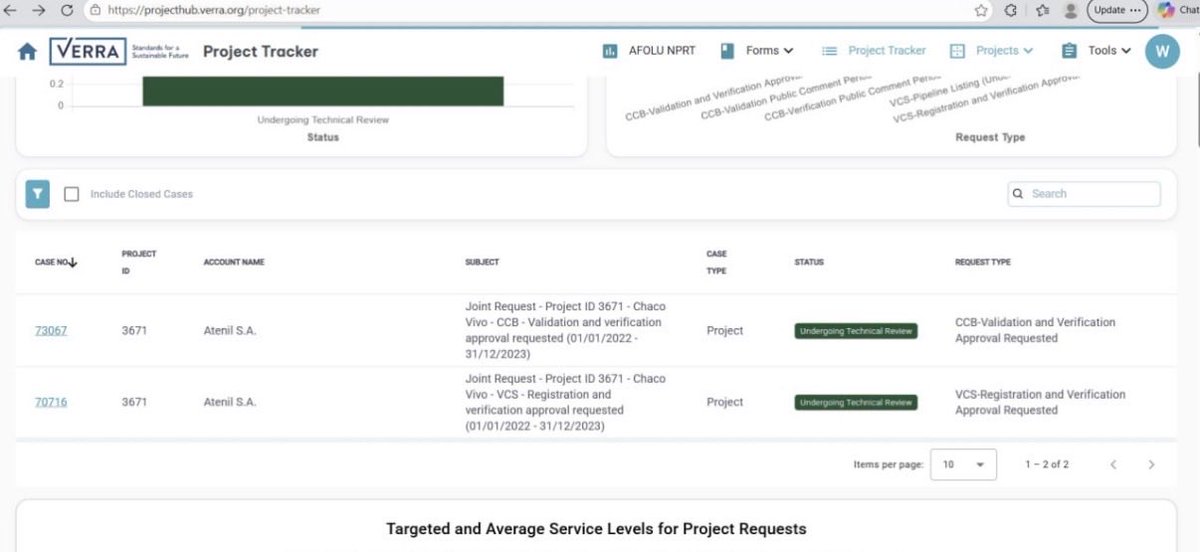
Chaco Vivo is a large scale environmental project with decades of expected impact, national level recognition, and one of the most demanding verification processes in the carbon industry. Progress is measurable. The project has moved from 29 findings in the first Verra review round to only 8 in the second, with the remaining items focused on technical clarification rather than new issues.
The project is currently in the second review phase, which Verra estimates typically takes around three weeks. While this timeframe can vary from project to project, we are already 2 weeks and 3 days into the current review period. Although no exact timeline can be given, it does indicate that we are approaching the final stages of the process.
At this stage, the outcome and timing are entirely dependent on Verra’s review process. There is nothing the team can do other than continue to provide any requested documentation and await the final assessment.
What is often overlooked is the amount of work taking place behind the scenes. While the community focuses on the Verra review, the team has continued to strengthen the foundation of the project through new hires, operational expansion, marketing preparations, strategic planning, and the development of additional initiatives across the broader portfolio. A significant amount of groundwork has already been completed, positioning the project to generate substantial momentum once the Verra process reaches its conclusion.
Non Kyoto Protocol continues to expand its portfolio beyond Chaco Vivo into additional carbon, biochar, and biofuel initiatives while maintaining the same level of diligence and transparency. Real world assets, fully doxxed leadership, government engagement, and independently verifiable projects are not built in weeks.
The closer a project gets to the finish line, the more important it becomes to focus on facts rather than emotions. The facts show continued progress.
The conversation around quantum risk is changing fast.
Google’s recent breakthrough reduced the resources needed to run Shor’s algorithm by roughly 10x. Independent researchers are already building on those results.
The question is no longer if cryptography will face quantum pressure.
It’s when.
Neptune Privacy isn’t waiting for Q-Day.
It was built with post-quantum assumptions from day one.
Privacy by default.
Post-quantum security.
Built for a future that may arrive sooner than most expect.
$XNT
Leviathan is a game changer.
It isn't competing in an existing category.
It's creating a new one.
Private smart contracts.
Quantum-resistant architecture.
A purpose-built Layer 1.
Built from the ground up for a future the market is only beginning to recognize.
$XNT
“The smartest money in crypto is making a huge bet that privacy focused quantum proof blockchains are the next big thing and the project they are focused on has one weakness.
But there’s another project that’s solving it.”
That project is $XNT.
Check out this insightful clip from @firehustle_net explaining why Neptune Privacy and Leviathan may be the realization of what Miden was always trying to build: a scalable, private, quantum-resistant ecosystem built on a purpose-built Layer 1 instead of inheriting the limitations of Ethereum.
🚨 Neptune Privacy Transcends Post-Quantum Security.
Everyone’s talking about Post-Quantum Security, we built that.
Not only that, we also built what no one else has:
Private programmability + the ability to scale while staying 100% private & quantum-safe.
No tradeoff.
$XNT
🚨 $3 trillion in crypto assets could be vulnerable to quantum attack within 4–7 years. 
Most chains are scrambling to patch it.
One was built for it from day one.
Leviathan was engineered for Quantum-safe DeFi (or programmability) since day one.
STARK-native at the base layer.
Fully-private.
Post-quantum secure by default.
Scalable by nature.
While everyone else plans for the quantum era. Neptune & Leviathan are already ready for it.
Most blockchains still treat quantum resistance as a future problem.
Neptune Privacy was built with post-quantum assumptions from day one.
Private by default.
zk-STARK architecture.
Quantum-resistant security designed at the base layer, not retrofitted later.
Even systems that upgrade later may still face the “Harvest Now, Decrypt Later” problem, where previously exposed transactions and data remain vulnerable in the future.
Worth the read👇