@PamelaSnow2 And it turns out to be a unique predictor of reading comprehension beyond autoregressor, decoding and listening comprehension (see Dolean & Prodan, 2023 in Learning and instruction).
Our new study suggests an important, underrated association btw awareness of capitalization & punctuation and reading comprehension #scienceofreading#ShowMeSOR#structuredliteracy https://t.co/9C1re7CbAX
@ehanford The claim that RC tests are invalid is not supported by empirical evidence. Yes, the construct validity of many RC tests (.60 - .85) is not as strong as others (e.g., fluency, .85-.95), but that does not make RC tests "invalid".
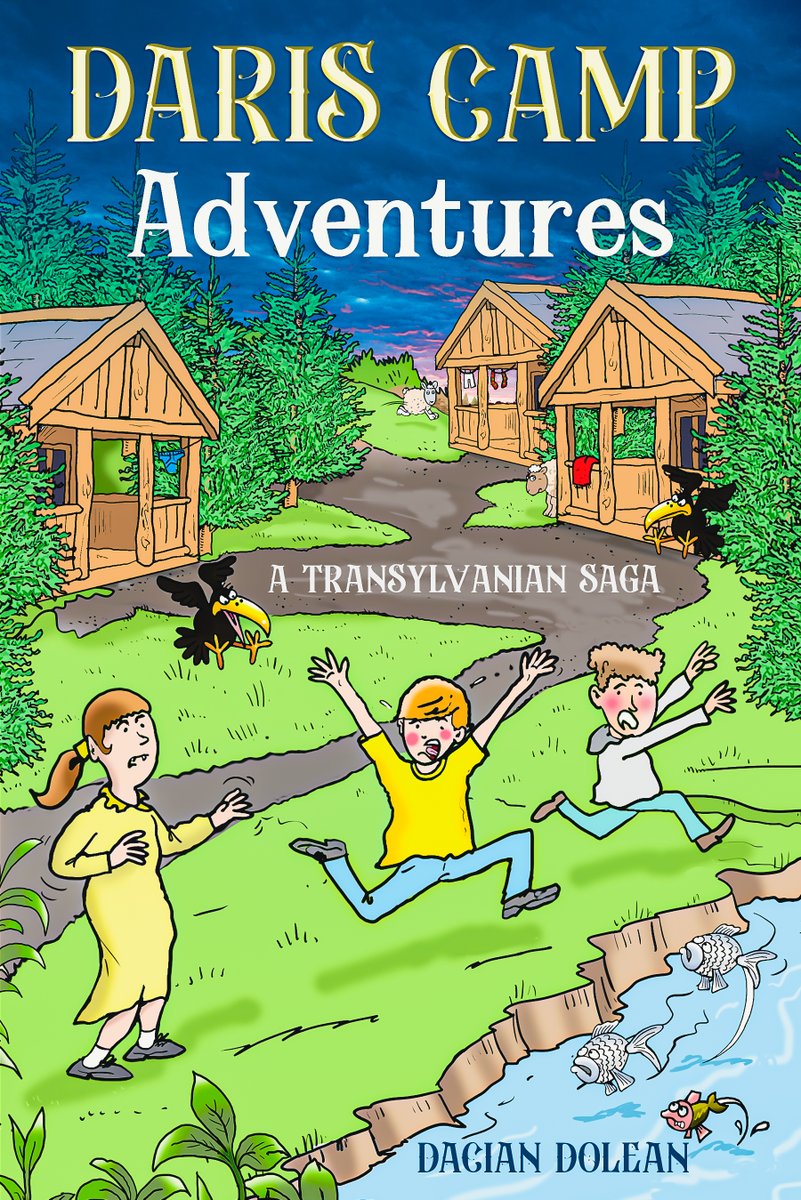
This might be the first novel written by a reading scientist & former classroom teacher to deliberately help students improve vocabulary and reading comprehension. Bridging #SOR – #TEACHers gap in #Literacy#Elementary#reading#scienceofreading
The readers are exposed to 150+ Tier 2 and Tier 3 vocabulary words introduced progressively and repeated systematically throughout the story. Similar-length chapters (400-600 words), dialogue-rich passages, end-of-the-chapter cliffhangers, hilarious content, emotional triggers.
@DTWillingham@kph3k Excellent point, thanks for sharing this! Our longitudinal studies (n=500) show that SES has a direct effect on reading development beyond linguistic and cognitive factors. Importantly, we tested our participants individually. https://t.co/Qga8hUxIBc
@wondrwomyn@NationalPTA@NEAToday@uefiscdi@lervag Our study does not support a 'No homework policy', as elementary school children seems to benefit from a moderate writing homework. The children did not need support from parents, as they practiced skills they have learned in class.
Our new experimental study supports a moderate allocation of writing homework in 2nd grade. It supports @NationalPTA and @NEAToday guidelines and questions the no-homework policy in elementary schools. Thanks @EEAGrants@UEFISCDI@lervag https://t.co/MeRjAqd80a