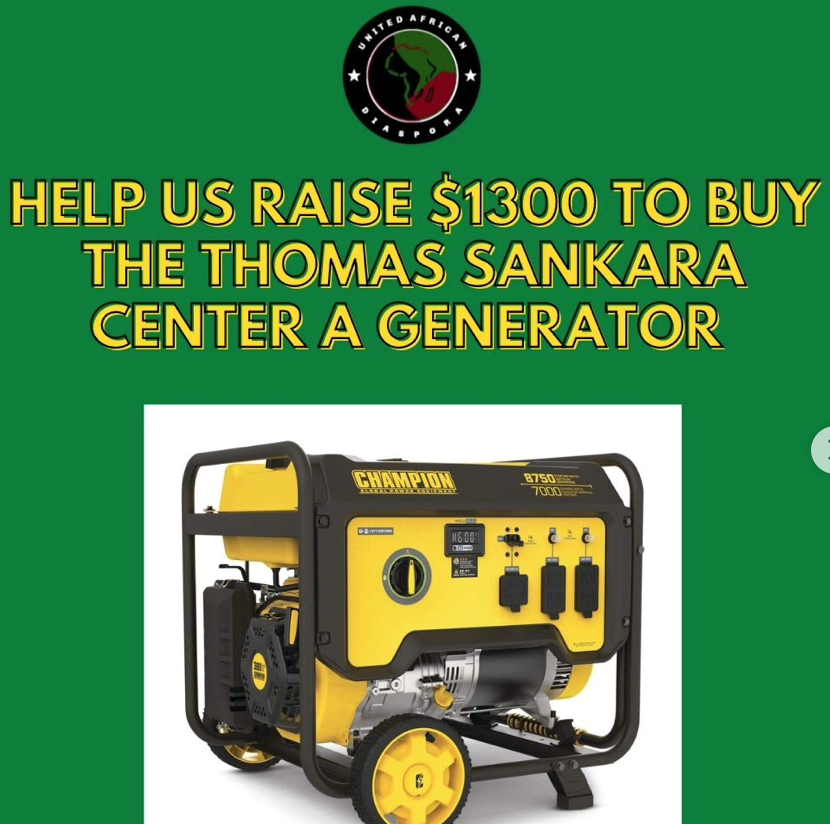
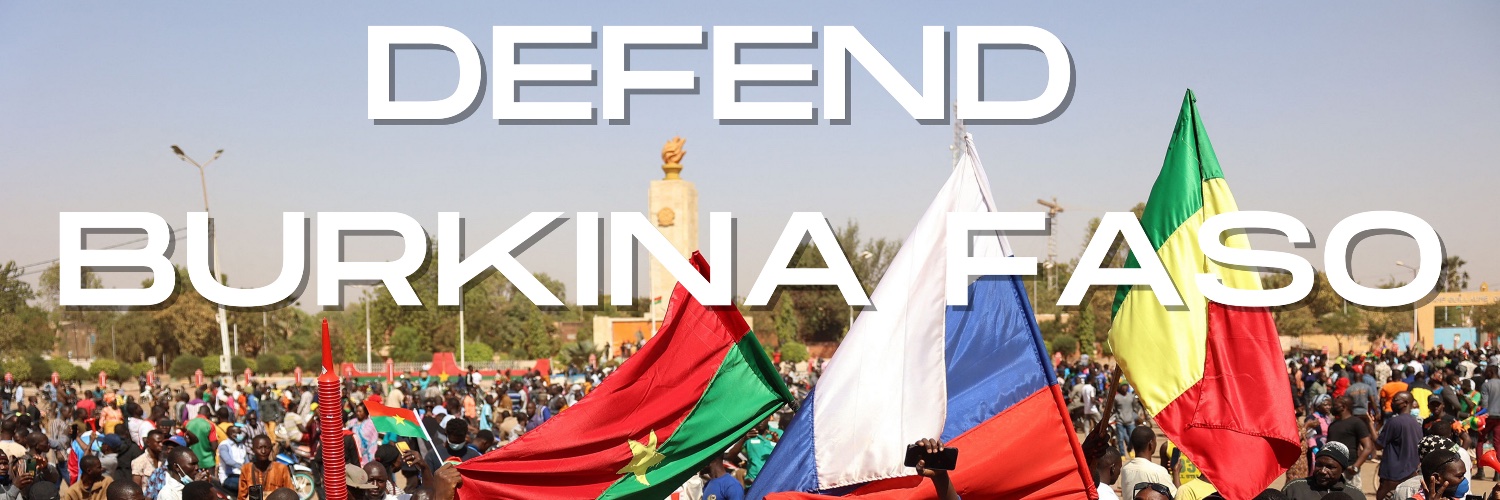
With your support we can continue to do this and so much more. What do you say? Will you support us during a crucial moment in history? This is our chance to make a BIG change. https://t.co/jJcYC4ZYXT
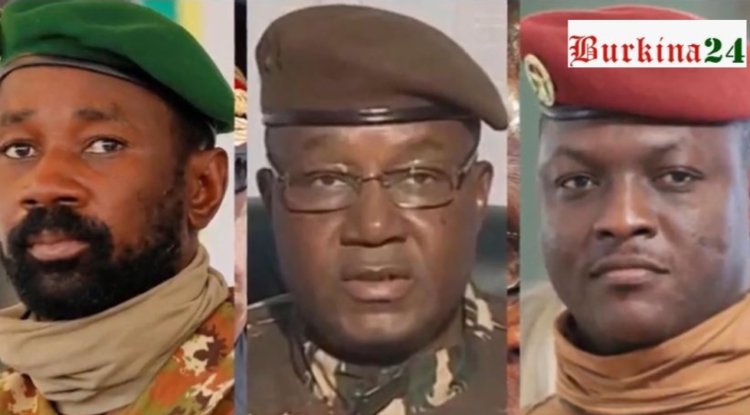
Malian, Burkinabé, and Nigerien visitors to Cuba felt an even stronger push to fight for socialism after seeing the progress of Africa’s sister revolution in Cuba https://t.co/55yA6eOnKF
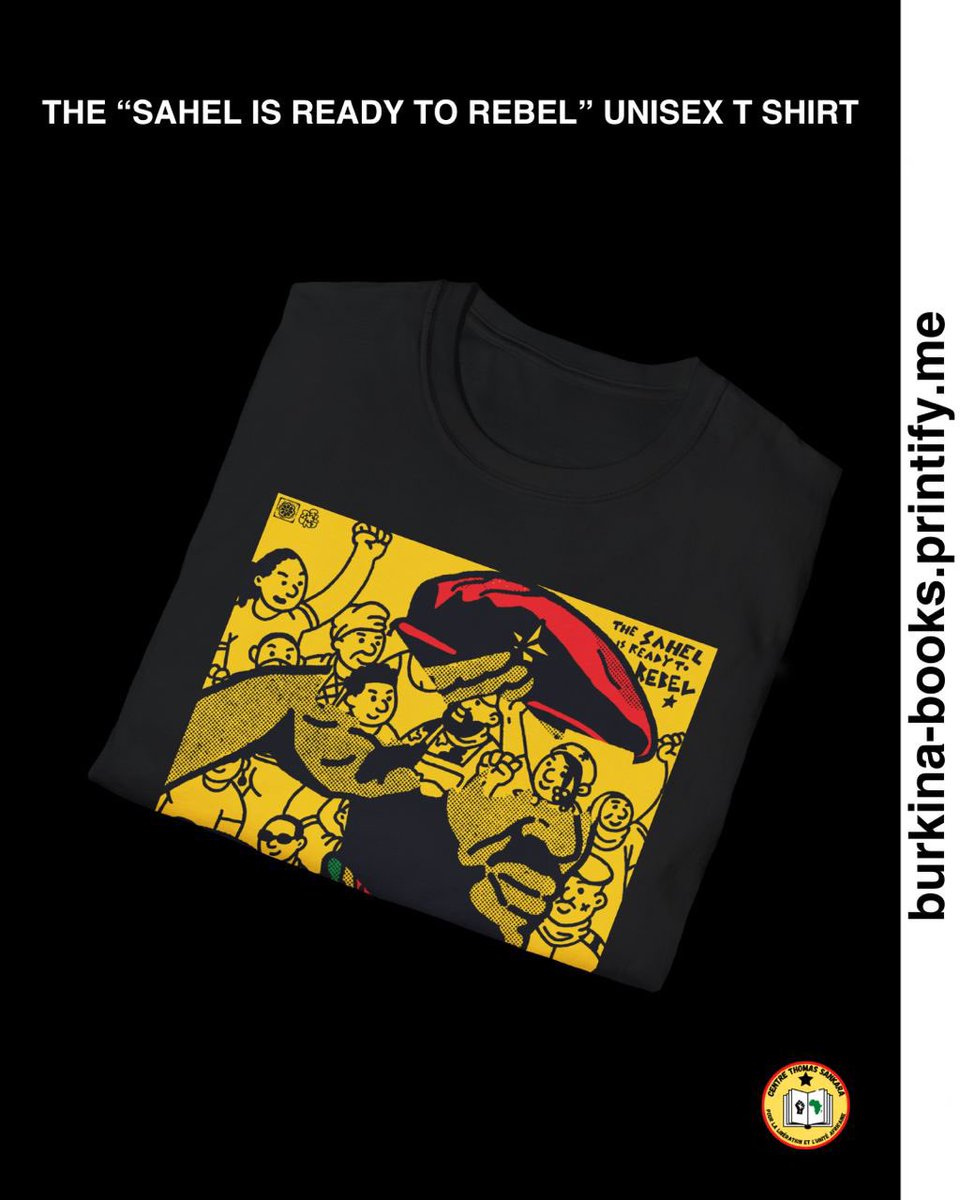
SANKARA LIVES ON
Burkina Faso's pan-African president and hero, Thomas Sankara, was assassinated on this day in 1987 in the capital, Ouagadougou. A hit squad also killed 12 of his comrades. Sankara was one of Africa's most outstanding leaders.
He came to power in a coup in 1983, and his pro-people policies endeared him to the nation. He understood that Africa's problems resulted from systemic issues such as debt. In his four years in power, he did a lot for Burkina Faso. For example, his land-reform policies gave rural farmers greater access to territory, which in turn boosted wheat production; while his drive to vaccinate two-million children against meningitis, measles and yellow fever saved many lives.
We remember his life and legacy, but we also raise questions about his death: why are the CIA and France still refusing to de-classify some of their records relating to Sankara’s demise?
🔴Don't Fall For the Liberal or Right Wing Trappings: The Importance of Defending AES as They Go Through Internal Contradictions
The recent news regarding the draft bill on homosexuality has sparked significant debate, even though its final details have not yet been fully released. Two extreme reactions have emerged: one from right-wing cultural nationalist Pan-African accounts, and the other from diaspora radical liberals.
Right-Wing Pan-Africanists and Radical Liberals:
Right-wing Pan-Africanists support the ban on homosexuality, viewing it as a means to preserve traditional values and cultural norms molded through colonial influences . They believe that accepting homosexuality threatens the moral fabric of society and imposes foreign values that conflict with their cultural heritage.
On the other hand, radical liberals see this draft bill as an opportunity to discredit Alliance of Sahel States (AES) and hinder their evolution. They argue that legal recognition and protection of homosexual relationships are fundamental to a just and inclusive society, and they view the draft bill as a step backwards in terms of human rights and equality.
The Imperialist Trap:
Both reactions, however, can be seen as part of an imperialist trap that has been laid on the continent since European colonization. This trap aims to sow division on the question of LGBTQ+ rights and use this issue to weaponize narratives away from united struggle against imperialism .A clear example is seen in Washington's client state Uganda, where white right-wing evangelists have influenced the state and captured the narrative, pushing an anti-LGBTQ+ agenda. This interference, whether from the extremely pro-liberal or the extremely anti-right-wing angle, further provides imperialist forces with an opportunity to organize and insert themselves into African internal issues. They leverage neo-colonial regimes and liberal activists to do so.
Conclusion
Balancing respect for cultural values with the advancement of collective rights is a challenging but necessary endeavor for building a more inclusive and equitable society. Alliance of Sahel States(AES) in their internal efforts to address these issues without external interference is key to fostering genuine progress and unity. It is important to avoid hardline positions and maintain focus on the main aims of AES, recognizing that it is new and will have imperfections, flaws, and challenges in the beginning.
We should be patient and not fall for the traps set by radical liberal camps or right-wing Pan-African elements who hyper-focus on this issue to sow division and distraction from the broader, more significant challenges impacting the region. Instead, we must support constructive dialogue and progress within AES, ensuring that it can evolve and address internal contradictions without external pressures that could derail its objectives. By doing so, we contribute to a more resilient and cohesive movement that prioritizes long-term, sustainable change over short-term divisive rhetoric. Don't fall into the imperialist trappings of the extreme liberal or hardline right-wing perspectives on this issue.
“The essential texts of Pan-Africanism clearly describe it. These peoples of the AES today share a common aspiration for the total liberation of Africa and its sovereignty.” -Fabrice, Secretary General of @DEFENDBURKINA
Our @DEFENDBURKINA recently took a tour of the AES. This is the what they found. "The unification of African states is a necessary precursor to the complete industrialization of Africa, which requires economic planning at the level of the continent.” https://t.co/IqfgbGNKbd
IBRAHIM TRAORÉ: 'DON'T TRUST WESTERN MEDIA'
Burkina Faso, like its neighbours Mali and Niger, has a pretty bad reputation, according to most mainstream media outlets. Yet, mobilisations and rallies rage in support of Burkina Faso's government and the Alliance of Sahel States (AES). So, what accounts for this significant difference in perception?
This clip shows Burkinabé President Ibrahim Traoré speaking on 20 June to local journalists working for Radiodiffusion Télévision du Burkina (RTB) about the need to be aware of these imperialist media outlets. As he pointed out, inaccurate news stories can have dire consequences for a country's internal politics.
Traoré referenced media coverage of former Ivorian President Laurent Gbagbo, who served from 2000 until 2011 and was acquitted in 2019 of alleged crimes against humanity in the International Criminal Court (ICC). The case shifted the political tide in the Ivory Coast by securing the rule of Gbagbo's rival, the ardent French ally and current president Alassane Ouattara.
He also referenced the assassination of Libyan leader Muammar Gaddafi, whom Western media outlets had depicted as a dictator before being k*lled following the 2011 NATO invasion. The North African state collapsed amidst an ensuing civil war that has torn the country into three parts. Plus, slave markets were established as a result of the chaos. The upheaval in Libya also destroyed thousands of lives in the Sahel because paramilitaries funnelled weapons seized from the fallen Libyan state into the Sahel.
Traoré pointed to French-owned media such as Radio France International (RFI), France 24 and Le Monde. He also called out Jeune Afrique, a news site and magazine founded owned by French-Ivorian businessmen and close friends of Ouattara.
This all begs the question: What media sources do you trust?
Video credit: Radio Television Burkina (@rtburkina on IG, X and YT and @radionationaleburkina on FB).
BURKINA: ‘THE CAPTAIN’S’ ANTI-COUP NIGHT WATCH
Videos of mass mobilisations organised at a moment's notice in Burkina Faso have circulated on the Internet. At the slightest whiff of a coup, supporters of Ibrahim Traoré and his revolutionary government are on the streets, ready to defend it. But how do they get information so quickly and bring people together so fast?
It turns out there’s an army of night watchmen across the country that is keeping an eye out for suspicious behaviour. Thousands have volunteered to create a nationwide web of surveillance spanning public places in major cities and villages. It’s a national network of eyes and ears that’s alert to anything suspicious in the early hours. The volunteers call themselves ‘La Veille Citoyenne’ - or Citizens Watch. From dusk until dawn they work to coup-proof the nation.
African Stream’s Inem Richardson caught up with some of them in the early hours.
LONGTIME DIASPORA ACTIVIST SEEKS PAN-AFRICAN UNITY IN BURKINA FASO
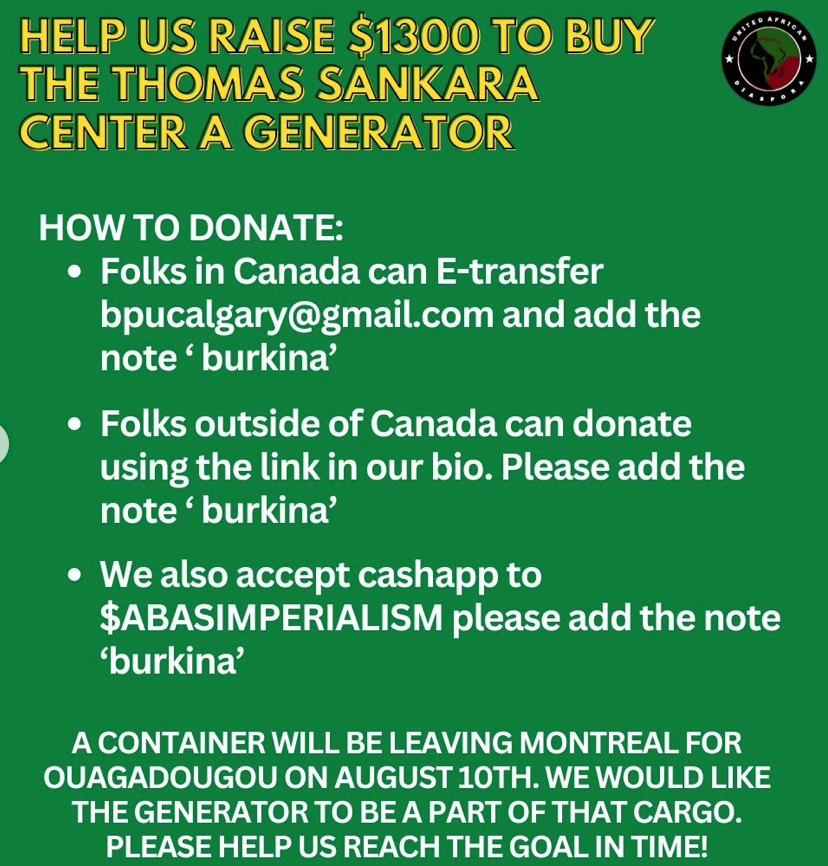
New Afrikan organiser Siphiwe Baleka (@siphiwebaleka) recently visited the Thomas Sankara Centre (@burkinabooks) in Ouagadougou, Burkina Faso, seeking to connect the struggle of African peoples in the diaspora with the fight waged on the continent.
He used his family’s history starting from the European Slave Trade to bridge Africa and the Americas.
Baleka travelled to Burkina Faso with the African Diaspora Development Institute (ADDI), meeting with President Ibrahim Traoré to discuss the importance of defending Africans in the diaspora, supporting a potential reparations case at the International Court of Justice, and granting diaspora Africans citizenship in Burkina Faso. Former African Union Permanent Representative to the United States Arikana Chihombori-Quao is ADDI’s founder and president.
Baleka identifies as a New Afrikan instead of as ‘Black American’ or ‘African American.’ The former term describes a descendant of enslaved Africans in the United States seeking to reclaim a historical land base in the US South, where their ancestors were forced into labour. The term signifies a collective identity rooted in shared experiences, acknowledging the unique history, culture, and struggles. Some have noted the contradiction in claiming land unceded by the region’s indigenous peoples.
Baleka also represented the Pan African Federalist Movement (PAFM) West Africa Region, of which he is Head of Research and Strategy. The organisation seeks to create a federal ‘United African States’ to benefit the diaspora, potentially granting citizenship in a new Pan-African superstate.
BURKINA FASO’S TRAORÉ: PRESIDENT FOR 5 MORE YRS
The people cheered as a charter granted President Ibrahim Traoré a 5-year extension in office, starting on 2 July. His title has changed from ‘President of the Transition of Burkina Faso’ to ‘President of Burkina Faso.’
On May 25-26, the landlocked African country held ‘Les assises nationales’ or ‘The National Conferences,’ when representatives from Burkina Faso’s 13 regions convened meetings to determine the country’s direction. The process included government officials, as well as representatives from civil society organisations and trade unions.
This extension comes almost 20 months after a military coup that ousted a Western-aligned leader. Since then, the population has poured into the streets to express support for the new government, which has taken over areas once held by terrorist groups, kicked out widely unpopular French troops and media, nationalised local industries, and embarked on a pathway to industrialisation and job creation with new refineries and plans for new energy facilities.
While political parties boycotted this past weekend’s decision-making process, party members decided to attend anyway to express their opinions as individuals. Such was the case with Moussa Diallo of Ex-Chef De Fil de L’opposition (Ex-Leader of the Opposition political coalition in English), who said to local TV news station Faso 7, ‘I told myself that, as a patriot, it was my duty to come here.’ The same was the case with Ali Badra Ouédraogo, former president of Rassemblement des Patriotes pour le Renouveau (Rally of Patriots for Renewal), who voiced satisfaction with the process.
Many ordinary Burkinabè people we spoke to outside the conference hall are satisfied with the five-year extension. However, a visible segment of the population hoped for a 10-year transition period.
Here is what they had to say.