AI Creates Abundance. Bitcoin Preserves Scarcity.
Here’s what’s shaping the Bitcoin macro picture right now
• Sanctions & stablecoins: Venezuela reportedly moved most oil revenue via USDT (mainly on Tron) to bypass sanctions. After US pressure, Tether froze $182M across 5 wallets (Jan 11). This highlights why Bitcoin’s censorship resistance and transparent ledger are more acceptable to institutions than centralized, freeze-able alternatives.
• Bitcoin price: BTC has gone sideways for ~57 days in the $90–94k range. Volatility is extremely low. Historically, long boring ranges like this tend to break with strong moves.
• Scarcity vs abundance: AI and robotics are making many goods and services abundant. Bitcoin is different. Its supply is fixed at 21 million. In a post-labor world, even 0.21 BTC could matter a lot.
• Macro tailwinds: US crypto regulation clarity is improving. Spot BTC ETF inflows returned in early 2026. Many expect a new BTC all-time high this year.
• Regulation reality: Criminal and sanctioned crypto use is being aggressively removed. Privacy coins face pressure. AI + blockchain analysis make tax evasion increasingly difficult.
• Positioning: Defense, robotics, and AI benefit in a more automated, conflict-prone world - with Bitcoin as the scarce store of value alongside them.
Sentiment:
Short term → boring / compressed
Medium term → bullish
Long term → extremely bullish Bitcoin as the scarcity asset in an AI abundance era
Compression doesn’t last forever. Breakout soon?
$Volt is the TRUE definition of DeFi. No admin, burned LP. Nobody waiting for when to deploy a bnb that’s supposed to be decentralized. $Volt is clean; it has no carrots.
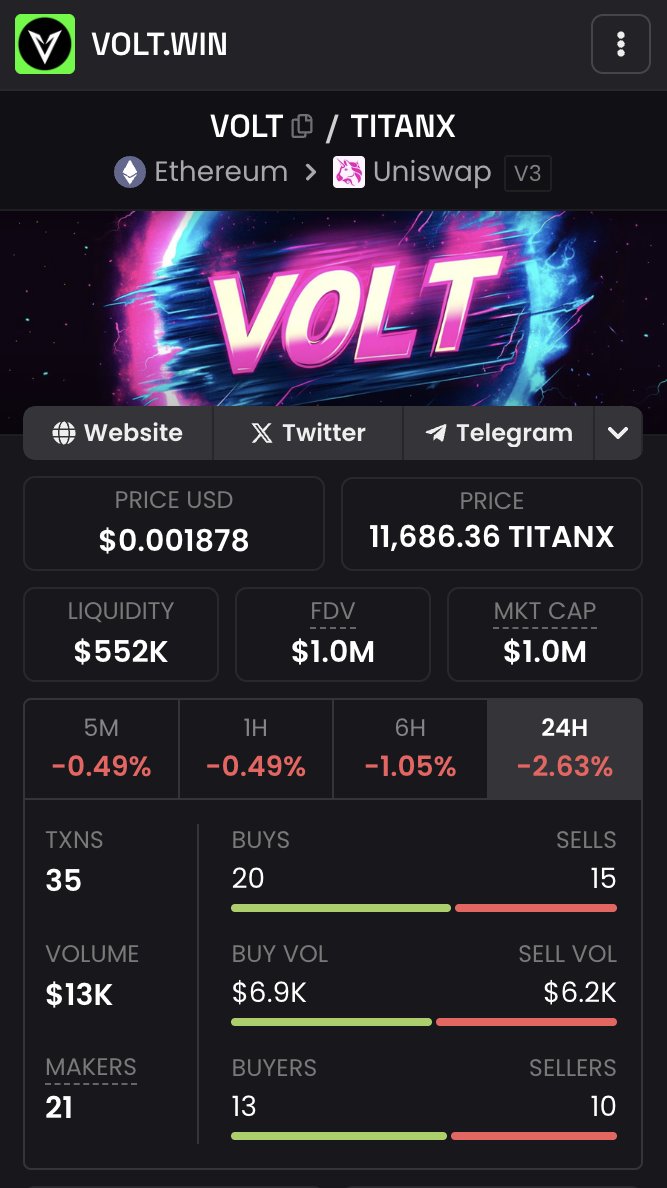
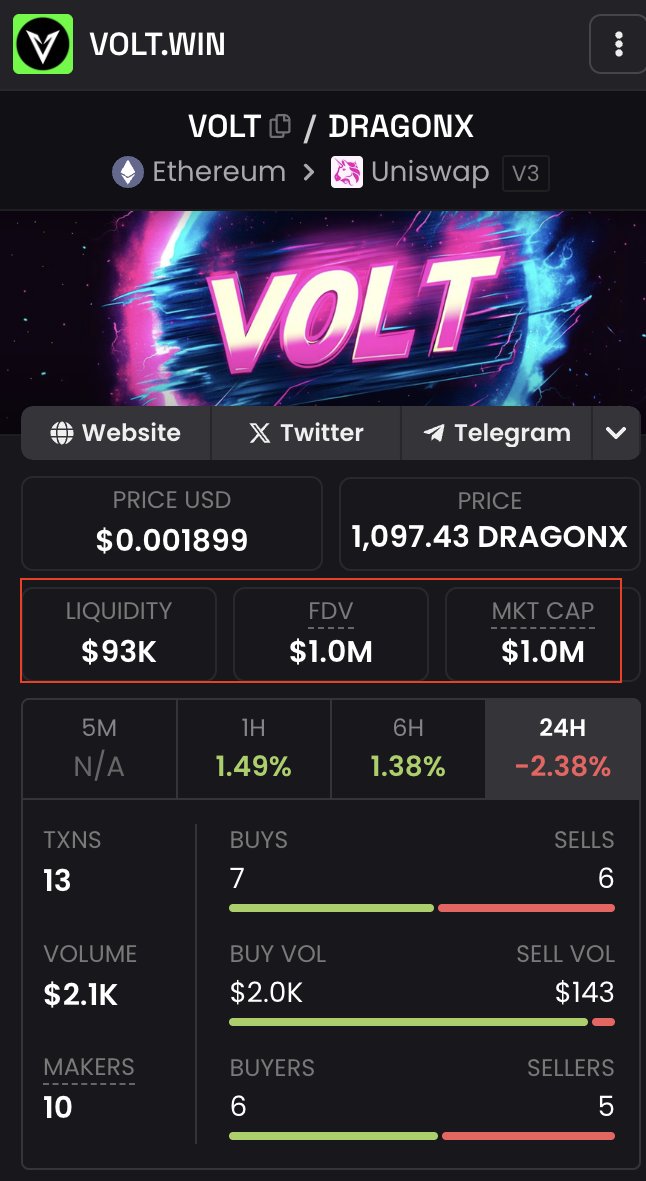
@MikeDeanLive I think only TitanX, Volt, and DragonX have the depth of liquidity to work as collateral. Volt Rocks will also include a debt cap, following the Liquity v1 auditors guidance of keeping it around 2× available liquidity for safety.
https://t.co/xZSs9XVpOf
⚡ Volt Rocks Debt Cap info ⚡
For long-term risk management, Volt Rocks will launch with a hard-coded $1M–1.5M debt cap in the protocol, complemented by our elevated 125% Minimum Collateral Ratio (MCR) vs. Liquity V1’s 110%.
This decentralized safeguard:
• Aligns growth with real LP depth
• Protects the peg from over-issuance
• Ensures smooth redemptions if it scales
⸻
💡 Context
Debt caps are essential in multi-collateral systems to curb over-leverage on low liquidity assets.
In single-collateral designs like Liquity V1 or Volt Rocks, they’re not mandatory - but we’re adding one for extra protection, especially with our thinner LP profile. (Even though Volt LP third biggest in ecosystem)
We’re also scouting more decentralized tools to enhance Volt Rocks long-term, without sacrificing immutability or user freedom
⸻
👉 This setup keeps Volt safe, straightforward, and community-focused, honoring Liquity’s immutable spirit. 🚀
Thoughts?
⚡ Volt Rocks Debt Cap info ⚡
For long-term risk management, Volt Rocks will launch with a hard-coded $1M–1.5M debt cap in the protocol, complemented by our elevated 125% Minimum Collateral Ratio (MCR) vs. Liquity V1’s 110%.
This decentralized safeguard:
• Aligns growth with real LP depth
• Protects the peg from over-issuance
• Ensures smooth redemptions if it scales
⸻
💡 Context
Debt caps are essential in multi-collateral systems to curb over-leverage on low liquidity assets.
In single-collateral designs like Liquity V1 or Volt Rocks, they’re not mandatory - but we’re adding one for extra protection, especially with our thinner LP profile. (Even though Volt LP third biggest in ecosystem)
We’re also scouting more decentralized tools to enhance Volt Rocks long-term, without sacrificing immutability or user freedom
⸻
👉 This setup keeps Volt safe, straightforward, and community-focused, honoring Liquity’s immutable spirit. 🚀
Thoughts?
Not every asset can be collateralised safely.
Deeply nested collaterals, or collaterals with a market cap or liquidity which is too low, compound risks quickly.
Debt caps exist for a reason, they stop borrowing from exceeding what the market can absorb. Without them, credibility is lost and one fragile asset can threaten the entire ecosystem.
Only a handful of tokens meet the collateral standard today: $Volt, #DragonX, $TitanX. They have liquidity and market caps to support collateralisation. Anything else right now is too small or too fragile.
Take INF as an example. With a market cap of $372K, even if 10% of supply participated like USDx (the norm for TitanX and DragonX in Ouroboros), that would amount to just $37K deposited.
At a 200% collateral ratio, the average on USDx, that supports under $20K in loans. That’s barely anything, not enough to support meaningful lending utility.
This is why collateral standards matter. The ecosystem only grows by protecting its foundation, not by lowering the bar.
#BuildOnTitanX
DeFi grows through abundance, not scarcity, like Ethereum’s explosion from competing DEXs and lenders
If TitanX had just “one of everything,” it’ll look small, centralized, and unappealing to outside capital.
Gatekeeping categories stifles capitalism … multiple options show strength, attract capital, and fuel innovation.
Let’s embrace variety to scale.
@Solo_CryptoX@voltygo TitanX needs multiple lending protocols, DEXs, yield farms, games, aggregators, and more.
No one owns DeFi’s fundamental categories. The market decides by using stuff, and more builders in each lane raise the bar.
I’m excited to see TitanX expand … we must think bigger