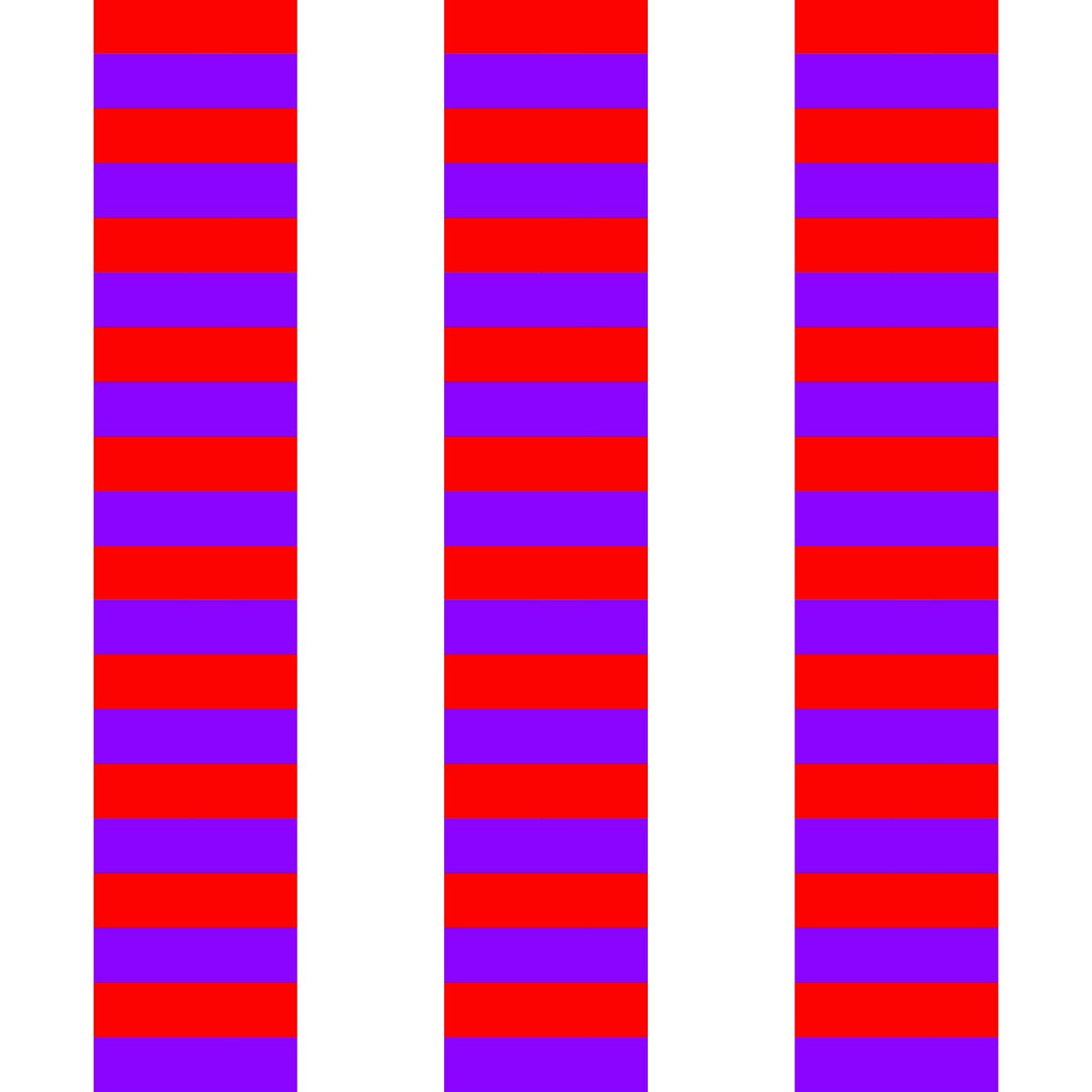
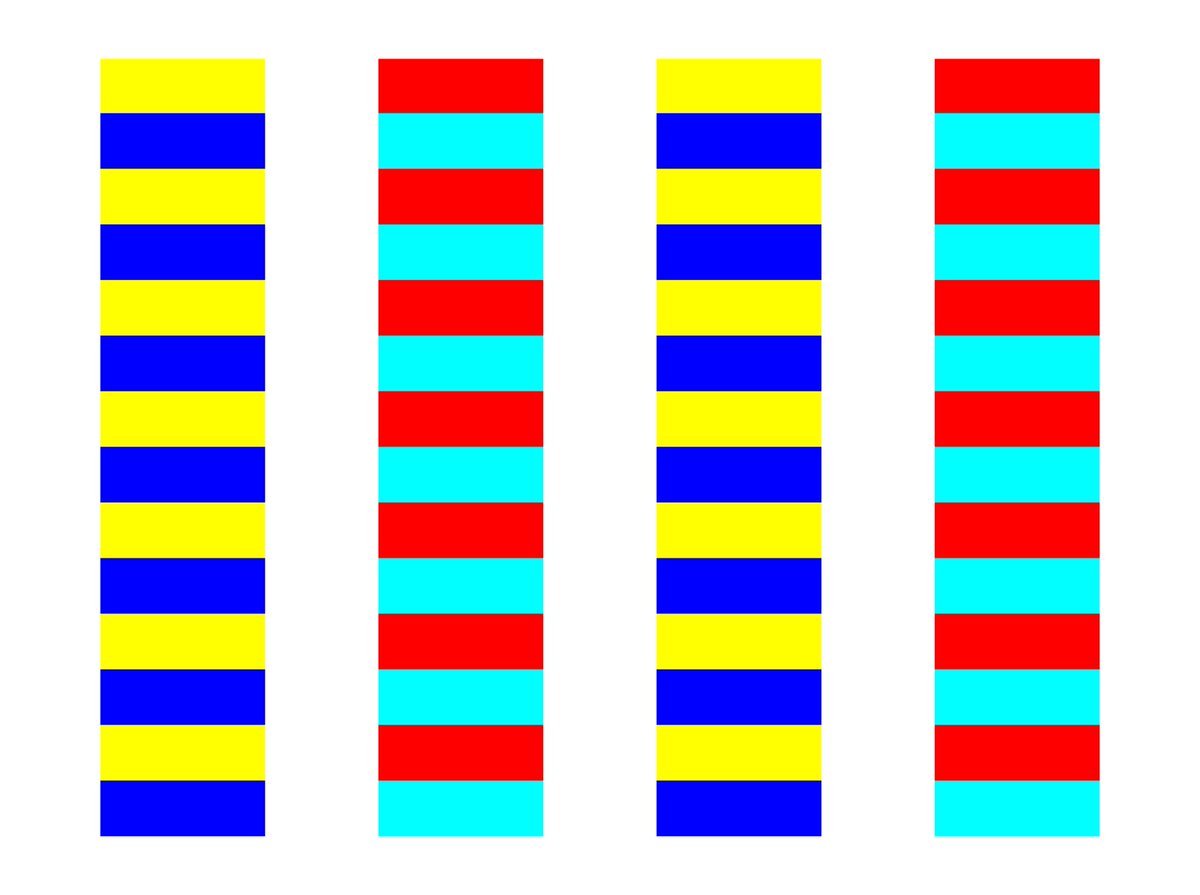
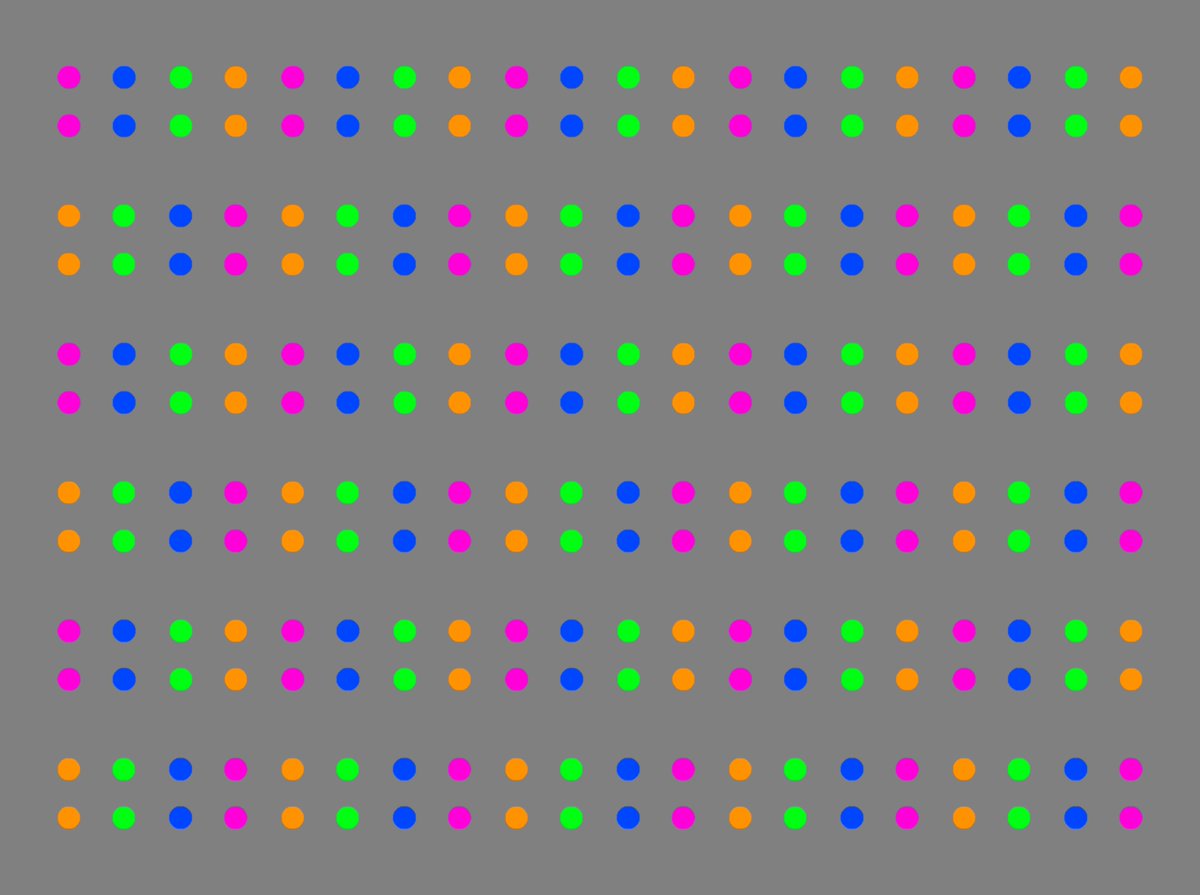
Reversal tilt illusion:
- Lowering your head with half‑closed eyes induces a tilt illusion, while raising your head with half‑closed eyes reverses the tilt.
Reversal tilt illusion:
- Lowering your head with half‑closed eyes induces a tilt illusion, while raising your head with half‑closed eyes reverses the tilt.
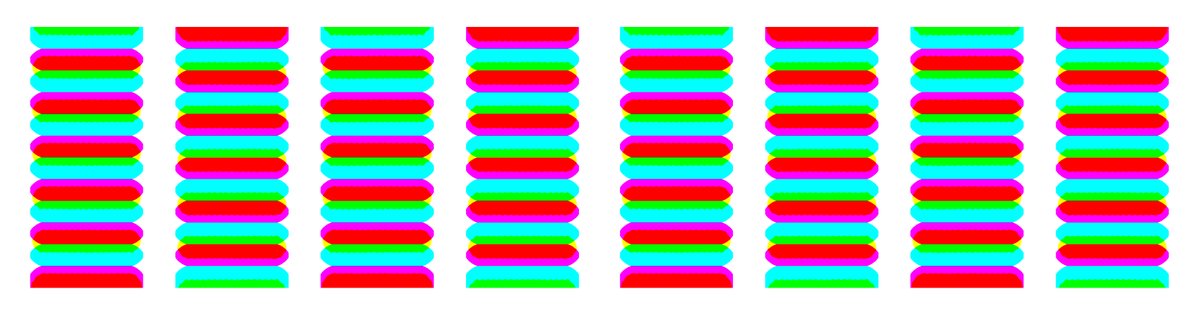
Reversal color illusion:
– Lowering your head with half‑closed eyes induces a color illusion in which one row appears as RGB and the other as CMY; raising your head with half‑closed eyes reverses the color illusion.
Reversal color illusion:
– Lowering your head with half‑closed eyes induces a color illusion in which one row appears orange–blue and the other green–magenta; raising your head with half‑closed eyes reverses the color illusion.
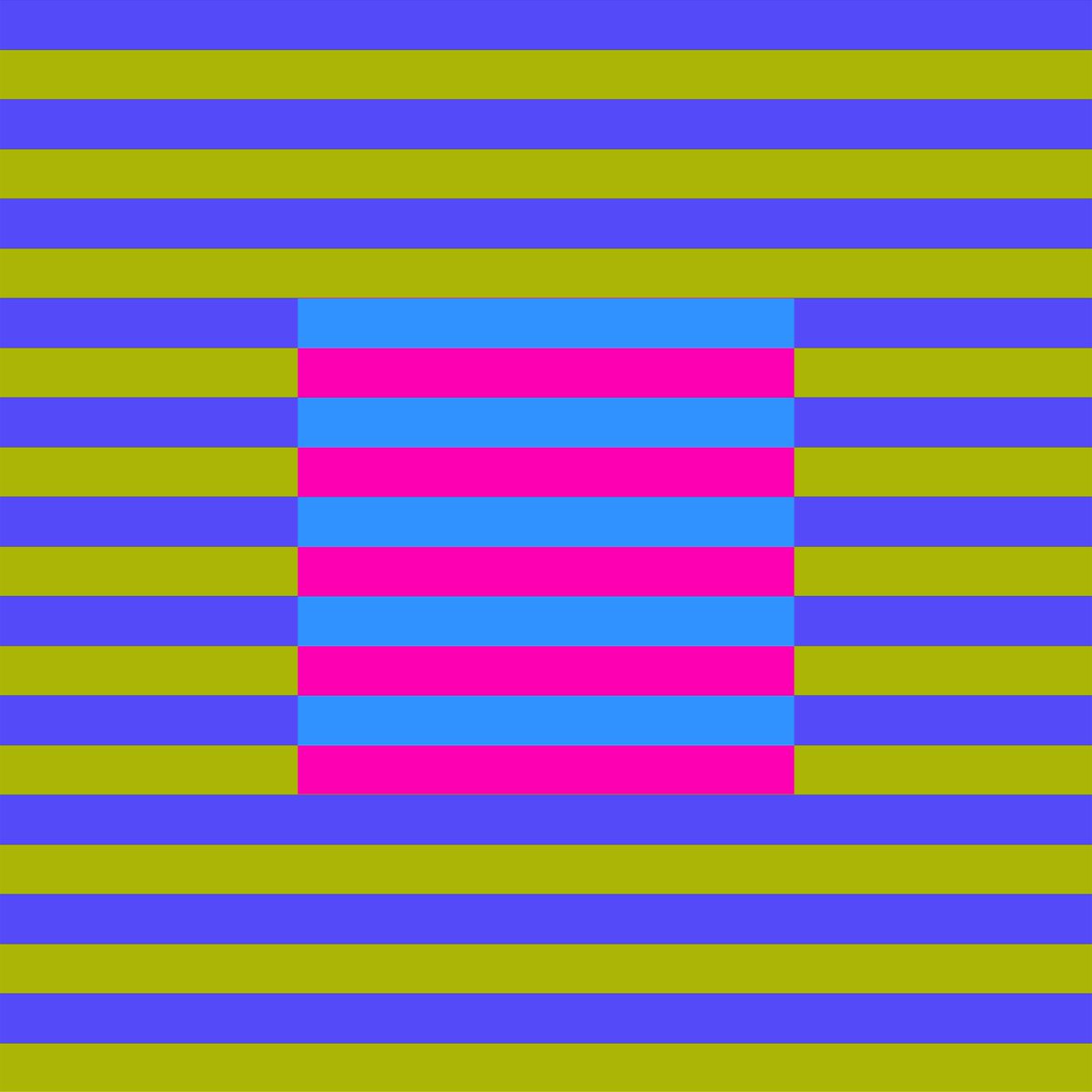
Reversal color illusion:
– Lowering your head with half‑closed eyes induces a color illusion in which one row appears green–magenta and the other cyan–red; raising your head with half‑closed eyes reverses the color illusion.
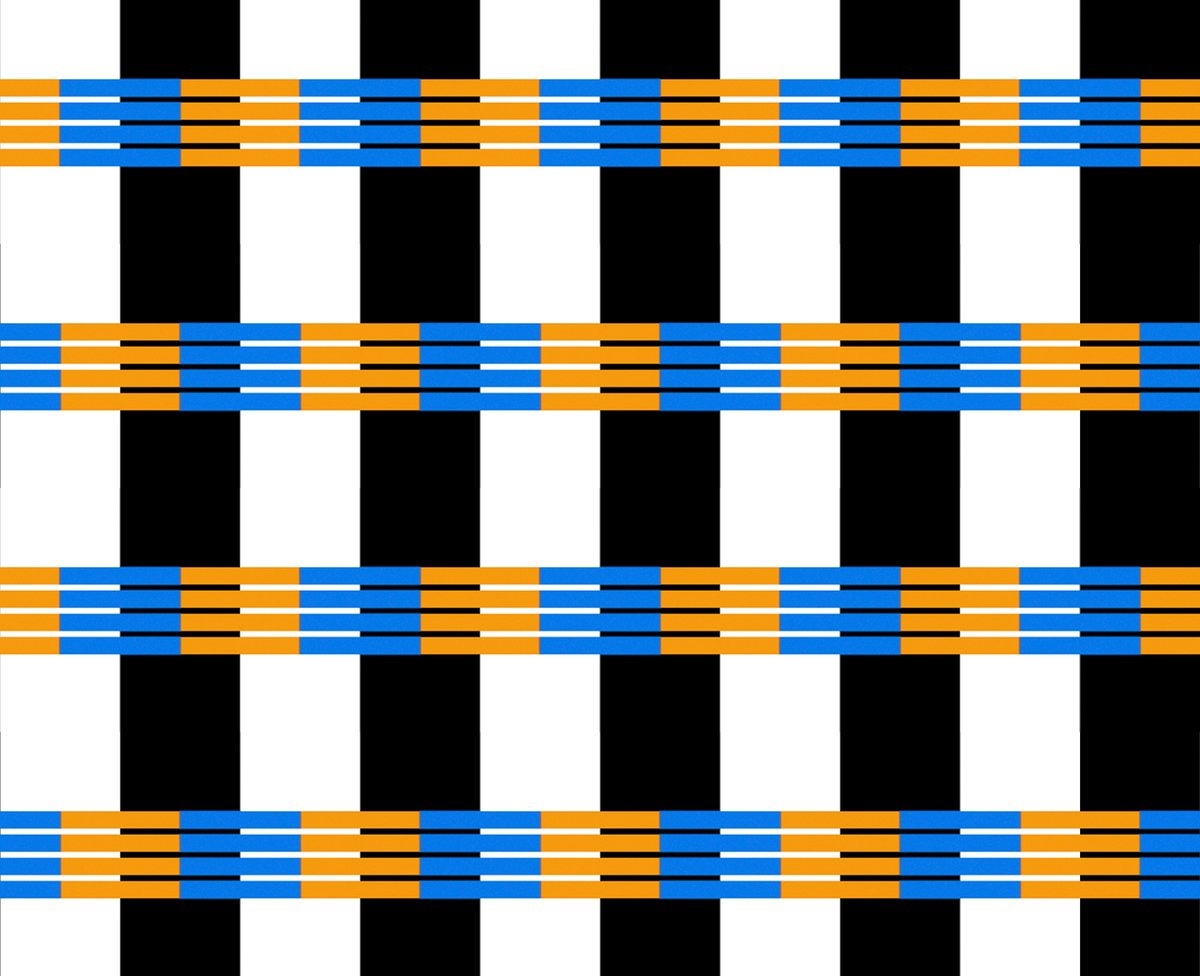
Reversal tilt illusion:
- Lowering your head with half‑closed eyes induces a tilt illusion, while raising your head with half‑closed eyes reverses the tilt.
- The black and white lines inside the colored bars tilt in the opposite direction to the colored bars.
Reversal tilt illusion:
- Lowering your head with half‑closed eyes induces a tilt illusion, while raising your head with half‑closed eyes reverses the tilt.
Lowering or lifting your head with half‑closed eyes makes the horizontal lines appear tilted, while moving your head left or right makes the vertical lines appear tilted.
Reversal tilt illusion:
- Lowering your head with half‑closed eyes induces a tilt illusion, while raising your head with half‑closed eyes reverses the tilt.
The brick illusion:
- Lowering your head with half‑closed eyes makes the brick‑pattern tilt, while raising your head with half‑closed eyes reverses the tilt.
Reversal Fraser–Wilcox illusion:
- Lowering your head with half‑closed eyes induces a motion illusion with a specific direction, while raising your head with half‑closed eyes reverses that direction.
- Viewing angle and distance affect the intensity of the illusion.
Reversal Fraser–Wilcox illusion:
- This illustration shows how I perceive the illusion with half‑closed eyes.
- The gradient changes direction depending on the head angle, which adds dark and light contours to the edges of the colored area.
Reversal Fraser–Wilcox illusion:
- Lowering your head with half‑closed eyes induces a motion illusion with a specific direction, while raising your head with half‑closed eyes reverses that direction.
Reversal PDI:
- Lowering your head with half‑closed eyes induces a peripheral‑drift illusion with a specific motion direction, while raising your head with half‑closed eyes reverses that direction.
Reversal tilt illusion:
- Lowering your head with half‑closed eyes induces a tilt illusion, while raising your head with half‑closed eyes reverses the tilt.
- The viewing angle of the screen can affect the strength of the illusion; its clarity may weaken or intensify accordingly.
Reversal tilt illusion:
- Lowering your head with half‑closed eyes makes the gradient tilt, while raising your head with half‑closed eyes reverses the tilt.
Reversal coffee‑wall illusion:
- Lowering your head with half‑closed eyes makes the gradient tilt, while raising your head with half‑closed eyes reverses the tilt.