We dropped one word. Borderless Capital is now Borderless. Same team, same Web3 roots, a bigger frontier. We started with the rails. Now we back what runs on them.
Backing frontier tech founders who create real value beyond preconceived human boundaries. https://t.co/jL2tcn5i9z
Six US criticalities in three months of 2026. Three NRC advanced construction permits. The first new nuclear megawatts still come from restarts and uprates, and modular reactors are lining up next. Criticality is a milestone. Delivered power is a contract. https://t.co/XyfCTKxvkE
Anthropic went from $41M of GAAP revenue in 2023 to $33.24B in nine months of 2026. The median 2019 venture fund has returned 4 cents per dollar called. Revenue runs on a new clock. Cash still runs on the old one. https://t.co/VTQdrVuGDl
PJM cleared capacity at $333.44 per megawatt-day and still came up short. Texas already prices the wait in statute. Markets price the joule at the hub. Process prices the connection. Statute binds. One constraint. Two prices.
The connection has a contract. https://t.co/sK3Q76ny6H
Apollo just committed $40 billion to SpaceX for GPUs. The collateral is Starlink. The next day the FCC cleared Amazon to buy Globalstar for its spectrum. Unbacked neoclouds pay almost 16 percent to borrow. Credit follows the cash flow that is not the chip. https://t.co/yKzingAcrr
NASA's commercial rate for an astronaut hour on the ISS is $130,000. A U.S. factory hour costs $48.62. In July a robot left to service a satellite no human will touch. Space buys few robots but pays the most per machine. In orbit, the robot is the default. https://t.co/XCSm1RaP2m
@sk_2496 Most of what trades today is still one-shot: buy the corpus, train, move on. The interesting deals are starting to price access instead, meaning a live feed of failures and corrections from deployed systems. That's a subscription to the loop, and it's the part nobody can resell.
Tesla has logged 15.6 billion FSD miles. Waymo has 271 million with nobody at the wheel, and it's the one paid for 500,000 rides per week. Data now sells by the dataset. What teaches a machine is the bill that lands when it fails. The loop is not for sale. https://t.co/z95JVDErSe
Close, but I would put it the other way round. The electrons were priced right both times. At 7 cents a kilowatt-hour in Texas they were a commodity under the miners and they are a commodity under the GPUs. What got repriced was the output: a hash nobody will pay a premium for, versus a twenty-year contract with a customer who will. Same electrons, same valuation. New output, new multiple.
And it is not quite "finally." More than four gigawatts are contracted and about 550 megawatts are billing. The market has priced the output before it has arrived. If the leases perform, the sites deserve it. If they do not, the electrons will still be worth 7 cents.
Same substation, same wires, same megawatts. A Texas site swapped Bitcoin miners for AI servers and the market repriced it nine times over. The energy never changed. A century of falling joules and fifteen years of Bitcoin say why. The output is the asset. https://t.co/qeaCAD7VYn
Good question. Owning the plant lowers your cost of the input. It does not change what your output is worth. A miner with its own plant still sells hashes at the market hashprice, and hashprice fell 93 percent while the fleet got a thousand times more efficient. Greenidge and Stronghold owned their generation and did not escape that.
What owning the plant does give you is two things that are not joules: a cost floor, and the option to sell the power to someone else. Riot made more in one month from power credits than from mining. The plant is worth what its best available output is worth. Owned generation makes the switch cheaper. It does not make the hash worth more.
The most successful robots on earth have four arms and no legs, or wheels and no hands. Humanoids raised $6.1 billion last year and cannot yet show a profitable shift. Robots are bought by the task, and the task sets their shape. The body follows the task. https://t.co/iJ4MawxzD9
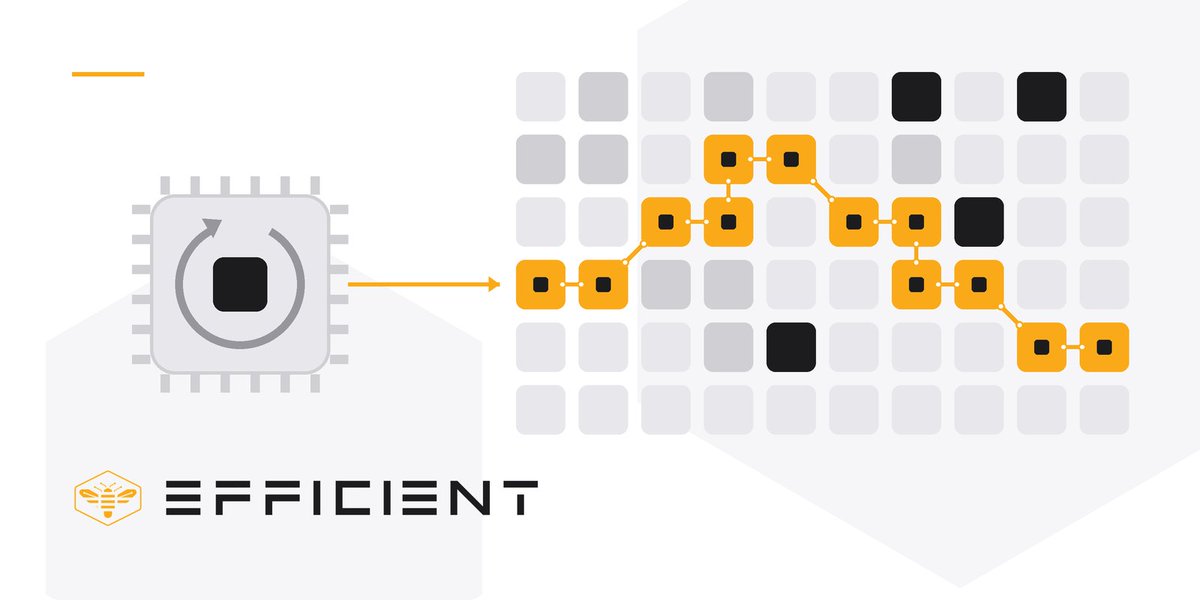
@efficient_hq announced a $97M Series B led by @TQVentures yesterday. @borderless_cap is in, and I wrote up why.
Energy is the constraint on computing now. Efficient built a chip that runs ordinary software for a fraction of the joules, and it is shipping.
https://t.co/tWRo7BmhoY
The future is borderless
@deedydas We are in a transition phase. The Neolabs will become OrbitLabs within a decade or less. I wrote an essay about it. I maybe wrong but the next frontier is above our roofs: https://t.co/jpvjlM0Faw
Rocket Lab is paying $8 billion for a company almost twice its age. Intuitive Machines bought a satellite factory and ninety antennas. Redwire bought drones. Every deal assembles the same stack, and the grid just ran out of gigawatts. Orbit is the product. https://t.co/c9mvJ1zCzA
Rocket Lab is paying $8 billion for a company almost twice its age. Intuitive Machines bought a satellite factory and ninety antennas. Redwire bought drones. Every deal assembles the same stack, and the grid just ran out of gigawatts. Orbit is the product. https://t.co/c9mvJ1zCzA