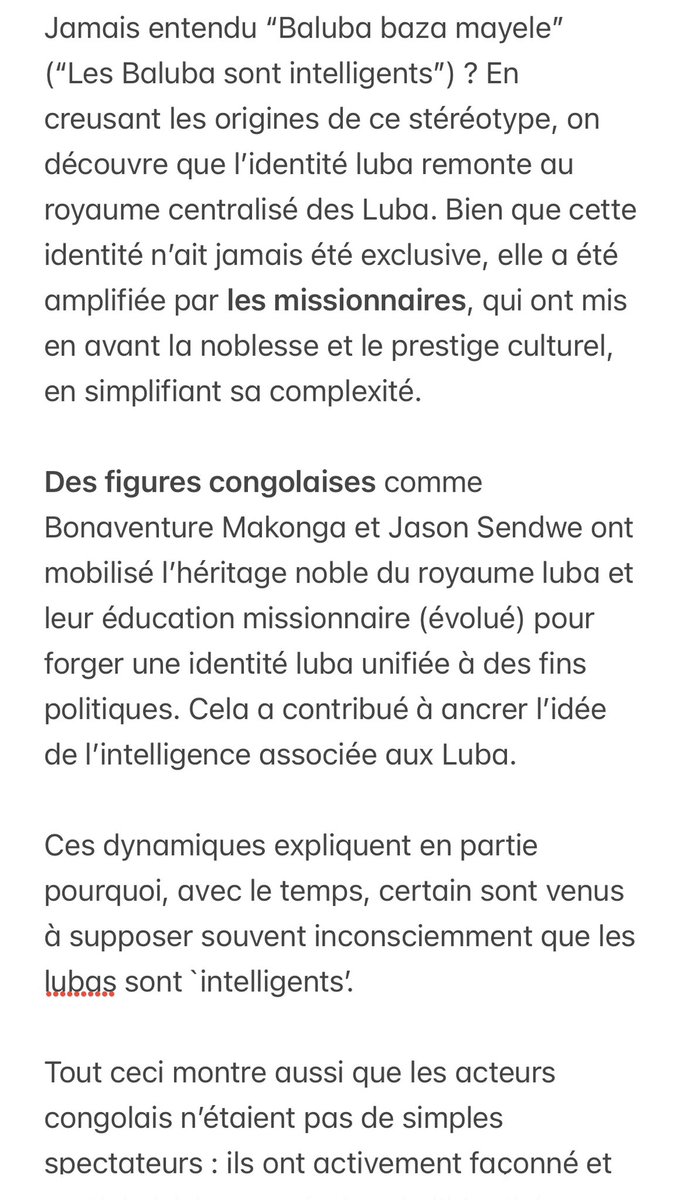
D’où viennent ces stéréotypes sur les Lubas ? C’est la question que je me suis posée and along the way, I learned more about the dual nature of identity formation
#Stereotypes#IdentityConstruction#AfricanAgency
Les #tribus, ça existe? Aujourd’hui, en cours, le prof a choisi de ne pas trancher sur la question, et je trouve ça sage : on n’a pas toujours réponse à tout. Il a laissé les étudiants d’Afrique répondre, et leur réponse était unanime : oui, ça existe.
Et vous, qu’en pensez-vous?
The resource curse, explains why resource-rich countries often struggle to benefit from their natural wealth. Take the #DRCongo : despite vast copper reserves in #Katanga , prosperity remains elusive. Once again, potential isn't translating into progress. #DRC#Copper
A mountain in the Democratic Republic of the Congo (DRC) collapsed, revealing large quantities of copper. This occurred in the Katanga region of the DRC, which is known for its mineral resources. #DRC#copper#viralvideo
This perspective tends to attract pity and fails to highlight the strength and agency required to take control of one’s future.
What are your thoughts on this 🤔?
(Part 10)
#africa#decolonisation#reflexion
Against decolonisation 😳!! Prof. Dr. Olúfẹ́mi Táíwò’s pov
Certain interpretations of decolonization are insufficiently focused on the practical challenges of today’s global society and, in some cases, are based on romanticized ideas about pre-colonial Africa, (part 1)
I don’t think I’ve ever considered it that way before. However, it's true that the term 'decolonise' positions one as a victim who is constantly affected by the harm caused by colonialism. (Part 9)
The term can imply a power dynamic where the West retains influence over the narrative It places undue focus on how external forces influence us, but when do we change the narrative and start discussing how we have influenced others? (Part 8)
Additionally, there were connections between African societies and the West both before and after colonization that have influenced Africa.
The buzzword “decolonize” can draw attention to issues that may not deserve the emphasis they receive. (Part 7)
Framing Africa's issues purely in terms of colonial legacies risks overlooking the responsibilities of African governments, elites, and institutions in addressing present challenges. (Part 6)
This connection often leads to a rejection of what is considered Western in the process of decolonization. But one must ask: is it truly Western? (Part5)
Similarly, French was appreciated by figures like Senghor and Lumumba as a means to unify the population around a common language. Furthermore, as Frantz Fanon noted, thoughts and ideas are linked to specific peoples and races. (Part 4)
For example, Cabral viewed the Portuguese language as the greatest aspect of Brazil's colonial heritage, despite the immense harm caused by colonialism. (Part 3)
which can lead to an unrealistic vision of what decolonization should achieve.
Here are key points from his critique:
Efforts to reject everything that comes from the West overlook the potential benefits of adopting what is good. (Part 2)
2 August 1998 - 2 August 2023...25 years since the genocide of the Congolese people for economic gain, #GENOCOST
Behind the millions of dead, displaced and raped women, there are names, faces and stories.
LET'S NOT FORGET THEM!
#TheRe2023
Anti-French sentiment has been growing rapidly lately! Can you name some of the reasons for this, besides the CFA franc and the presence of French troops in West Africa? #TheRe2023