👋 Hello Twitter! Young people deserve tools and information that help them connect in safe, enjoyable, and empowering ways. DIY ("Digitally Informed Youth") is a five-year research project looking into technology-facilitated sexual violence. Stay tuned for updates! 📢ℹ️
Our @nikitakalwani, @cdietzel, and Suzie Dunn discovered that TFSV, gender-based harms, sexuality-based harms, power imbalances, and intersectionality are not discussed comprehensively or consistently in educational curricula, policies, or legislation.
✨ Publication alert ✨
We are excited to share our most recent publication in the Canadian Journal of Communication, which examines how Canadian secondary schools address TFSV within their educational curricula, policies, and legislation.
Check it out https://t.co/qhElqstzzb
Le #FRQ et le @CNRS vous invitent au colloque « Nos recherches changent le monde », les 4 et 5 juin 2025, à @HEC Montréal et en ligne. Venez explorer les transformations et enjeux de la recherche en sciences humaines et sociales, arts et lettres.
🔽https://t.co/RoTZm78jIw
🤳TikTok investigated over use of children's data: The UK will inspect how the social media platform uses the data of 13 —to 17-year-olds to recommend further content to them.
https://t.co/IO6PT4LZLI
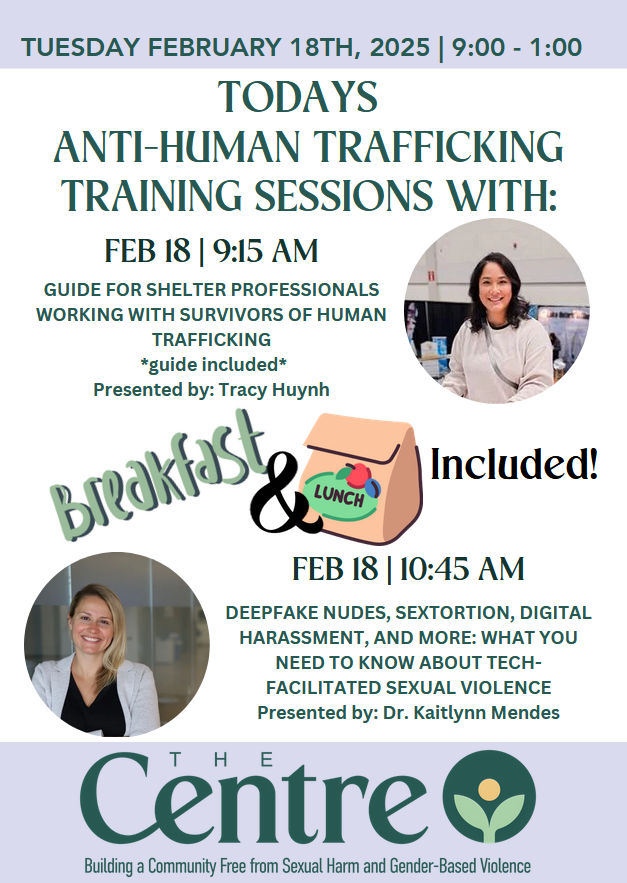
📌 If you live in Sarnia and are interested in learning more about tech-facilitated sexual violence, Dr. Kaitlynn Mendes will offer a workshop for The Centre Sarnia-Lambton.
Register here https://t.co/S8CVEYQ7ZH
L’Australie interdira les médias sociaux aux adolescents. Le Canada devrait-il faire de même ? 🤔
Nos experts Dr Dietzel (@cdietzel) et Dre Mendes discutent des implications et des impacts de ces mesures dans cet article de @ConversationCA .
https://t.co/a0fc8kwll0
Faire face à des préjudices en ligne peut être accablant, mais vous n’êtes pas seul·e. Des ressources sont disponibles partout au Canada. 🇨🇦
Découvrez la liste complète sur notre site web : https://t.co/wD5l4z3qgG
Our team has compiled detailed lists of support services for youth affected by technology-facilitated violence.
These guides can help you if you are seeking resources tailored to specific identity groups or locations across Canada 🇨🇦 https://t.co/xhzd9kXwDm
@nytimes asked teens about barring children under 16 from social media, and they were very honest about how social media has affected them —both positively and negatively. They also discussed other ideas for helping young people navigate life online.
https://t.co/OMu5qKn2bF
Young people face unique challenges when it comes to experiencing their sexuality in a digital age. 📲👀🍑
On January 22 at @DalhousieU, Prof. Suzie Dunn will discuss some of our preliminary findings, including insights from interviews and surveys conducted with youth across 🇨🇦.
Australia is banning social media for teens. Should Canada do the same?
Our experts, Dr. Christopher Dietzel (@cdietzel) and Dr. Kaitlynn Mendes discuss the implications and impact of these measures in this @ConversationCA article.
https://t.co/1UDvAo0ZSE
Smartphone policies in schools: What does the evidence say? 🏫🤳 The @5RightsFound and @MediaLSE joint centre gathered evidence from around the world.
Don’t miss their report https://t.co/Xk2fRDB7ci
Curious about sextortion and how to stay safe? 🛡️ @netsafeNZ has amazing resources with tips, solutions, and support for parents and young people. Don’t miss out 🔗 https://t.co/E3uYafcqey
Looking for free resources to address technology-facilitated sexual violence among youth? 👀📲
Visit our website for infographics, fact sheets, & reports to learn about online harms https://t.co/c8hWHjVhZW #DigitalSafety
Want to warn young people about sextortion? Scottish teens recommend using language that teens understand, keeping the messages fast-paced and skipping the scare tactics.🗣️✨ (via @guardian)
https://t.co/UEJCL1h7n5