🇺🇸 A German officer pressed a pistol between his eyes. Behind him stood more than 1,200 American prisoners.
If he surrendered the names the Nazis wanted, more than 200 Jewish-American soldiers could disappear.
He answered with five words.
His story was nearly forgotten. Follow us and share it so it never will be again.
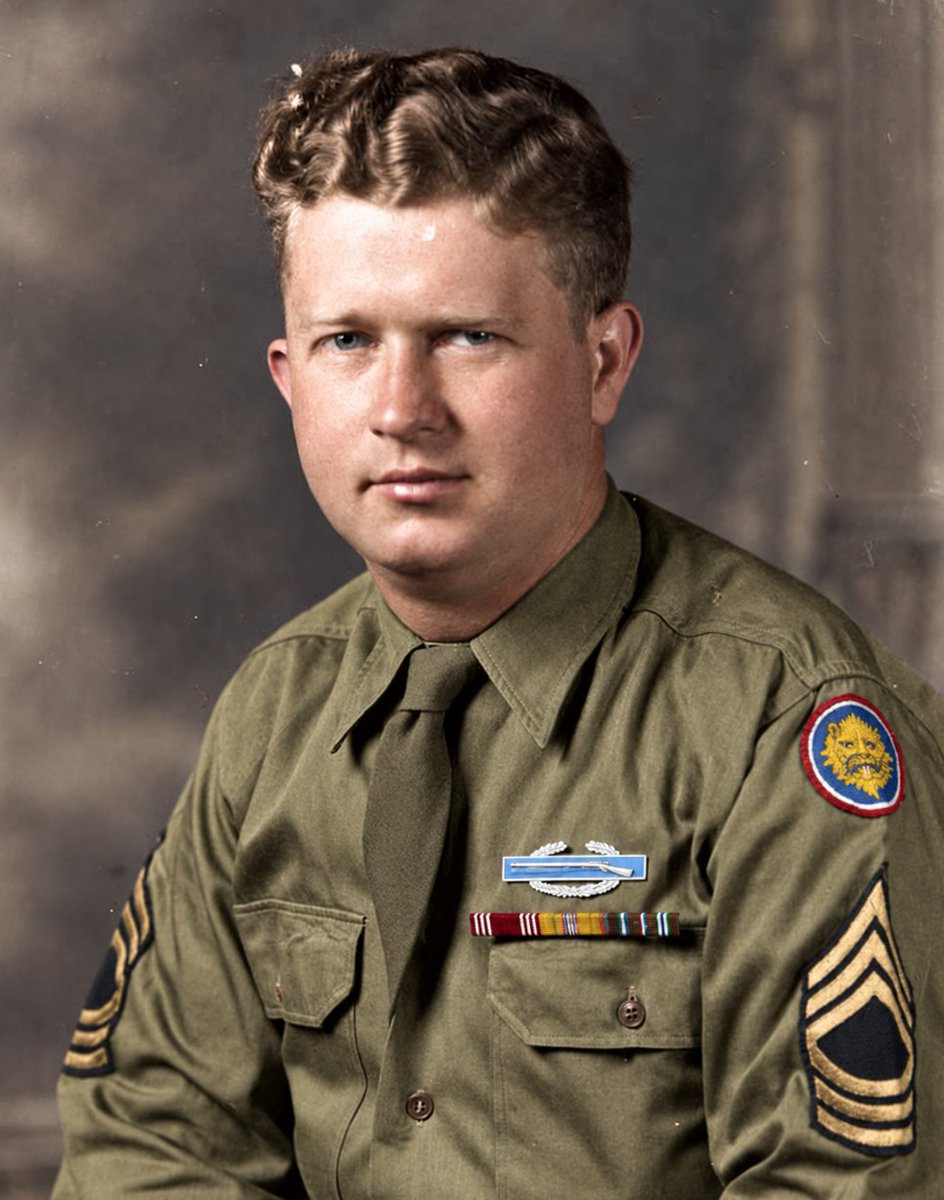
Master Sergeant Roderick "Roddie" Edmonds had been captured during the Battle of the Bulge while serving with the 422nd Infantry Regiment.
By January 1945, he was the senior American NCO at Stalag IX-A. On January 26, the Germans issued an order: every Jewish-American prisoner must report separately at morning roll call.
Edmonds understood what separation could mean. So he issued his own order: "Every American would report".
The next morning, more than 1,200 men stood together outside the barracks.
The German commandant demanded that Edmonds identify the Jews. When he refused, the officer drew his pistol and pressed it against Edmonds’ forehead.
Edmonds did not move. "We are all Jews here."
He reminded the commandant that prisoners were required to give only their name, rank and serial number. If the German shot him, Edmonds warned, he would have to shoot them all, and face trial for war crimes after Germany’s defeat.
Then the commandant lowered his pistol and walked away.
Not one Jewish-American prisoner stepped forward. More than 200 men had been saved because one soldier refused to surrender them.
Edmonds survived the war but never told his family what he had done. He died in 1985.
Witnesses later revealed the truth. In 2015, Yad Vashem recognized him as Righteous Among the Nations. On March 2, 2026, his son accepted the Medal of Honor on his behalf.
His name was Master Sergeant "Roddie" Edmonds.
And when evil demanded names, he answered: "We are all Jews here".
I reread this every year.
I cry like a baby every year.
Todd Beamer died a father, husband, and hero.
Todd: Hello… Operator… listen to me. I can’t speak very loud. This is an emergency. I’m a passenger on a United flight to San Francisco. Our plane has been hijacked.
Lisa: I understand. Can they see you?
Todd: No. There are three that we know of. They have knives — razor knives, like box cutters. Someone announced from the cockpit there was a bomb. It sounded fake.
Lisa: Your name?Todd: Todd Beamer. United Flight 93.Todd: They killed one passenger in first class. They forced most of us back. Fourteen of us here. Five flight attendants. The guy with the bomb ordered us to sit on the floor.
Lisa: Are you okay?
Todd: We’re going down… wait. No. We’re leveling off. We changed directions. We’re flying east again.
Todd: A guy named Jeremy called his wife. She told him two planes hit the World Trade Center. Lisa, is that true?
Lisa: I have to tell you the truth. It’s very bad. Both towers are gone. A third plane hit the Pentagon. Our country is under attack. I’m afraid your plane may be part of their plan.
Todd: Oh God. Lisa, will you do something for me? Call my wife and my kids. Promise me you’ll call.
Lisa: I promise.
Todd: Our home number is… You have the same name as my wife. Lisa. We’ve been married ten years. She’s pregnant with our third child. Tell her I love her. I’ll always love her. We have two boys — David, he’s 3, and Andrew, he’s 1. Tell them their daddy loves them and he is so proud of them. The baby is due January 12th. I saw an ultrasound. We still don’t know if it’s a girl or a boy.
Lisa: I’ll tell them. I promise, Todd.(Lisa patches in the FBI.)
Agent: Todd, your plane is on a course for Washington. Best guess is the White House or the Capitol.
Todd: I understand. I’ll be back.
Todd: Everyone knows this isn’t a normal hijacking. We have decided we will not be pawns in their plot.
Lisa: What are you going to do?
Todd: Four of us are going to rush the one with the bomb. Then the cockpit. A stewardess is getting boiling water. We’ll take them out.
Todd: Would you pray with me?They pray the Lord’s Prayer. Then: Yea, though I walk through the valley of the shadow of death, I will fear no evil, for thou art with me.
Todd: God help me. Jesus help me.Are you guys ready? Let’s Roll.
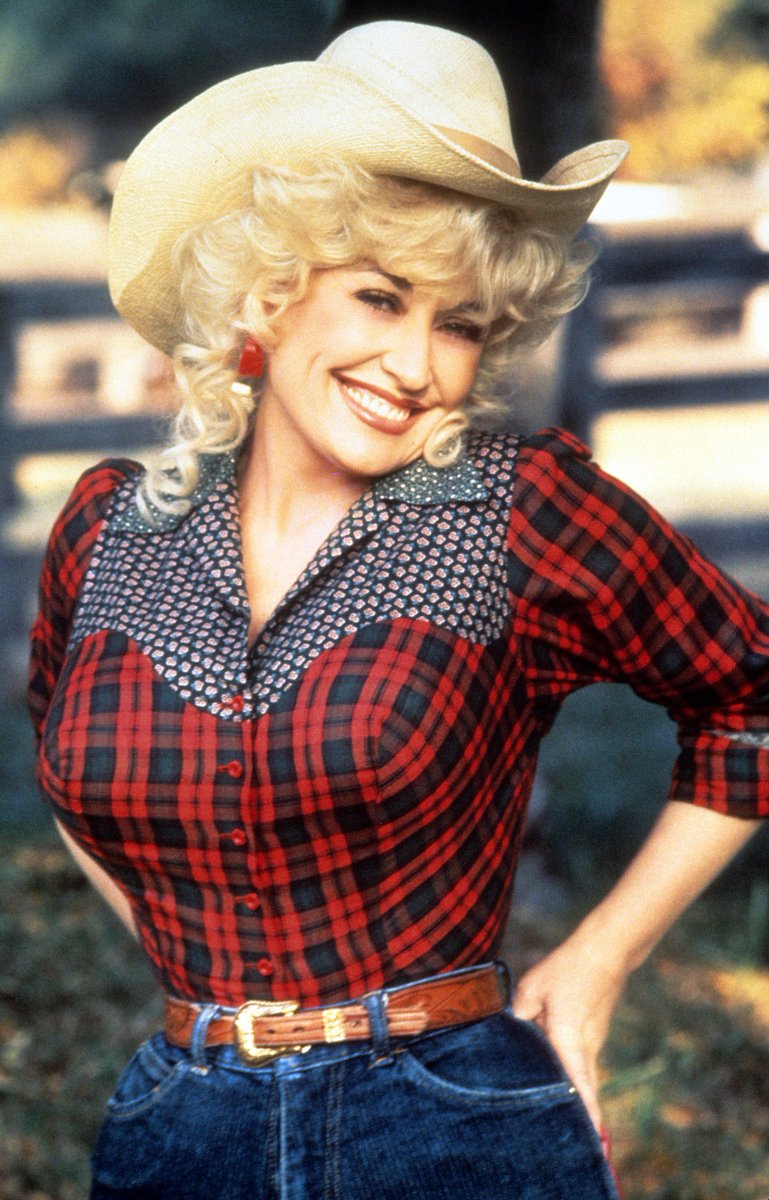
In 1988 Dolly Parton pulled every 7th and 8th grader in Sevier County into a room and told them to pick a buddy.
She made them sign a contract.. if BOTH graduate, she hands you both $500. One fails, nobody gets paid.
The county dropout rate went from 35% to 6%.
She handed out the checks herself.
In 1989 she offered $500 to every kid in the county who wanted to go to the local college.
When Gatlinburg burned in 2016, she sent 900 families $1,000 a month for six months.
You've probably heard that part.
Here's the part you haven't:
The fund raised more than expected, so she showed up in May and handed every one of those families another $5,000 on top.
Then she quietly put $3 million into the recovery group that handles the years after the news trucks leave.
She built her county an entire hospital.
She played a benefit concert in 2007, Dollywood and the Stampede matched it, and LeConte Medical Center opened in 2010 with a birthing unit and a women's center in it.
In 2022 she started covering 100% of tuition, books, and fees for Dollywood employees.
Full-time, part-time, AND seasonal.
In 1991 she paid for a bald eagle sanctuary because the birds couldn't be released back into the wild, no press release.
And when Hurricane Helene came through here in Western North Carolina, she wrote a personal check for $1 million and her companies matched it.
She didn't owe North Carolina anything, but she helped us anyway.
She started the Imagination Library because her daddy couldn't read or write. Before he passed, he told her it was the most important thing she ever did.
Rest in Peace, Dolly 🇺🇸
They threw boots at him in the barracks at night.
They called him a coward in front of the whole unit. His commanding officer filed formal paperwork to have him removed. His fellow soldiers decided, collectively and deliberately, that if they made his life miserable enough — he would crack.
Desmond Doss did not crack.
He was 23 years old, from Lynchburg, Virginia, and he had made a decision so clear and so complete that no amount of pressure from the United States Army was going to move it. He would serve. He would go wherever they sent him. He would run toward enemy fire without a second's hesitation.
He just would not carry a rifle. He would not kill anyone. Not for any reason. Not ever.
He was a Seventh-day Adventist. The commandment against killing was not a suggestion. It was the word of God. And Desmond had decided, simply and absolutely, that no earthly authority — not his officers, not a world war, not the men throwing boots across a dark barracks — was going to override it.
What he wanted was to be a combat medic. To go into the field. To save lives instead of taking them. The Army, not knowing what else to do with him, agreed. And the men who had tormented him waited to see what a soldier without a weapon was actually worth.
They found out in the Pacific.
By 1944 he was in the 307th Infantry Regiment, 77th Division. He ran into fire to reach wounded men in Guam and the Philippines. He came back with them. He ran in again. The mockery became quieter. Then it mostly stopped. He earned two Bronze Stars. The men had watched what he did under fire, and the word coward had simply stopped fitting.
Then the division was ordered to Okinawa. To the Maeda Escarpment. To a place the soldiers called Hacksaw Ridge.
It was a 400-foot wall of jagged rock. At the top, Japanese forces had spent months building a network of tunnels and fortified positions. The Americans went up. They fought. They took casualties. They kept going.
On May 5, 1945, the Japanese launched a massive coordinated counterattack. The men at the top were being overwhelmed. Officers gave the order: fall back. Get off the ridge. Get down now.
The men came down.
Scattered across the top of the escarpment were approximately 75 wounded American soldiers. Without help, they could not move. Without help, they would die there or be captured. The retreat was happening under fire and there was no plan to get them out.
Desmond Doss stayed.
Unarmed. Alone at the top of a contested ridge with enemy soldiers moving through the smoke around him. And he began to work.
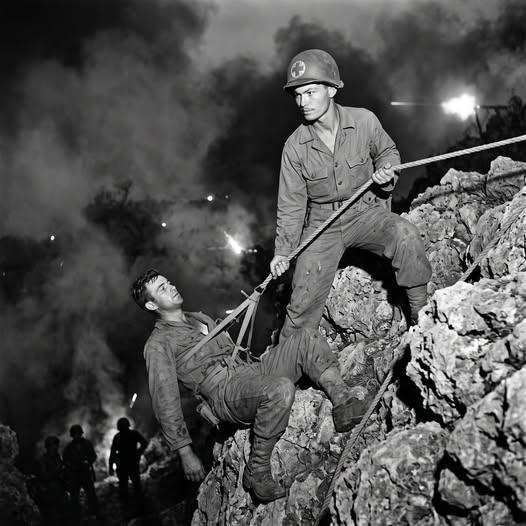
He found a wounded man. Moved him to the edge of the cliff. He had a rope and fashioned a lowering sling, and he lowered the man down to the soldiers waiting at the base. Then he turned around and went back into the fire and found another one.
He prayed the same prayer each time.
""""Please, Lord, help me get one more.""""
He kept going back. Hours passed. The light changed. He kept going back.
By the time darkness settled over the escarpment, Desmond Doss had lowered approximately 75 men — alone, unarmed, under fire, one at a time — down the face of that cliff. The number was later chosen for his Medal of Honor citation because even Doss himself couldn't say exactly how many. He had stopped counting. He had just kept praying for one more.
Days later, the fighting continued on the ridge. A Japanese grenade landed near him. Doss tried to kick it away from the men around him. It exploded. Seventeen pieces of shrapnel tore into his body.
He treated his own wounds. He told no one. He waited five hours in silence because he would not call for medics when other men needed them more.
When the stretcher finally came, the men lifted him onto it.
Then Doss looked across the field and saw another soldier whose wounds were worse than his. He got off the stretcher. He told them to take the other man first. And while he waited on the ground, bleeding, a sniper found him. A bullet shattered his arm.
He broke a rifle stock off a discarded weapon — not to use as a weapon, but to use as a splint — and he crawled three hundred yards to the aid station under his own power.
On October 12, 1945, President Harry Truman placed the Medal of Honor around Desmond Doss's neck. He was the first conscientious objector in American history to receive it. Truman held his hand while the citation was read aloud, and then looked at him directly and said:
""""I'm proud of you. You really deserve this. I consider this a greater honor than being president.""""
Captain Jack Glover — the officer who had spent months filing paperwork to have Doss removed from his unit — was among the men lowered off that ridge. He said afterward that Doss was one of the bravest people he had ever known. That this man, of all men, had ended up saving his life was, he said, """"the irony of the whole thing.""""
Doss came home. Tuberculosis — contracted during the Leyte campaign — cost him a lung and five ribs. He lived with what remained for the rest of his life, which lasted until March 23, 2006. He was 87.
He never carried a weapon. He never fired a shot. He never wavered.
He just kept going back for one more.
The bravest thing Desmond Doss ever did wasn't surviving a grenade or crawling three hundred yards with a shattered arm. It was standing in a barracks at 23 years old, with boots being thrown at him across the room, and simply refusing to become someone he wasn't.
Everything else followed from that one decision.
“And every four years when the World Cup comes around, we will say that we’d dominate if we had a stronger youth program.”
“And will we develop a stronger youth program?”
“We will not.”
@wildforthecats@SFGiants@fabfourfan Sorry to hear this news! Certainly remember his name from back in the day. Roanoke was proud to have someone in the major leagues.
Ray’s Rock - Omaha Beach
On the morning of June 6, 1944, 23 year old Staff Sergeant Arnold “Ray” Lambert came ashore with the first wave of the 1st Infantry Division on the eastern side of Omaha Beach. At this small patch of concrete he saved nearly 20 lives:
The division came under intense fire from several German bunkers surrounding the entrance to the Colville Draw (one of two exits off Omaha Beach). Ray, a medic, immediately went to work.
He was shot in the arm. Moments later he was hit by shrapnel in the leg, but Ray kept pulling men to safety. He pulled nearly 20 wounded soldiers to cover behind this 8ft wide obstacle, treating each soldier before going out in search of others.
After several hours under fire, while pulling a wounded soldier from the ocean, he was struck by a landing craft. It dropped its ramp on top of him, breaking his back. He fell face down in the water, drowning. The craft backed up and nearby soldiers pulled an unconscious Ray to safety, eventually evacuating him off the beach.
Remarkably, Ray had already earned two Silver Stars and three Purple Hearts in Sicily and North Africa, prior to landing in France. But here in Normandy his war would end.
He awoke in a hospital back in England a day later. In the next bed over was his brother, who had also been wounded at Omaha.
When asked about his work on D-Day, Ray simply said, “I did what I was called to do.”
Ray Lambert passed in 2021 at 100 years old. He exemplified the best of American grit and why remembering this day is so important.
On August 7, 1942, a 28-year-old German oil executive stood outside a Jewish orphanage in Nazi-occupied Poland and watched SS soldiers throw babies out of windows.
That moment changed his life forever.
His name was Berthold Beitz.
At the time, he wasn’t a resistance fighter. He wasn’t a politician. He wasn’t part of an underground movement.
He was a businessman working for the German oil industry in Boryslaw, a town in occupied Poland where Hitler’s war machine depended heavily on oil production.
Beitz had a wife at home.
A small daughter.
A comfortable position.
And after witnessing what the SS were doing to Jewish families, he went home and told his wife Else:
“We have to do something.”
Most people in occupied Europe survived by looking away.
Berthold and Else refused.
Over the next several years, they would save around 800 Jewish lives.
Not with weapons.
Not with speeches.
With forged papers.
False job titles.
Hidden rooms.
And unimaginable courage.
Beitz discovered that Jews officially classified as “essential oil workers” were temporarily protected from deportation.
So he started expanding the definition.
Tailors became “petroleum technicians.”
Hairdressers became “oil specialists.”
Rabbis and scholars suddenly had paperwork claiming they were critical to Germany’s fuel production.
He signed the papers himself.
When deportation trains arrived, Beitz sometimes walked directly up to the cattle cars and demanded prisoners back, claiming they were essential workers needed for the war effort.
And astonishingly, it often worked.
While Berthold rescued people publicly, Else turned their home into a sanctuary.
Jewish children hid in the cellar while Nazi officers sat upstairs eating dinner.
Parents who knew they were about to be murdered entrusted their children to her arms.
If the Gestapo had searched the house thoroughly, the Beitz family would have been executed.
They did it anyway.
In 1943, the Gestapo finally investigated Berthold after forged work permits were discovered.
He denied everything.
Somehow, he escaped arrest.
By the end of the war, approximately 800 people were alive because the Beitz family refused to accept evil as normal.
After the war, Berthold rebuilt his life quietly.
He became one of the most powerful industrialists in Germany, eventually helping lead the massive Krupp steel empire and later ThyssenKrupp.
He advised world leaders.
Helped strengthen postwar Germany.
Worked behind the scenes during the Cold War.
But he almost never spoke publicly about what he had done during the Holocaust.
His own grandson later admitted the family learned many details only by reading newspapers.
When people called him a hero, Berthold rejected the word.
He said:
“I was just a human being who saw what was happening.”
In 1973, Israel honored Berthold and Else Beitz as Yad Vashem “Righteous Among the Nations,” one of the highest recognitions given to non-Jews who risked their lives to save Jews during the Holocaust.
Berthold Beitz died in 2013 at age 99.
Else died the following year.
The children they saved went on to have children of their own.
Today, thousands of people exist because one German couple refused to look away while others did.
Berthold Beitz spent the rest of his life believing he had simply done what any human being should do.
History tells us otherwise.
Because when cruelty becomes ordinary, the people who choose compassion become extraordinary.
For seventy years, on this hillside overlooking the James River, Virginians have gathered on Memorial Day to remember our neighbors who paid the ultimate sacrifice.
Every single year, we have come back here, together, to say in one unified voice: we have not forgotten you.
Tony Bennett shares a masterclass on humility and why most people get it wrong.
"When we talk to our young men about what humility means, it's twofold and sometimes it's not what you think."
"Don't think too highly of yourself. If you wanna turn people off, walk around arrogantly thinking you own this place."
"But we also talk about the other aspect: don't think too lowly of yourself. That's false humility."
Most people only see one side. Real humility is balanced.
"Have sober judgment. That's what humility means - to really know who you are as a player, as a team. And know who you're not."
It takes self-awareness to know who you are and where you want to go.
Then he shared a definition that changes everything:
"I heard Timothy Keller give the definition of humility as this: It's not thinking less of yourself - it's thinking of yourself less."
That's the difference. Not self-doubt, but selflessness.
"We're all so selfish. When your team gets past that, that's when you have success. It's been about the team and less about yourself."
"People look at humility as a position of weakness. But I think it is true strength. There's power in true humility."
It takes humility to be willing to learn and listen.
It takes humility to be willing to admit you don't know yet.
It takes humility to be unoffendable and put the team first.
(🎥 UVA Basketball)
Reid Wiseman told his two teenage daughters where to find his will before he got on this rocket. He’s raised them alone since their mom died of cancer six years ago. Right now, he is 252,757 miles from home, farther from Earth than any human being has ever been.
Wiseman grew up outside Baltimore. Got rejected from the Naval Academy, went to Rensselaer Polytechnic Institute instead, studied computer engineering. Became a Navy fighter pilot, flew F-14 Tomcats (the jet from Top Gun) on combat missions over Iraq and Afghanistan. Two Middle East deployments by his mid-twenties. He saw a Space Shuttle launch in person in 2001 and couldn’t let go of it. Applied to NASA while at sea on the aircraft carrier USS Dwight D. Eisenhower. They picked him. Nine people out of 3,500 applicants. His astronaut class, nicknamed “The Chumps,” included Jeremy Hansen, the Canadian who’s floating next to him right now.
Wiseman’s first trip to space was 165 days on the Space Station in 2014. Two spacewalks. Thirteen hours outside the hull in nothing but a suit. He climbed all the way up to Chief of the Astronaut Office, the person who decides which astronauts fly and which ones sit. Then he gave it up in 2022 to put himself back on the flight list.
His wife Carroll was a nurse in a newborn intensive care unit. She got cancer. Fought it five years. Died in May 2020 at 46. His mother died from Alzheimer’s just weeks before that. Wiseman raised both daughters by himself after that. NASA’s own bio says he considers being a single parent his hardest challenge and the best part of his life. Even while she was dying, Carroll told Reid not to step back from his career. She made him keep going. His brother is a Navy SEAL. His father is 83 and battling cancer too. The old man told reporters he wanted to stay alive long enough to see his son launch.
Before liftoff, Wiseman’s daughters snuck homemade cookies into his flight bag. He posted a photo with them in front of the rocket and wrote “I’m boarding that rocket a very proud father.”
The previous distance record from Earth belonged to the Apollo 13 crew. 248,655 miles, set in April 1970, and it was an accident. An oxygen tank blew up and the emergency route home happened to swing them farther out than anyone before. Wiseman broke that record by 4,100 miles, and his distance is on purpose. Today he flies within 4,600 miles of the Moon, photographs stretches of the far side that were too dark or at the wrong angle for any of the 24 Apollo astronauts to see, and watches a solar eclipse that nobody on Earth can see, only the four people inside that capsule.
Then he turns around and spends four days flying home to his girls.
When I was in law school, I thought grand juries were like the "appendix" of American law -- a vestigal formality that really served no purpose in the modern era. Was I ever wrong. Recent events have really shown the wisdom of the Founders' design.
Beautiful views of the Virginia War Memorial and downtown Richmond after Winter Storm Fern on Monday, January 26, 2026, courtesy of Bill Draper Photography.
Trump is the first president not to issue an official proclamation recognizing Martin Luther King Jr. Day since Reagan made it a holiday.
https://t.co/UF94wH2rU0