Nobody in Walton County knew who was buying up the Panhandle. Timber companies sold him tract after tract. Sod farms. Played-out peanut fields. Pine that had been cut and cut again. The buyer was a timber and oil commodities trader, and he never told a single seller what he wanted it for.
He was buying it so it could NEVER be developed again.
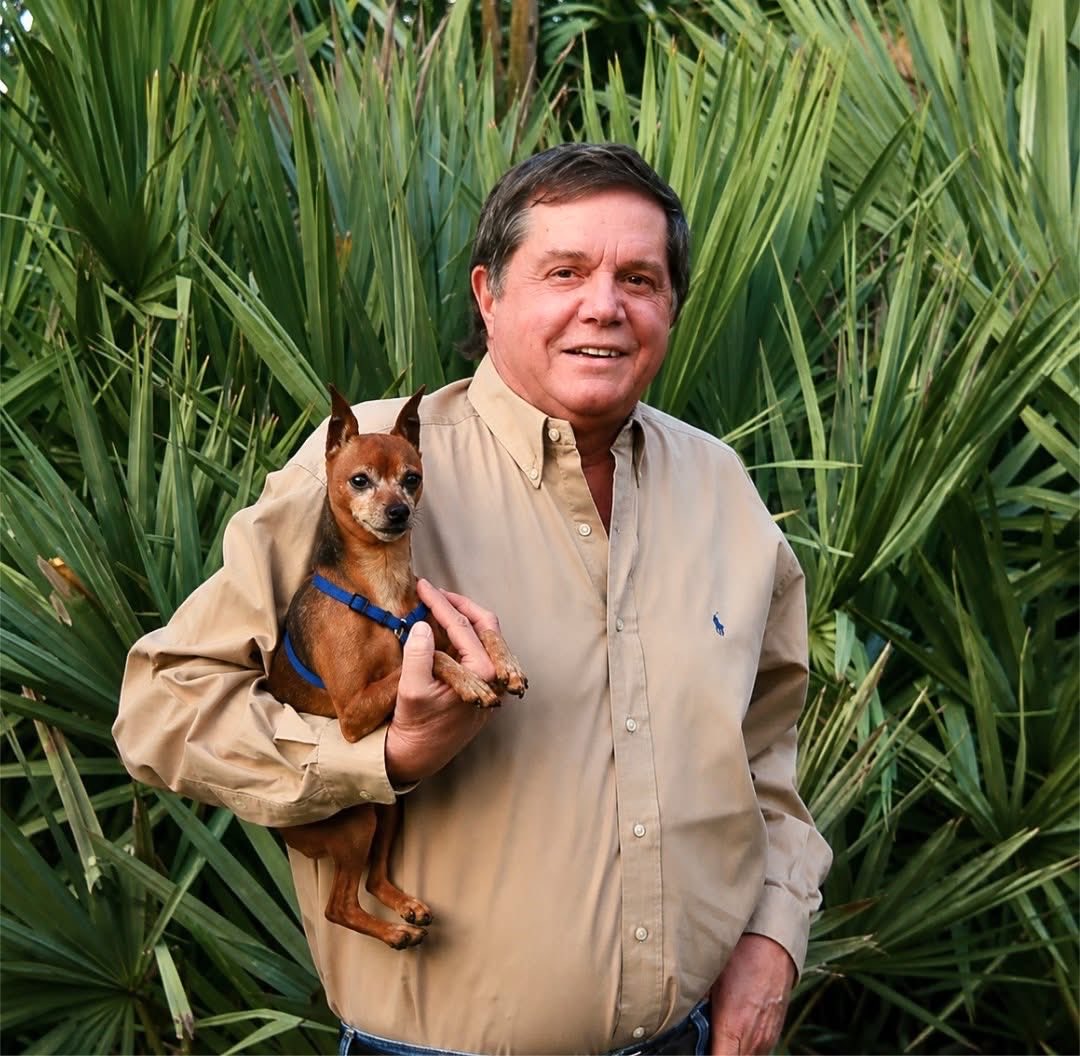
Marion Clifton Davis grew up on the wrong side of the tracks in the Florida Panhandle. He summed up the whole childhood in one sentence: "I grew up with five other people in 300 square feet in a wore-out trailer on a dirt road."
He gambled his way out, hustling pool and poker from the time he was 16 until he was 30. It paid for a political science degree and then a law degree. He moved the winnings into land and mineral rights, and they turned into hundreds of millions of dollars.
He had spent his entire life climbing out of that trailer, and he got all the way to the top of it. Then he said this: "I finally made some money and it wasn't what it was advertised to be."
What changed him was a traffic jam. Stuck in a line of cars going nowhere, he read a high school marquee advertising a presentation on the Florida black bear. He pulled out of the line and walked in.
"I hate to confess to this. I didn't know Florida even had black bears at the time." He gave the two women running the presentation enough money to keep going for another two years, then asked them for a reading list and spent the next year working through Thoreau, John Muir, and a Harvard biologist named E.O. Wilson.
In 2000, he started buying. He spent roughly $90 million assembling more than 50,000 acres along the Choctawhatchee River, tract by tract, never tipping his hand until each deal closed. He named it Nokuse. It is the Muscogee word for black bear.
Then he did the thing no land man does. He took it apart. His crews thinned 22,000 acres of pulpwood pine and hand-planted EIGHT MILLION longleaf seedlings across 24,000 acres, scattered in deliberately random patterns so the forest would never come back in rows. They burned about 10,000 acres a year on purpose, because longleaf needs fire.
He told people it was a 300-year project.
In 2009 he spent $12 million of his own money on a 28,000-square-foot science center for Panhandle schoolkids. He named it for E.O. Wilson. Not for himself.
In November 2014, doctors found stage 4 lung cancer. He kept working. That June he sat down with a national radio crew and said it plainly: "I'm dying, as we all are. It's well advanced."
He got 15 years of the 300.
M.C. Davis died on July 11, 2015, eight months after the diagnosis. Not one tree he planted had grown tall enough to matter yet.
He spent thirty years learning how to take. He spent the rest putting it back.
Around here, thousands of Panhandle fourth graders get loaded onto a school bus and driven out to that center. Almost none of them ever find out who paid for the trip.
Then the bears came back.
They cross under US 331 now, through three wildlife underpasses finished in 2012, funneled in by a mile and a half of fence on both sides of the four-lane highway. The man who did not know Florida had black bears built them a way under the road. They den on land named after them.
Nokuse Preserve is 56,258 acres today, endowed and permanently protected, the largest private conservation project east of the Mississippi River. More than 3,800 gopher tortoises pulled off Florida development sites have been released there since 2006. In 2025 the E.O. Wilson Biophilia Center took in 5,500 students from 56 schools, and it charged none of them a dollar.
A longleaf pine can live 400 years. The seedlings put in the ground in 2004 are barely out of childhood, and the forest he was actually aiming at will not stand until sometime around the year 2300. He knew that when he wrote the checks.
M.C. Davis, a poor kid from a dirt road, spent everything he ever won on a forest he would never walk through.
So long, America🫡🇺🇸
49 days ago we landed in the USA to follow our country at the World Cup. We had no idea it would turn into the trip of a lifetime.
Thank you to everyone who followed along, and to all the people we met who made this journey even more special. We honestly don’t have the words to express how grateful we are for everything you did for us.
This trip exceeded every expectation we had. We came here with an open mind, wanting to experience as much of the country as possible. I still remember telling my friends on the flight to Atlanta that I hoped we’d get to meet a few locals on this trip. Now we’re flying home with friends all across the USA.
Before we came, we heard so many stereotypes and warnings about America. People told us about safety concerns, that they might check our social media at the border, and all kinds of other things. None of it matched our experience. This was probably the most welcoming country we’ve ever visited.
So if you have the chance to travel, do it. The world isn’t nearly as bad as the media often makes it seem. 99% of people are awesome!
I heard this quote somewhere during the World Cup, and I think it sums up our experience perfectly:
“If you want to hate the world, watch the news. If you want to love it, travel it.”
Thank you, America ❤️🇺🇸
Happy Heavenly Birthday to our beloved mentor and friend, Chef Paul Prudhomme. We miss you!
ps. Look at that line for dinner at K-Paul's Louisiana Kitchen back in the 1980’s! #totallyhot
🤩♥️🔥🔥🔥