Happy SHINE Syndrome Day 2024.
Please like and share and help us make these smiles even brighter by supporting our mission to find or create treatment options to improve quality of life and help each affected individual reach their potential
Donate here: https://t.co/boL8Z3eTbQ
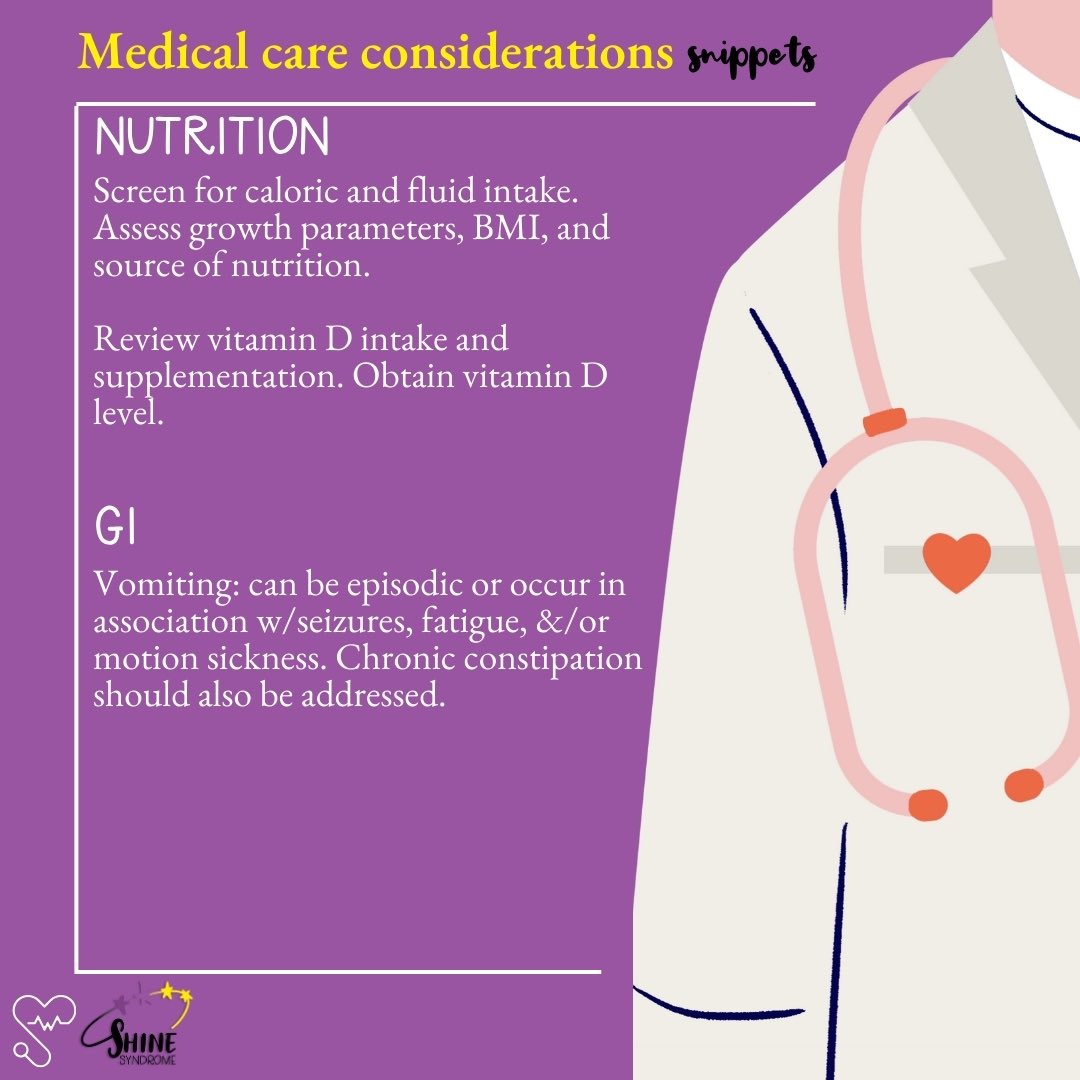
In addition, with many affected individuals experiencing difficulties with communication, caregivers are often left to often wonder if abdominal pain is occurring and causing anxiety or other behavioural issues.
We continue our series of excerpts from the Medical Care Considerations document regarding the many symptoms and issues SHINE caregivers must monitor for.
Here is a snippet about concerns around nutrition and gastro-intestinal health.
Full document here: https://t.co/V7rB5g7tHc
Image text continued:
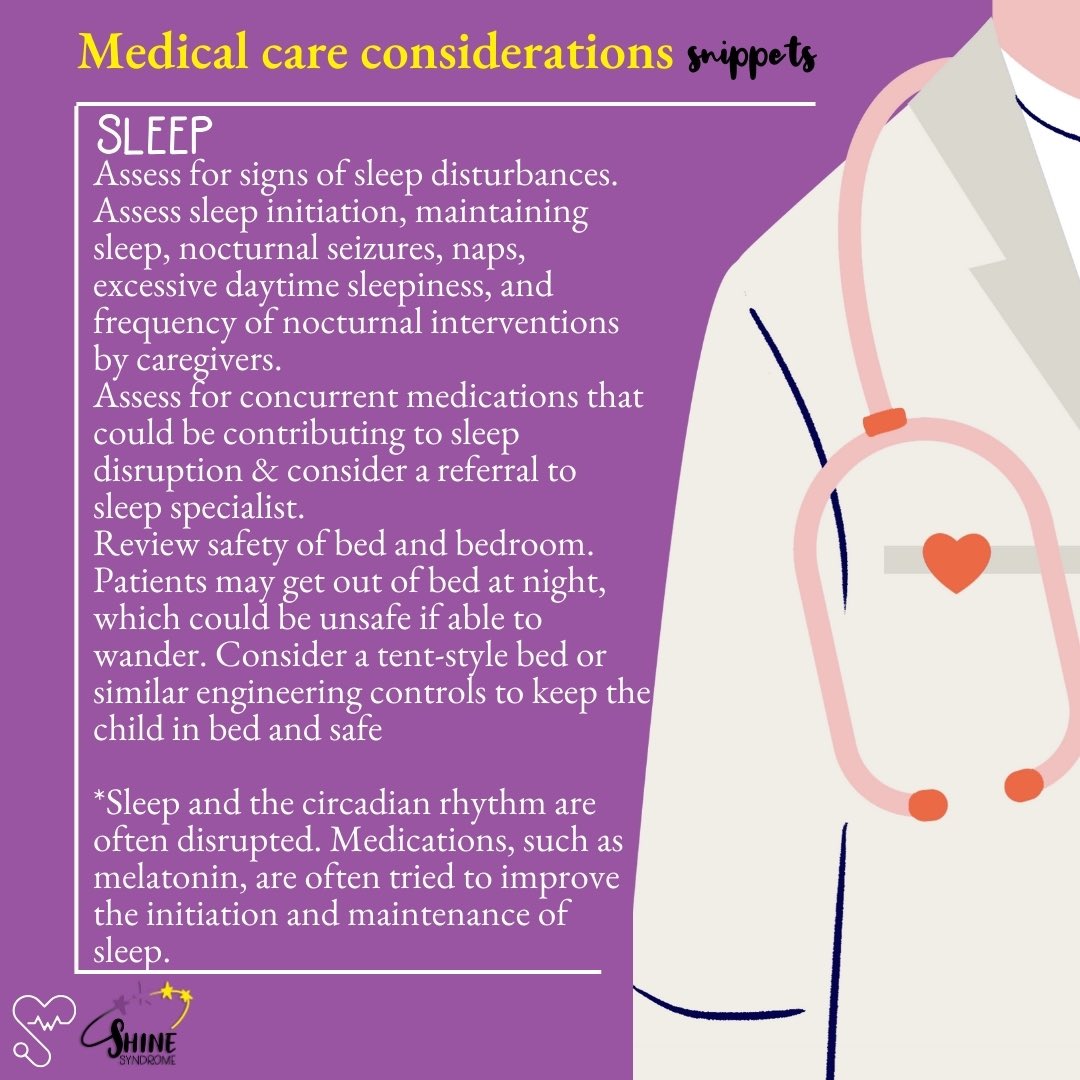
Consider a tent-style bed or similar engineering controls to keep the child in bed and safe.
*Sleep and the circadian rhythm are often disrupted. Medications, such as melatonin, are often tried to improve the initiation and maintenance of sleep.”
Medical care for SHINE Syndrome is very complex and multifaceted.
Caregivers have to be on the lookout for many symptoms and issues.
To assist, we have developed a Medical Care Considerations document. Here is just a snippet about sleep.
(Full document: https://t.co/V7rB5g81wK)
Image text continued:
“Assess for concurrent medications that could be contributing to sleep disruption & consider a referral to sleep specialist.
Review safety of bed and bedroom. Patients may get out of bed at night, which could be unsafe if able to wander.”
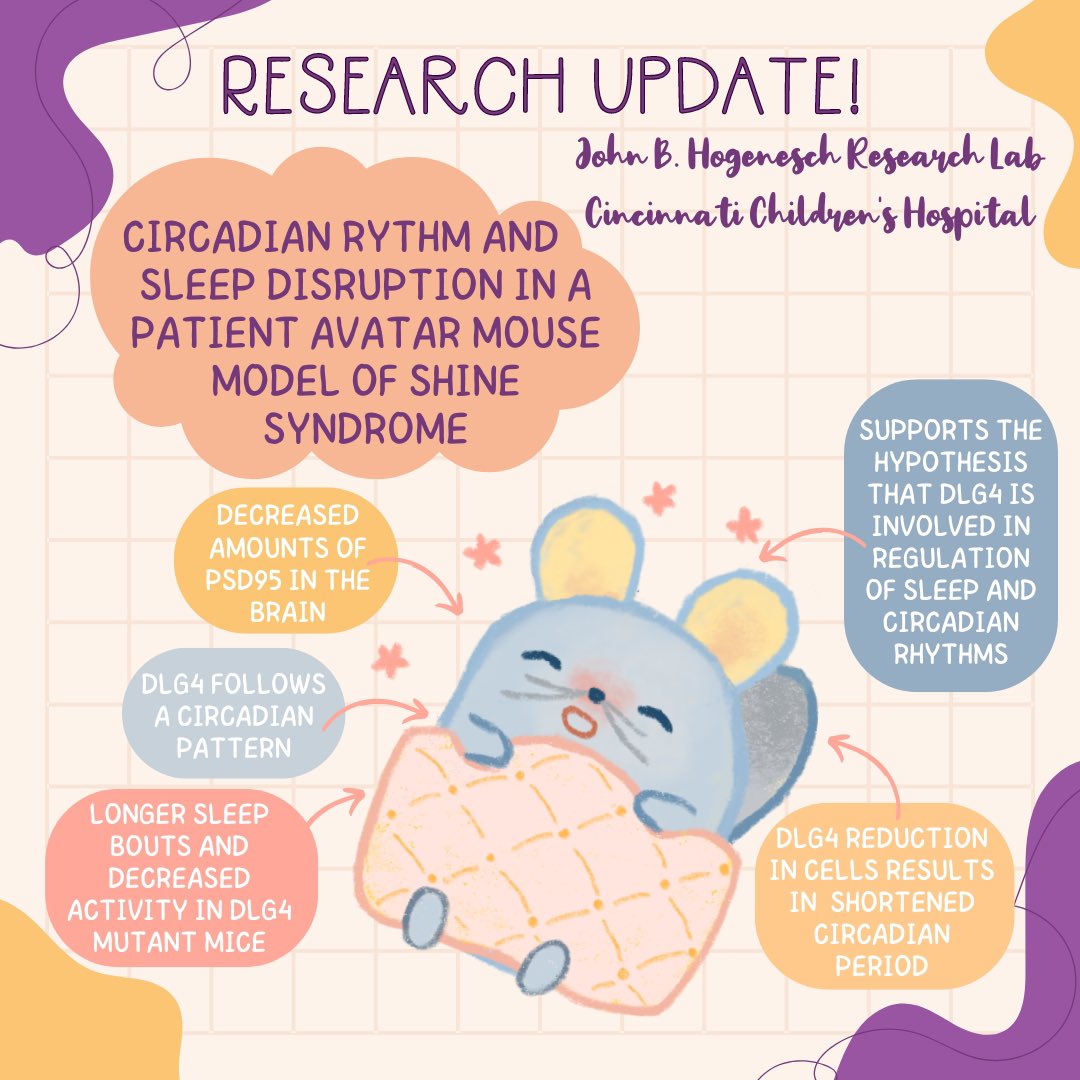
Their research so far shows that DLG4 is rhythmically expressed and follows a circadian pattern, and that compared to controls, mice with a DLG4 variant have:
⁃decreased amounts of PSD95
⁃a shortened circadian period,
⁃decreased activity,
⁃ longer average sleep bouts
We are extremely thankful to Dr John Hogenesch and his collaborators, Dr Jiffin Paulose and Sharon Tamir (MD/PHD student), at the Cincinnati Children’s Hospital Hogenesch Research Lab for their work on sleep issues in SHINE Syndrome.
Happy Father’s Day to all the Dads and father figures to a SHINE loved-one.
Rare disease parenting/caregiving is not for the faint of heart and we are very thankful for all the dedicated and loving SuperDads in the SHINE community!
SHINE Syndrome is still quite new and better understanding the disorder is still a critical need.
If you are an adult patient or caregiver to an adult loved-one with SHINE syndrome (16 or older), please consider participating to the research effort below:
https://t.co/BgKArCIZv4
From the researchers: Project WellCAST is a NIH-funded clinical trial focused on CAREGIVER and FAMILY well-being. If you are eligible for our research study, you’ll receive a FREE 12-week support program that can be completed 100% by telehealth!
Read more: https://t.co/54AtNmTUry
Project Wellcast is an ongoing Caregiver Study with some great perks for the participants.
Read more from the researchers in the comments and join here:
https://t.co/uuylxsa9rV
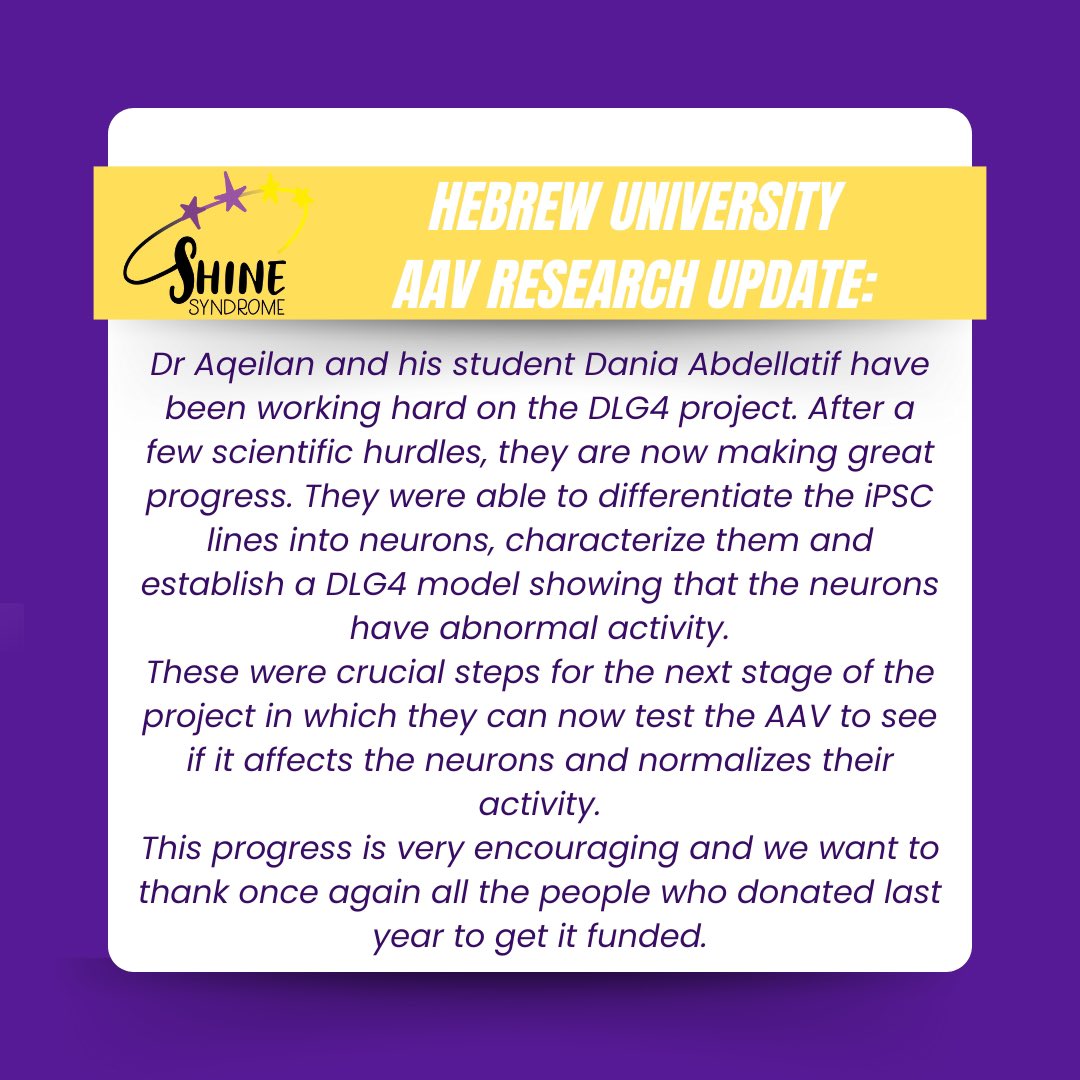
We're thrilled to share an update about our AAV research.
We need your support to finish funding this crucial research: https://t.co/qbQPixnZfK
To learn more watch these videos of the lead researchers:
Dr Muotri: https://t.co/Jhlwt1kYZy
Dr Aqeilan: https://t.co/WpoxI70HQ4
Thank you to Melanie Queen for her Spring Cleaning Drive with Savers.
They have collected a lot and it will add up to over $700 raised for the SHINE Syndrome Foundation!
Check out this link if you’re inspired to follow suit and have a drive in your area: https://t.co/82TbBISER3
A very Happy Mother’s Day to all the Moms and mother figures to a SHINE loved-one.
Their needs might be special but so are the Moms who love and care for them, and advocate relentlessly. 💜💛
PS: Happy belated or early Mother’s Day to those in countries who don’t celebrate today
We have very 80 signatures!!
Thanks to all the caregivers, family members, family friends and others who supported us in this important pursuit 🤗.
We would love to reach 100 names… if you haven’t yet added yours or shared this post, it’s not to late 😉
We need to urge the CDC to agree to the addition of an ICD-10 code by May 17th!
The SHINE Syndrome Foundation will be sending a letter of support.
Please follow the link to read more and and add your name before May 10th:
https://t.co/udbvE71M9M
Text reads: There are many unique variants of various types across the patient population with a DLG4 diagnosis. no clear link or correlation has been found yet between a specific variant or even a type of variant and certain symptoms or severity of symptoms.