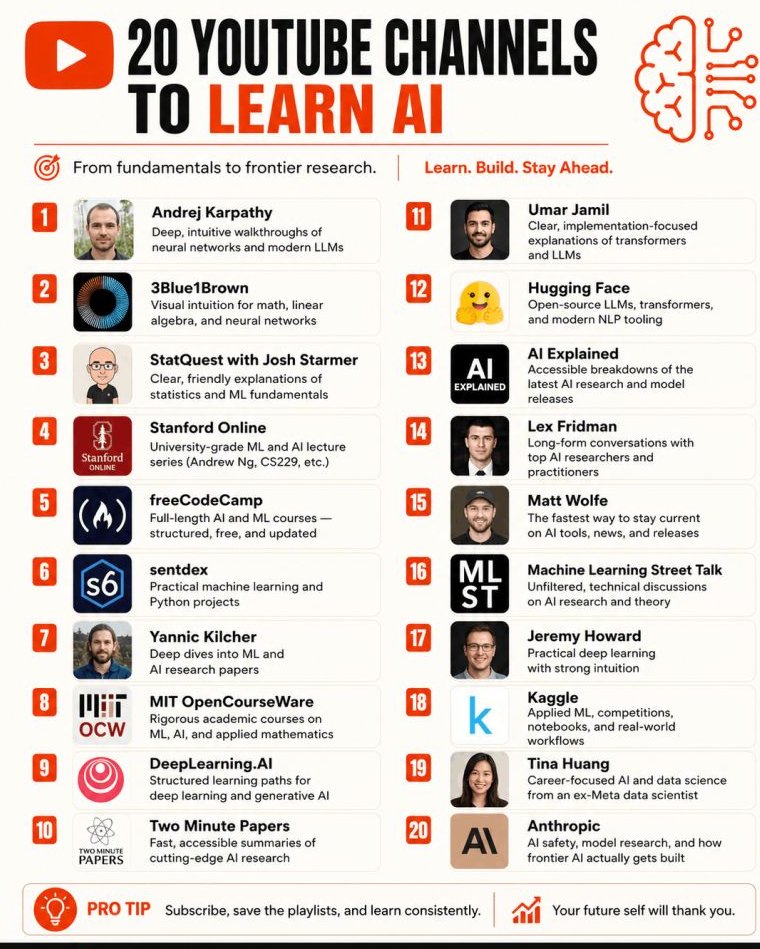
20 YouTube channels that teach AI better than most CS degrees.
Free. No application required. No tuition.
This list covers everything: theory, intuition, implementation, research.
Here's the full list:
👇
1. Andrej Karpathy
Deep, intuitive walkthroughs of neural networks and modern LLMs
Link: https://t.co/VhrPS6mRJF
2. 3Blue1Brown
Visual intuition for math, linear algebra, and neural networks
Link: https://t.co/16cFDyp7YP
3. StatQuest with Josh Starmer
Clear, friendly explanations of statistics and ML fundamentals
Link: https://t.co/U2wZJc3JLV
4. Stanford Online
University-grade ML and AI lecture series (Andrew Ng, CS229, etc.)
Link: https://t.co/Zj5FMcGPNa
5. freeCodeCamp
Full-length AI and ML courses — structured, free, and constantly updated
Link: https://t.co/hXVr0KEVX6
6. sentdex
Practical machine learning and Python projects
Link: https://t.co/ZGtXhYUUnZ
7. Yannic Kilcher
Deep dives into ML and AI research papers
Link: https://t.co/J5hXNTp3DY
8. MIT OpenCourseWare
Rigorous academic courses on ML, AI, and applied mathematics
Link: https://t.co/Dg5O9NyQWW
9. DeepLearningAI
Structured learning paths for deep learning and generative AI
Link: https://t.co/Nm5OhqrbI1
10. Two Minute Papers
Fast, accessible summaries of cutting-edge AI research
Link: https://t.co/mL5bY9kImz
11. Umar Jamil
Clear, implementation-focused explanations of transformers and LLMs
Link: https://t.co/VknS4Zyqr3
12. Hugging Face
Open-source LLMs, transformers, and modern NLP tooling
Link: https://t.co/b6A7qSwhRW
13. AI Explained
Accessible breakdowns of the latest AI research and model releases
Link: https://t.co/UndrSMlReG
14. Lex Fridman
Long-form conversations with top AI researchers and practitioners
Link: https://t.co/maxG9W4bM4
15. Matt Wolfe
The fastest way to stay current on AI tools, news, and releases
Link: https://t.co/6eNhNS861T
16. Machine Learning Street Talk
Unfiltered, technical discussions on AI research and theory
Link: https://t.co/Lu6Daamcrz
17. Jeremy Howard
Practical deep learning with strong intuition
Link: https://t.co/SjEggqxBQe
18. Kaggle
Applied ML, competitions, notebooks, and real-world workflows
Link: https://t.co/I90OW4LfoV
19. Tina Huang
Career-focused AI and data science from an ex-Meta data scientist
Link: https://t.co/kxOyBYxNnx
20. Anthropic
AI safety, model research, and how frontier AI actually gets built
Link: https://t.co/fsW7wWfint
The best AI education isn't behind a paywall.
It never was.
While people debate which bootcamp to buy,
the best instructors in the world are uploading for free.
Every week.
♻️ Repost to give your network an unfair advantage.__
1. Follow @Dharmikpawar31
2. Save the post.
3. Repost to your network.
4. Join My AI Community: https://t.co/Kcq5K41Hem
If you want to become good at system design (in 30 days), learn these 30 case studies:
1 How Stock Exchange Works
→ https://t.co/ckLlZUh4UR
2 How YouTube Works
→ https://t.co/dTVLjI8EYh
3 How Google Docs Works
→ https://t.co/lXjTlb3Vm9
4 How Kafka Works
→ https://t.co/1D04tpNm2q
5 How URL Shorteners Work
→ https://t.co/SNxRzuzV6B
6 How WhatsApp Works
→ https://t.co/phAf30nR2M
7 How Airbnb Works
→ https://t.co/4NZMIlN70F
8 How Spotify Works
→ https://t.co/d1rGAvPIxA
9 How Slack Works
→ https://t.co/dpjG03ZvlL
10 How Reddit Works
→ https://t.co/J3ZrmwJ0q4
11 How Bluesky Works
→ https://t.co/wfo35CdFvm
12 How Tinder Works
→ https://t.co/uTLfmUajeG
13 How Twitter Timeline Works
→ https://t.co/T7xJTWL30C
14 How Uber Finds Nearby Drivers
→ https://t.co/UX8AA8yNmv
15 How Amazon S3 Works
→ https://t.co/fOchSbdw3C
16 How Apple AirTags Work
→ https://t.co/02ChJDY5Y5
17 How LLMs Actually Work
→ https://t.co/VW4fD9fH8P
18 How ChatGPT Apps Work
→ https://t.co/cK51NCi6OQ
19 How Uber Computes ETA
→ https://t.co/t5G2mhzahX
20 How Meta Serverless Works
→ https://t.co/jVCIuoN4wj
21 How Live Comments Work
→ https://t.co/UzdZPXinxX
22 How Real-Time Leaderboards Work
→ https://t.co/tPqC4Cear5
23 How Live Presence Works
→ https://t.co/u7LWmkQ9UB
24 How YouTube Scales MySQL
→ https://t.co/vm2enNgV16
25 How Vector Databases Work
→ https://t.co/UAtlY6Ntle
26 How Pastebin Works
→ https://t.co/nVS9TKAluk
27 How ChatGPT Works
→ https://t.co/wgE4cxO7i2
28 How Nginx Works
→ https://t.co/XX0ukXAQuG
29 How Lyft Works
→ https://t.co/T9fvldjqC4
30 How Google Search Works
→ https://t.co/DVlsy0vLPq
What else should make this list?
===
👋 PS - Want my System Design Playbook for FREE?
Try the link below to join my newsletter right now:
→ https://t.co/ByOFTtOihX
(200K+ software engineers are already inside.)
===
💾 Save & RT to help others learn system design.
👤 Follow @systemdesignone + turn on notifications.
System Design Series - Day 8/30
API Gateway Patterns – The Front Door of Your Microservices
API Gateway is the single entry point for all your clients.
Without it:
- Mobile/web clients call 10+ different services directly
- Authentication is duplicated everywhere
- Rate limiting, CORS, logging → repeated in every service
- Services are fully exposed to the internet
With it:
- One clean URL for clients
- Centralized auth, rate limiting, routing, aggregation
- Backend services stay hidden and secure
Here’s everything you need to know about API Gateway patterns.
What is an API Gateway?
Think of it as the hotel front desk
Without a front desk:
- Guests wander around looking for rooms
- No security check
- Housekeeping and room service have no coordination
With a front desk:
- Single check-in point
- Routes guests to correct room
- Handles security, coordination, and requests
API Gateway does exactly that for your microservices.
The Problem It Solves
Before API Gateway:
Mobile app needs user profile + orders:
→ Calls User Service directly
→ Calls Order Service directly
→ Calls Payment Service directly
Problems:
- Client knows internal service URLs
- Multiple network calls (slow on mobile)
- Auth tokens sent to every service
- No centralized rate limiting or logging
- Services exposed to the internet
After API Gateway:
Mobile app calls one URL:
https://api.example. com/profile
Gateway handles everything internally:
- Authenticates once
- Routes and aggregates calls
- Returns combined response
Benefits:
- 1 network call from client
- Services completely hidden (security win)
- Centralized cross-cutting concerns
- Much better client experience
Core Responsibilities:
1. Routing
Maps external URLs to internal services
GET /api/users → User Service
GET /api/orders → Order Service
2. Authentication & Authorization
Validates JWT/OAuth once at the gateway.
Services trust the gateway.
3. Rate Limiting
Prevents abuse (e.g., 100 requests/min per user).
4. Request Aggregation
Combines multiple backend calls into one response for the client.
5. Protocol Translation
Client uses REST → Service uses gRPC (handled at gateway).
Advanced Patterns
- Circuit Breaker → Prevents cascading failures when a service is down
- Request/Response Transformation → Convert old → new API formats
- Caching → Cache frequent responses at the gateway level
- Logging & Monitoring → Centralized observability
When to Use API Gateway
Use it when:
- You have multiple microservices
- External clients (mobile, web, third-party)
- You need centralized auth, rate limiting, or aggregation
Don’t use it when:
- Simple monolith (overkill)
- Only internal service-to-service communication
- Ultra-low latency is critical (extra hop)
Popular Solutions
- Kong (open-source, powerful plugins)
- AWS API Gateway (managed, serverless)
- NGINX + Lua (DIY, lightweight)
- Traefik, Envoy, KrakenD
Summary
API Gateway is not just a proxy.
It is the security layer, traffic manager, and aggregator for your entire backend.
It simplifies client code, hides internal complexity, and centralizes cross-cutting concerns.
Trade-offs:
- Extra network hop (adds latency)
- Becomes a critical component (make it highly available)
Used correctly, it’s one of the most valuable pieces in any microservices architecture.
Tomorrow (Day 9): Inter-Service Communication Patterns
Questions about API Gateway?
Drop them below 👇
#SystemDesign #APIGateway #Microservices #Backend
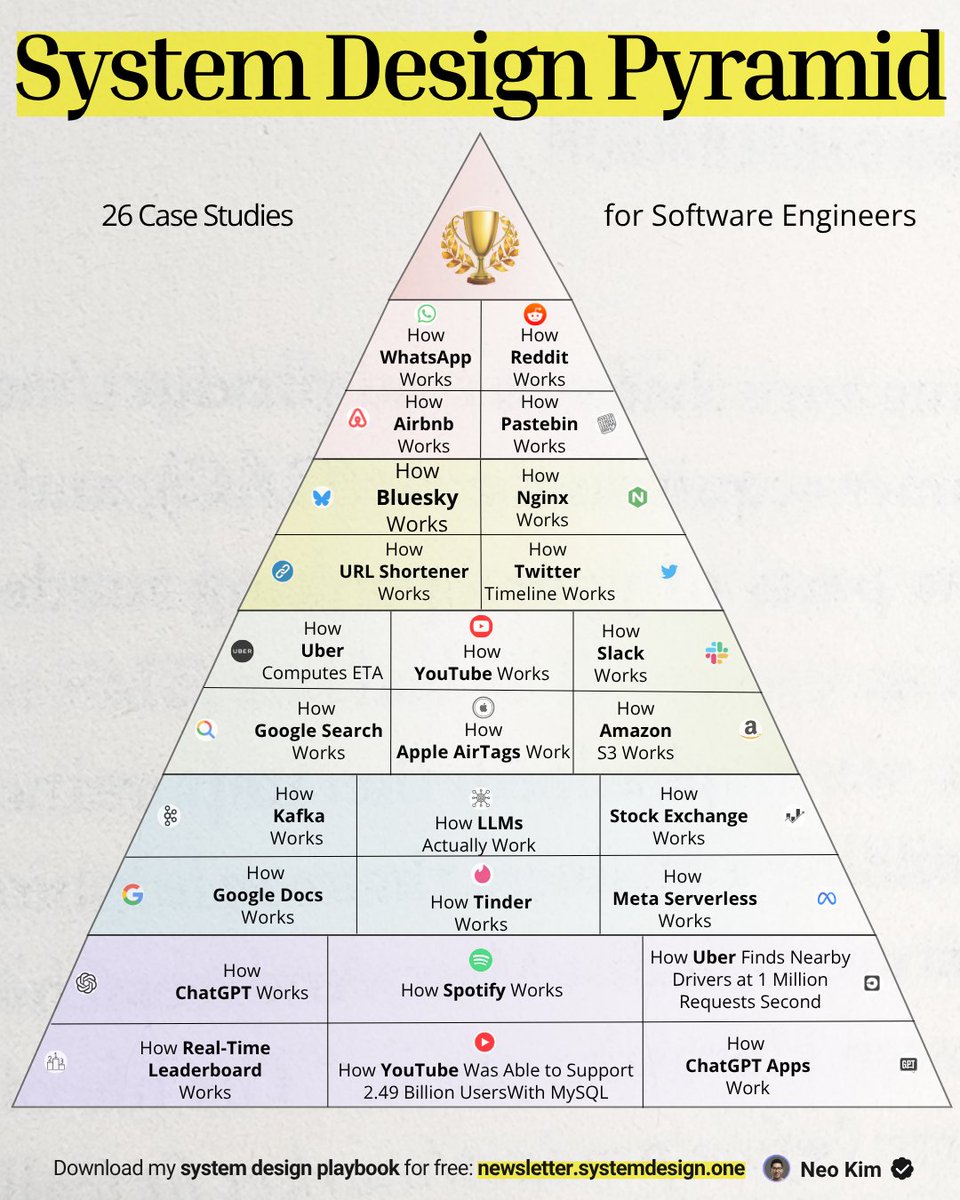
If you're serious about system design (in 2026), learn these 26 case studies:
1 How Stock Exchange Works:
↳ https://t.co/iFNSX9TM9O
2 How YouTube Works:
↳ https://t.co/kHk3g6jz6t
3 How Kafka Works:
↳ https://t.co/8rOy9KgCMo
4 How Google Docs Works:
↳ https://t.co/W57IkAjXpT
5 How URL Shortener Works:
↳ https://t.co/tGndgdhH0V
6 How WhatsApp Works:
↳ https://t.co/VScq8QwHMr
7 How Airbnb Works:
↳ https://t.co/Bi5SAjfv5S
8 How Spotify Works:
↳ https://t.co/BxrH3oHIFS
9 How Slack Works:
↳ https://t.co/eIo29uOQOJ
10 How Reddit Works:
↳ https://t.co/o6Pw2hhj3T
11 How Bluesky Works:
↳ https://t.co/2rLYlRlky0
12 How Tinder Works:
↳ https://t.co/4E1zfgfvlw
13 How Twitter Timeline Works:
↳ https://t.co/pF2RYmPaIG
14 How Uber Finds Nearby Drivers:
↳ https://t.co/kJ2t8dtmch
15 How Pastebin Works:
↳ https://t.co/8NSUNlYM7q
16 How Amazon S3 Works:
↳ https://t.co/iReWAEHwmj
17 How Do Apple AirTags Work:
↳ https://t.co/upWcgsXwKh
18 How LLMs Actually Work:
↳ https://t.co/5lCKxq2g4N
19 How Uber Computes ETA:
↳ https://t.co/hw1hYJqQmj
20 How Real Time Leaderboard Works:
↳ https://t.co/HEChNTOHWb
21 How ChatGPT Apps Work:
↳ https://t.co/BJTYYnAwO1
22 How Nginx Works:
↳ https://t.co/JTeQTJvyrf
23 How ChatGPT Works:
↳ https://t.co/TZYZ3iddYH
24 How Meta Serverless Works:
↳ https://t.co/NSt6jovxu5
25 How YouTube Was Able to Support 2.49 Billion Users With MySQL:
↳ https://t.co/4VDJ5cs6fL
26 How Google Search Works:
↳ https://t.co/jwOaC4bhnv
What else should make this list?
===
👋 PS - Want my System Design Playbook for FREE?
Join my newsletter with 200K+ software engineers now:
→ https://t.co/ByOFTtOihX
===
1 Save & RT to help other software engineers ace system design.
2 Follow @systemdesignone + turn on notifications.
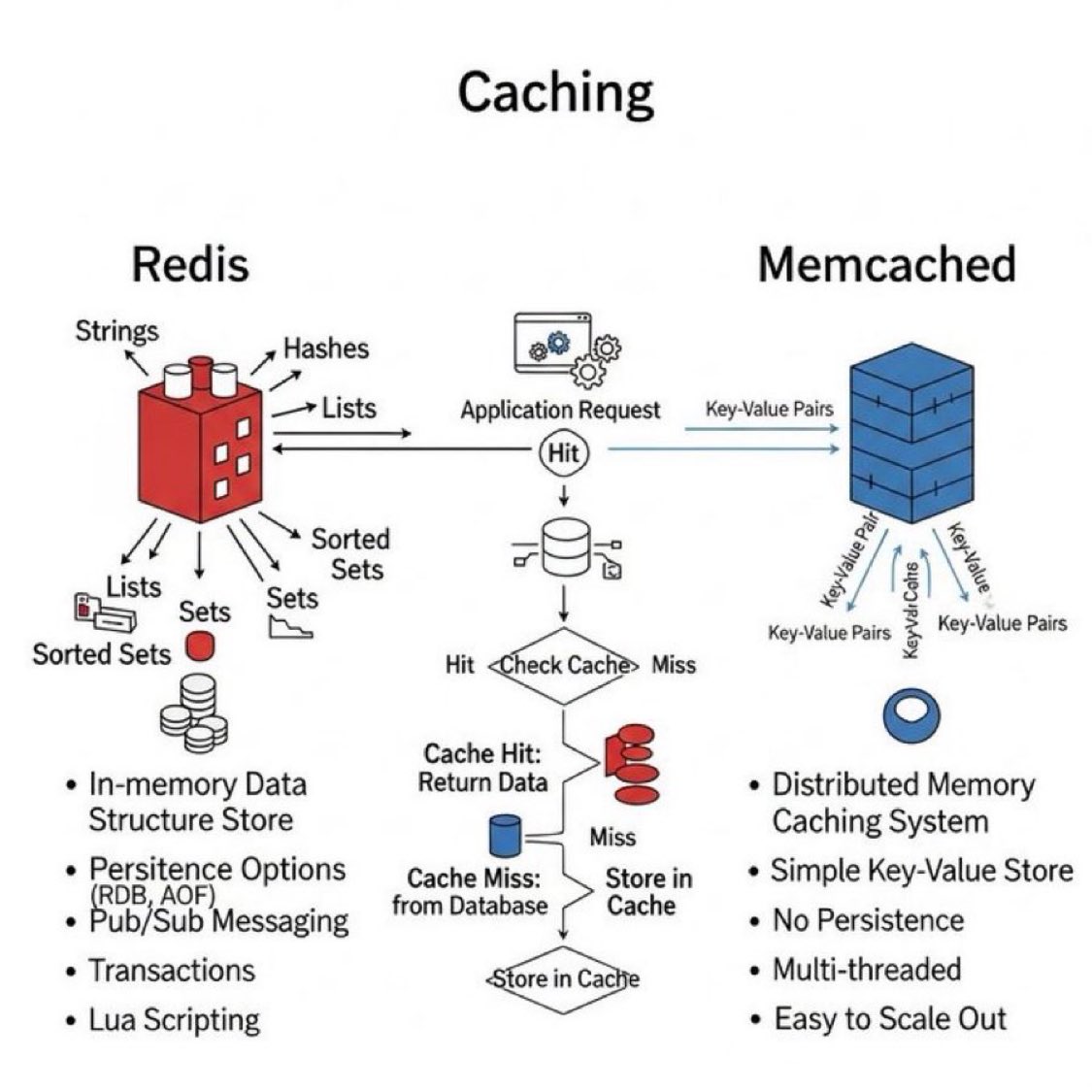
Caching (Redis, Memcached)
What is Caching?
Caching is the process of storing frequently accessed data in a temporary storage (cache) so future requests can be served faster. Instead of querying the database every time, the system retrieves data from the cache, reducing response time and server load.
Why Caching is Important
→ Improves application performance.
→ Reduces load on the database.
→ Enhances scalability and user experience.
→ Useful in real-time applications where speed is critical.
Redis
Redis (Remote Dictionary Server) is an open-source, in-memory data store often used as a cache, database, and message broker.
→ Stores data in key-value pairs.
→ Supports complex data structures like lists, sets, and hashes.
→ Provides persistence options (data can be saved to disk).
→ Commonly used in session storage, leaderboards, and pub/sub systems.
Advantages of Redis
→ Very fast (in-memory).
→ Rich data types and features.
→ Persistence support (RDB, AOF).
→ Suitable for real-time analytics.
Memcached
Memcached is a high-performance, in-memory caching system designed for simplicity and speed.
→ Stores data in key-value pairs.
→ Focuses only on caching (no persistence, fewer data structures).
→ Commonly used for caching database queries, HTML fragments, or session data.
Advantages of Memcached
→ Simple and lightweight.
→ Extremely fast read/write operations.
→ Scales horizontally across multiple servers.
Redis vs Memcached
→ Redis: Feature-rich, supports persistence and advanced data types.
→ Memcached: Lightweight, purely focused on caching.
→ Redis: Best for applications needing caching + extra functionality.
→ Memcached: Best for simple caching with minimal overhead.
Real-World Examples
→ Redis: Storing user sessions in large-scale apps like Twitter.
→ Memcached: Caching product details on e-commerce sites for faster page loads.
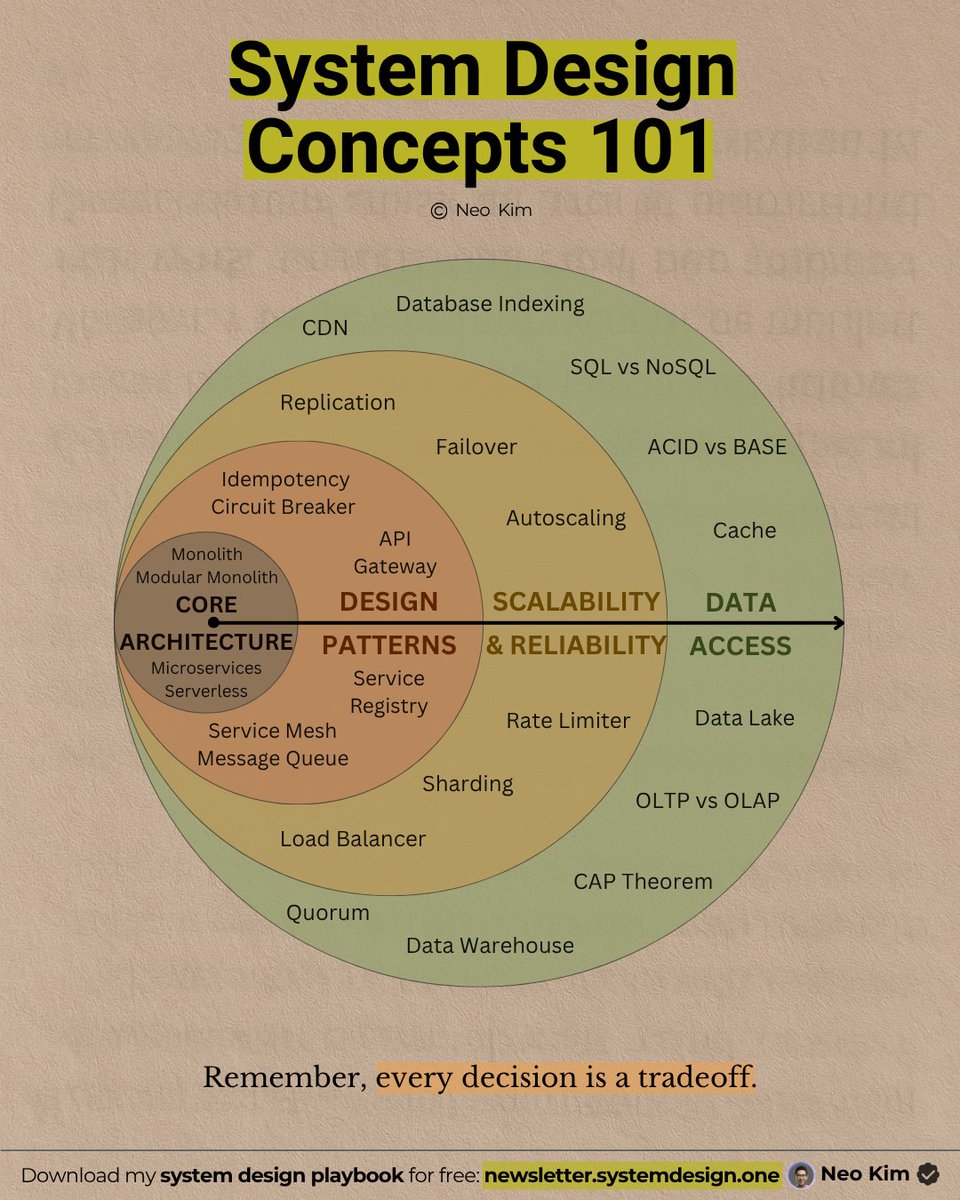
If you're just getting started with system design, learn these concepts:
1 System Design Concepts
↳ https://t.co/Jqfyh7YfZn
↳ https://t.co/8ZlHtl7vxU
↳ https://t.co/BlrhLsTXIC
2 The CS Stack 101
↳ https://t.co/qfZnlyCSN5
3 Frontend System Design Concepts
↳ https://t.co/ViPOQrLZzA
4 Microservices Lessons from Netflix
↳ https://t.co/XgS7VQoBFv
5 Modular Monolith Architecture
↳ https://t.co/VVV6v3KGHJ
6 Redis Use Cases
↳ https://t.co/hZ571ruVeA
7 How RPC Actually Works
↳ https://t.co/yeIgcmAxQx
8 How Message Queues Work
↳ https://t.co/bZjdqs8Py2
9 How JWT Works
↳ https://t.co/SZXXrlBsWH
10 How Does HTTPS Work
↳ https://t.co/r5rUtVpw0O
11 How Bloom Filters Work
↳ https://t.co/ntZXq7LxVn
12 How Service Discovery Works
↳ https://t.co/BcL3tgxx1u
13 How Consistent Hashing Works
↳ https://t.co/7d6EipPcKF
14 API Versioning - A Deep Dive
↳ https://t.co/OHAtKSUgVN
15 How Idempotent API Works
↳ https://t.co/afe7ACuSYE
16 Saga Design Pattern
↳ https://t.co/2CffTodOHL
17 How Databases Keep Passwords Securely
↳ https://t.co/KSfIhpAT2j
18 API Design Best Practices
↳ https://t.co/I2ejJ0kbYq
19 How Websockets Work
↳ https://t.co/JfT6mj4mrv
20 Distributed Systems 101
↳ https://t.co/yi0K5K5RIE
What else should make this list?
===
👋 PS - Want my System Design Playbook for FREE?
Join my newsletter with 200K+ software engineers now:
→ https://t.co/ByOFTtOihX
===
1 Save & RT to help other software engineers ace system design.
2 Follow @systemdesignone + turn on notifications.
If you want to become a world-class software engineer, learn these 19 system design case studies:
1 How Stock Exchange Works:
↳ https://t.co/iFNSX9TM9O
2 How Payment System Works:
↳ https://t.co/ARiLxGR43G
3 How YouTube Works:
↳ https://t.co/kHk3g6jz6t
4 How Google Docs Works:
↳ https://t.co/W57IkAjXpT
5 How Kafka Works:
↳ https://t.co/8rOy9KgCMo
6 How Pastebin Works:
↳ https://t.co/8NSUNlYM7q
7 How WhatsApp Works:
↳ https://t.co/VScq8QwHMr
8 How Airbnb Works:
↳ https://t.co/Bi5SAjfv5S
9 How Spotify Works:
↳ https://t.co/BxrH3oHIFS
10 How Slack Works:
↳ https://t.co/eIo29uOQOJ
11 How Reddit Works:
↳ https://t.co/o6Pw2hhj3T
12 How Google Search Works:
↳ https://t.co/jwOaC4bhnv
13 How Real-Time Leaderboard Works:
↳ https://t.co/HEChNTOHWb
14 How Twitter Works:
↳ https://t.co/pF2RYmPaIG
15 How Uber Computes ETA:
↳ https://t.co/hw1hYJqQmj
16 How Amazon Lambda Works:
↳ https://t.co/lx0BjeSRZt
17 How Amazon S3 Works:
↳ https://t.co/iReWAEHwmj
18 How Do AirTags Work:
↳ https://t.co/upWcgsXwKh
19 How ChatGPT Works:
↳ https://t.co/5lCKxq2g4N
What else should make this list?
——
👋 PS - Want my System Design Playbook (for FREE)?
Join my newsletter with 200K+ software engineers right now:
→ https://t.co/ByOFTtOihX
———
💾 Save this for later & RT to help others become good at system design.
👤 Follow @systemdesignone + turn on notifications.
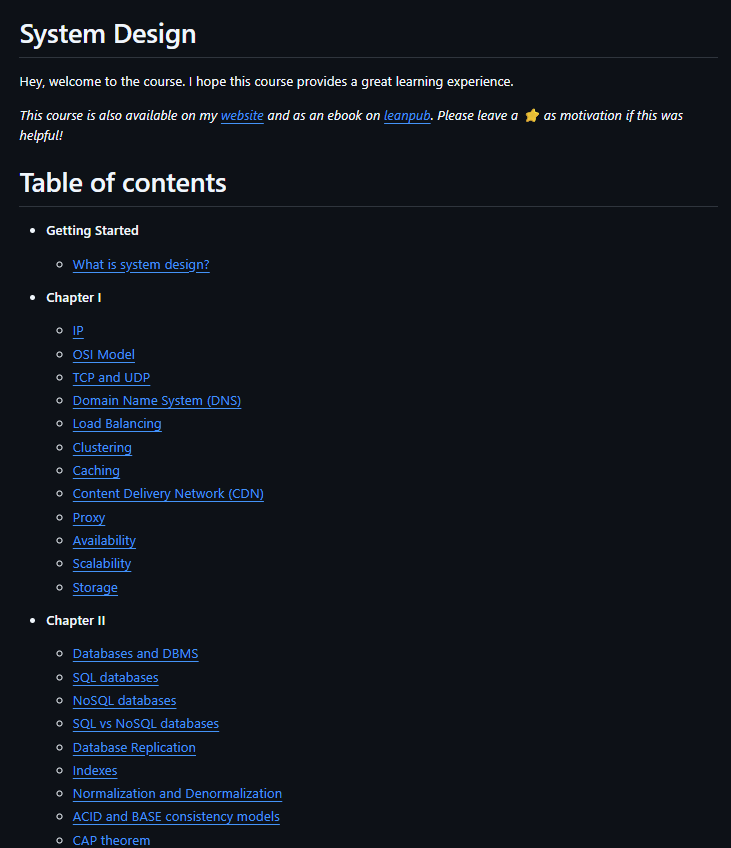
🚨 Developers: Stop skipping System Design.
I just found a FREE GitHub course that teaches almost everything you need to design systems like Twitter, Netflix, Uber, and WhatsApp.
No fluff. Just pure fundamentals.
Inside the repo you’ll learn:
🌐 Networking Basics
• IP & DNS
• OSI Model
• TCP vs UDP
⚡ System Architecture
• Load Balancing
• Caching
• CDNs
• Proxies
• Scalability & Availability
🗄 Databases
• SQL vs NoSQL
• Replication
• Sharding
• Indexes
• CAP & PACELC theorem
🏗 Modern Architecture
• Microservices vs Monoliths
• Event-Driven Systems
• Message Queues
• API Gateways
• REST, GraphQL, gRPC
🛡 Production Engineering
• Rate Limiting
• Circuit Breakers
• Service Discovery
• Disaster Recovery
• OAuth, TLS, SSO
And the best part…
It also includes real system design case studies:
• URL Shortener
• WhatsApp
• Twitter
• Netflix
• Uber
This is basically a complete roadmap to master System Design.
Repo in comments👇
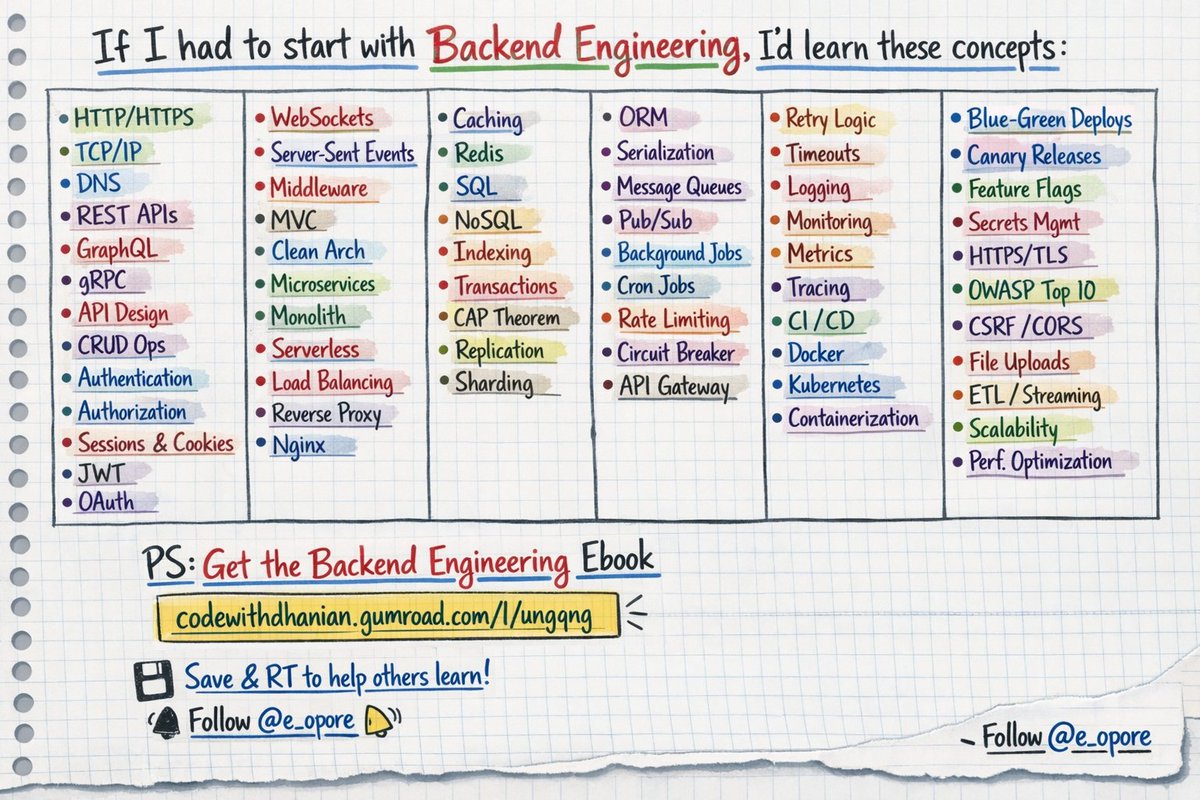
As a developer,
Please slap yourself if you can't explain at least 10 of these :
API Gateway
Load Balancer
Reverse Proxy
Rate Limiting
Throttling
Pagination
Cache stampede
Idempotency
GraphQL
gRPC
Webhooks
JWT
OAuth
Cache invalidation
Composite index
Query optimization
CAP THEOREM
ACID
Sharding
Circuit breaker
Livelock
CSRF
Backpressure
False sharing
mTLS
12 System design concepts engineers should know:
1. Load balancing algorithms explained
↳ https://t.co/VCLCKOZzni
2. gRPC clearly explained
↳ https://t.co/QwgTXr1N9z
3. How HTTPS actually works
↳ https://t.co/wc3CQOsmPS
4. Database caching strategies
↳ https://t.co/23QdZATj2o
5. System design quality attributes
↳ https://t.co/v9WJoUPevt
6. Health checks vs heartbeats
↳ https://t.co/r5SalP6CCh
7. CI/CD pipelines
↳ https://t.co/SM2YvhioIX
8. API gateway vs load balancer vs reverse proxy
↳ https://t.co/Tg3EhT60tU
9. Microservices clearly explained
↳ https://t.co/1CpY04nNxb
10. How JWT works
↳ https://t.co/Kuv7DAj6B9
11. Idempotency in API design
↳ https://t.co/2sItwlz1oe
12. API protocols made simple
↳ https://t.co/2CEu4Wnhsv
What else should make the list?
What concepts would you like me to cover?
👋 PS: Get our System Design Handbook FREE when you join our newsletter. Join 30,001+ engineers: https://t.co/8uVCeyVa1w
--
📌 Save for later.
♻️ Repost to help other engineers learn system design.
➕ Follow Nikki Siapno + turn on notifications.
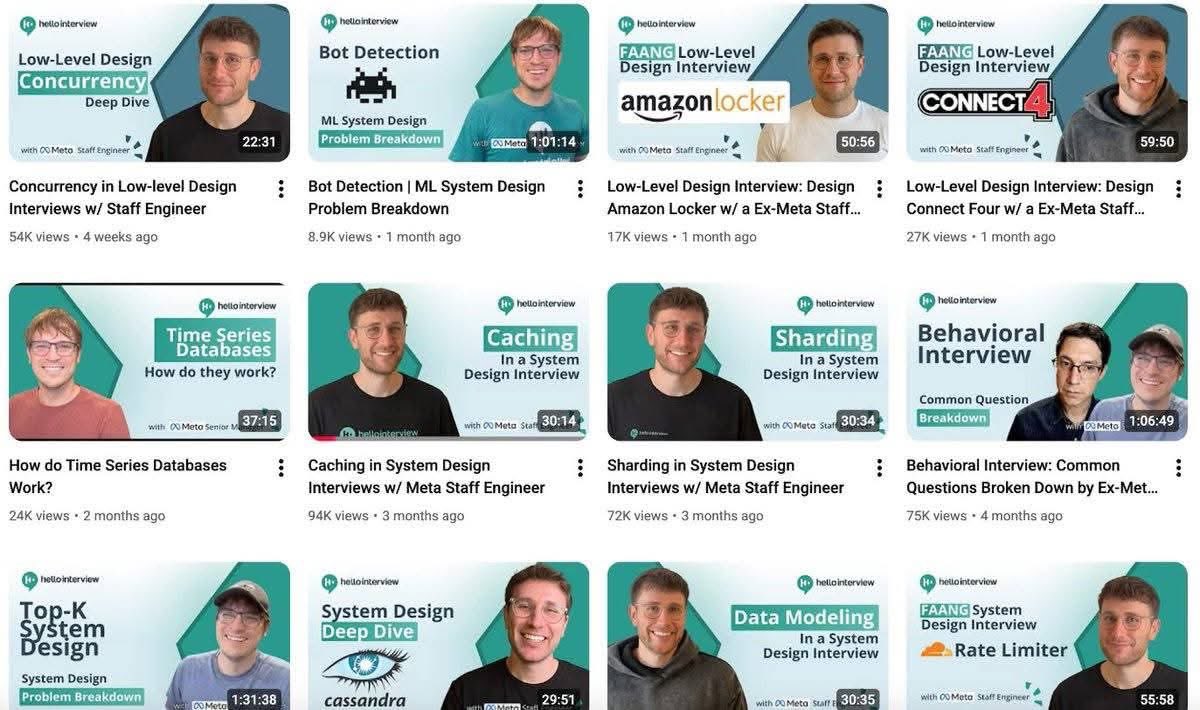
One of the BEST channels for System Design:
https://t.co/YHvXMkJ3C5
1. API Design
https://t.co/zLtjgOAeiX
2. Sharding
https://t.co/rQYx5o2de3
3. Caching
https://t.co/SDlYHR1I7e
4. Concurrency
https://t.co/SLp1Ph7dP5
5. Data Modeling
https://t.co/jrJXmTRxSE
6. Rate Limitter
https://t.co/jrJXmTRxSE
Most people use LLMs.
Very few actually understand how they work under the hood.
If you want to go from prompt user → real AI engineer, study these 9 concepts in order:
1️⃣ Transformers — attention, tokens, self-attention basics
https://t.co/5YmBhXQrpu
2️⃣ Transformer tricks — what makes them stable & scalable
https://t.co/QFvPbLVuMt
3️⃣ From Transformers → LLMs — how scale changes behavior
https://t.co/1mbXcogTGF
4️⃣ LLM training — where “intelligence” actually emerges
https://t.co/4PnlOTPjbT
5️⃣ Instruction tuning & alignment — why fine-tuning matters
https://t.co/r5XbxsJvpu
6️⃣ LLM reasoning — why models fail + what improves them
https://t.co/0wzxbMtIIk
7️⃣ Agentic LLMs — models that plan, call tools, and act
https://t.co/oG0VaEWqp0
8️⃣ LLM evaluation — measure beyond demos & vibes
https://t.co/nLtvJW4n6W
9️⃣ What’s next — trends that actually matter
Bookmark this. Study step-by-step. Your prompts will level up — and so will your builds.