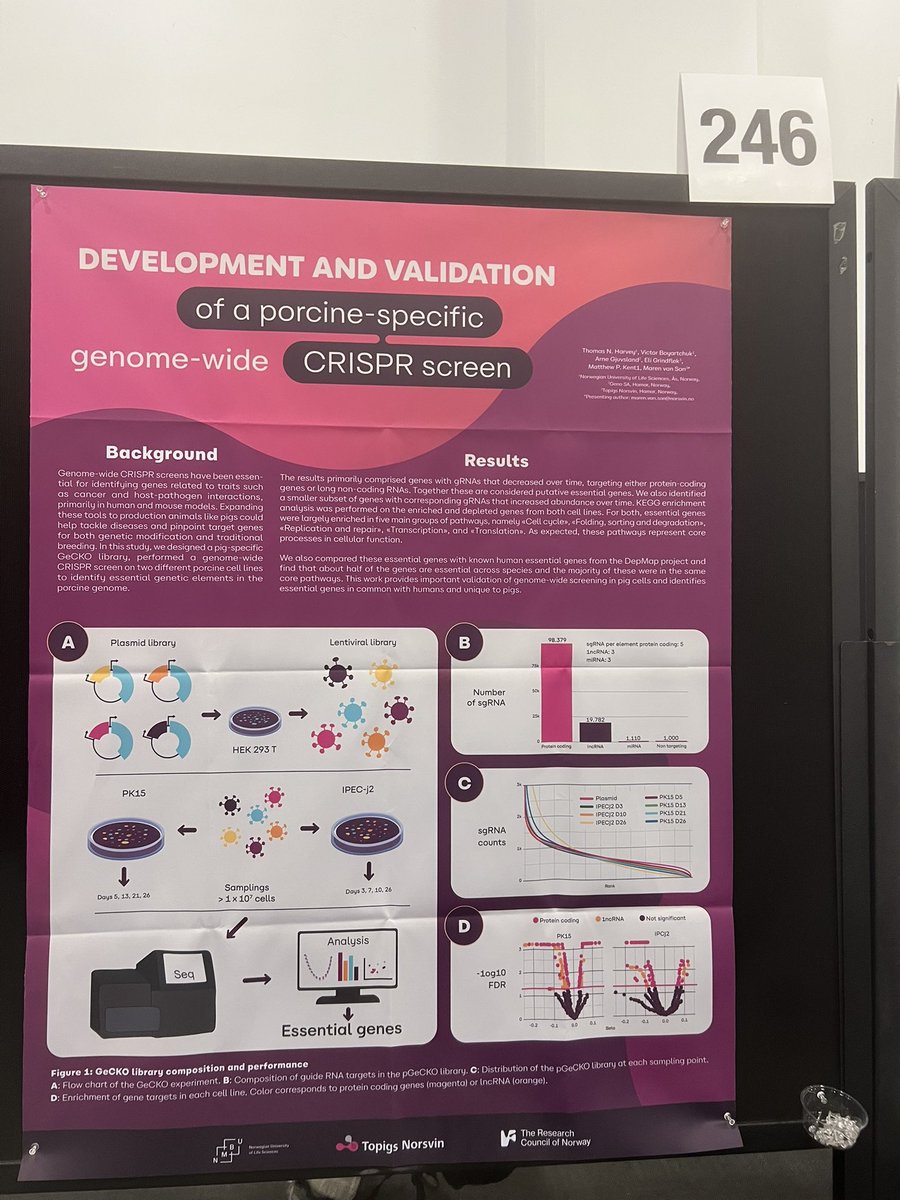
Day two in sunny San Diego and I will be giving a talk at the swine session now under my temporary pseudonym T. Harvey. Interesting in whole genome CRISPR screens? Come listen! #PAG32
Large scale sequence-based screen for recessive variants allows for identification and monitoring of rare deleterious variants in pigs https://t.co/LJlTgXt6Fg
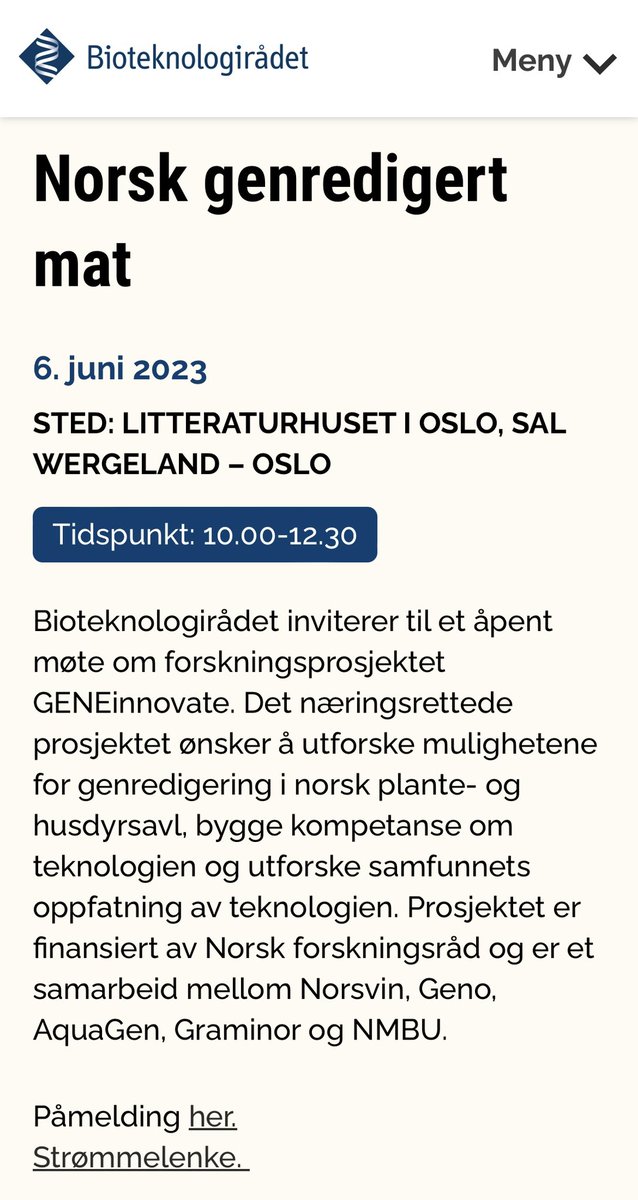
Et vendepunkt for #CRISPR -mat: EU foreslår vesentlig enklere regler for genredigerte planter: kun meldeplikt og ingen GMO-merking. 🥳🧬
https://t.co/WGStvCuJqG
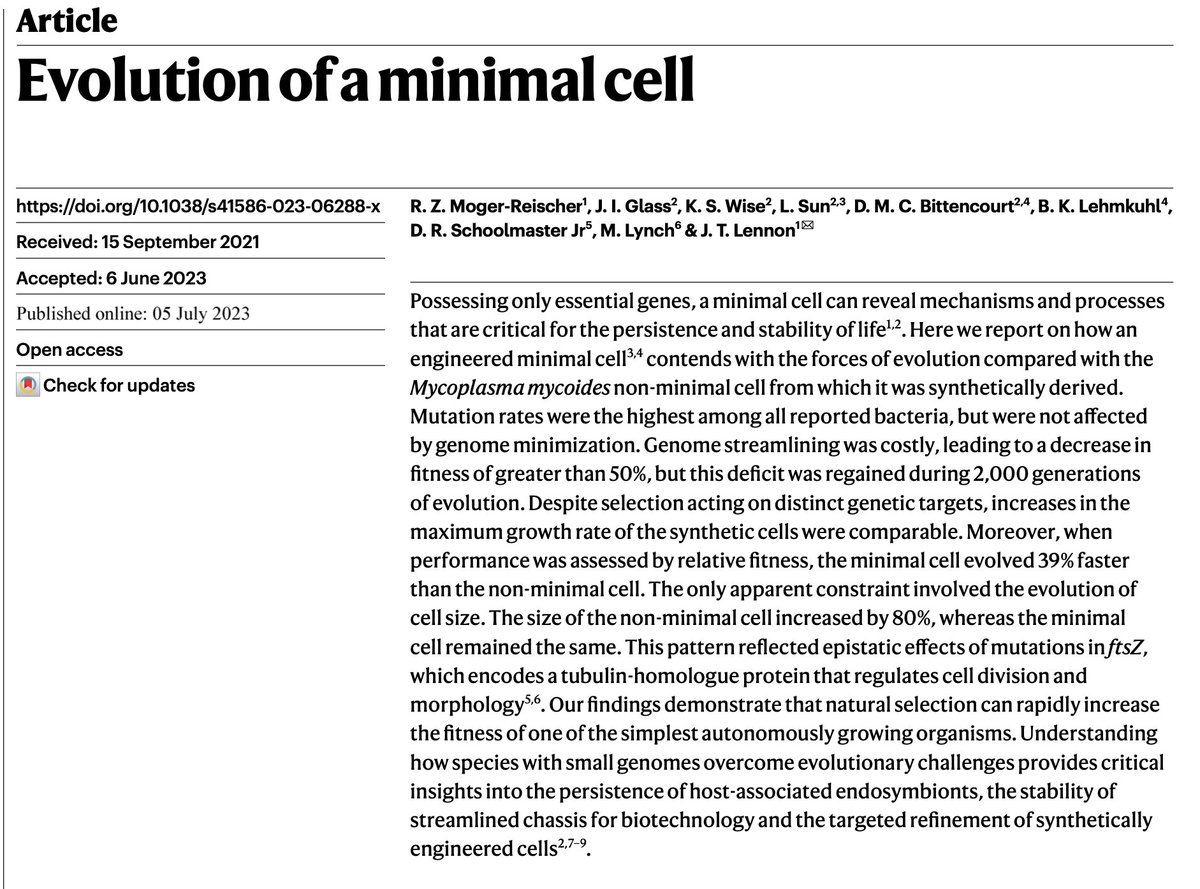
A mind-blowing paper has come out today in @Nature
In 2016, JC Venter Institute scientists trimmed a bacterial genome to its barest minimum required for life to synthesize what they called a "minimal genome" (https://t.co/Rk8oZJ0bUj).
Today, a group of scientists from Indiana University reports how that minimal genome evolved over 2000 generations in comparison to the non-minimal genome.
The authors found that even when you reduce a bacterial genome to its absolute minimum where every nucleotide matters, the genome undergoes mutational events generation after generation as much as the non-minimal genome. One simply cannot stop the evolution.
Just over 300 days of evolution (equivalent to 40,000 years in humans) the minimal cell has gained everything it lacked in fitness on day one in comparison to the non-minimal cell.
When comparing the evolved traits between the minimal and non-minimal cells, the scientists found something striking. The evolutionary process increased the cell size of non-minimal cells but not that of the minimal cell. But that is not the striking part.
The scientists were able to identify the key mutation that resulted in cell size evolution. And it turned out that the mutation that helped the non-minimal cells to grow bigger is the same that helped the minimal cells to stay smaller. Growing bigger had a survival advantage for non-minimal cells and not growing bigger had a survival advantage for minimal cells. So, the mutation had a context-dependent effect. This just demonstrates that the evolutionary effects on traits have no absolute direction. All that matter is what is beneficial for the organism's survival.
The conclusion of the paper is metaphorically a quote from the Jurassic Park movie:
“Listen, if there’s one thing the history of evolution has taught us is that life will not be contained. Life breaks free. It expands to new territories, and it crashes through barriers painfully, maybe even dangerously, but . . . life finds a way". (https://t.co/UlxRlb86CT)
https://t.co/zA9OAqSoAu
Hvis Norge legger seg på linja genredigering = GMO vil vi fremdeles spise importert mat fra andre land der genredigert mat ikke trenger merkes. Dette gjelder etter hvert mange land hvor teknologien er i bruk. Ny NOU presenteres snart. #genredigering
📢Exciting invited speaker to NMBU's Breeding&Genetics📢 24 May 12:00 CET. Dr Marc Vandeputte speaking on "Successful genetic improvement of feed efficiency in European seabass by an alternative method"🐟🥇🧬 @Marc_VDP_INRAE please join us zoom link 👇 https://t.co/Exg0JBbZyp
Since 2020, Topigs Norsvin has used machine learning in routine predictions of carcass composition for living pigs based on CT scan images. Recently, we launched an improved model that will create more precise predictions. Read more: https://t.co/AWittnORbr
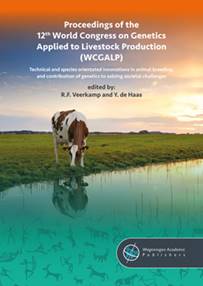
The proceedings of @wcgalp2022 is now available online & open access. Over 3300 pages technical and species orientated innovations in animal breeding, and the contribution that genetics can make to solving societal challenges.
https://t.co/x584ETnrpf @wcgalp2026@WURlivestock