Sometimes scientific terms can be confusing. @ENERGY's "DOE Explains..." offers straightforward explanations of everything from Atmospheric Radiation to Ultrafast Science https://t.co/OdlOF8edRf
Are you a STEM undergrad student or know someone who is? Check out @ENERGY's Science Undergraduate Laboratory Internships!
Interns receive valuable hands-on experience at National Labs and a stipend.
Find out more and apply today: https://t.co/TJsvXGSH14
Advancing American energy, growing our economy, and bolstering national security all starts with supporting the next generation of scientists.
@ENERGY has selected 75 students for its Office of Science Graduate Student Research Program: https://t.co/OT0TsA0s0h
The Established Program to Stimulate Competitive Research (EPSCoR) partners university researchers in EPSCoR states with @ENERGY National Laboratories to build expertise across the U.S.
38 newly announced projects will help expand institutional capability: https://t.co/Yi8f4t9FEg
How can researchers and developers use Super Intelligence (SI) more effectively in their research?
@ENERGY has released "Genesis Agent Skills," a set of coding assistants that helps researchers and developers work more effectively with SI coding tools. https://t.co/nkXNqM6JO1
Are you a faculty member who is interested in expanding your research? Check out @ENERGY's Visiting Faculty Program (VFP)! Faculty receive valuable hands-on experience at National Labs and receive a stipend.
Find out more and apply today: https://t.co/1F0Lg5jnDO
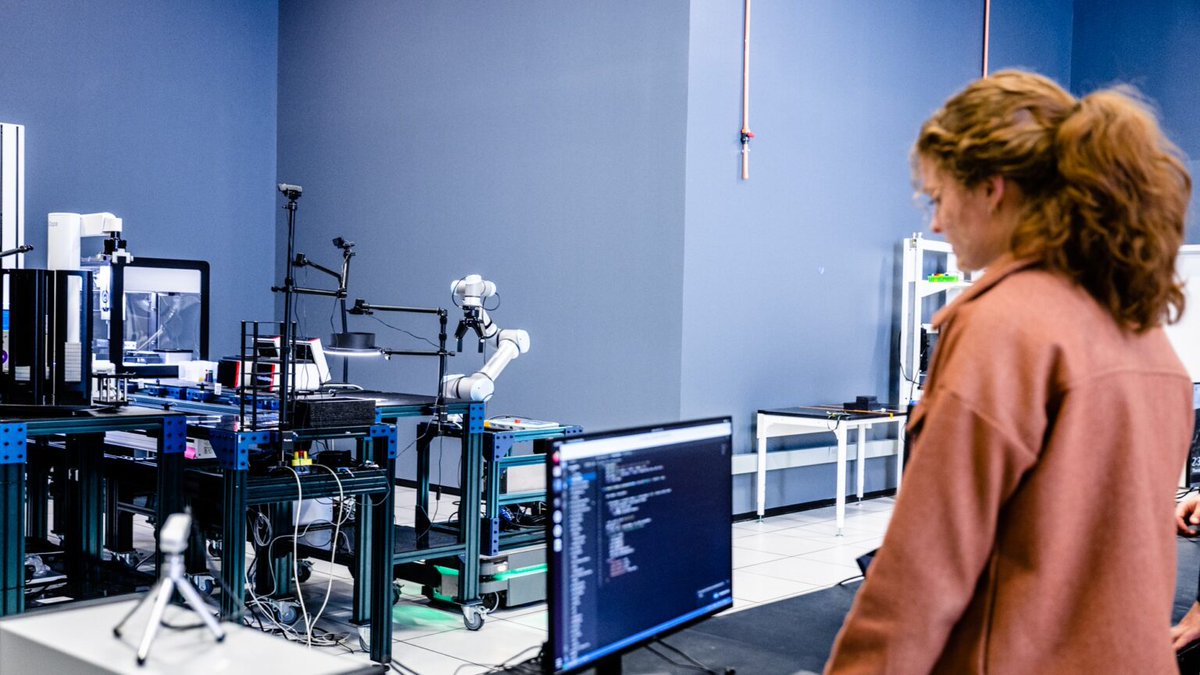
Advanced robotics and automation can make scientific tasks more efficient and effective.
DOE is supporting projects led @argonne, @ORNL, @SLAClab & @BrookhavenLab to demonstrate these possibilities and create capabilities for the scientific community. https://t.co/ghGvImy8Aw
.@SecretaryWright has announced the newest recipients of the Ernest Orlando Lawrence Awards!
These 9 scientists and engineers have made exceptional R&D contributions to advance @ENERGY's mission. Their work ranges from fusion to materials: https://t.co/9m9TL0AsgO
To leverage quantum computing's potential, @ENERGY announced 8 key aspects of the Quantum Computing National Challenges. These questions will guide the Quantum Genesis Mission's goal of developing fault-tolerant, scientifically-relevant quantum computers. https://t.co/VUhsBGsRGA
.@ENERGY is awarding $96 M to 67 scientists through its Early Career Research Program!
By supporting exceptional researchers during their formative years, the program bolsters the U.S. scientific workforce and empowers the next generation of STEM leaders: https://t.co/Y295jyNiff
.@ENERGY is announcing the Genesis Mission Fellowship Program, an accelerated, 4-year doctoral pathway to cultivate a workforce that is skilled in both Super Intelligence and foundational science: https://t.co/C2D2zIVhtM
To advance the frontier of Super Intelligence in biology, @ENERGY is partnering with @NIH and @biohub.
The organizations will coordinate research, funding, and data generation to help scientists develop predictive models of living systems: https://t.co/dP3r19knqH
Are you passionate about safety in research settings? @ENERGY is hiring a manager for the @BrookhavenLab site office. Apply today! https://t.co/ZMvBhGrZi1
Are you an expert at managing research projects, determining strategic direction, organizing calls for proposals, and assessing scientific progress?
We're hiring program managers for our EPSCoR and geosciences programs. Apply now!
https://t.co/NWfVXjKEq2
The @ENERGY Office of Science Advisory Committee assessed how scientists can best apply Super Intelligence to their research. Check out the blog post and report:
https://t.co/CayUA9rNpT
.@ENERGY announced up to $400 million for projects advancing the Office of Science's priorities!
The Open Call is a way to solicit applications for research not covered by more specific Notice of Funding Opportunities. https://t.co/BktLzRLDri
Computers have become smaller and more powerful by fitting more transistors into each circuit. But in 2019, circuits started approaching the max.
Researchers @BerkeleyLab reversed that trend with a technique that prints very thin circuit patterns: https://t.co/71YYxPUSnN
Experienced in managing highly complex scientific projects?
@ENERGY's Office of Science is hiring a federal project director for @BerkeleyLab's site office. Apply today: https://t.co/ISWMcEFMUy
AI is changing what is possible in science.
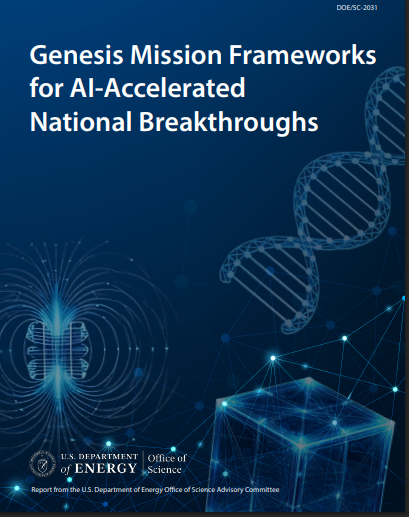
I asked @DOEScience’s Advisory Committee to survey the scientific landscape and assess how AI can accelerate national breakthroughs through the Genesis Mission.
Their report is out now: https://t.co/AKMswYe0C8
Quantum computing is moving from fundamental research to revolutionary capabilities for science!
The Office of Science Advisory Committee Quantum Subcommittee has issued a report on our path to an integrated quantum future: https://t.co/CayUA9rNpT