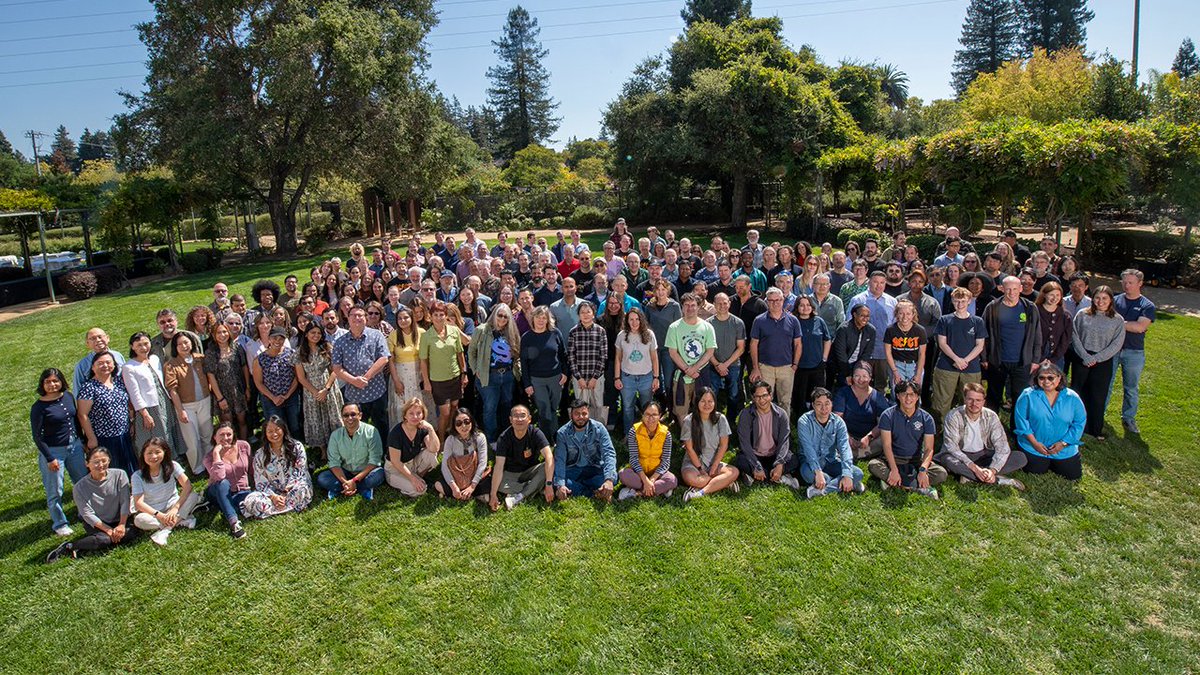
As the JGI approaches 30 years, it is charting a new course toward AI-driven user research and discovery. Over the next 15 months, we'll trace the pivotal breakthroughs, as well as the researchers and staff who made them possible.
Learn more: https://t.co/PUTPIFu1Uv
@BerkeleyLab
From our FY26 joint CMM call: Setsuko Wakao is screening algae that naturally hyperaccumulate critical minerals — aiming to uncover the genetic basis of metal response and building on algae-based metal bioremediation research.
Full Portfolio: https://t.co/k8eRC3smrS
@berkeleylab
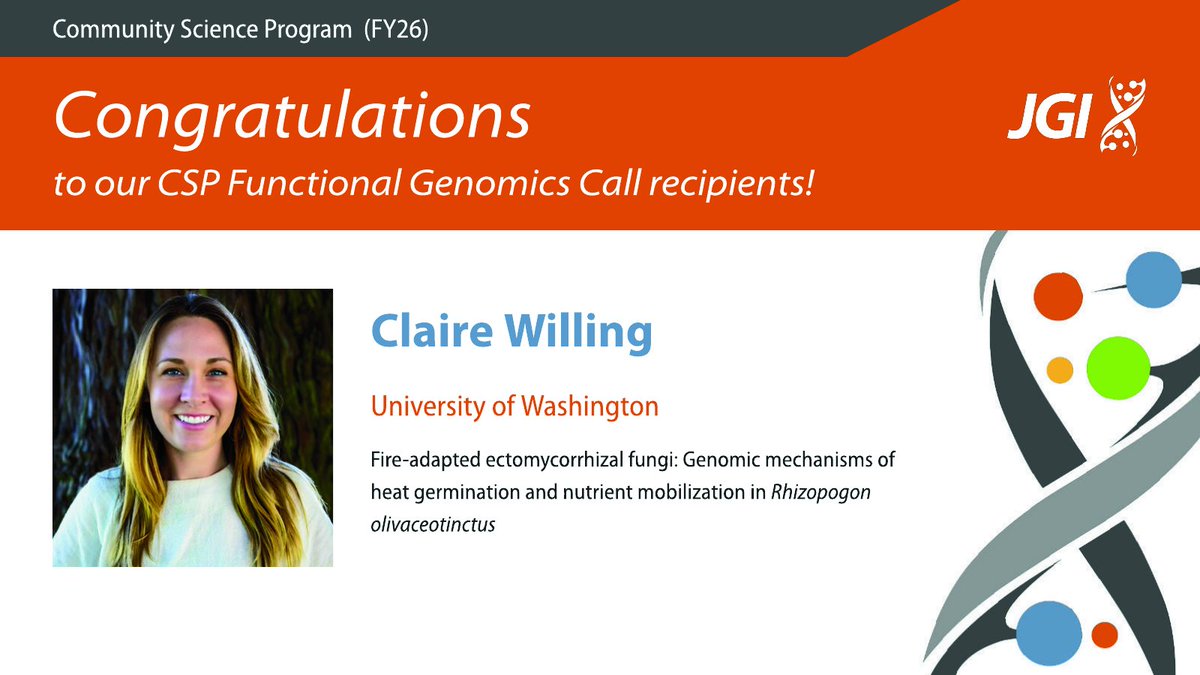
From our FY26 Functional Genomics call: After severe wildfire, fungi may help ponderosa pine seedlings recover by mobilizing nutrients and critical minerals. Claire Willing will study how Rhizopogon olivaceotinctus “switches on” after heat.
More: https://t.co/4ZjeFYpklB
By leveraging new tools and large-scale data mining, JGI researchers nearly tripled the available fungal mitochondrial genome data, unlocking new potential for AI-driven studies of energy metabolism.
More: https://t.co/Ai7Uqf4G19
DYK microbes can help extract #CriticalMinerals? Engineered yeast from the @JGI and the Molecular Foundry grab & store elements like mini collection units. We’re studying how the organisms could pull valuable but dilute elements from mining wastewater. #LBNLCriticalMinerals
https://t.co/Rha7ZlZxWn
From our FY26 joint CMM call: @VatamaniukLab is developing plant-based methods to recover copper from low-quality soils and waste streams. Learning how plants absorb, transport and store copper lays the groundwork for “phytomining.”
Full Portfolio: https://t.co/k8eRC3smrS
New and evolving user programs will combine genomics with AI, automated experimentation and complementary capabilities across DOE user facilities — giving researchers integrated approaches hard to assemble in a single lab.
More in our new strategic plan: https://t.co/k37Sb4HqAT
From our FY26 Functional Genomics call: Duckweed is a bioenergy feedstock candidate, but the microbes shaping its growth remain unclear. Jiaqi Tan will pair plant and microbial gene activity to reveal what drives productivity.
More: https://t.co/4ZjeFYpklB
@xjaliu@lsuscience
From our FY26 joint CMM call: Ning Sun wants to know how bacteria capture and separate rare earth elements. The team especially wants to learn how these microscopic systems distinguish "light" from "heavy" rare earth elements.
Full Portfolio: https://t.co/k8eRC3smrS
@berkeleylab
Efforts outlined in the JGI's new strategic plan directly align with the Genesis Mission — a DOE initiative to link AI, computing, automated experiments and national research facilities like the JGI into one connected system for discovery.
Full release: https://t.co/k37Sb4HqAT
From our FY26 Functional Genomics call: Gray mold fungus Botrytis cinerea threatens bioenergy crops. Ritu Singh will map the genetic switches driving infection, filling a major gap in plant pathogen research.
More: https://t.co/4ZjeFYpklB
@RituSingh280@UCDavisPlants@ucdavis
An estimated 97% of microbial chemical classes are still undiscovered. With @jgi we're working to map the genes that drive this chemistry across 80 previously unexplored species from our collection, generating a massive ground truth dataset to fuel future drug discovery. https://t.co/xjf5hwJZQ1
Joint us! This year's meeting will feature keynotes from computational biologist Curtis Huttenhower @HarvardChanSPH and plant biologist C.J. Tsai @universityofga
More info: https://t.co/8oYA7czeNV
Sign up for our newsletter for updates: https://t.co/7MgN0oqG7o
From our FY26 joint CMM call: Viktoria Steck is investigating a new link between manganese and phosphorus metabolism in ocean microbes, and how this relationship controls the resource distributions of this critical mineral.
Full Portfolio: https://t.co/k8eRC3smrS
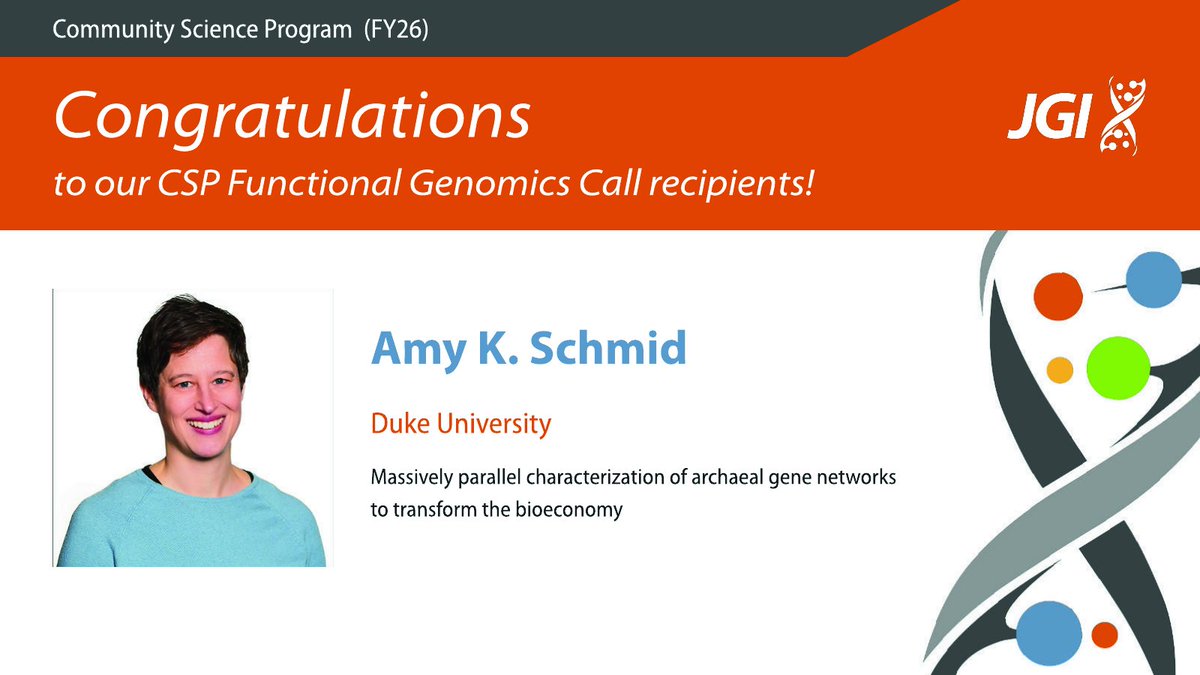
From our FY26 Functional Genomics call: Extreme-environment archaea have unique metabolic abilities, but their gene-control networks are unclear. Amy K. Schmid will use DAP-seq to map transcription factor–DNA interactions.
More: https://t.co/4ZjeFYpklB
Recently published in @ScienceMagazine: With high-quality genomes, researchers shed light on pathways to starch and lignin — important starting materials for a wide variety of bioproducts.
Learn more: https://t.co/j9qR85JHxX
@BerkeleyLab
From our FY26 joint CMM call: John Sedbrook is studying how Brassicaceae plants take up and accumulate metals, and aims to apply that knowledge to optimize the ability of these species to extract nickel from nickel-rich soils.
Full Portfolio: https://t.co/k8eRC3smrS
The JGI is scaling generation of high-quality, AI-ready data. The S2S transformation will expand sequencing capacity through automated sample processing and data delivery—ensuring consistent, standardized datasets suitable for large-scale analysis.
More: https://t.co/k37Sb4HqAT
DOE @jgi's new strategy puts AI, machine-learning-ready genomic data, automation and connected research infrastructure at the center of predictive biology over the next five-plus years.
https://t.co/Kq51GV1lDG
Subscribe to our newsletter and get the biggest biotech news straight to your inbox 🧬
https://t.co/uNrxaa7z6R
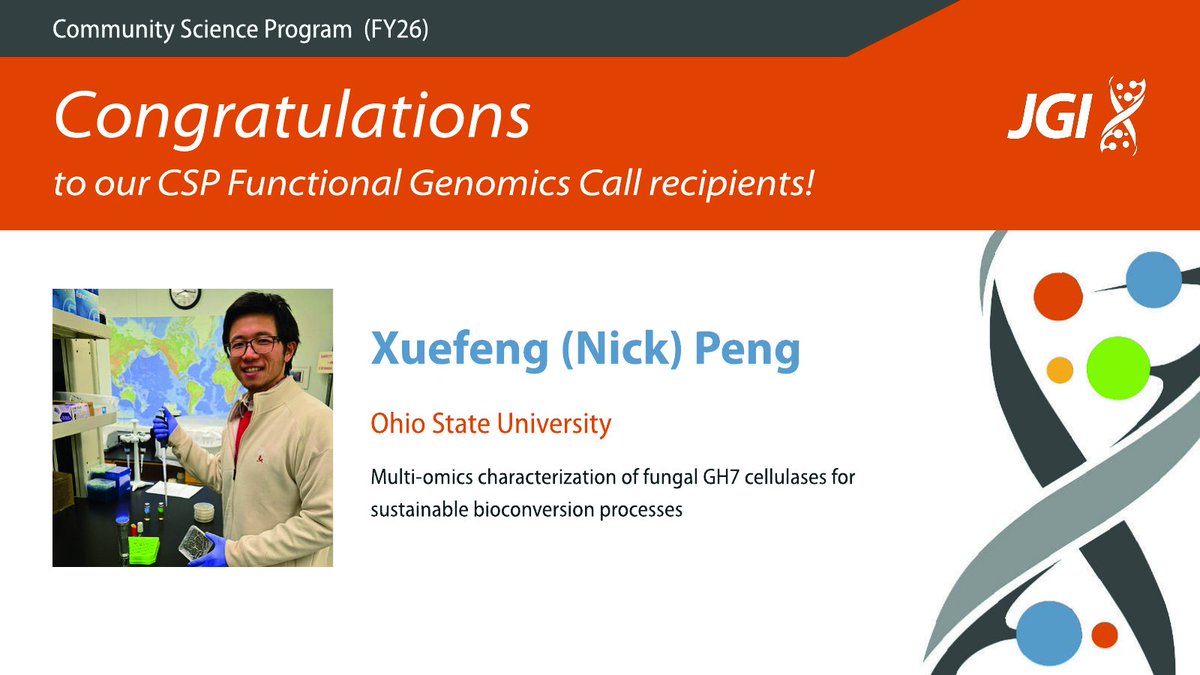
From our FY26 Functional Genomics call: Ocean fungi produce enzymes that break down hard-to-degrade polymers. Xuefeng (Nick) Peng will use biodesign and multi-omics to test new GH7 enzymes and map how they convert polymers into useful sugars.
More: https://t.co/4ZjeFYpklB
From our FY26 joint CMM call: Chris Rinke will explore microbes as an alternative method for extracting rare earth elements. Uncovering the microbial processes involved could help lay a foundation for future biological extraction methods.
Full Portfolio: https://t.co/k8eRC3smrS