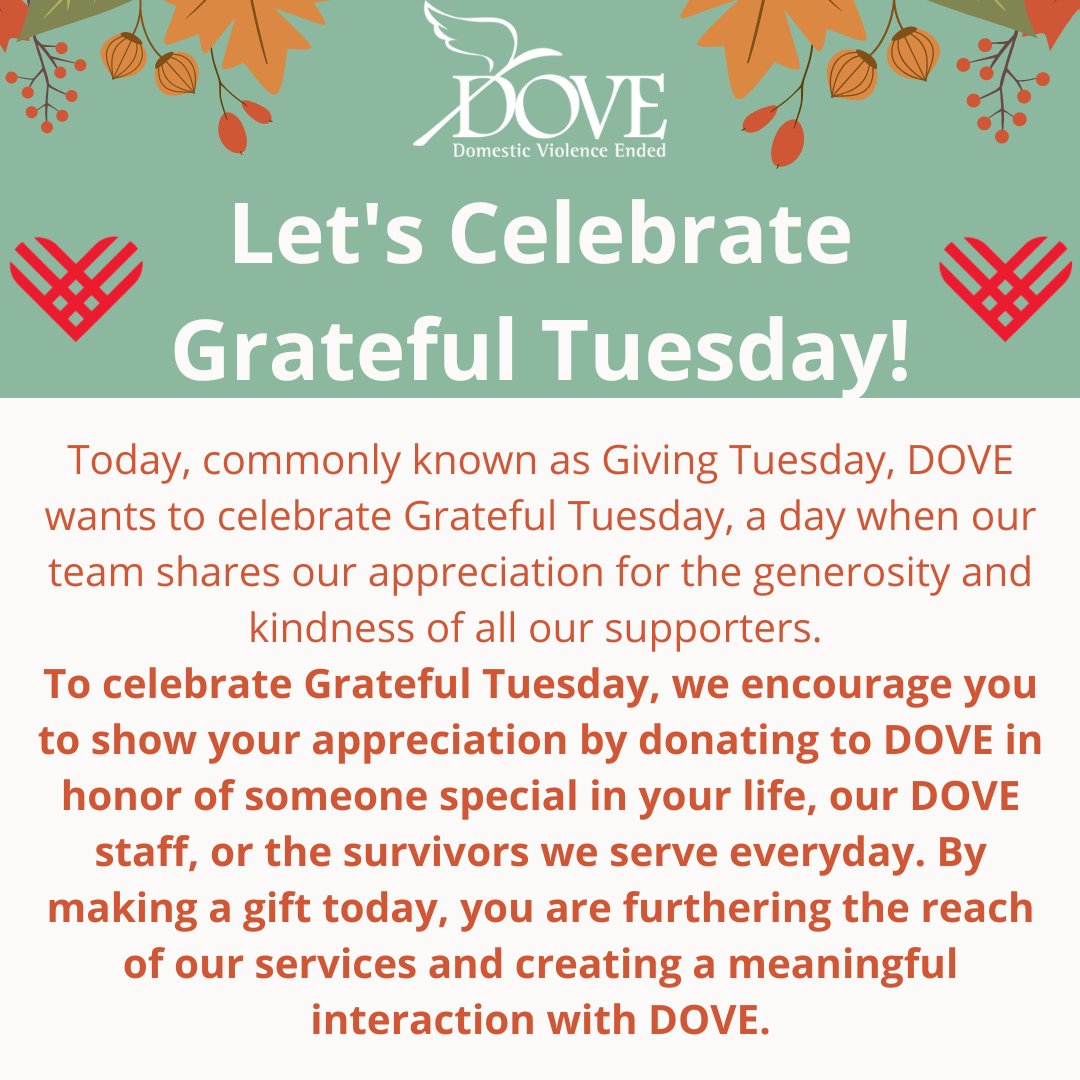
To celebrate Grateful Tuesday, we encourage you to show your appreciation by donating to DOVE in honor of someone special in your life, our DOVE staff, or the survivors we serve everyday. Give Today at https://t.co/37GLgOVyEk!
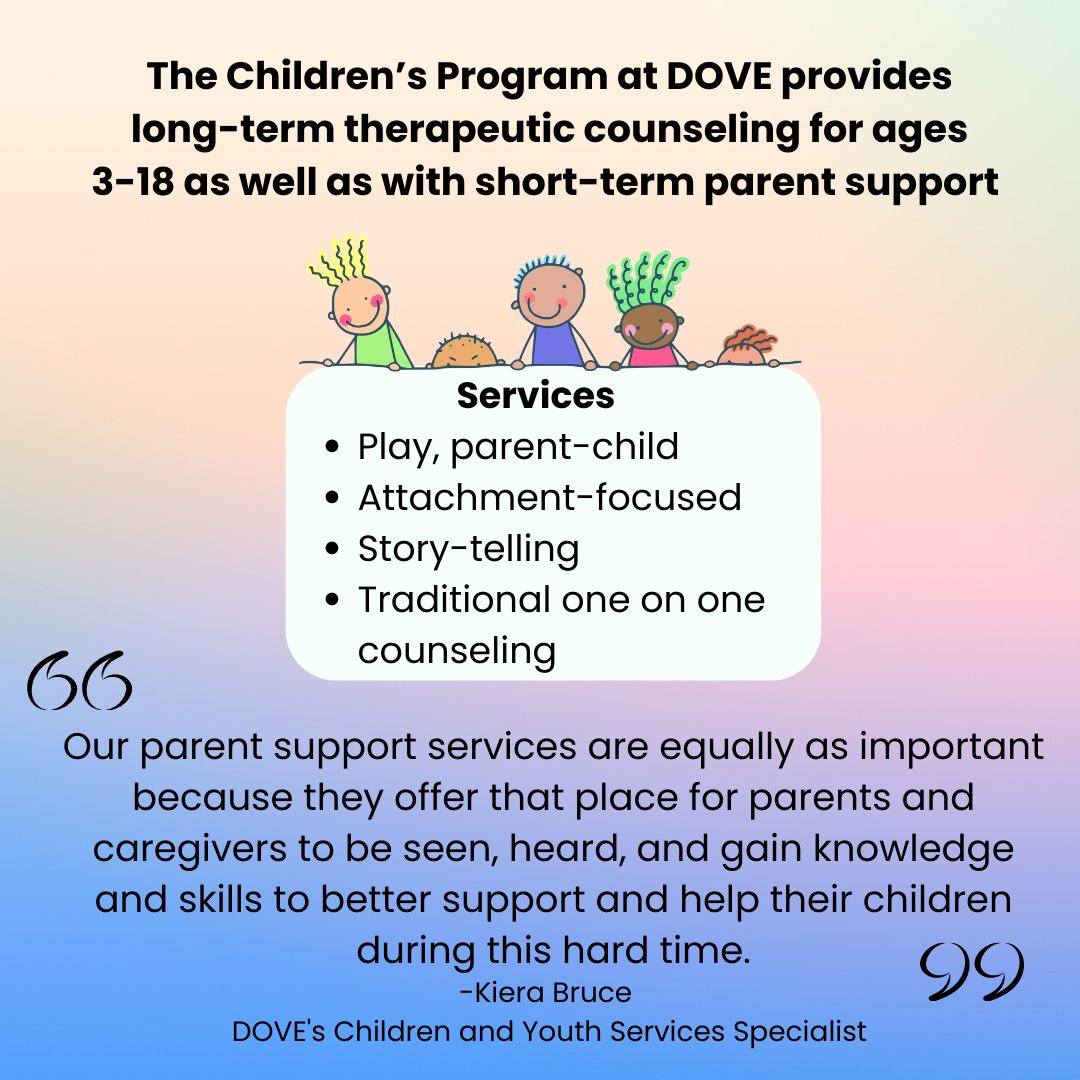
We hope to connect with supporters and survivors to provide useful information for why our work is important. We will be highlighting different services throughout the month and sharing quotes from our valued team members about our life-saving programs.💜
Election day is approaching on November 8th! DOVE is proud to share a resource put together by Jane Doe Inc. to share information on the Confidential Voters Program. The guide can be found here: https://t.co/Oij1LWcXrW.
Your voice matters and can make a substantial difference!
Keep conversations around domestic violence going! You have the power to change how we view and talk about domestic violence. Embrace your power to create important change! #DVAM
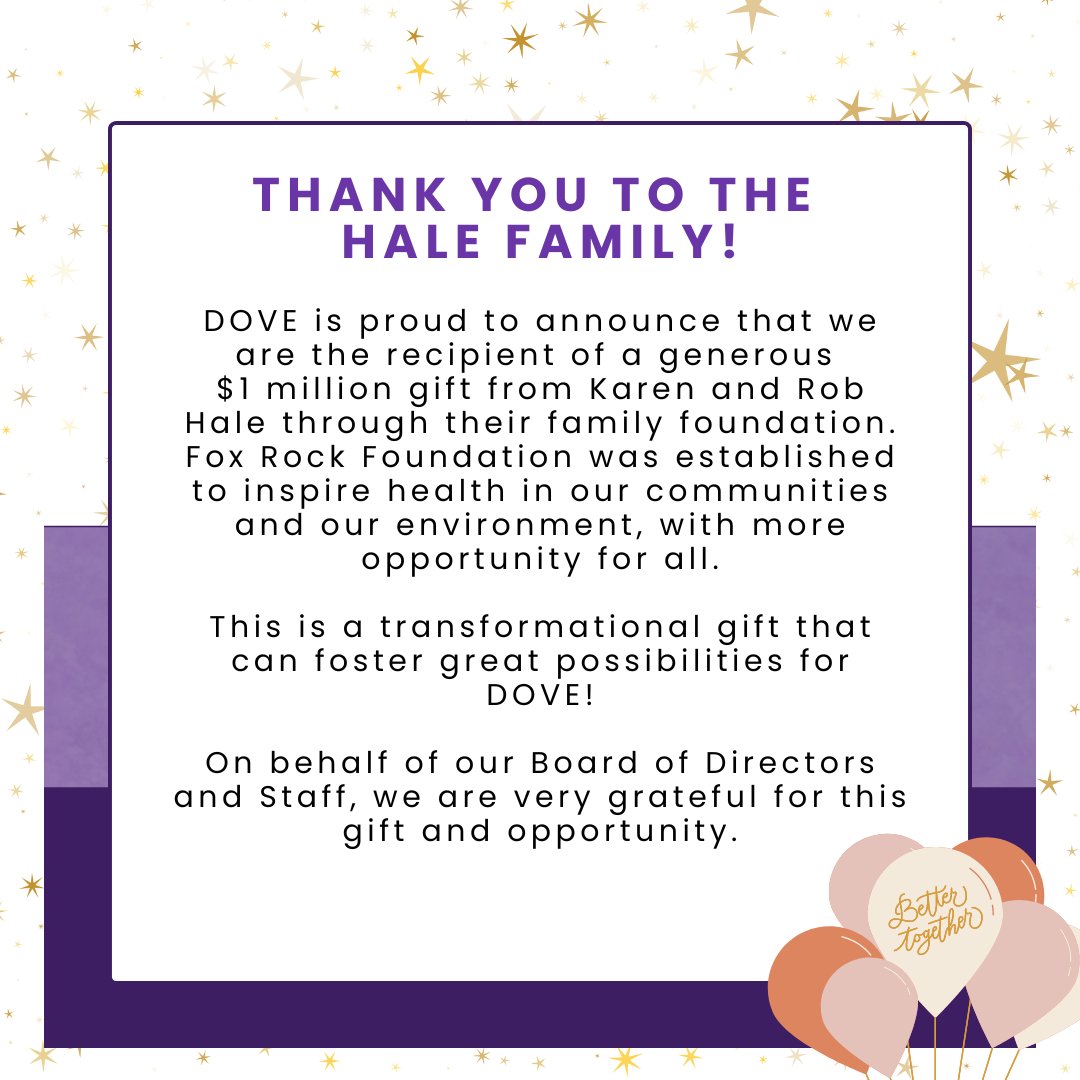
In their charitable efforts to help create significant impacts for local communities, Fox Rock Foundation will be donating $52 million, $1 million a week, to benefit dozens of nonprofits.
Check out a video featuring DOVE for this wonderful occasion! - https://t.co/rP6P2tqVPL
Thank you to @nnedv and all partner organizations for hosting this chat! DOVE is so proud to be in the presence of amazing individuals who are committed to this work and to creating lasting impacts in our communities.
DOVE’s Civilian DV Advocates have worked hard within our communities and in systems of incarceration to uplift the voices of Black female identifying survivors. We’ve centered their voices in our steps for crucial change in trauma informed care and support.
Q12. From @ujimacommunity: How has your organization promoted culturally rooted healing practices and support services for Black women survivors who have been disproportionately criminalized?
#DVAM#NoSurvivorJusticeWithoutRacialJustice
Recognizing the need for racial justice with survivor justice would mean understanding how racism has impacted tribal communities. Racial justice would amplify the voices of Native survivors and their need for extended safety and support that has been denied in so many ways.
but we have to always be looking to long-term laws and policies if we want lasting changes that make a significant impact for survivors. We want to secure every person's safety and well-being beyond the support they seek in their interactions with DOVE (2/2)
The very inequity and abuse experienced in IPV is directly linked and mirrored in deep rooted inequity and abuse of racism and anti-Blackness. To secure survivor justice is to also work within racial justice. Success in the short term is meeting the urgent needs of survivors (1/2
DOVE constantly engages with our clients and partner organizations to evaluate the equity within our programs and services. Evaluations and feedback are a critical part to our every changing growth as an organization.
BIPOC and LGBTQIA+ staff have a committed 2 hrs/wk to self-care that can be used as desired. That time is also allocated to active justice and equity learning for white-identifying staff, as well as monthly staff meetings focusing on justice and equity building.
and continue to exist/work against those very individuals. The very inequity and abuse experienced in IPV is directly linked and mirrored in deep rooted inequity and abuse of racism and anti-Blackness. To secure survivor justice is to also work within racial justice. (3/3)
DOVE has worked to understand and address systemic racism within our own organization, as well as within a nonprofit space. We've turned inwardly to critically evaluate that programs and services are built to be equitable, without denying self-determination to any survivor (1/3)
Q7. From @WithoutViolence: How do we address anti-Blackness and work towards racial justice in the fight to ensure safety and self-determination for IPV survivors, and pregnant + birthing people?
#DVAM#NoSurvivorJusticeWithoutRacialJustice
who seeks support. From this point, it's crucial to reevaluate our organizational values and services, while working within community to hear the voices and concerns of BIPOC survivors who are most affected by the inequitable laws, policies, and services that have existed (2/3)
It is only by hearing the voices of communities of color that we can work toward racial and survivor justice. We must listen and understand the problems survivors of color face, to then actively collaborate and make our programs and services effectively meet every person's needs.
We strive to actively collaborate more with our community of supporters and partner organizations. From events, donation drives, webinars, etc., collaborations are vital to continuing our work and building solidarity as individuals who want to end domestic and partner violence.