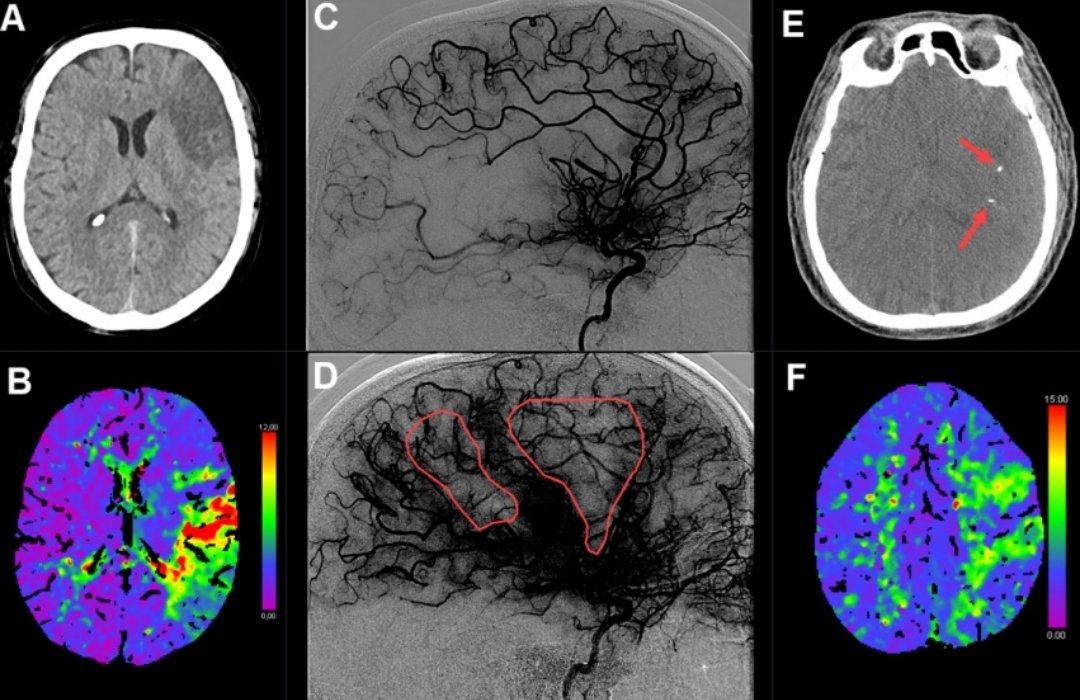
Why some #stroke patients worsen despite apparently successful thrombectomy?
👉 Focus: the Distal Occlusion Tracker (DOT) sign on post-MT flat-panel CT
🔰a thread on our newly published study in @JNNP_BMJ
https://t.co/PaSr7LpmCj
Clinical performance studies were reported for approximately half of @US_FDA-approved #AI-enabled medical devices, but information was often insufficient to fully assess their clinical generalizability.
https://t.co/3laQHbJ4PD
🚀 Check out our recent paper published in @JAMANetworkOpen
Generalizability of FDA-Approved AI-Enabled Medical Devices for Clinical Use
⬇️⬇️⬇️
Giovanni Baj @isaacshiri Pooya Kazaj @CheesemakerMD@chrisgraeni George Siontis
https://t.co/ORPZx7VIuh
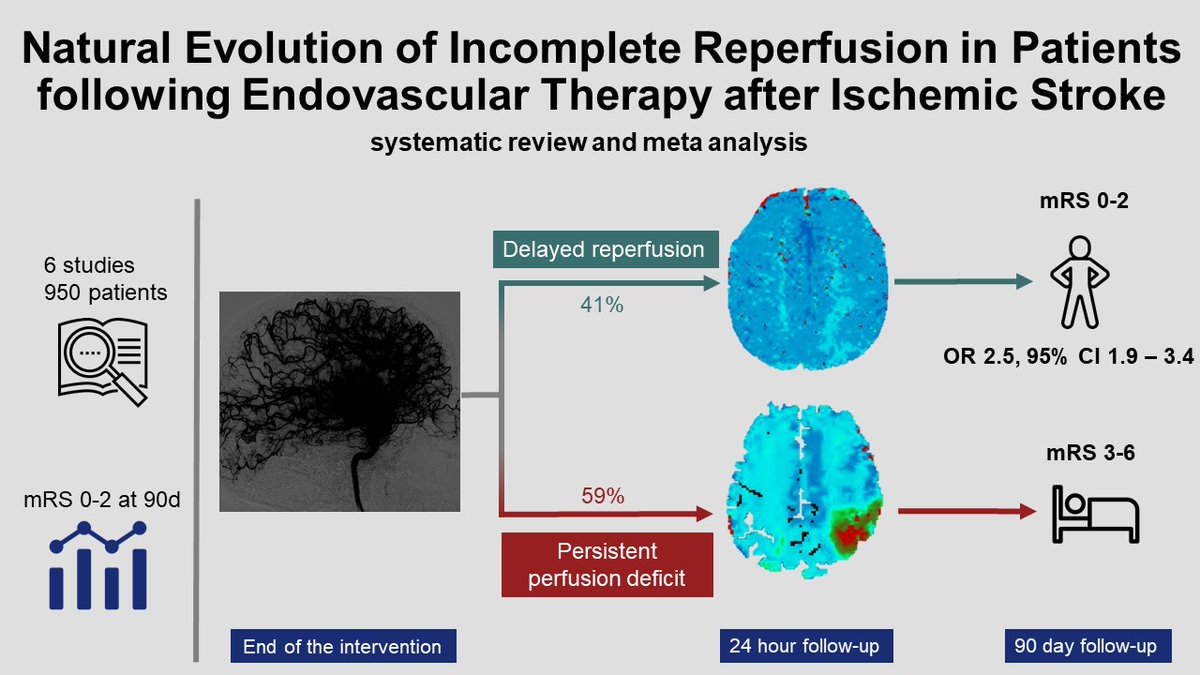
🧵The significance of delayed reperfusion post-EVT in predicting response to adjunctive therapies is not known. Predicting the evolution of reperfusion post-EVT could identify promising candidates for adjunctive anti-thrombotic, lytic, or neuroprotectant therapies. #SVIN24
Look for the DOTs ⚪️⚫️ Flat-panel non-contrast CT could be enough to indicate which patients will have persistent hypoperfusion (and poor outcome) post-EVT
⬇️⬇️⬇️
https://t.co/2ds4ggADoP
⚫ Mind the DOT! https://t.co/oqrsS2UXna Novel demonstration of focal hyperdensity on post-thrombectomy flat-panel CT, the distal occlusion tracker (DOT) sign, strongly correlates with incomplete reperfusion and residual occlusions. @adnan_mujanovic@CheesemakerMD#stroke