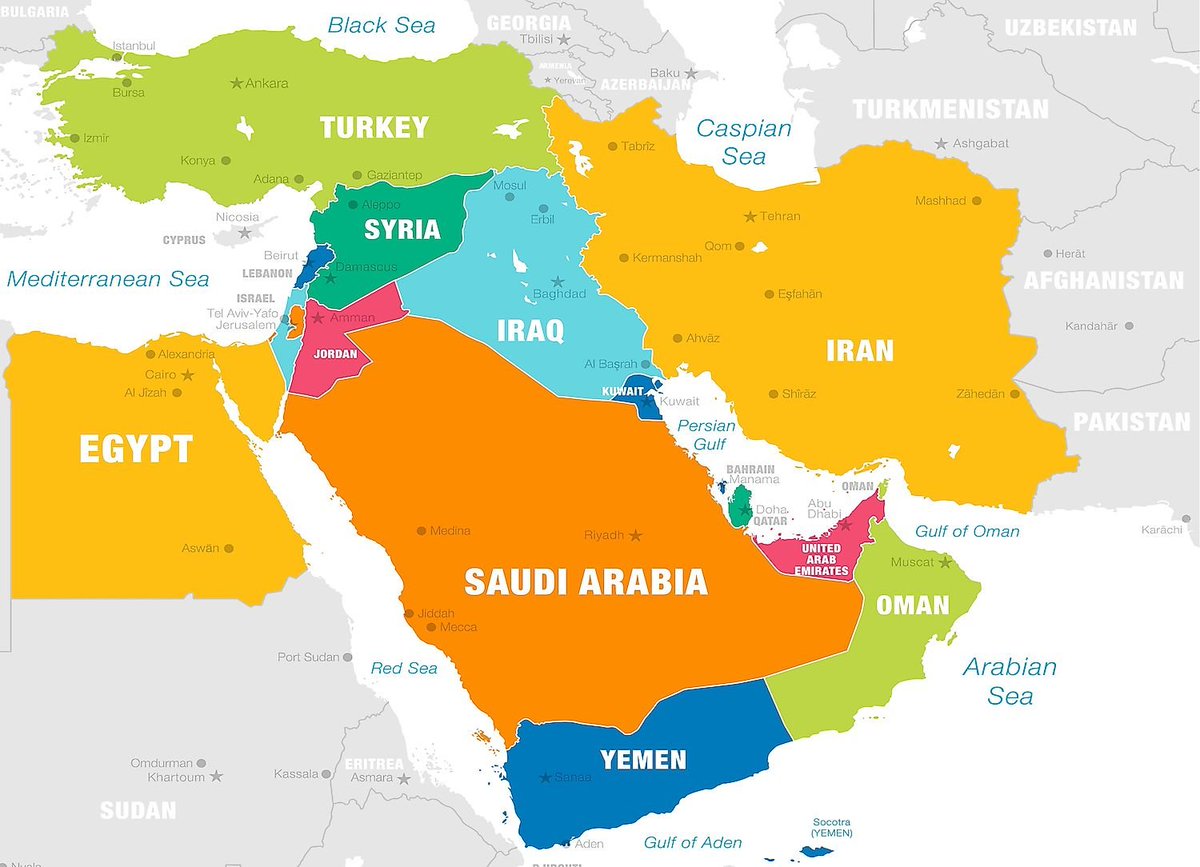
Incase you want to understand why the US is doing everything within their power to remove Iran from the face of the earth
WATCH THIS
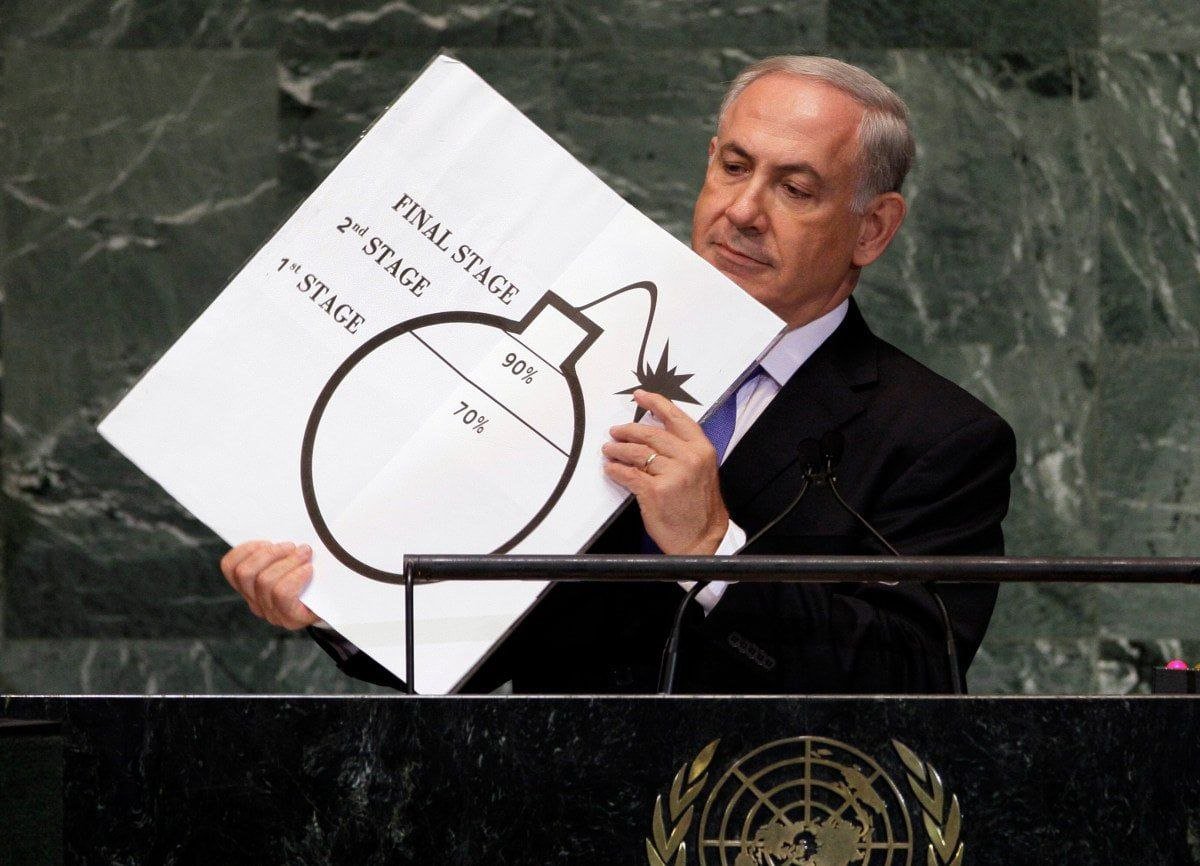
Understand the deals they made with the Saudi side. Understand why Netanyahu has told the same nuclear power lies for eons just to invade Iran
Educate yourself- the US is about to loose its heads but it didn’t start today.
Mic Check:
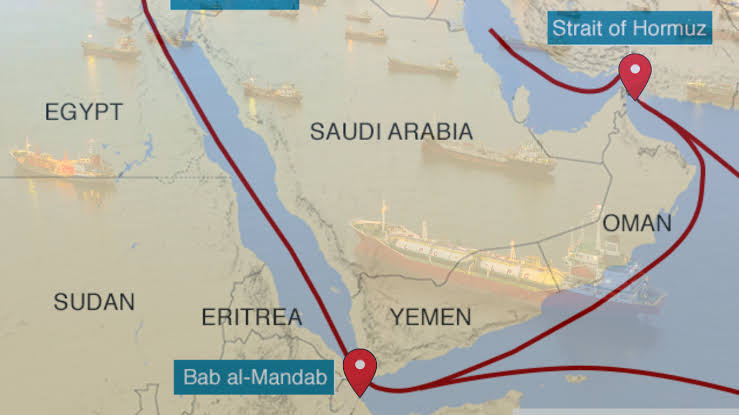
For those still in denial and living off of hopium, the Strait of Hormuz and the Bab al-Mandeb are entirely compromised.
When both chokepoints are compromised at once, the shock does not stay at sea.
It reaches YOUR wallet, and YOUR living room within the next 12 months fully, if not already...
THE IMPACTS I HAVE ALREADY WRITTEN ABOUT:
1. Diesel: the fuel that moves everything. Prices have hit records, and this is the Diesel Wars I named.
2. Crude oil: with 20 million barrels a day through Hormuz at risk, oil prices spike and stay volatile.
3. Freight rates: a war-risk voyage now costs over a million dollars a day, and that surcharge rides on every imported good.
4. Marine insurance: war-risk cover vanishes or prices itself out, and without cover the cargo stops.
5. Who can ship at all: private owners pull out, so only state-owned, politically aligned tankers move. The strait becomes a state-only waterway.
6. Food and groceries: higher fuel and freight feed straight into the price of everything on the shelf.
7. Gasoline at the pump: refined-product supply tightens and pump prices climb, even if you drive electric.
8. Electricity and utility bills: fuel and gas feedstock cost more, and the grid substations feeding you are now targets.
9. Drinking water: Gulf water comes from coastal desalination that runs on energy, and that infrastructure is being hit.
10. Trucking and logistics: diesel spikes bankrupt carriers, capacity leaves the road, and delivery costs rise.
11. Supply chains: port congestion, diversions around Africa, longer lead times and empty shelves.
12. Inflation: an energy shock is an inflation shock, so the cost of living reaccelerates across the board.
13. Interest rates and mortgages: that inflation keeps rates high, so borrowing, mortgages and refinancing stay expensive.
14. Bonds and savings: yields rise and bond prices fall, so the "safe" part of your portfolio loses value too.
15. Physical security of infrastructure: cheap drones ended the guarantee, and no fixed installation can be fully defended again.
16. The information you get: this is the blackout phase, where one side loses its voice and you receive a curated version of the war.
17. A widening war: Pakistan, Egypt, Somalia and the Horn of Africa are being pulled in, raising the risk of a regional conflict.
THE FULLER MAP OF WHAT A CLOSED CHOKEPOINT DOES TO YOU
18. Air travel: jet fuel is a distillate, so fares and fuel surcharges rise with it.
19. Flight routes: contested airspace reroutes corridors, adding hours and cost to journeys far from the Gulf.
20. Natural gas and LNG: much of the world's LNG exits through Hormuz, so Japan, Korea and Europe face supply and price shocks.
21. Fertiliser: natural gas is the feedstock for nitrogen fertiliser, so fertiliser prices climb.
22. Next year's food: costlier fertiliser and farm fuel now become higher grain prices at the next harvest.
23. Plastics and packaging: petrochemical feedstock costs rise, lifting the price of nearly every packaged good.
24. Fuel rationing and export bans: governments ration diesel and move to ban fuel exports, exactly the path I flagged for the United States.
25. Strategic reserves: emergency oil releases draw down the buffer, leaving less cushion for the next shock.
26. Importing-nation currencies: oil importers' currencies weaken as their energy import bill balloons.
27. Exporter budgets: even producers lose revenue when they cannot ship, straining Gulf state finances.
28. Sovereign borrowing: bond spreads widen for importers and exporters alike, raising the cost of national debt.
29. Stock markets: energy-sensitive sectors sell off, hitting airlines, shippers and manufacturers.
30. Pensions and retirement: that market volatility erodes the retirement savings of people who never touch oil.
31. Heavy industry: steel, glass, cement and chemicals run on energy, so plants cut output or shut down.
32. Jobs: freight, manufacturing and trade shed workers as volumes and margins fall.
33. Small business: higher fuel, freight and input costs squeeze cash flow until the thinnest operators fail.
34. Construction: diesel, asphalt, steel and shipped materials all cost more, so projects stall.
35. Agriculture: farm diesel, fertiliser and shipping costs rise together, squeezing farm incomes.
36. Asia to Europe trade: diversions around the Cape of Good Hope add roughly two weeks and a tank of fuel to every voyage.
37. Suez and Egypt: a closed Bab al-Mandeb collapses Suez Canal traffic and the canal revenue Egypt depends on.
38. Online shopping and delivery: last-mile and freight surcharges raise prices and slow delivery.
39. Consumer electronics: Asia-sourced goods face longer, costlier shipping, so prices rise and launches slip.
40. Cars and parts: components and finished vehicles are delayed, prices rise, and production lines idle.
41. Medicine and medical supplies: shipped drugs and devices face delays, putting essential supply at risk.
42. Defence spending: states divert budgets to naval escorts and missile defence, and taxpayers fund the bill.
43. Escalation risk: crowded warships and anonymous strikes raise the odds of miscalculation and direct war.
44. The nuclear and CBRN floor: a widening regional war lowers the threshold for the worst weapons being used.
45. Displacement: conflict and economic collapse push refugees across the region and beyond.
46. Remittances: migrant workers in a strained Gulf send less money home, hitting whole economies downstream.
47. Tourism: regional travel and Gulf transit hubs lose traffic, hurting tourism-dependent economies.
48. Navigation and timing systems: GPS jamming and spoofing in the strait spill into commercial shipping, aviation and the timing networks finance runs on.
49. Contracts and legal exposure: force majeure and war-risk exclusions trigger across global contracts, and disputes multiply.
50. The end of "it just flows": the quiet assumption that global trade always moves is broken, and every business now plans for disruption as the baseline.
What did I miss?
Signal, not noise!
SAUDI IS TRAPPED: HOUTHIS HOLD THE FUSE TO THE PETRODOLLAR- WORLD WAR III STARTS IN YEMEN
Jiang Xueqin, the Chinese-Canadian educator and presenter of ‘Predictive History’, discussed with Glenn Diesen the view that the conflict which could draw the major powers into its maelstrom is not the confrontation between the US and Iran. He argued the real war is already the one between Saudi Arabia and the Houthis. A century from now, he said, that is where people would look for the start of a third world war. The kingdom cannot win it, cannot exit it, and cannot let it continue.
THE REAL WAR IS NOT THE ONE ON CAMERA
➡️ Great wars, in his telling, are not started by the great powers. They are started by allies on the margin. Serbia in 1914. The clients of Athens and Sparta. Yemen now.
The United States and Iran, he says, have settled into a major standoff. The problem that is actually moving is the war emerging between the Houthis and the Saudis.
➡️ Riyadh treats the Houthis as a threat to its existence. For ten years it has tried to beat them, including by trying to starve them. It has not worked.
Houthi drones and ballistic missiles can hit the pipelines, the refineries, and the desalination plants. His line is blunt. There is nothing the Saudis can do about it.
THE TRAP
Give in, end the blockade on Yemen, and the Houthis grow strong. Refuse, and the Houthis keep striking Saudi energy, and the kingdom may not survive a long fight.
➡️ Jiang says Riyadh is trapped on credibility too. Any compromise will be read as weakness. Saudi Arabia sells itself as leader of the Islamic world because it is rich, and because it holds Mecca and Medina. It cannot be seen backing off.
Muhammad bin Salman, in this reading, is arrogant enough to believe an all-out push will make the Houthis fold. Tribespeople with sailboats against F-35s and the most advanced American kit. A year ago Washington already tried to take the Houthis out. It did not work.
THE MECCA SPIRAL
He says Saudi Arabia, Turkey, and Pakistan signed the Mecca Accords, a mutual-defense pact, and that Riyadh has invoked it after the hits on its energy sites.
➡️ Saudi Arabia and the UAE have asked the Yemeni government to launch a massive offensive. Pakistan, he says, is sending troops to guard Saudi energy infrastructure.
Iran and the United States are states. China and Russia can still pull Tehran back. The Houthis are not a state. He calls it a messianic fever. They hate the Saudis. Hit them, and they will do whatever they can to hit back.
That, he says, is how this spins out of control very quickly, and how it drags the great powers in.
WHY WASHINGTON CANNOT WATCH IT FALL
If the fight turns bad for Riyadh, Jiang argues the Americans will be compelled to enter. Saudi Arabia is the base of the petrodollar. If the kingdom falls, so does that system.
➡️ The stake he names is not only oil. Gulf money helps hold up the AI bubble and the Treasury market. A Saudi break, in his picture, is an American financial break.
➡️Even a dream force does not solve the map. Egyptians, Turks, Pakistanis, half a million troops around the Houthis, and that force is still ringed by Iran and its proxies. Hezbollah and Iran, he says, become the outer siege. The army sent to crush Yemen is pinned before it moves.
➡️ If Saudi Arabia moves on the Houthis, his conclusion is that Washington has no choice but to put ground troops in to pin Iran down.
THE LADDER AFTER THE MIDTERMS
He quotes the logic he attributes to Trump. Nothing to lose once the midterms are gone, because Democrats take the House, and then there are two years to do whatever he wants. Including ordering a ground invasion of Iran.
➡️ It would not open as a march on Tehran. A quick win. Kharg Island. Qeshm. A move on Pickaxe Mountain. A limited tactical strike that does not stay limited.
That is the Vietnam pattern he reaches for. Two thousand Marines land at Da Nang to take an airfield. Two or three years later, half a million troops are in the country.
THE HAND NOBODY SEES
Israeli politicians he cites, including Bezalel Smotrich, have said Israel will not join the US fight with Iran or the Saudi fight with the Houthis. Jiang does not read that as absence.
➡️ Right before Riyadh announced an offensive, Benjamin Netanyahu made a secret visit to the UAE. Saudi Arabia needed Abu Dhabi to get the Yemeni government to move. When the Houthis took the Red Sea coast, he says, Riyadh asked Israel for help, and the answer was yes, if you normalize.
➡️ His argument is that the one capital benefiting from every fire in the region is not in the official war, and is working behind the scenes to make this one burn hotter.
THE BOTTOM LINE
Jiang’s picture is not a US–Iran duel with Yemen on the side. It is a marginal war the kingdom cannot exit, a petrodollar it cannot risk, and a non-state enemy that gets stronger when it is hit. A hundred years from now, he says, the place to look for the start of a world war is not Hormuz. It is the Houthi–Saudi fight.
The fuse is already lit in Yemen, and nobody in this story has an exit that does not make it worse.
#YemenWar #HouthiSaudi #Petrodollar #JiangXueqin #PredictiveHistory #WorldWarFuse #MBSTrap
HT: YouTube Glenn Diesen @Glenn_Diesen
THE APOCALYPSE IS ALREADY HERE: THREE OIL SHOCKS JUST HIT AT ONCE
The oil shock warned about months ago is no longer a forecast. It is here, and it is not one shock. Iran, Ukraine, and the Saudi fight in Yemen are hitting the same barrel at the same time, and the boats that move that barrel have broken with them. Gas lines are the distraction. The real hit lands on every person on earth, car or no car.
THE PICTURE RIGHT NOW
The world oil market is one pool. About 100 million barrels are produced on a given day, and about 100 million are consumed. There is no slack. Every drop gets used, so any hole shows up everywhere.
➡️ Into early September the hole was about 5 million barrels a day, and that was still bearable.
Power bills rose. Flights were canceled. The pump hurt. It was not a dystopia.
➡️ Mid-September broke the workarounds that had kept it bearable.
That is the turn. The relief valves did not slowly fade. They got hit.
OIL SHOCK ONE: THE GULF
February 2026, a regime-change war on Iran fails into a Hormuz blockade. The strait had carried about 20 million barrels a day. The world patched it. A UAE line added about 1.5 million. The Saudi East-West line added about 5.5 million across 750 miles of desert. Emergency stocks added about 2.5 million. China cut imports by about 5.5 million. Small ships shuttled crude along the Omani coast for ship-to-ship transfer, about 6.5 million more. Together the “closed” Gulf was still moving about 13.5 million barrels a day. Two-thirds of normal. Then the Houthis showed up.
➡️ Ansar Allah took the Yemeni coast, including Bab el-Mandeb, the backup Hormuz.
Rockets hit the Saudi refinery at the end of the East-West line. Iran-backed militias in Iraq then sent drones into three pumping stations. One blast was big enough to see from space.
➡️ The mother pipeline is down, and the region is framed at 8 million barrels a day, from 20.
China, after months of sitting out, is buying again. The import cut shrinks from 5.5 million barrels a day to 2.5. Shanghai crude is near $135 while the rest of the world pays about $105.
➡️ The net hole is now about 7 million barrels a day.
“Yeah, it’s time for oil.” That is the guess on Beijing. They are not saying.
OIL SHOCK TWO: THE BOATS
Forever, moving oil from the well to the customer cost about $3 a barrel. Before this war a big tanker hired for about $30,000 a day. A pandemic panic day hit $250,000, and people called that armageddon.
➡️ The hire is now about $1.2 million a day, and rising.
Bab el-Mandeb is shut, so Asia-bound oil goes up through Suez, across the Mediterranean, down Africa, around the Cape of Good Hope, and back up. Nineteen days becomes 48. One ship now takes three or four times as long to finish one delivery. That is the same as two out of every three tankers disappearing.
➡️ Freight alone has gone from $3 a barrel to $26.
That extra $23 matches the price shock of the Iran war itself. The shipping crunch doubled the spike, and doubled the shortages, because the barrels cannot arrive on time.
OIL SHOCK THREE: THE REFINERIES
Crude out of the ground is useless. The second half is the refinery. Gasoline is about 25 million barrels a day. Jet fuel about 8. Diesel is the one that runs the physical world, about 30 million barrels a day: trucks, farms, construction, ships, generators. Diesel demand does not bend. A farmer cannot switch the tractor off mid-harvest.
➡️ Ukraine has hit 28 of Russia’s 32 biggest refineries, and that cut is framed near 1 million barrels a day of diesel.
A Gulf refinery war, hit for hit, is framed near 1.5 million more. China cut diesel exports by about 0.5 million instead of bailing the world out. Three million barrels gone from a 30 million barrel market. A 10% hole does not describe the strain.
THE DIESEL PRICE
Last year oil was about $65 and the crack spread, the cost of turning crude into fuel, was about $20. Diesel landed near $85. Normal.
➡️ Oil is now about $100, and the diesel crack spread is about $110, the highest on record and still rising.
Add them. Diesel is framed near $210 a barrel. Almost triple. A 60% rise in oil has become about a 250% rise in diesel. “This is the crisis.”
Trucking is about half of global diesel use. Triple the fuel and trucking costs triple, so lumber, construction, and housing rise with it. Transport is about 10% of food cost, so groceries are rough-math 20% higher before the farm diesel is even counted. Airline fuel bills are up about 40%, so tickets follow, with cancellations behind them. Overseas freight triples. The expensive oil then makes shipping the oil more expensive. A diesel export ban, the patch being talked up, is the move energy economists call worse than nothing. It lifts the world price, and the home pump with it.
THE BOTTOM LINE
This is not a hypothetical worst case, and it is not over the horizon. The Gulf is down from 20 million barrels toward 8, the boats now take a month longer, and diesel has been marked from $85 to $210. Where we are now is the start of a shortage that gets bigger every week the people who opened it refuse to stop. The longer they wait, the more of the physical world this price eats.
#OilShock #DieselCrisis #Hormuz #BabElMandeb #CrackSpread #EnergyCrisis #WhereWeAreNow
🚨📢The Greater Game:
🔺️Why Iran 🇮🇷 and Israel 🇮🇱 Are Splitting the Map⁉️
🔺️How Chaos at Sea and Blood on Land Redraw Energy Forever:
🧵👇
1/9
What if the overt conflict between Iran and Israel isn't a dead-end bloodbath, but a functional division of global trade leverage—with one absolute boundary: Israel will never let Iran get a bomb?
The whole world could be staring at another deadly disaster.
A lab technician at an anti plague institute in Russia has died after a virus leak.
This pneumonic plague is far deadlier than COVID.
It can kill people within 18 hours because the bacteria rapidly takes over the lungs.
197 contacts of the deceased victim have been identified.
189 have been hospitalized.
The Baikalsk municipal authorities have warned civilians not to travel to Shelekhov and nearby towns.
IRKAZ has ordered mandatory mask wearing.
Pneumonic plague can spread between people through respiratory droplets.
The White House is panicking.
It is monitoring the situation closely with the CDC and its interagency partners.
America has urged Moscow to immediately share accurate information about the deadly plague.
The dead victim also broke a tube containing LIVE bacteria.
And the plague is now spreading rapidly.
Five hospitals are under strict quarantine.
Healthcare workers have accused the government of attempting to cover this up.
Multiple universities have started cancelling classes.
This could lead to something catastrophic.
Tucker Carlson on Iran:
"Authorities arrested Mossad agents in Qatar and Saudi Arabia last night who were planning bombings in both countries. That's strange and makes absolutely no sense.
Why would Israelis carry out bombings in two Gulf states that are also being attacked by Iran? Aren't they on the same side? No.
Israel wants to harm Iran, Qatar, the UAE, Saudi Arabia, Bahrain, Oman, and Kuwait. And it has succeeded."
🇮🇶 Iraq wasn’t about WMDs. It was about oil.
🇱🇾 Libya wasn’t about democracy. It was about oil.
🇸🇾 Syria wasn’t just about chemical weapons. It was about power, energy routes and oil.
🇻🇪 Venezuela isn’t about drugs. It has the world’s largest oil reserves.
🇮🇷 Iran isn’t just about nukes. It’s about oil, strategic power and Israel.
🇿🇦 South Africa isn’t about “white genocide.” It’s about diamonds and its case against Israel.
🇳🇬 Nigeria isn’t about Christians. It’s about oil.
🇨🇩 Congo isn’t about peace. It’s about cobalt, copper, gold and strategic minerals.
Different countries, different excuses.
Whenever strategic resources are at stake, “democracy,” “security,” “terrorism” and “international law” suddenly become urgent.
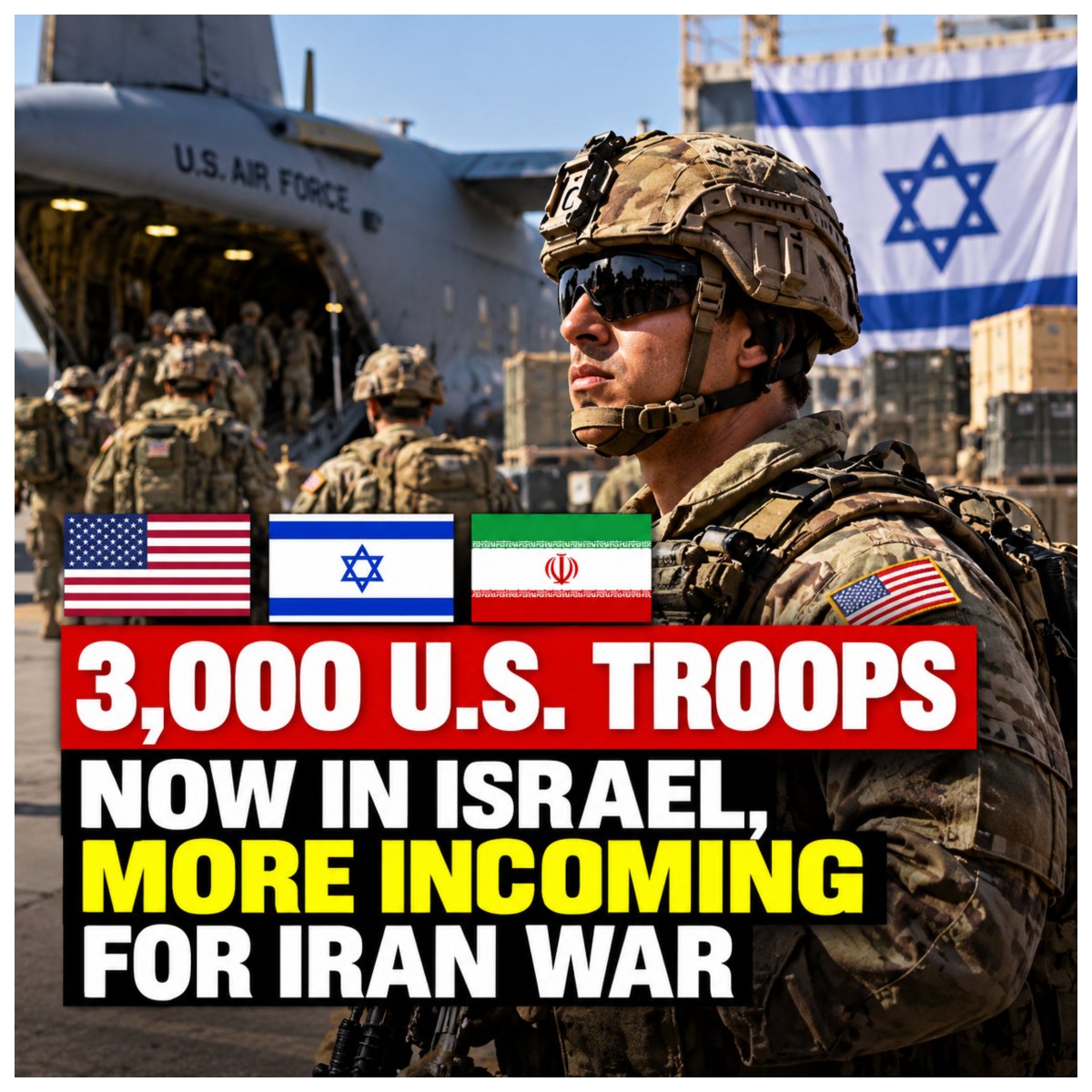
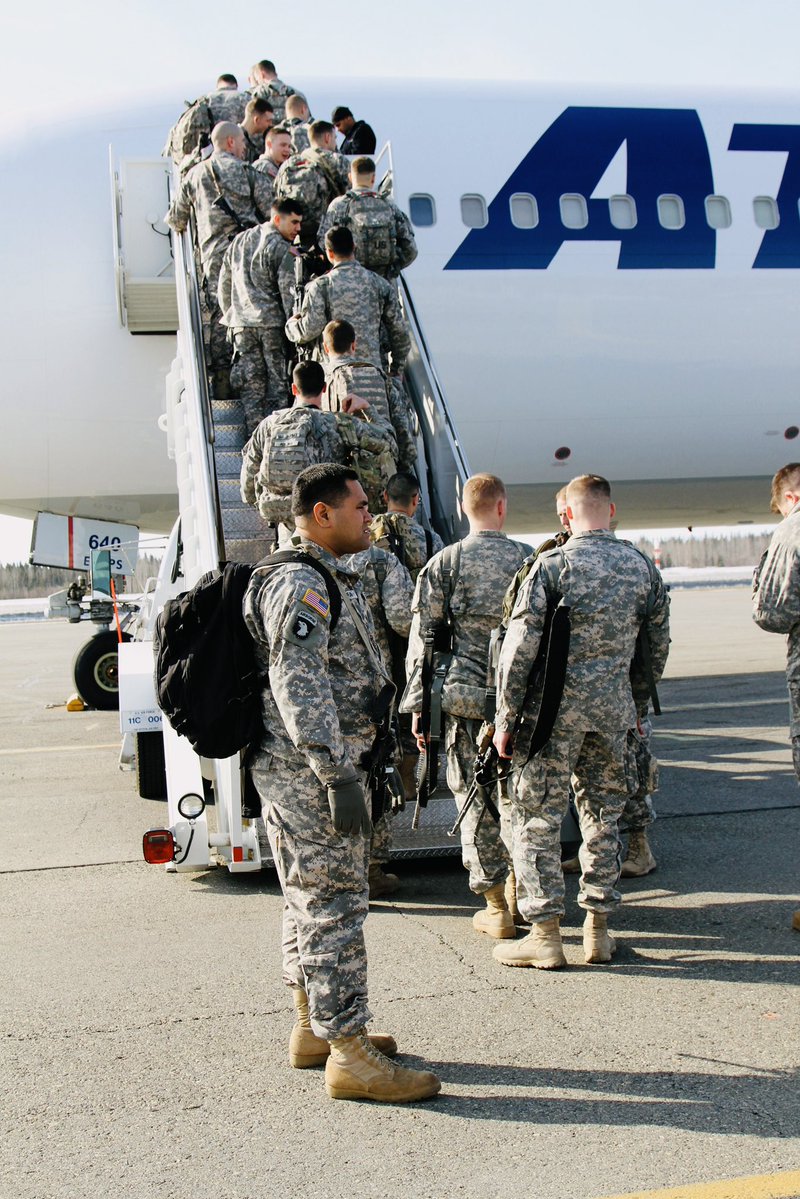
3,000 U.S. Troops Now in Israel, MORE Incoming for Iran War
AMERICANS WAKE UP
Israeli news outlet Walla reports additional forces and aircraft are expected to arrive in the coming weeks as preparations intensify for another possible FLARE-UP with Iran.
Once again, Americans could be sent to fight and die in a war for Israel.
Image two is for reference
🇮🇷⚔️🇺🇸🇮🇱
🇸🇦🇾🇪
Il existe une fenêtre de risque d’escalade entre fin octobre et mi-novembre. Plusieurs éléments pourraient créer une période particulièrement sensible entre le 20 octobre et le 15 novembre 2026:
➡️Arabie saoudite et Yémen: Riyad prépare, selon plusieurs sources citées par Reuters, une offensive contre les Houthis au Yémen afin de reprendre le contrôle de zones stratégiques sur la côte de la mer Rouge et de sécuriser le détroit de Bab el-Mandeb d'ici quelques semaines (fin octobre, début novembre). L’opération devrait être menée principalement par des forces yéménites soutenues par l’Arabie saoudite. Les États-Unis fournissent notamment du renseignement et un soutien défensif, tandis que la Turquie et le Pakistan ont fourni des équipements militaires. La France, de son côté, a déployé des moyens militaires en Arabie saoudite afin de contribuer à la protection d’infrastructures stratégiques, notamment autour de Yanbu.
➡️ Élections israéliennes: les élections pour la Knesset sont actuellement prévues le 27 octobre 2026.
➡️ Élections de mi-mandat aux États-Unis : les élections fédérales américaines auront lieu le 3 novembre 2026. Elles détermineront notamment la composition de la Chambre des représentants et d’une partie du Sénat.
➡️ Présence navale américaine: Washington envisage actuellement un renforcement important de sa présence militaire au Moyen-Orient, avec la possibilité de voir jusqu’à trois groupes aéronavals déployés dans la région.
➡️ Retrait américain d’Irak: les dernières forces américaines ont quitté l’Irak le 30 septembre 2026, avec notamment le départ d’Erbil Air Base. Cette base était le maillon faible du dispositif de la défense américaine contre l'Iran.
L’ensemble de ces éléments ne permet évidemment pas d’affirmer qu’une nouvelle guerre débutera durant cette période. En revanche, ils constituent plusieurs points de tension simultanés, ce qui pourrait en faire une période particulièrement sensible pour l’évolution de la situation régionale au Moyen-Orient.
🚨 عاجل |
المشروع السعودي العظيم — قناة سلمان — بتكلفة تقدر بنحو 140 مليار دولار.
المشروع الان قيذ التخطيط مع مهندسين محليين واجانب قد يستغرق المشروع اربعه سنوات من العمل المتواصل.
ملاحظه :
الفيديو تم توليده عن طريق ال AI للرمزيه.
BREAKING: 🇺🇸🇮🇷 The US is deploying thousands of troops across the Middle East ahead of a new round with Iran, per AP
Third aircraft carrier and thousands of troops head to Mideast as Trump weighs new Iran strikes
The U.S. military is dispatching roughly 9,000 troops aboard a group of ships to the Middle East, a U.S. official said Thursday.
The bolstering of the American military presence comes as President Donald Trump warned anew that new strikes against Iran could be on the horizon.
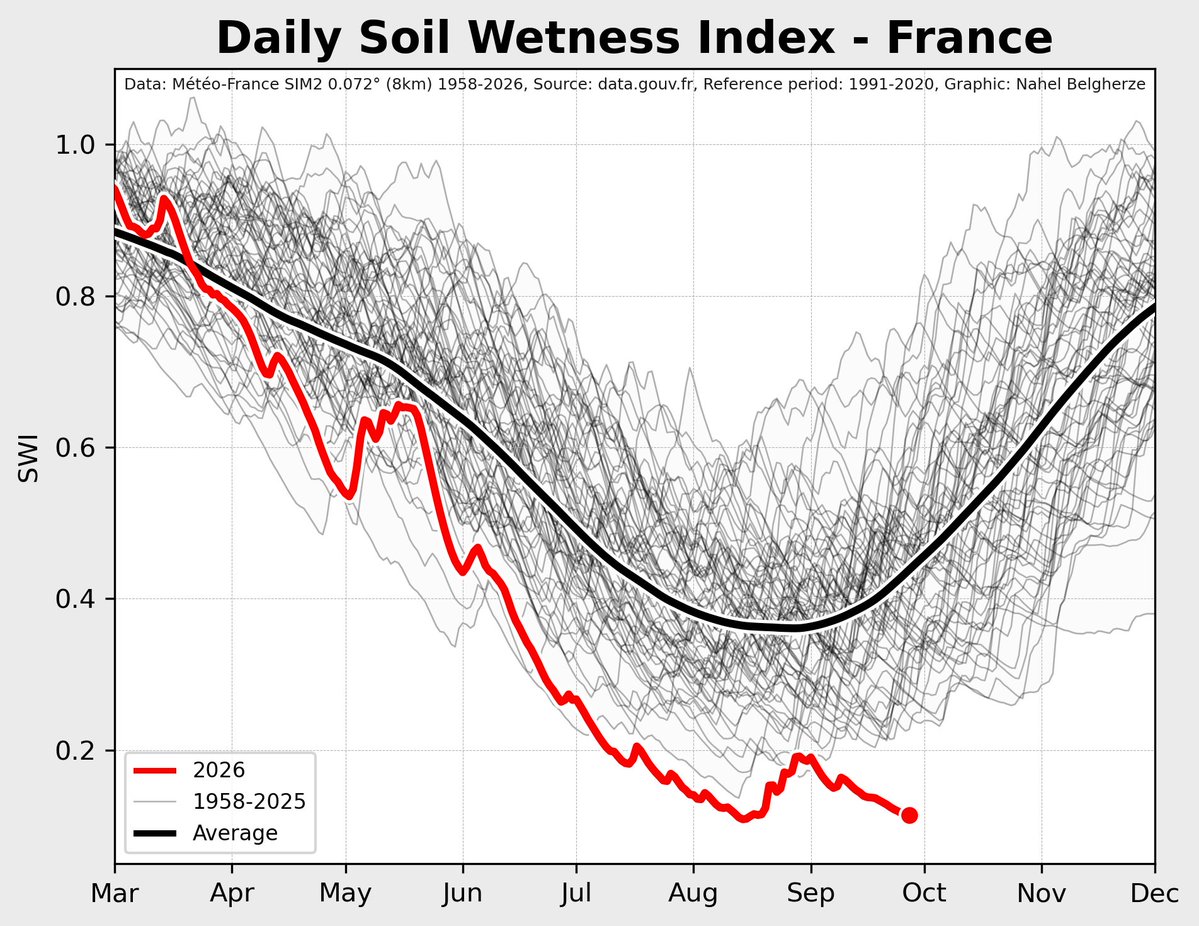
France’s ongoing drought has once again pushed soil moisture further below historical levels than any previously recorded drought.
Uncharted territory.