Jadis universitaire, mariée, aspie, dix-huitièmiste, écopoétologue (média,écrits de femmes poètes,lyrisme) a créé #SIEFEGP & sa presse féministe🐦TD gère ce fil
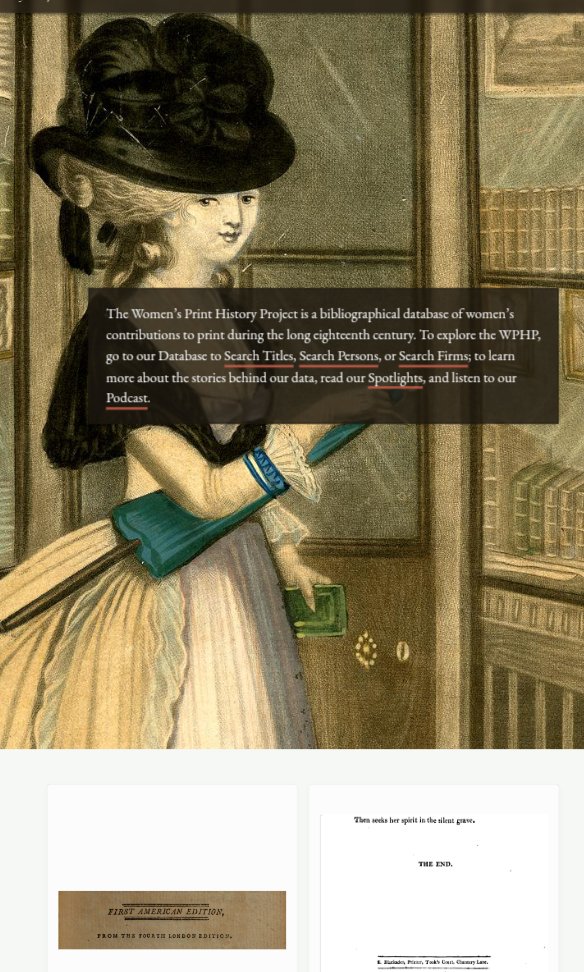
«The Women’s Print History Project» est un formidable site d'archives. Il contient une excellente base de données bibliographiques en répertoriant les créations de femmes (autrices, illustratrices, traductrices, éditrices compositrices..) du XVIIIe siècle.
https://t.co/CoJ33aj9Gv
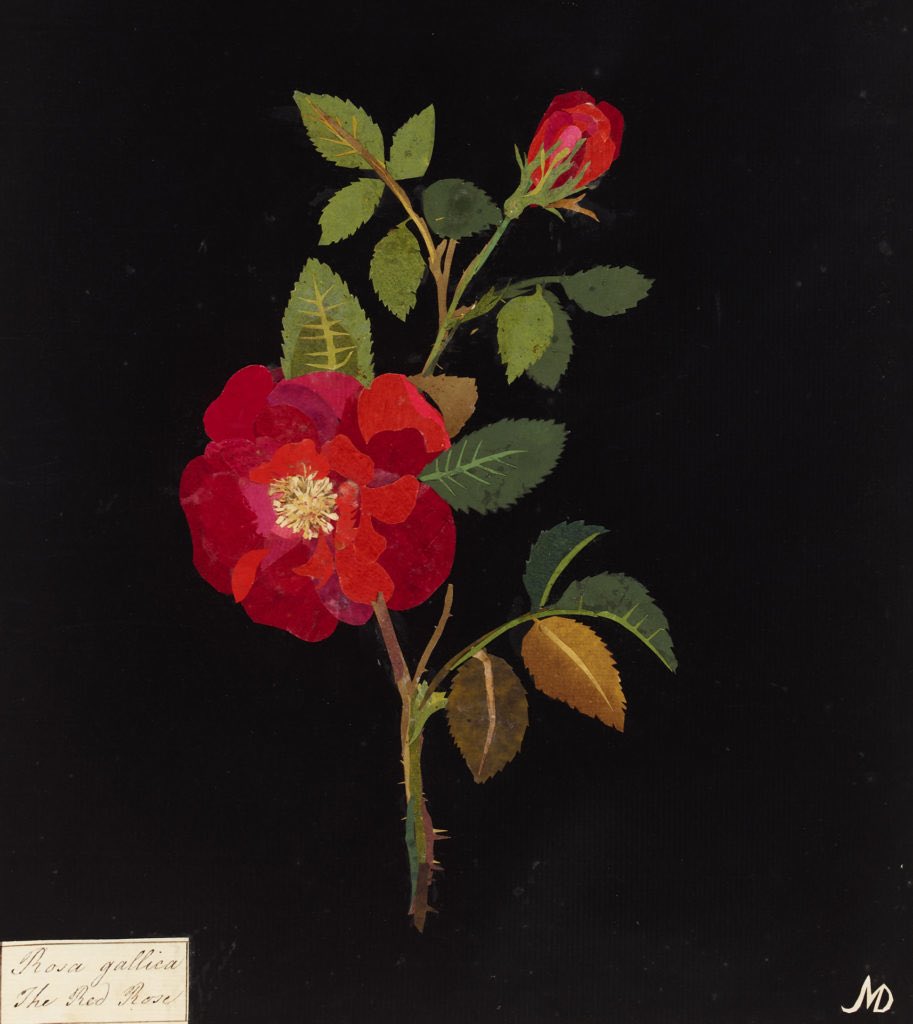
¿Sabías que Mary Delany (1700-1788) empezó su carrera a los 72 años?
En una época en que se esperaba que las mujeres envejecieran en silencio, deslumbró a la ciencia con una técnica artística única inventada por ella misma: los “mosaicos botánicos de papel”.
Te lo cuento 🌷👇🏼
Considérée comme la première auteure-compositrice-interprète de la chanson québécoise, Mary Travers (Bolduc) (1894–1941) lègue un répertoire de 102 titres, créés entre 1929 et 1939. Son succès s’explique par son authenticité: artiste engagée...via @dbc_dcb
https://t.co/He43YknD1y
🗣️ La escritora francoargelina Hélène Cixous, Premio Formentor de las Letras 2025, ha asegurado unas horas antes de recoger este galardón que "Israel se autodestruye al destruir Gaza y destruye gran parte de Occidente".
https://t.co/AuJMpeHRrM
#OTD in 1547, at 2 o'clock in the morning, Elizabeth Hardwick (#BessofHardwick) married Sir William Cavendish in the chapel at Bradgate House, Leicestershire, the home of the 'Dorsets': Henry Grey & wife Frances Brandon (parents of #LadyJaneGrey) #Tudors
https://t.co/BgyRrmAUty
✨ Historique : le Vatican ouvre ses portes aux catholiques LGBTQ+ ✨
Pour la première fois, le pape Léon XIV recevra « We Are Church », groupe réformiste pro-LGBTQ+. Fondé en 1995, le mouvement milite pour l’inclusion des femmes et des personnes LGBTQ+ dans l’Église, ainsi que pour la fin des abus sexuels.
Cette rencontre, accompagnée du passage par la Porte Sainte, symbolise une ouverture inédite et un dialogue possible avec les voix critiques de l’Église. Pour la communauté LGBTQ+, c’est un premier pas vers une Église plus accueillante et inclusive.
🔗 https://t.co/O74nHvA9PY
#Vatican #LGBTQ #ÉgliseInclusive #WeAreChurch #AnnéeSainte
El 20 de agosto de 1821 nacía la escritora y periodista Robustiana Armiño. Aprendió de manera autodidacta y pronto empezó a publicar poemas en la prensa.
Su primer libro de poesía fue prologado por su amiga Carolina Coronado. También conoció a Gertrudis Gómez de Avellaneda y🧵👇
#20agosto 1799
Muore Eleonora de Fonseca Pimentel, patriota, politica, giornalista e
poetessa italiana, una delle figure più rilevanti della breve esperienza della Repubblica Napoletana del 1799.
#storia
Winner of the Best Article Prize for volume 18 of Early Modern Women, this article challenges the historical narrative of enclosure and reconstructs the lived realities of nuns. Find out more here: https://t.co/OXPzu8G1xN @SSEMWomenGender
À découvrir, si vous ne le connaissez pas encore, le site de l'association Aware qui consacre ses activités aux femmes artistes (ex. voir la page en lien ci-joint) https://t.co/IzsdKNJQWy
J'ai découvert l'existence de cette association au projet formidable en 2017. Bon été ! DS.
Émancipation économique: il y a 60 ans, les femmes mariées obtiennent le droit de travailler et d'ouvrir un compte en banque sans l'autorisation du mari https://t.co/lDR2Gakaqc @humanitelles
Nous espérons que vous passez un été doux et agréable.
Notre association est très heureuse du lancement de la cinquième édition de la distinction ci-jointe, les candidatures sont désormais ouvertes, à bientôt !
Angélique-Marguerite du Coudray was a famous 18th century French midwife who designed various teaching aids to train midwives about anatomy and obstetrics. Her work saved many lives in the age #WomensArt
Today is publication day! Check out our new issue with four articles, a conversation on race, an exhibition review, and many book reviews https://t.co/TBeXrJpv0l
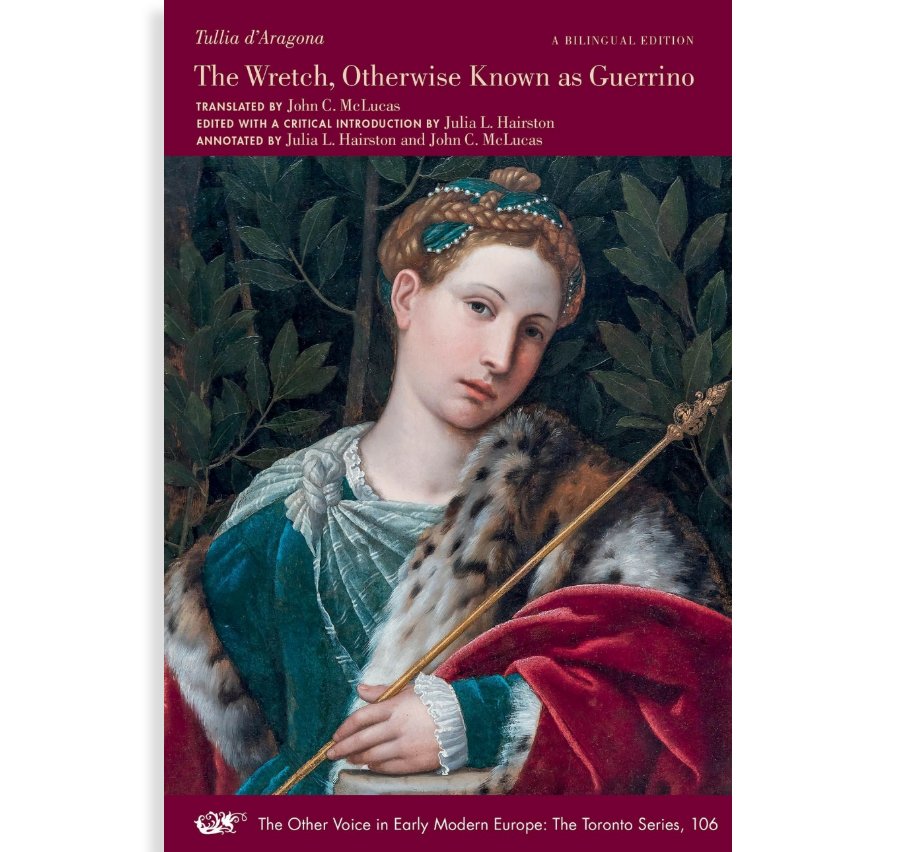
New Reads Alert: Tullia d’Aragona's The Wretch, Otherwise Known as Guerrino: A Bilingual Edition
Edited by Julia L. Hairston
With an Introduction by Julia L. Hairston
Translated by John C. McLucas
https://t.co/jBKKFUrdBj
Woman of the Day agricultural inventor Eva Ekeblad, born OTD 1724 in Sweden, discovered how to make flour from potatoes during a European-wide famine crisis in the 1740s caused by severe winters and crop failures. She was the first woman to become a member of the Royal Swedish Academy of Sciences.
Wasn’t the humble spud always a food source once the first one was brought over to us in 1586? Well, yes and no. South Americans used different variants to produce healthy crops but Europeans had only one sort so it was vulnerable to pests and parasites. In any case, it was viewed with suspicion - the potato is a member of the deadly nightshade family - so it was only regarded as fit for livestock to eat, and perhaps poor people at a pinch. In France, the potato was even banned for human consumption because of a widespread belief that it caused leprosy.
Eva, born to an aristocratic family, was married at 16. Her dowry consisted of two castles and her husband owned a manor estate as well as property in Stockholm. He was often absent on privy councillor duties so she got on with extensive hostess duties, bearing eight children and managing three large estates. By all accounts, she ran a tight ship and wasn’t afraid to argue with the estate bailiffs, quoting the law at them.
By the time she was 22, Eva had discovered a way to cook, crush and dry potatoes to make a starchy type of flour. Her work couldn’t have been more timely. Large areas of Europe were badly affected by famines.
She summarised her experiments in an essay entitled ‘Försök att tillverka bröd, brännvin, stärkelse och puder af potater’ (Attempts at producing bread, spirit, starch and powder from potatoes) and submitted it to the Royal Swedish Academy of Sciences. She described in some detail how to extract potato starch and turn it into a usable flour similar in texture to wheat flour by grinding and sifting it, and how to make alcohol from potatoes. She included a recipe she developed for making bread with oat flour mixed with mashed potatoes.
On 3 December 1748, Eva became the first woman elected as a member. The Academy sent her a letter of thanks on 17 December of that year, speculating in committee that by admitting her as a member, it might inspire more women to develop products which could be useful in households across the country.
Her paper was published in Kungl. Vetenskapsakademiens Handlingar (Transactions of the Royal Swedish Academy of Sciences), and the Board of Commerce printed 4,000 copies and distributed it throughout the country.
Turning potatoes into a staple food in Sweden not only reduced the impact of famine and improved the Swedish diet but it increased the availability of wheat, rye and barley for making bread, since potatoes could also be used an alternative for making alcohol. The downside was that it also led to a spike in alcohol (brännvin) consumption, especially vodka.
On 19 January 1751, the Academy downgraded her status to honorary member. Ironic, really, when it had been using her as a poster girl. Its charter still restricted membership to men.
She accepted the decision because she didn’t attend regular meetings (well, she was a bit busy, what with having seven children to raise almost single-handedly as well as running vast estates) but she continued her scientific experiments and later the same year, found another use for potatoes. Potato flour could be used in place of lead, a dangerous element, in cosmetic products such as soap. She developed a method of bleaching cotton textile and yarn with soap and promoted the potato plant by using its flowers as hair ornaments.
After the death of her husband in 1771, Eva continued to manage her estates until she died in 1786, aged 61.
And after her death?
The Royal Swedish Academy of Sciences elected its second female member…in 1951. Only 203 years later.
France dropped its ban on potatoes for human consumption, not because Eva had shown it to be a safe and versatile source of food but because Antoine-Augustin Parmentier published “Manière de faire le pain de pommes de terre, sans mélange de farine” (How to make potato bread, without flour) in 1779 - 31 years after Eva published her paper.
He is credited with making the potato popular in Europe. That’s why you’ve heard of parmentier potatoes, not Ekeblad potatoes.