@m_chiles@SchoolsWeek Hi Michael. Just been discussing this and how impressive it is with my VP. Any chance I could see the whole thing?
Thanks in advance.
19 years ago, a high school basketball coach put his team manager into a game for the final four minutes. The kid had never played a single minute of competitive basketball in his life. He scored 20 points.
Jason McElwain was diagnosed with severe autism at age two. He didn’t speak until he was five. He couldn’t chew solid food until he was six. He wore a nappy for most of his early childhood. As a baby, he was rigid, wouldn’t make eye contact, and hid in corners away from other children.
He tried out for his school basketball team every year and got cut every time. Too small. Too slight. Barely 5’6 and about 54 kilograms. But he loved the game so much that his mum called the school and asked if there was any way he could be involved. The coach created a team manager role for him. For three years, McElwain showed up to every practice and every game. He wore a shirt and tie on match days. He ran drills, handed out water, kept stats, and cheered every basket like he’d scored it himself.
On 15 February 2006, the last home game of his final school year, the coach let him suit up in a proper jersey and sit on the bench. With four minutes left and a comfortable lead, the coach sent him in.
His first shot missed. His second missed. Then something shifted.
He hit a three-pointer. Then another. Then another. His teammates stopped shooting entirely and just kept passing him the ball. He hit six three-pointers and a two-pointer. 20 points in four minutes. The highest scorer in the game. When the final buzzer went, the entire crowd rushed the court and lifted him onto their shoulders.
His mum tapped the coach on the shoulder, in tears. “This is the nicest gift you could have ever given my son.”
McElwain won the ESPY Award for Best Moment in Sports that year, beating out some of the biggest names in professional sport. He’s 36 now. He works at a local supermarket, coaches basketball, has run 17 marathons including five Boston Marathons, and travels the country speaking about never giving up.
When asked about that night, his coach still gets emotional. “For him to come in and seize the moment like he did was certainly more than I ever expected. I was an emotional wreck.”
Parents now have the power to completely disable YouTube shorts.
Google has rolled out major enhancements to its parental control tools, giving families far greater control over YouTube Shorts.
Using the Google Family Link app and newly introduced supervised account options, parents can now set strict daily time limits for children and teens under 18. By simply setting the Shorts time allowance to zero minutes, the entire Shorts feed can be blocked, directly tackling concerns about the addictive, endlessly scrolling nature of the format.
The updated features also include locked bedtime schedules and mandatory break reminders that children cannot override, helping maintain consistent and healthy screen-time routines.
For parents looking for maximum protection, the dedicated YouTube Kids app continues to offer a completely Shorts-free, age-appropriate environment with curated content. On computers, families can further restrict access using browser extensions, Restricted Mode, or specific URL blocks.
These changes mark a significant step forward in digital wellbeing, empowering parents to customize YouTube according to their child’s age and needs—whether that means a short daily viewing window or a full ban on Shorts.
[Google. (2026). Supervised Accounts and Family Link: New Tools for Managing YouTube Shorts for Teens and Children. Google Support]
One of the most patronising things I’ve encountered is where people outside education tell teachers kids need someone who cares, wants the best for them & will keep them safe. What do some people think motivates teachers to teach? It isn’t the pay…
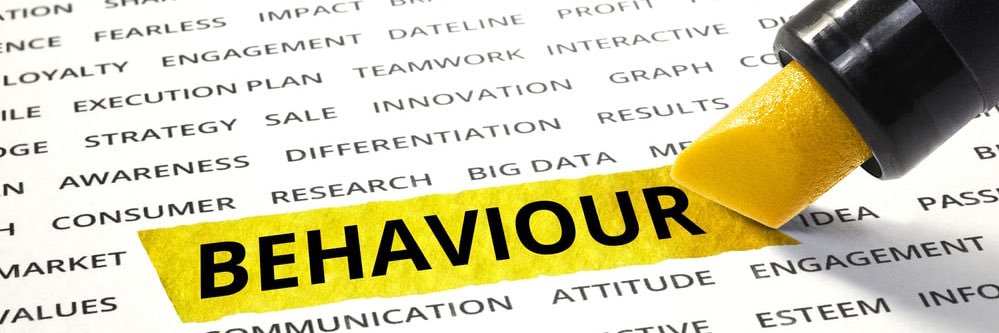
Poor behaviour in schools is a wellbeing issue….
The wellbeing of:
- Staff & their being able to do their core job
- Other pupils & their learning
- SLT/pastoral staff
- Parental happiness
are all impacted on negatively by poor behaviour. It’s a huge wellbeing issue.
Leaders: this is it, right? It's a hard ask, but a simple one. If you want to rapidly improve your school, you have to get in to every lesson, every day.
I loved this interview, do check it out, link in reply 👇👇
Schools are experiencing an 'exponential rise' in AI-generated parental complaints warn experts, piling stress on headteachers.
Leaders have had formal complaints over a school giving a child a cold lunch, and for taping a child’s verruca for PE
https://t.co/rDRmm7SsYC
Fascinating to hear lessons learned from the new Ofsted.
Lessons learned:
· Consider carefully which groups you flag up to inspectors, as these (refuge, EAL) formed part of the case sampling.
· Impact is everything, from the phone call right through the inspection.
· Inclusion is already a central part, even on the phone call
· IDSR was reviewed, but the lead inspector pulled out the overarching themes rather than going line by line. However, be prepared to explain any single data point.
· They are looking to validate the SIP/SEF; narrate how what you are seeing fits into the school’s context
· Inspectors asked ‘is this typical’? Be prepared to break this down
· Case sampling/inclusion learning walks:
· What happens in class needs to match the planned provision (SEND folders/EHCPs/class provision map)
· Staff leading this need to really know the pupils
· Guide inspectors towards the pupils with SEND, otherwise they will gravitate to those with visible adaptations/needs
· Curriculum – asked to see some medium term planning. Have this ready just in case.
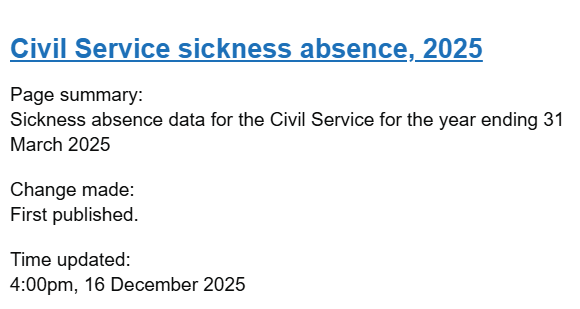
The government has dumped a massive heap of data, as is the tradition before parliamentary recess
The data on sickness absence in the civil service is just astonishing
Quick 🧵 on the most eye-catching parts
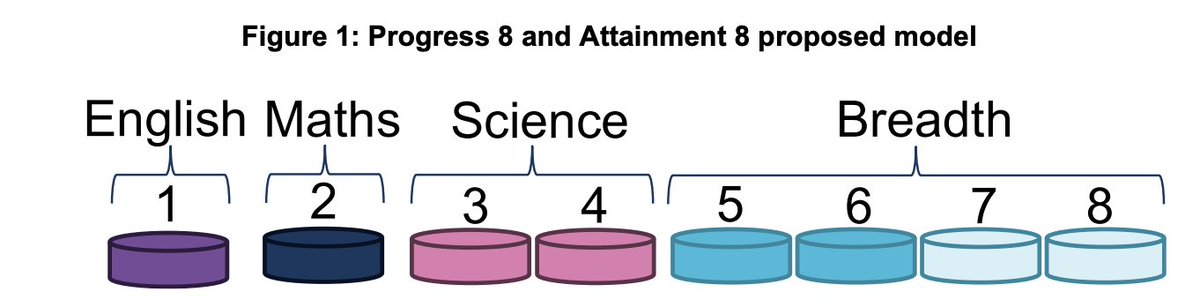
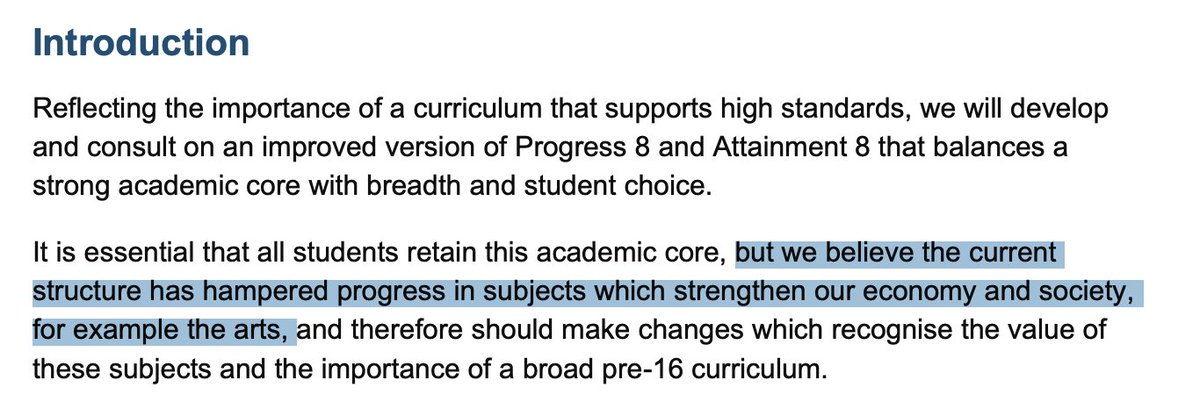
I spoke too soon - Progress 8 is NOT staying the same! Govt have overruled CAR and proposed changing it to incentivise arts subjects. Big change!! https://t.co/3DKdfquNIG
Children know who lowers the bar. They seek them out, it feels easier, safer, less demanding. Some adults even enjoy it. But that’s not kindness. It’s harmful. Leaders need to call them out.






![Rainmaker1973's tweet photo. Parents now have the power to completely disable YouTube shorts.
Google has rolled out major enhancements to its parental control tools, giving families far greater control over YouTube Shorts.
Using the Google Family Link app and newly introduced supervised account options, parents can now set strict daily time limits for children and teens under 18. By simply setting the Shorts time allowance to zero minutes, the entire Shorts feed can be blocked, directly tackling concerns about the addictive, endlessly scrolling nature of the format.
The updated features also include locked bedtime schedules and mandatory break reminders that children cannot override, helping maintain consistent and healthy screen-time routines.
For parents looking for maximum protection, the dedicated YouTube Kids app continues to offer a completely Shorts-free, age-appropriate environment with curated content. On computers, families can further restrict access using browser extensions, Restricted Mode, or specific URL blocks.
These changes mark a significant step forward in digital wellbeing, empowering parents to customize YouTube according to their child’s age and needs—whether that means a short daily viewing window or a full ban on Shorts.
[Google. (2026). Supervised Accounts and Family Link: New Tools for Managing YouTube Shorts for Teens and Children. Google Support]](https://pbs.twimg.com/media/HA5K1WubsAQwNn8.jpg)