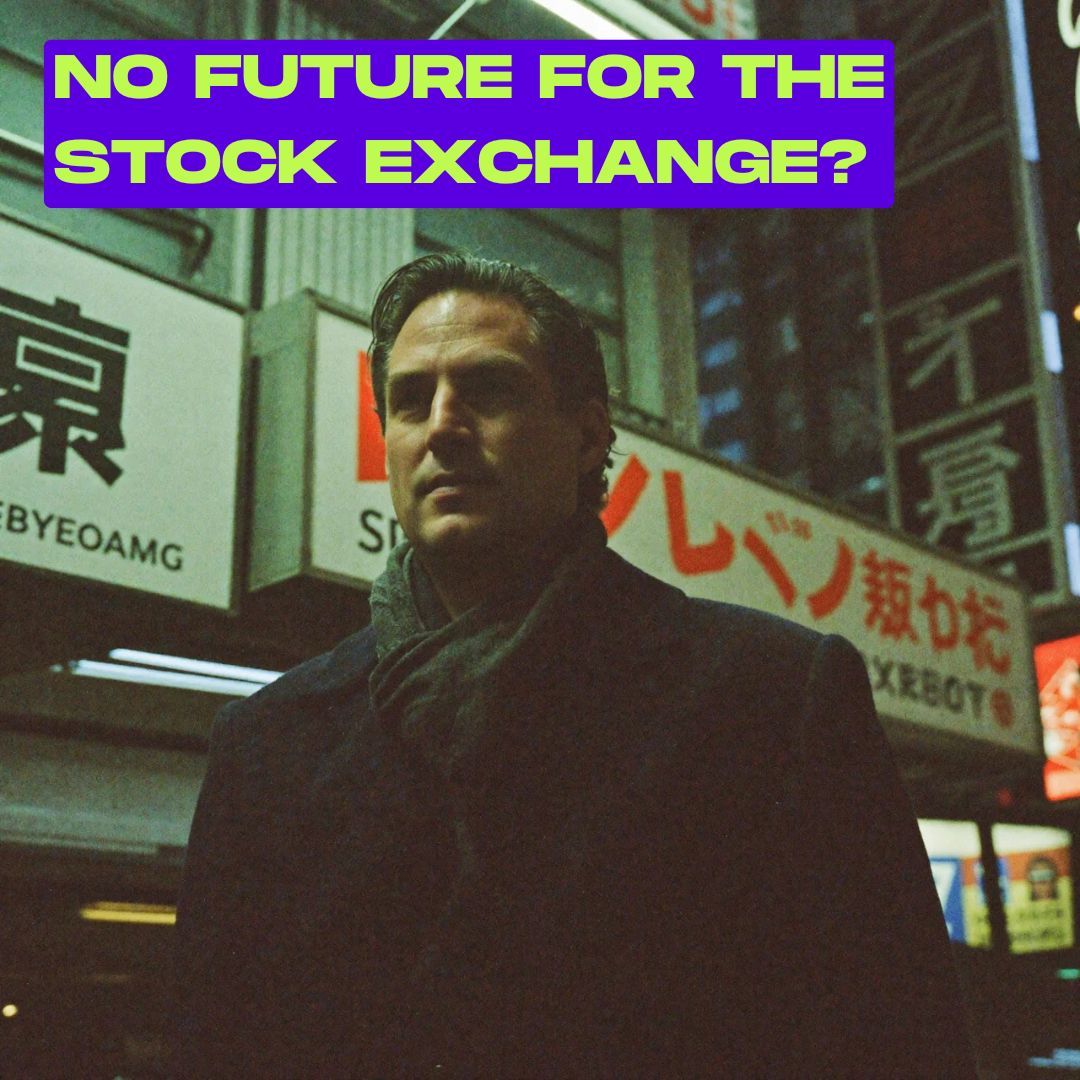
JUST IN: A new report from @ChronicleLabs says 70% of tokenized assets can't fully prove what's backing them.
Founder @nomos_paradox joins @kateirwin to break down their findings on the transparency gap in real-world asset tokenization, and what it'll take for institutions like BlackRock and BNY Mellon to trust the data.
Watch the full conversation on Markets Outlook:
00:00 - Niklas Kunkel Joins Markets Outlook
02:21 - Chronicle's New Report: Tokenization's Hidden Problem
03:50 - $12.3B Exposed: 70% of Tokenized Assets Fail the Test
06:12 - The Five Pillars Every Tokenized Asset Needs
08:18 - How to Achieve Proof of Asset
10:47 - Why Risk Isn't Priced In
12:57 - BlackRock, BNY Mellon and the Road to Real-Time Regulation
Good assets do not automatically travel.
International investors need more than the local story: clear ownership, payment obligations, cash control, currency exposure and downside rights.
The investment structure must work beyond the asset's home market.
AI illustration.
🇺🇸 NOW: Coinbase CEO Brian Armstrong says crypto can't wait on Congress after the CLARITY Act stalled, adding "clarity is coming to crypto regardless."
Blockchain privacy is not one setting.
In a selectively disclosed transaction, an administrator can receive the ownership data it needs while another investor sees nothing about the position.
The design question is specific: who must verify what?
AI illustration.
Tokenised project finance does not make software the inspector.
An engineer could verify a solar milestone. An oracle could carry the result to a smart contract. If the agreed payment conditions are met, a funded tranche could be released.
AI illustration.
Tokenised funds could help a manager run different portfolios for different clients.
Smart contracts could coordinate the steps between compatible funds, while each client's mandate and each fund's dealing terms still govern what can happen.
Tokenisation could let you try a new portfolio-analysis app without moving your fund units. A compatible app could read the holding in an account you control. The fund must permit this holding model; its ownership and transfer rules still apply.
The token is not enough
Blockchain does not change the building. It changes how ownership works around it.
That means rights can become easier to divide, track, and manage.
The big catch: a token is not always the title.
That is where most people get this wrong.
This goes deeper than crypto.
Wall Street didn’t suddenly fall in love with crypto.
It just couldn’t ignore it anymore.
After years of doubt, the biggest players are now building on blockchain.
Not because it’s trendy.
Because it works.
The real shiftis acceptance.
If the data stays offline, the token is just a shell.
No real insight = no real trust.
The winners will connect the asset to the token.
That’s when this market gets real.
It’s not about the tech
Blockchain can already track ownership, move assets, and settle trades.
What it lacks is trust, rules, and real market structure.
This shift won’t happen because it’s new.
It happens when it feels safer and more reliable than today.
Money moves. Property doesnt.
You can send $10M globally in minutes.
Transferring a property can take weeks.
Not because buyers and sellers disagree.
Because the process is fragmented.
Funds move on one timeline.
Ownership on another.
⚡️ TODAY: Ethereum founder Vitalik Buterin calls for better decentralized stablecoins.
He highlights three key challenges: finding alternatives to USD tracking, building capture-resistant oracles, and solving staking yield competition issues.