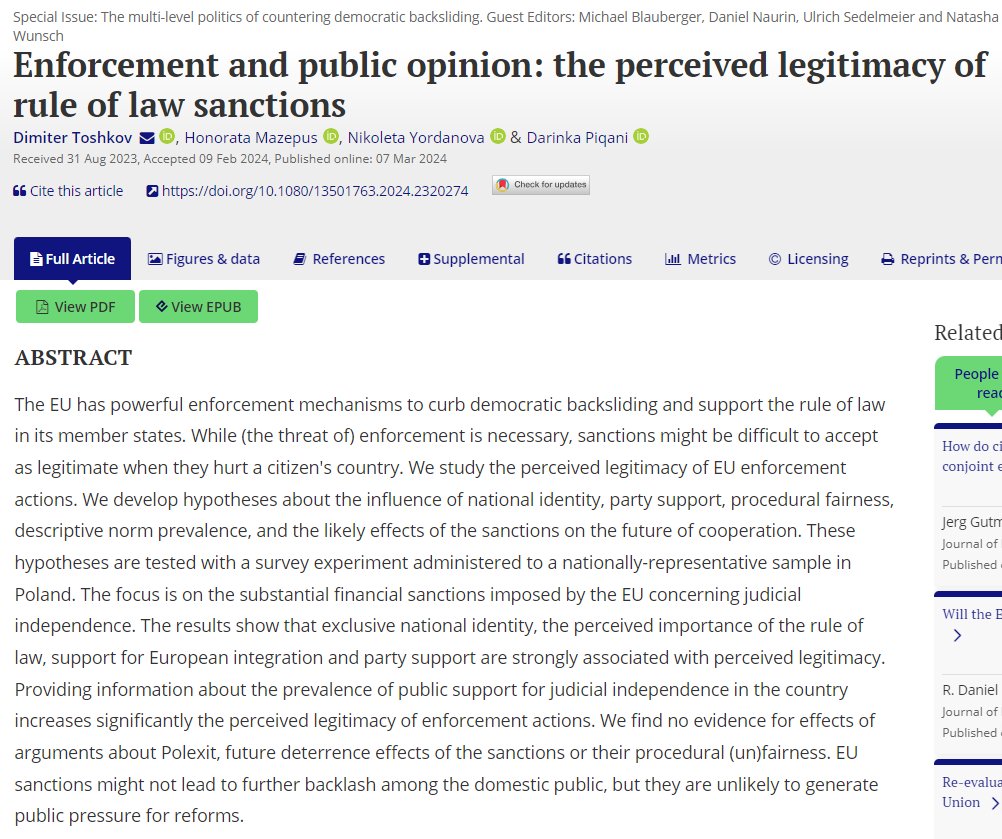
Do people find sanctions imposed on their country by the EU🇪🇺 acceptable? What arguments, if any, can increase support for sanctions that hurt your own state 🇵🇱?
Some answers in our new @jepp_journal article (w. @HMazepus@NYYordanova & @DarinkaPiqani)!
https://t.co/XDzKiQsMiI
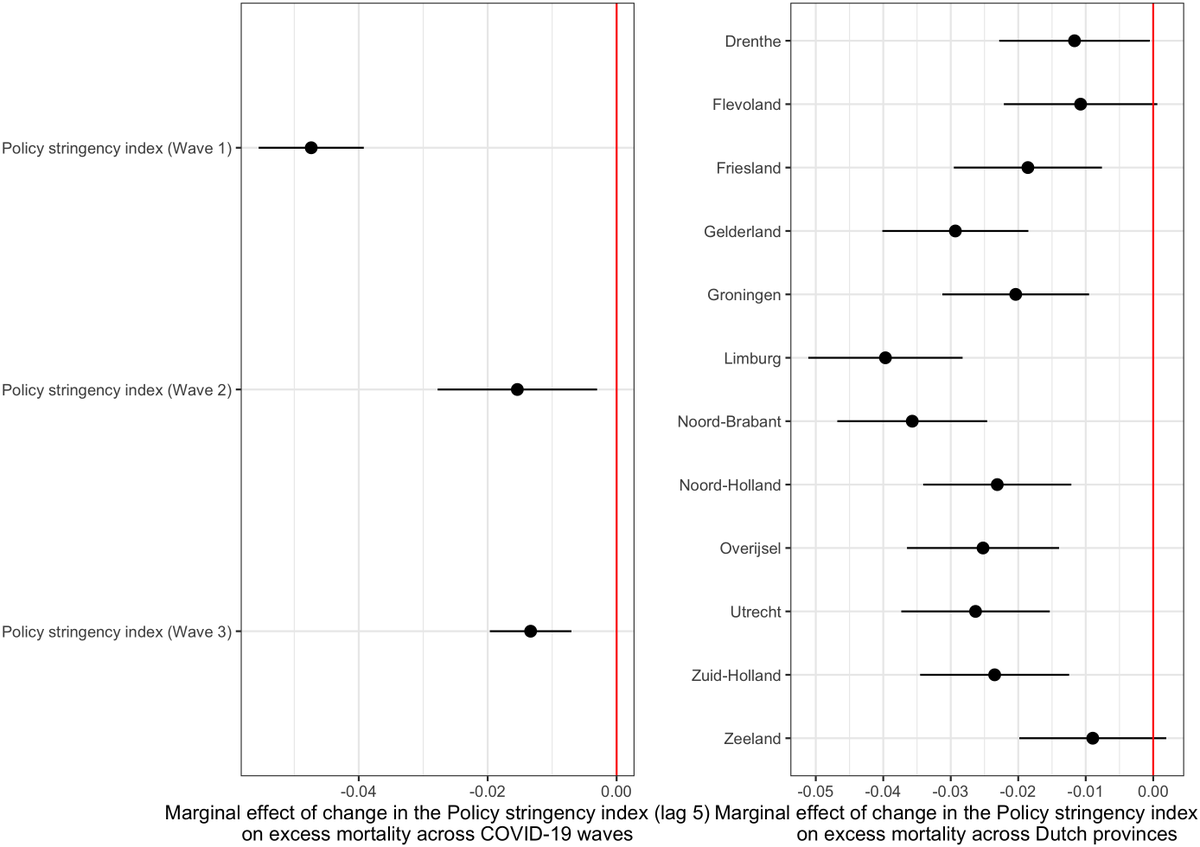
De oversterfte in NL was het hoogst in 2020, maar zette zich voort in 2021 en ook in 2022. Er waren aanzienlijke verschillen tussen groepen: de oversterfte was hoger bij mannen, mensen met een laag gezinsinkomen, en 1te generatie migranten.
https://t.co/65fnHdJXgK
Deze week zet het Nederlandse parlement de openbare verhoren van de enquêtecommissie corona.
Het parlementaire onderzoek behandelt veel vragen waarover wetenschap belangrijke inzichten heeft opgeleverd. Een korte samenvatting, gericht op oversterfte en de impact van het beleid:
Waren de beleidsmaatregelen noodzakelijk? Ja! Zouden mensen hun mobiliteit en contacten niet sowieso al beperken als reactie op de pandemie? Nee!
Beleidsmaatregelen hebben de mobiliteit verder beperkt, bovenop wat mensen sowieso al zouden hebben gedaan.
https://t.co/OCEYbDon78
New study shows that the policy measures introduced by the Dutch govenrment during the #Covid19 pandemic reduced excess mortality (= saved lives). The effects were greatest during the first wave of the pandemic (2000) and declined in size, but remained significant, afterwards.
🚨 REPLICATION REPORT UPDATE: One year ago, a tweet by @JohnHolbein1 alerted me, @OlleFolke, and Joop Adema (@Jopieboy) to a paper with a shocking result about Sweden’s law criminalizing the purchase of sex.🧵
@slantchev This contradicts prior meta analyses, e.g. https://t.co/CCCWHXhheL and https://t.co/2AZMMeSWZe (both are not cited!) as well as the conclusions of the most sophisticated econometric analysis by @VC31415 et al. https://t.co/nHm1k2UYaN
We hope this paper will open a research agenda to study how motivated reasoning affects causal judgments across diff. contexts (e.g. party conflict over policy & coalition bargaining). We should also uncover the way bias works (e.g. the role of intentions & foresight). /END
If an army bombs a hospital, killing the civilians inside, it clearly *caused* their deaths & bears responsibility. But what if enemy soldiers moved to the hospital first. Does the causal power of the attackers diminish? Do the enemy soldiers bear responsibility? [THREAD]
If our guys bomb a hospital, they are *not* the ones causing the deaths of the civilians: it is the responsibility of the defending soldiers who hid there.
But not when our enemies bomb a hospital where *our* soldiers hid: then the attackers caused the deaths!
Depressing.
Attitudinal sorting, based on symbolic ideology, policy attitudes, & group sentiments has risen substantially & explains most of the rise of affective polarization. Demographic sorting is stable & explains little
https://t.co/mxQm9TChqM









![DToshkov's tweet photo. If an army bombs a hospital, killing the civilians inside, it clearly *caused* their deaths & bears responsibility. But what if enemy soldiers moved to the hospital first. Does the causal power of the attackers diminish? Do the enemy soldiers bear responsibility? [THREAD] https://t.co/P1NjU1ps3H](https://pbs.twimg.com/media/Gl1EGrCXoAAbGet.jpg)


