En 1997, une jeune actrice de 23 ans quitta une chambre d’hôtel avec un chèque de 100 000 dollars et un document juridique lui interdisant de révéler quoi que ce soit sur ce qui venait de se passer.
Elle signa ce document.
Puis, pendant les vingt années qui suivirent, elle passa son temps à le briser.
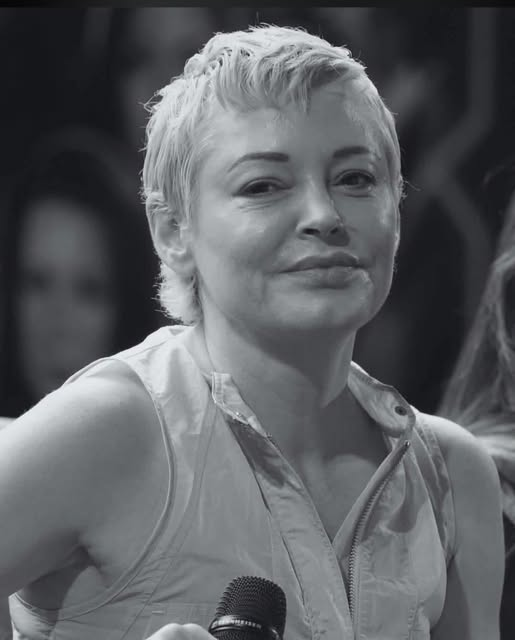
Elle s’appelait Rose McGowan.
L’homme qui avait rédigé ce chèque était Harvey Weinstein.
L’industrie qui le protégeait était Hollywood.
La plupart des personnes placées dans une telle situation auraient encaissé l’argent et tenté de tourner la page.
Rose McGowan, elle, choisit de dire la vérité.
Pas une seule fois. Pas à voix basse. Pas même lorsque parler était devenu moins risqué.
Pendant deux décennies, elle prit la parole dans des salles, sur des scènes et lors d’interviews, dénonçant sans relâche le système qui protégeait cet homme. Les agents qui détournaient le regard. Les avocats qui rédigeaient les accords de confidentialité. Les dirigeants qui préféraient garder le silence parce que ce silence leur rapportait de l’argent.
L’industrie ne chercha pas à enquêter sur ses accusations.
Elle s'en prit à elle.
Les rôles disparurent discrètement. Les auditions se firent de plus en plus rares. Son nom devint celui que personne ne souhaitait voir associé à un projet.
Et lorsque les médias commencèrent à parler d’elle, ce ne fut pas pour s’intéresser à ce qu’elle dénonçait, mais plutôt à la manière dont elle le faisait.
Trop bruyante. Trop en colère. Trop difficile à gérer.
C’est souvent ainsi que les institutions se protègent. Pas nécessairement par un acte spectaculaire de censure, mais par mille petites manœuvres. Un appel auquel on ne répond pas. Un rôle confié à une autre actrice. Un titre de journal qui qualifie une femme de « perturbée » plutôt que de reconnaître qu’elle avait raison.
Mais Rose McGowan continua de parler. En 2015. En 2016.
Puis, en octobre 2017, les journalistes Jodi Kantor et Megan Twohey publièrent leur enquête dans le New York Times. De son côté, Ronan Farrow publia la sienne dans le New Yorker.
Ils n’avaient pas découvert une nouvelle histoire.
Ils avaient donné à celle que Rose racontait depuis vingt ans le poids institutionnel et médiatique nécessaire pour qu’elle soit enfin entendue.
Plus de 80 femmes prirent alors la parole. Leurs témoignages correspondaient aux siens, jusque dans les moindres détails : les chambres d’hôtel, les assistantes qui disparaissaient, les accords financiers, les arrangements secrets et ce silence imposé à toutes.
En quelques jours, le mouvement #MeToo se propagea à travers le monde.
Harvey Weinstein, cet homme dont Rose McGowan répétait le nom dans le vide depuis 1997, devint alors le symbole de tout ce qui avait été dissimulé et protégé pendant tant d’années.
Il fut condamné à New York en 2020.
Cette condamnation fut ensuite annulée en appel. Un nouveau procès eut lieu en 2025, avec un verdict partagé : reconnu coupable sur un chef d’accusation, il fut acquitté sur un autre. Les procureurs décidèrent de ne pas engager un quatrième procès concernant les accusations restantes. Il est actuellement toujours détenu, principalement en raison d'une condamnation distincte prononcée en Californie en 2022, qui a de nouveau été confirmée cette année.
Il est toujours derrière les barreaux.
Quant à Rose McGowan, sa carrière d’actrice n’a jamais véritablement repris.
C’est cette partie de l’histoire que l’on oublie parfois de raconter.
Les mouvements ont besoin de récits simples, presque parfaits : une femme parle, le monde l’écoute et la justice finit par triompher.
Mais celle qui allume l’allumette alors que la pluie tombe encore, alors que tout le monde prétend qu’aucun orage ne se prépare, paie un prix que la victoire finale ne pourra jamais effacer.
Rose McGowan avait raison en 1997. Elle avait raison en 2005. Elle avait raison depuis le début.
Mais avoir raison ne l’a pas protégée.
Cela lui a coûté presque tout. Et lorsque le monde a enfin commencé à écouter et à célébrer ce réveil tardif, elle, elle est restée là où toutes ces années de vérité l’avaient laissée.
Réhabilitée dans ses accusations. Mais jamais véritablement rétablie dans sa vie.
Toutes les personnes qui disent la vérité avant l’heure ne vivent pas assez longtemps pour voir le monde leur donner raison au moment voulu.
Certaines portent seules le poids d'avoir vu juste avant les autres, en payant le prix fort, sans reconnaissance, sans applaudissements et sans garantie que justice leur sera rendue.
Rose McGowan a porté ce poids pendant vingt ans.
La véritable question sur laquelle nous devrions tous prendre le temps de réfléchir n’est pas de savoir pourquoi elle a continué à parler.
C’est de savoir pourquoi il a fallu autant de temps au reste du monde pour enfin l’écouter.
Sharetha was 7½ months pregnant with twins. A knife at her neck woke her. The neighbor's son pulled her from bed by her hair. He and a friend raped her in turns. He cut her throat twice. Her baby kicked. She gurgled, twitched, played dead. The blade missed her jugular by a hair.
Her whole shirt was soaked in blood. She kept it up on the ground until she heard their footsteps running away.
That day she had turned in her college term paper, gone to work, and gone to Lamaze class with her mom. She was exhausted. She went to bed.
She felt pressure behind her in the bed. A hand under her neck. She thought she was dreaming. Then he pulled her head up by the roots of her hair and put the knife under her chin. "Get up."
He walked her downstairs into his mother's apartment. The door was already open. Another man was waiting. She knew the first one only by face. Some days he stood on the front porch when she came home.
They made her take off everything. Seven and a half months pregnant, naked in front of two strangers. They laid a blanket on the floor. When she begged him to stop, he told her to shut up or he'd kill her with the knife. When he finished, he called the other one in.
She was carrying twin girls. All she could think was that she would never see them.
When they let her into the bathroom, she pressed her fingerprints onto every wall she could reach. If she didn't make it, at least someone would know she had been in that apartment.
Then they told her to walk to her truck like she normally does. That's when she realized they'd been watching her. They'd been inside her apartment while she was gone.
In the video below Sharetha tells the rest of it herself.
Where did they take her? They drove her truck out, stopped, and told her she could go. "Take two steps that way." Did she? She ran the other way. "Catch that bitch!" He tackled her and she fell on her stomach. What did he want? "Move your hand so I can leave my mark." The first cut went straight across her throat. Her baby kicked on the left. Then he lifted her head and cut again, at an angle. How did she survive? She gasped, choked, made her body jerk and gurgled like it was her last breath, until she heard their footsteps running away. Then she looked down. Her whole shirt was blood. "Stay calm, get help." She climbed a fence, banged on a stranger's picture window and said: "My name is Sharetha, I'm seven and a half months pregnant, I've been raped, my throat is cut twice. Could you please call 911?"
The knife missed her jugular by a little. Within an hour police caught both men driving her truck. Zannsabar Johnson, who cut her throat, got 30 to 50 years. Curtis Jenkins got 25 to 50.
Some people will say playing dead was luck. Others will say a woman with her throat open, faking her own death to save two unborn girls, is the strongest thing they've ever heard.
Both her daughters are alive today.
Could you have stayed that calm?
In 1959, doctors in Alberta told a 14-year-old girl they were taking out her appendix.
They were not.
It took her nearly forty years to make the province admit what it had really done.
She was born in Calgary on July 15, 1944.
Her family was poor. They moved constantly. At home, she was unwanted, and she was abused.
When she was eight, her mother placed her in a convent for a month. A year later, her mother applied to have her committed to the Provincial Training School for Mental Defectives in Red Deer.
There was no bed free.
So the girl waited two years.
On July 12, 1955, just before her 11th birthday, she was admitted. No doctor tested her first. The admission rested entirely on what her mother said about her.
She thought she was being sent to an orphanage.
Her name was Leilani Muir.
And a condition of her entry had already been signed. Her mother had given written permission for her to be sterilized.
Think about what that actually meant.
A child walked through those doors, and the decision about whether she would ever have children of her own had already been made by somebody else.
Alberta had passed its Sexual Sterilization Act in 1928. A small government panel, the Eugenics Board, decided who was "fit" to have children. Low test scores, poverty, being Catholic, being an immigrant's daughter, being Indigenous, being in an institution at all. Any of it could put you in front of the Board.
More than two years after she arrived, Leilani was taken to a clinic in Calgary for an intelligence test.
She scored 64.
The Board labelled her a "moron." Her file noted her Irish and Polish background, her Catholic faith, and that she had "shown definite interest in the opposite sex."
They ordered her sterilized.
Nobody told her.
On January 19, 1959, surgeons destroyed both of her fallopian tubes. She was told it was her appendix.
She stayed in the institution until she was 20. She had been taught to about a Grade 5 level.
In 1965, she walked out into the world on her own.
She worked as a waitress. She married. She wanted a baby.
The baby never came.
Fertility tests finally gave her the answer. A doctor told her she had been deliberately sterilized, and that it could never be reversed.
She tried to adopt instead.
She was turned down. Her history as a former inmate of an institution followed her into every office.
Two marriages ended. The years went by. By 1989, living in British Columbia, she was depressed enough to seek professional help.
To see whether she was a good fit for group therapy, a psychologist gave her another intelligence test.
She scored 89.
Normal.
Here is the part that should make people angry.
The number the province had used to justify cutting her open had never measured her mind. It had measured a frightened, neglected child in an institution.
Leilani Muir decided to sue the Province of Alberta.
Nobody had ever done that before.
She had no money and no profile. She had a Grade 5 education and a file that called her mentally defective. Against her stood a provincial government with every resource it needed.
The case took years to reach a courtroom.
The trial opened on June 22, 1995, before Justice Joanne Veit of the Court of Queen's Bench. It ran four weeks.
On January 25, 1996, the judgment came down.
Leilani Muir won.
Justice Veit awarded her $740,780 in damages, plus $230,000 toward her legal costs.
And she wrote, plainly, what had been done: "In 1959, the province wrongfully surgically sterilized Ms. Muir."
The judge went further. She listed what the confinement had cost a young girl: loss of liberty, loss of reputation, humiliation and disgrace, pain and suffering, loss of normal developmental experiences, loss of contact with family and friends.
Thirty-seven years after the surgery.
Forty-one years after she first walked into that school.
Her win opened a door that could not be shut again.
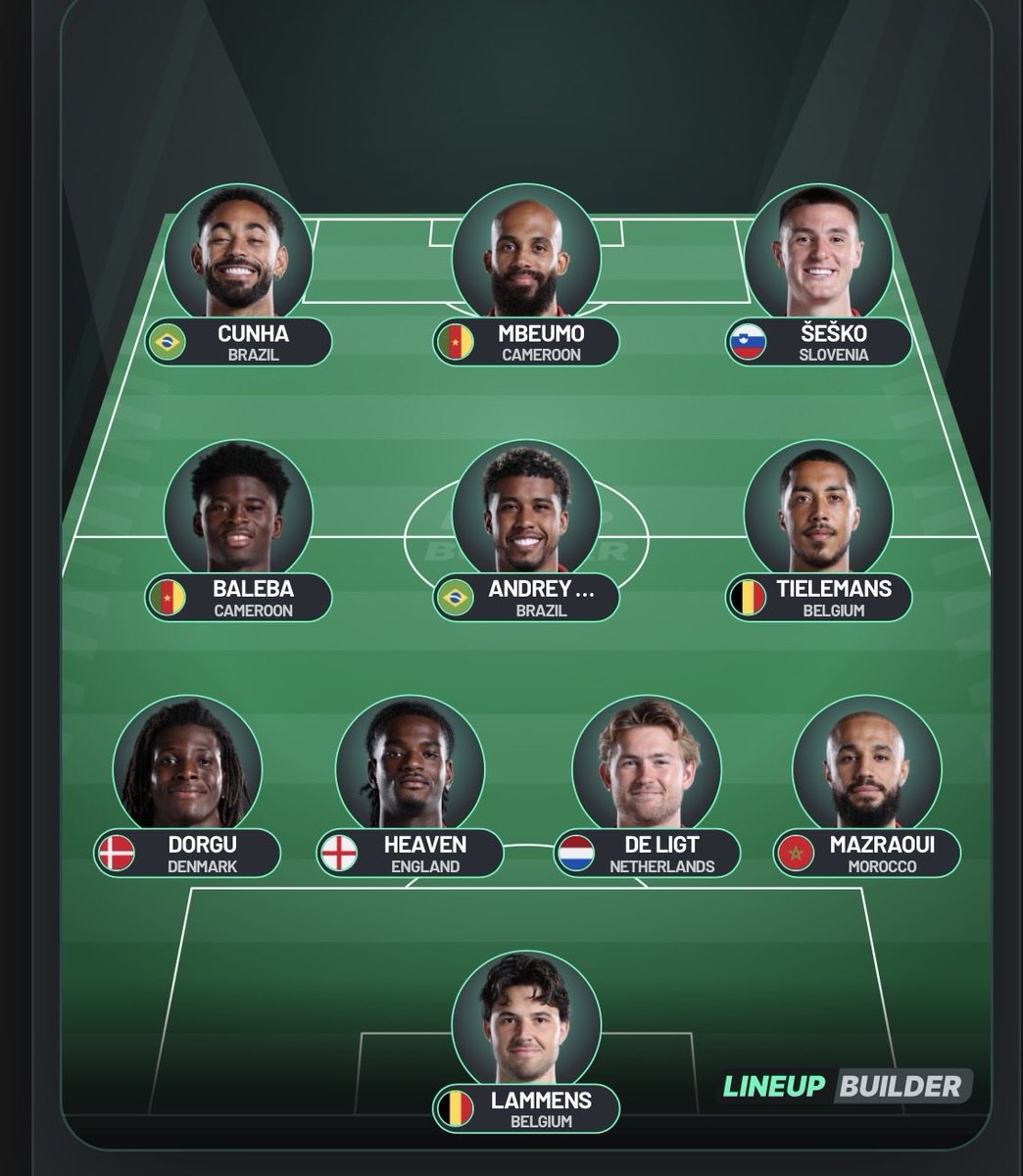
Add Zirkzee and Yoro look at this XI! This is Manchester United’s actual problem Ineos have signed enough players to build a new team. The signings simply haven’t been good enough, can’t stand talk about Shaw when a lot of you were putting your faith in Dorgu last season. Very basic fact in football you need to sign players who are significantly better than the ones you have to level up. It’s really that simple!
Ten women reported the same man at Cornell. TEN. And nothing was done to stop him. Then people turn around and ask why women don't report. Maybe start asking why nobody listens when they do.
He amputated a fully conscious 5 year old girl's leg hoping she would faint from the pain. Dr Mark Perlmutter is an American Jewish orthopaedic and hand surgeon who treated victims of 9/11, Hurricane Katrina and numerous other disasters before volunteering in Gaza in 2024 and returning in 2025. Some of the barbarity he saw. I've been going through a lot of these testimonies by physicians in Gaza, this is the first one that made me gag while listening. There is no form of pain depicted in the history of the horror movie genre that Israelis have not inflicted on people in Gaza.
1. For the first time in his life, he held a baby's brain in his hands. The child's head had suffered catastrophic injuries. It was the first of several such cases. He had spent decades operating in disaster zones. Nothing had prepared him for this.
2. He examined children shot twice, once in the chest and once in the head. The bullet wounds were extraordinarily precise. Perlmutter concluded that Israeli snipers were deliberately targeting children. He couldn't believe such injuries were accidental.
3. He removed shrapnel the size of his thumb from eight-year-old children. He saw children burned beyond recognition, crushed beneath collapsed buildings and missing entire parts of their bodies.
4. Nine-year-old Juri had maggots crawling inside her wounds. Parts of her thigh were missing. Surgeons removed nearly two kilograms of dead tissue. When she woke, she asked for her father. She feared he was dead. He was alive, desperately searching for food she might eat.
5. A mother named Israa had watched her four children disappear beneath their collapsing home. Perlmutter and his colleagues spent almost four hours operating on her shattered limbs and other injuries. She survived. Her family had been buried beneath the rubble.
6. Fifteen-year-old Rafiq was dying for want of an inexpensive feeding tube. He was severely malnourished, with devastating abdominal injuries and wounds that made sitting or lying on his back unbearable. His doctors warned that without evacuation, he would die. The equipment needed to feed him cost approximately $11.
7. He described amputating a five-year-old girl's leg without anaesthesia. The child remained conscious. The doctors sang to her as they worked, hoping she would faint from the pain.
8. A fifteen-year-old girl was shot while riding her bicycle. She arrived with catastrophic wounds to her limbs. According to accounts relayed to Perlmutter, an Israeli military helicopter had fired at her. He feared she might lose more than one limb.
9. Another fifteen-year-old was travelling with his grandmother when their car was struck. His grandmother died. The boy lost a foot, suffered extensive injuries to his remaining limbs and underwent hours of emergency vascular surgery. Perlmutter feared he might not survive.
10. A dying boy reached for his trouser leg. The child lay on the floor among the wounded, too weak to speak. Perlmutter knew he couldn't save him. Other patients still had a chance. He had to pull his leg away and move on.
Perlmutter estimated that the suffering he witnessed during his first week in Gaza exceeded everything he had encountered across decades of humanitarian missions.
He returned to America carrying photographs, medical testimony and memories of children he had been unable to save.
His work in Gaza also transformed his relationship with Israel, which he had previously supported.
He continues to speak publicly about what he witnessed.
He went to Gaza to repair shattered limbs. He returned determined to confront the world with the children those limbs belonged to.
Sources in comment. Apart from the video itself.
Not that it matters, because those who enjoy all this horror love to make it worse by denying it or regurgitating simpleton hasbarah excuses for it.
“Doesn’t this feel good?” I said no. He said, “Someday you’ll know what I’m talking about.”
Teri Hatcher was 5 when her uncle, Richard Stone, started. He would drive her places, pull over in a parking lot and touch her. She told no one. She became Lois Lane, a Bond girl, a Desperate Housewife. Then she read about a 14-year-old girl named Sarah who had shot herself with her father’s gun. Her note said: “You’re probably thinking a normal teenager doesn’t do this, well ask Dick. Please forgive me.” Dick was the same uncle. It should have been over right there.
In the video below, Teri tells Oprah what he did to her.
“He used to drive me places in the car and then pull over in a parking lot and touch me.”
“I remember the color of the carpet.”
“If I let sex feel good, then somehow he was right.”
It got worse. Stone admitted only to a “passionate kiss” with Sarah when she was 12. Police believed he had abused three more girls. None would testify, not even the 12-year-old Sarah had made a suicide pact with. A hearing to dismiss the case was set.
Teri remembered thinking: “He’s been doing this for 35 years. Who else has he done this to?”
Two days before that hearing, she sat down with police.
Stone pleaded guilty to four counts of child molestation and got 14 years. He died in prison six years later.
She had stayed silent for 30 years, sure she’d end up on a tabloid cover. Should she have spoken up sooner, or was that never a 5-year-old’s job?
Watch this interview with an 11-year-old Iranian whose sister was killed by the US in Minab--under Pete Hegseth as Secretary of War.
"It is truly damning that an 11-year-old is somehow displaying more integrity and moral clarity than Pete Hegseth that has shown in his entire fucking life." 👇🏽
This is why everyone is REALLY scared of him. He is very smart ! It’s been so long since we’ve seen such directness and accuracy. We need more leaders like him in government.