30 features of an AI native company:
1) Function-by-function process blueprint of your entire business.
2) Everyone in org using a daily driver harness like Grok Bot, Claude Cowork, ChatGPT at Work.
3) Centralized intelligence layer that aggregates structured and unstructured data, documents, and business logic into a single source of truth that is queryable & agentic work can be done on top of.
4) Model routing via OpenRouter, Ramp, etc that optimizes cost-per-successful-task across the business.
5) Treat context as code, ensuring architecture documents and conventions remain updated while allowing for diligent upfront planning.
6) Willing to throw away everything that you've built every three months and reimagine all your workflows.
7) A “skills distribution system” is used to manage agent behavior and optimize for token efficiency by ensuring developers trigger consistent skills throughout their workflow.
8) Separate technical implementation from high-level specifications, enabling non-technical staff to contribute in a format that agents can utilize to build technical implementation plans.
9) A key software metric is “cost per accepted PR”, with a focus on driving these costs down through better token efficiency.
10) An automated, agent-native development system where fleets of AI coding agents handle planning, writing, testing, reviewing, and shipping code while humans define the intent and acceptance criteria.
11) Heavy planning with higher-effort models and executing with cheaper, faster models.
12) Agent harness that uses CLI tools to parse metadata within markdown files to traverse dependency relationships, allowing agents to be granular in their input token usage.
13) Finance org that runs processes continuously in accounting (record-keeping) to re-define/reset forecasts on a much, much tighter cadence.
14) Financial models embedded in the underlying OS across the org to help drive reasoning.
15) Citizen Developer SDLC where non-technical employees can take a solution from idea to production with governance, access, versioning, and software conventions built in.
16) Closed loop, self-improving non-engineering workflows that learn from previous runs based on external performance metrics or internal evals.
17) AI ROI framework that includes experimental phase, scaling phase, and optimizing phase with bets sitting in 3 buckets: infrastructure, innovation, and efficiency.
18) Paid marketing motion that uses agent swarms to deploy thousands of pieces of creative for testing, before increasing spend on human-generated ads.
19) AEO/SEO engine that audits, rewrites, and (ideally) generates SEO/AEO-optimized blogs on a weekly basis, and then measures if any of it worked.
20) Agentic cyber security solution that fights AI with AI.
21) Combo of RL gym and first-party data to fine-tune open source models on high-volume processes that need SOTA performance at reasonable cost.
22) Human touch and judgement gets reserved for the first and final mile of most processes.
23) Evals are core infrastructure of your business. Anytime new models come out you have an apparatus for testing cost & performance against core processes.
24) Everyone is a builder. Especially C-level execs.
25) Everything gets recorded because what you don’t capture can’t be turned into ai-enabled work.
26) Legal, HR, and IT work in lockstep with owners of AI agenda so that business’ ass is sufficiently covered without slowing down transformation.
27) Bias to disrupting yourself before being disrupted by others.
28) Guardrails before features. Agents inherit the permissions of whoever is asking, enforced in the data layer.
29) Earned autonomy. Feedback feeds the evals that gate each new version, and agents move up a ladder as they clear it: observe, suggest, act with approval, act alone. The endpoint is agents running whole workflows inside a defined boundary, with humans setting the standard instead of checking every answer.
30) Traceability as the training signal. Trace every output to its prompt, model, data, and approver, so human feedback attaches to something specific rather than a vague sense that something is off.
What's missing?
India's 700 million+ WhatsApp users are now seeing AI become more accessible.
Language accessibility might not be the strongest competitive advantage in AI. But it's intriguing to see how such technology is adopted by those who aren’t tech savvy.
https://t.co/6Zil6BPNBX
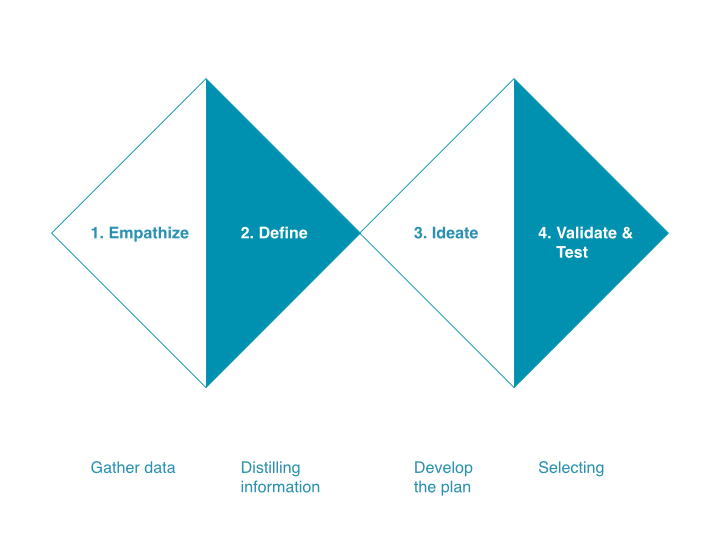
The last step is to validate your birthday plan.
Share your prototype with friends and get their feedback on their thoughts.
They didn't like your idea? Thats fine. Design thinking is an iterative process. Start from step 1 and run through the cycle again!
Looking to plan a Summer outing? Maybe a birthday? Design Thinking, a tool beloved by top companies and innovators, might just be your best event planner!
Let me show you how you can plan out your perfect birthday with #DesignThinking
@DanBesbris congratulations on the move! Been listening to you for a few years now.
I work with AI application development, and have a proposition to help you with newsletters and analysis. Hit me up if interested, would love to chat!
I've been looking for a AI agent that can search through your inbox, and provide some automation. E.g a customer contract with an expiry date, with an automation for a notification 30 days prior to contract expiry.
I would assume a @langchain based solution could be possible.
Here are some non-AI alternatives I have come across:
1. RPA: Use robotic process automation to have it scan the email subject line and attachments to have the email categorized, and actioned on with a specific action step
2. Process Mining: (https://t.co/tVqNntJs59): Use a platform like @Celonis to use process/task mining to search through your emails. Based of my knowledge this has its limitations, as it can't search through email attachments, but is more cost effective then any RPA development.