Good afternoon, @caesarzvayi
In March 2023, I went to see President Ian Khama at his home in Johannesburg, and we discussed many things around his presidency. I raised your issue with him, and his perspective was very interesting.
He said to me:
“Hopewell, it is difficult to understand how someone can support ZANUPF, its atrocities, its failures, its mismanagement of the Zimbabwean economy, and all the killings it continues to carry out.
Then that person leaves that failed country, that reign of terror, abuse, mismanagement and everything that comes with it behind. They go to a country called Botswana, where they are enjoying freedoms that are being denied in the country they left, yet they continue to support the denial of those same freedoms to Zimbabweans by ZANUPF.
Such a person should ask themselves whether it is right to enjoy freedoms in Botswana while supporting a political party that denies those same freedoms to Zimbabwean citizens at home. And then they write about it regularly, supporting the oppression of their own people.”
He added;
“Why should such a person escape the dysfunctionality of Zimbabwe, a country that cannot even provide adequate employment opportunities, when he supports the very system responsible for that dysfunctionality? He escapes that madness by going to Botswana, where he gets a job and enjoys the freedoms and opportunities that Zimbabweans are denied.
We would rather have a victim of that system in Zimbabwe come to Botswana, if they have the necessary skills, and get a job than employ people who have supported and helped create a political menace for Zimbabweans, only to reward them by giving them jobs in Botswana.”
That is what President Khama said to me about your case, Caesar.
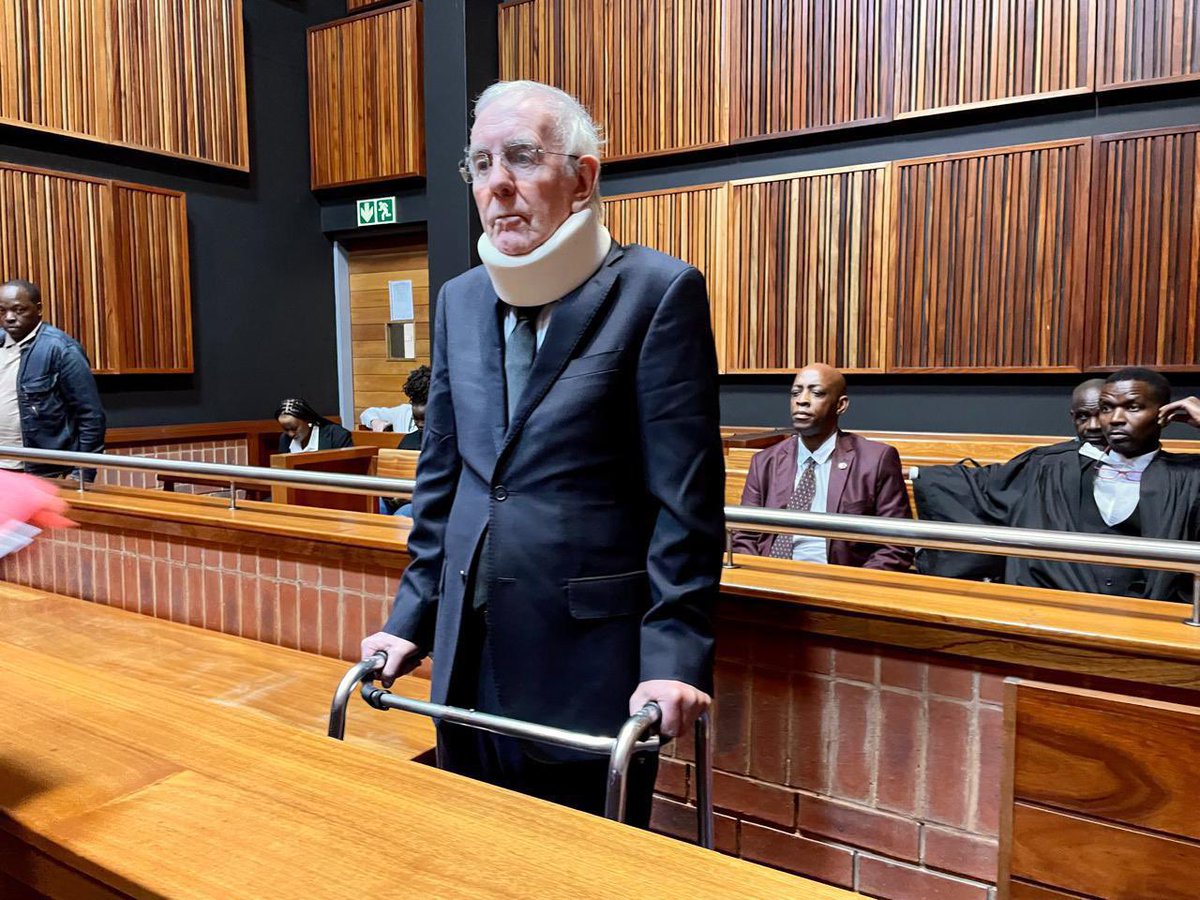
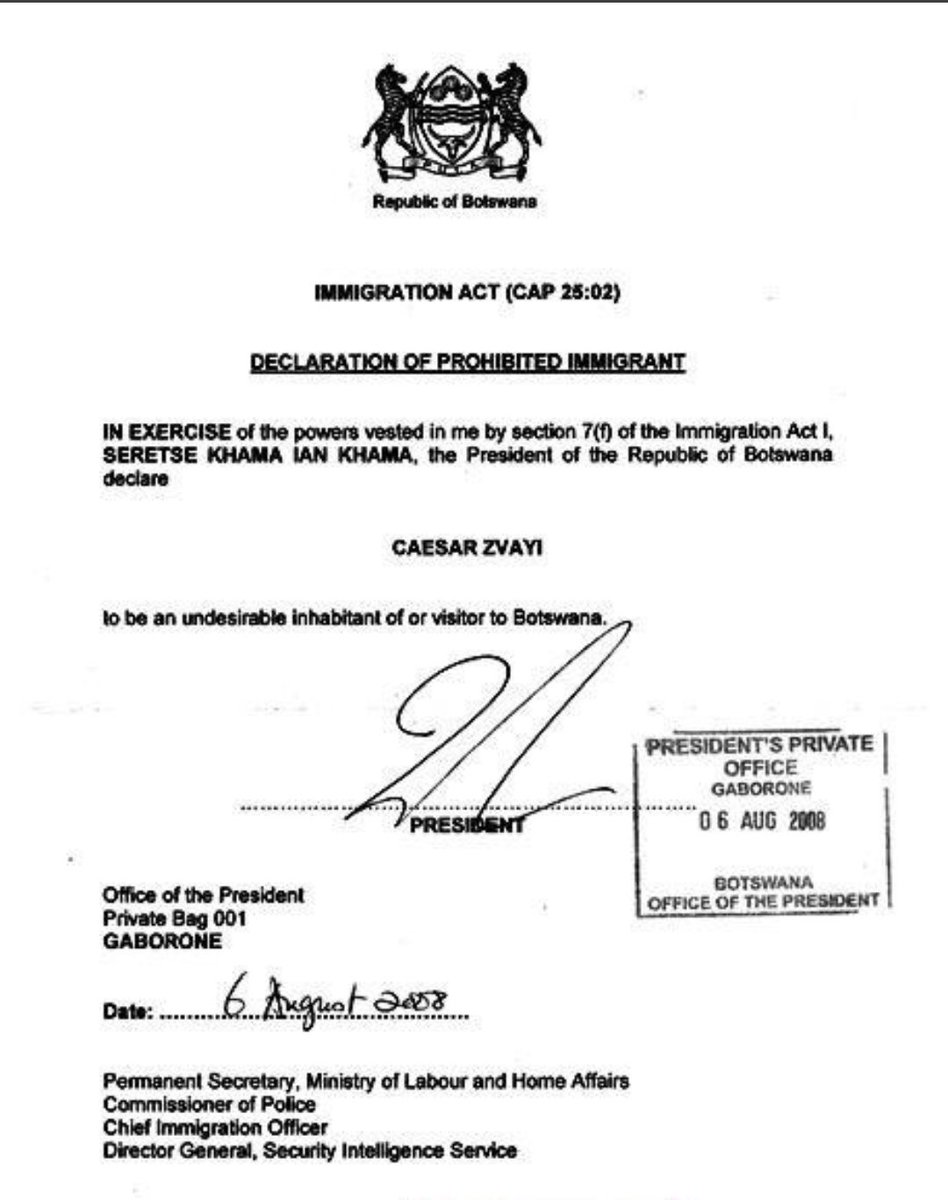
On this day in 2008, I was dragged from my office @ the UniversIty of Botswana, taken to the chief immigration officer of Botswana who tore my work & residence permits before being driven to Ramokgwebana Border Post where I spent a night in the cells before being booted across the no-man's land to Plumtree Border Post.
My "crime" . . . I was accused of being part of "Mugabe's inner circle" after being put on EU sanctions.
#StillIRise! @BWPresidency@BWGovernment@UBBotswana@SeretseII
You should have mentioned that the private investors are Donald Trump’s family. So, my dear friend, do not forget that a lot of serious people in football are upset about the shambolic World Cup that took place in America, where Donald Trump publicly said that he had influenced the decision to have the red card for the American player rescinded.
If that is what private capital is going to do in the World Cup, that is exactly what many of the people pushing back are pushing back against.
And where did the FIFA president get these investors without even talking to anyone or putting it out to tender so that people could choose which investor was better? Why would he bring in Trump’s family as investors without discussing it with anyone?
The legitimate criticism is about governance, transparency, valuation and whether private investors should receive an economic interest in FIFA’s commercial assets. That is a serious debate.
FIFA wants to put more development money into marginalised nations, particularly in Africa, by selling a minority stake in its commercial entity to investors. Based on the initial valuations, each member country could receive an additional US$20 million immediately for development.
It is easy to see why Europe might say no. US$20 million is small change for the major footballing nations. But for us in Africa, US$20 million per country could make a huge difference, particularly in grassroots development and football infrastructure.
If Europe does not want this proposal, the obvious question is: what are they offering as an alternative?
PS. Why is the media against this wise proposal? And what alternative are they offering?
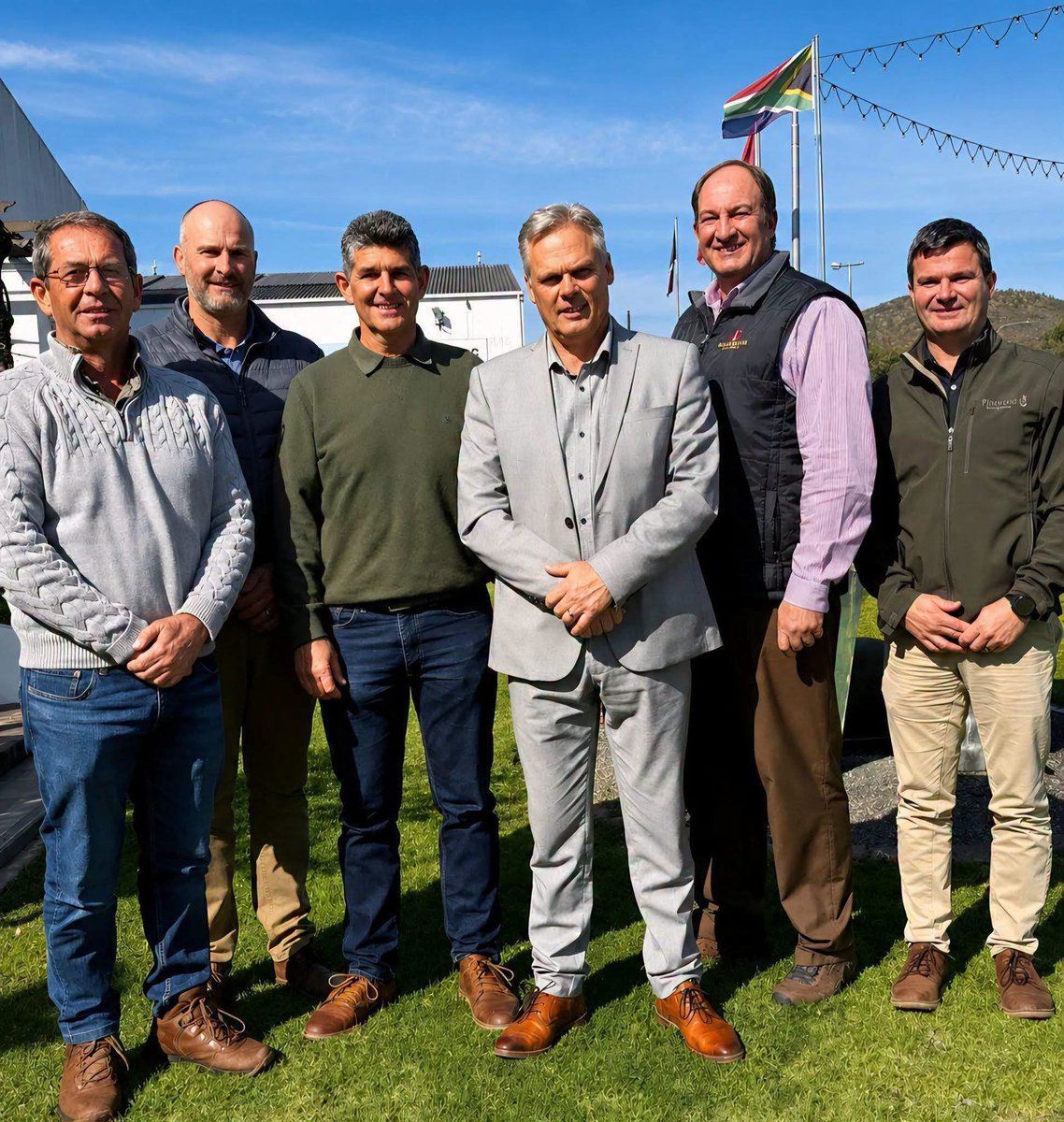
You used the word “kwerekwere” thinking that you are insulting a fellow African. These pictures were taken today, it is not KZN. This is in Malawi today! The man wearing the blue top is one of Malawi’s two Vice Presidents.
That is why educated South Africans laugh at “patriots” who are seen swooning before white folks while calling Malawians “Kwerekere”. Ignorance is bliss.
And here is the irony. Malawi itself has a significant Ngoni population whose historical roots are in the Nguni peoples of present-day South Africa. The M’mbelwa Ngoni of northern Malawi trace their origins to Zululand, while the Maseko Ngoni of central Malawi have historical links to the Nguni migrations from the south.
They migrated north during the upheavals of the 19th century and established powerful kingdoms in what is now Malawi.
So when some South Africans like you use “Kwerekere” as a term of contempt for Malawians, they should perhaps remember that the history of Southern Africa is far more interconnected than their narrow nationalism suggests. People, cultures and royal lineages crossed today’s borders long before these modern countries existed.
So when you use the nasty, cruel and dehumanising word “kwerekwere” to describe fellow Africans, look yourself in the mirror. You are insulting people whose history, culture and bloodlines are deeply intertwined with your own. Southern Africa’s borders are relatively recent. Our peoples have been moving, mixing and building communities across these borders for centuries.
Before looking down on Malawians, Zimbabweans, Mozambicans or any other Africans, perhaps learn your own history first. Ignorance is bliss, but it does not make contempt any less ugly.
Well, in that case, South Africans should have learned from what happened in Zimbabwe: you do not simply kick people out, as Zimbabwe did with white commercial farmers, if you do not have the replacement skills and capacity to take over from them immediately.
You first develop the skills, train people, build the necessary capacity and have qualified people ready to take over. Then, if you still want to remove those who are already there, you can do so knowing that the economy will not be disrupted.
Whatever you want to call it, the fundamental principle is simple: if you remove people from an economy, you must be prepared to immediately replace the skills, businesses and services they were providing.
If you kick people out without having the replacement skills because a politician has comically convinced you that foreign nationals are the problem, you should not be surprised when the consequences come. When shops and factories close down, there is less competition, fewer goods and services, fewer jobs and, ultimately, higher prices.
People should therefore be very careful about politicians who offer simple scapegoats for complicated economic problems. Removing people does not automatically create skills, businesses or jobs. An economy needs capacity, competition and skills. Remove those without replacing them, and ordinary consumers will ultimately pay the price.
Weeks after xenophobic protests drove thousands of migrant workers from South Africa, rows of sewing machines stood idle at a clothing factory in Newcastle, a manufacturing hub in the eastern province of KwaZulu-Natal.
🔗 Read the full story online: https://t.co/NoX5OLFlf5
@daddyhope You are the King in X ( tweeter). I will never jump your tweet. You write simple English for everyone to understand. I salute you my brother.
X (Twitter) is ending its existing Creator Revenue Sharing programme and introducing a new system designed to reward creators for producing original work rather than generating engagement through recycled or repurposed content.
The new system is designed to reward original reporting, analysis, commentary, videos, threads, graphics, humour and other original work. This represents a significant shift in how creators can earn money on the platform, with greater emphasis on the value and originality of what they produce.
For journalists, analysts, commentators and other creators who consistently produce their own material, the change will be significant.
Instead of rewarding content primarily because it attracts engagement, X is seeking to place greater value on creators who contribute original material to the platform. The message from X is that only originality matters.
https://t.co/CsatNgEnRT
Sad. He was a rock of strength and support throughout Lionel Messi’s career, standing by his son through the highs and lows and playing an important role in his journey to becoming one of the greatest footballers of all time.
The truth is that Zimbabwe does not have enough reliable electricity generation to meet its needs.
The country is currently producing around 1,500 MW at peak, while its suppressed demand is estimated at about 2,200 MW, meaning there is a gap of roughly 700 MW before even allowing for a proper reserve margin.
Independent energy-sector data also puts reliable generation as low as about 1,049 MW at times, with roughly 400 MW being imported.
TM Pick n Pay Zimbabwe used a staggering 2.04 million litres of diesel in 2023, at a cost of approximately US$3 million, to run backup generators because of persistent electricity shortages.
That works out to roughly US$250,000 a month, or about US$8,200 every day, just to keep its supermarkets operating when the national electricity grid could not reliably supply them.
The figure shows the enormous economic cost of Zimbabwe’s electricity crisis, money that should be going into expanding the business, creating jobs and reducing prices is instead being burned in diesel generators simply to keep the lights, refrigerators and freezers running.
@daddyhope I was thinking that there were two new units installed at hwange,and that currently there is sufficient water in Kariba ,aren't these the major contributors?
WATCH | SABC News reporter Vanessa Poonah brings the latest details from the Operation Ubuntu march in the Western Cape, where the group is calling for an end to violence against migrants in the country.
I plead with you all to RETWEET this post to help save the life of this one-year-old child, who desperately needs an operation in India.
Her mother is donating part of her own liver so that her child can survive and have a chance at life.
Please donate if you can. If you cannot contribute financially, simply RETWEET and help us reach people who may be able to help.
Every retweet could make a difference. 🙏🏾
https://t.co/eSCWIH5HvX
WATCH | Operation Ubuntu coordinator General Moyo alleged that the police are failing to act against vigilante groups. The group is calling for an end to violence against migrants and stronger protection for vulnerable communities across the continent.
Zimbabwe still has serious electricity shortages, but the reason you do not hear about them as much as you did five years ago is that many companies have simply gone around the problem by building their own electricity generation capacity, mainly through solar.
In the past, companies relied heavily on diesel generators. But generators are expensive to operate because you have to keep buying diesel, and the costs quickly become unsustainable.
Solar requires a significant upfront investment, but once installed, the operating costs are much lower. Many businesses have therefore invested in solar systems, batteries and other alternative sources of electricity.
The same thing happened in South Africa during the worst years of load shedding. The government has done a lot to improve the electricity situation, but the untold story is that many people and businesses, particularly in affluent suburbs, have also gone partly or completely off grid. They no longer depend on Eskom or municipal electricity to the same extent they used to.
In Johannesburg, for example, City Power has been inspecting properties where electricity consumption has changed significantly, checking for meter tampering and other issues. One reason is that many households and businesses have installed solar and battery systems and are drawing far less electricity from the grid.
The same transformation is happening in Zimbabwe. In the industrial sector, many companies have built their own generation capacity, particularly through solar, and some have also installed substantial battery storage systems.
This does not mean Zimbabwe has solved its electricity crisis. Shortages are still there, but the economic impact is less visible because a growing number of companies are no longer entirely dependent on the national grid.
The grid has not necessarily become reliable. In many cases, the users have simply stopped depending on it.
Donald Trump’s tariffs on South African exports, combined with South Africa’s high production costs, particularly labour costs, contributed to the shutdown of this component of the business.
The company could no longer remain competitive under the increased cost pressures and unfavourable trading conditions.
ZIMBABWE'S PREMIER FOODS TO CLOSE SOUTH AFRICAN 🇿🇦 PLANT AS PRODUCTION SHIFTS TO HARARE
Premier Foods plans to close its Tulbagh fruit canning plant in South Africa, putting thousands of jobs at risk. The company says it is increasing production in Harare, Zimbabwe.
The Congress of South African Trade Unions (COSATU) has strongly condemned the planned closure, warning it could affect factory workers, farm workers, and local fruit producers. The union has urged Premier Foods to halt the retrenchment process and find an alternative solution.
Michael Lomas, who admitted to his role in the R745 million Eskom corruption scheme, received a wholly suspended sentence under a deal with the IDAC. His Black co-accused, Maphoko Hudson Kgomoeswana, was sentenced to 5 years’ direct imprisonment for stealing R6 million.
It gives me great pleasure when my followers take something I share, put it into practice, and see real results. This lady is one of them. Out of my more than two million social media followers, if even one person transforms their financial future by acting on the information I share based on my experiences, that alone makes me very happy.
I want to remind both South Africans and foreign nationals that South African banks offer mortgage finance to both locals and foreigners. Even if you do not live in South Africa and do not have a South African residence permit, you can still apply for a mortgage.
In many cases, banks will finance up to fifty percent of the property’s value, while you provide the remaining fifty percent as your deposit if you are a foreign national who doesn’t live in South Africa.
What the bank wants to see is proof that you have the financial capacity to repay the loan. That means providing bank statements from your home country, evidence of your income, and a good financial and credit history.
Property remains one of the most reliable long term wealth building assets. If you buy a property today and sell it ten years from now, you benefit in two ways. First, you earn rental income throughout the period, which can help cover your bond and other costs. Second, the property’s value is likely to appreciate over time, allowing you to build equity and realise a capital gain when you eventually sell.
Cape Town has been one of South Africa’s strongest performing property markets in recent years. Demand has consistently outstripped supply in many areas, driving significant price growth. One of my followers bought a flat in Cape Town in 2024 for R820,000, and it is now valued at R1.2 million. In early 2025, she bought another property for R2 million, which is now valued at R3.3 million. Those are remarkable returns which she is getting through bank loans.
If you have the means to invest and you are thinking long term, take the time to understand how the South African financial system works. Opportunities exist, but they reward those who educate themselves and act.
You do not need a middleman. Go directly to a bank, where they will assess your financial position, credit history, income, and affordability. If you qualify, they will give you a pre-approval or indicate the maximum amount they are prepared to lend you.
Once you know your budget, you can start looking for properties on online property portals such as Property24 https://t.co/NKXVZ9tynD. This approach saves time because you will be searching for homes that fall within your approved price range, and sellers will also take your offer more seriously because your financing has already been assessed.
PLEASE RETWEET TO HELP SAVE THE LIFE OF THIS ONE YEAR OLD GIRL.
Naomi Chigwada is battling for her life and needs an urgent medical operation in India because the medical facilities in Zimbabwe are unable to perform the life-saving liver transplant she urgently needs. Donate whatever you can to help this little girl.
https://t.co/eSCWIH5HvX