Just to inform everyone :
I don’t have the money or wherewithal or need to hire any PR firms/ groups
Anyone claiming to represent me is just Mauke Pe Chauka types.
Thank you for your kind attention to this matter
Swami Vivekananda — Life in Simple English
Part 3 of 7: The monk with no money and one mission
In 1886 Sri Ramakrishna died. Narendra felt lost. Then he understood: his teacher had prepared him for a larger work.
He gave up worldly life. He took the name Swami Vivekananda. With other disciples he began to spread the teaching: God in every person, service as worship.
Life as a monk was not easy. He wandered from village to village with no money, no food, and no place to stay. When people insulted him or turned him away, he only grew stronger.
He believed a simple rule: “Strength is life. Weakness is death.”
In 1893 he received an invitation to represent India at the World’s Parliament of Religions in Chicago. This was his chance to share India’s spiritual wisdom with the world.
There was one problem. He had no money for the journey.
He wrote to his followers. Some sent money. Others sent clothes and supplies. With their help he boarded a ship to America.
The voyage was hard. He faced racism, hunger, and doubt. He did not complain. He kept his eye on one goal: help the world see India’s spiritual heritage with respect.
A fellow traveler asked why he spoke kindly even to people who insulted him.
Vivekananda smiled. “My mother taught me that a knife can harm or help. I choose to use my words to heal, not to hurt.”
Swami Vivekananda — Life in Simple English
Part 2 of 7: The teacher who had seen God
“Have you seen God?”
Narendra asked that question all his young life. Then he met Sri Ramakrishna, a simple spiritual man. Ramakrishna answered, “Yes. I see God as clearly as I see you.”
That meeting changed everything. Ramakrishna became a father figure, a guide, and the key to Narendra’s true strength.
He taught two lessons that became Vivekananda’s mission:
1. God lives in every human being.
2. Serving people is the greatest worship.
“If you want to see God,” Ramakrishna said, “serve the poor, the hungry, and the needy.”
Narendra still wanted proof. “How can I believe in God if I have not seen Him?” Ramakrishna smiled. “Close your eyes and meditate. You will feel God within you.”
At first Narendra doubted. Later he felt something deep. God was not only in temples or books. God was in every living being.
He also loved learning. He sat for hours with books on philosophy, science, history, and spirituality. Once he finished a library book in a single day and returned it the next morning. The librarian did not believe him.
“Ask me anything from the book,” Narendra said. He answered every question correctly.
He used to tell others, “Fill your mind with high thoughts, and you will always walk with your head held high.”
His secret was focus. Friends once talked loudly while he studied. Later they asked if they had disturbed him. He looked up, surprised: “I did not even hear you.”
As people admired him, a wealthy woman said, “You are brilliant and handsome. Will you marry me?”
He smiled. “I am already married to truth and knowledge.”
He would not let praise or comfort pull him from his path.
The 48 Laws of Power - Robert Greene
Law 29: Plan All the Way to the End
Think beyond your next move. Consider possible consequences and obstacles so you know where you’re going and when to stop.
Law 30: Make Your Accomplishments Seem Effortless
Let your results look natural and smooth. You don’t always need to reveal all the hard work and preparation behind them.
Law 31: Control the Options—Get Others to Play With the Cards You Deal
Shape the available choices so that whichever option is selected still works in your favor.
Law 32: Play to People’s Fantasies
People are often attracted to hopeful and appealing possibilities. Understanding what they want to believe can make your message more persuasive.
Sam Altman, CEO of OpenAI:
“You don’t need to write prompts anymore.”
In just 27 minutes, he explains how to use ChatGPT in ways most people haven’t even explored yet.
This was a talk he gave to Stanford students. A friend sent me the recording last night.
After watching it, I realized I was barely using 15% of what ChatGPT can actually do.
Watch the full talk, then check out the guide below on how to build a system that can prompt itself.
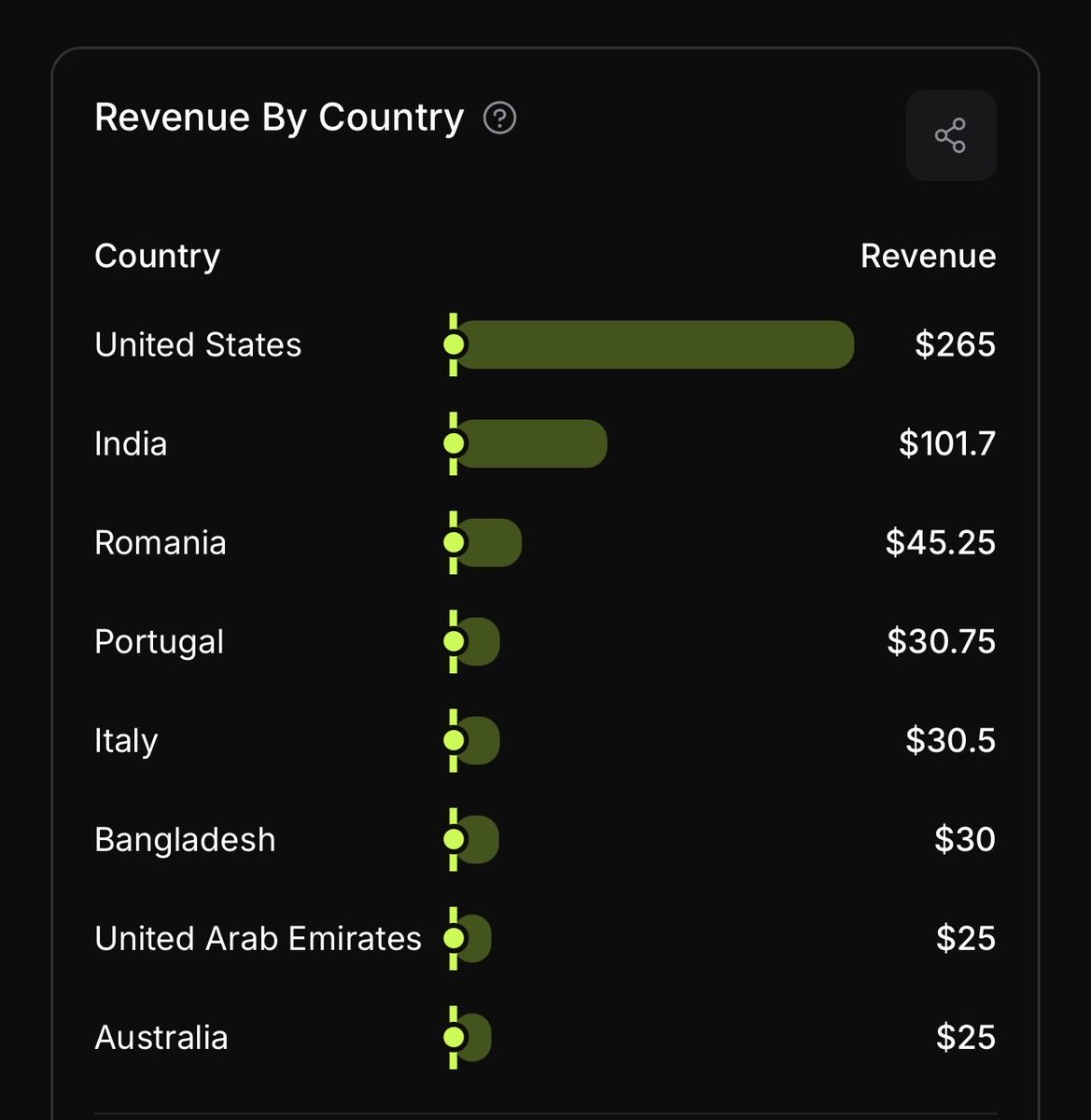
Everyone says India 🇮🇳 is the hardest market to sell SaaS
Yet India is the 2nd highest revenue source for my SaaS
If your product solves a real problem, people will pay for it 🙌
The colon in your YouTube title is costing you views.
I studied 5.9 million videos with TubeAI.
Titles using "Topic: Subtitle" did worse in every niche.
Brackets do the opposite. Only 13.3% of creators use them and they carry a 30.9% lift.
This is because a colon splits an idea in half whereas a bracket adds a second hook to the same title.
"Trump's Warning: The Phrase Every President Uses Before a Currency Reset" becomes:
"The Phrase Every President Uses Before a Currency Reset (Trump's Warning)"
Replace colon titles with brackets.