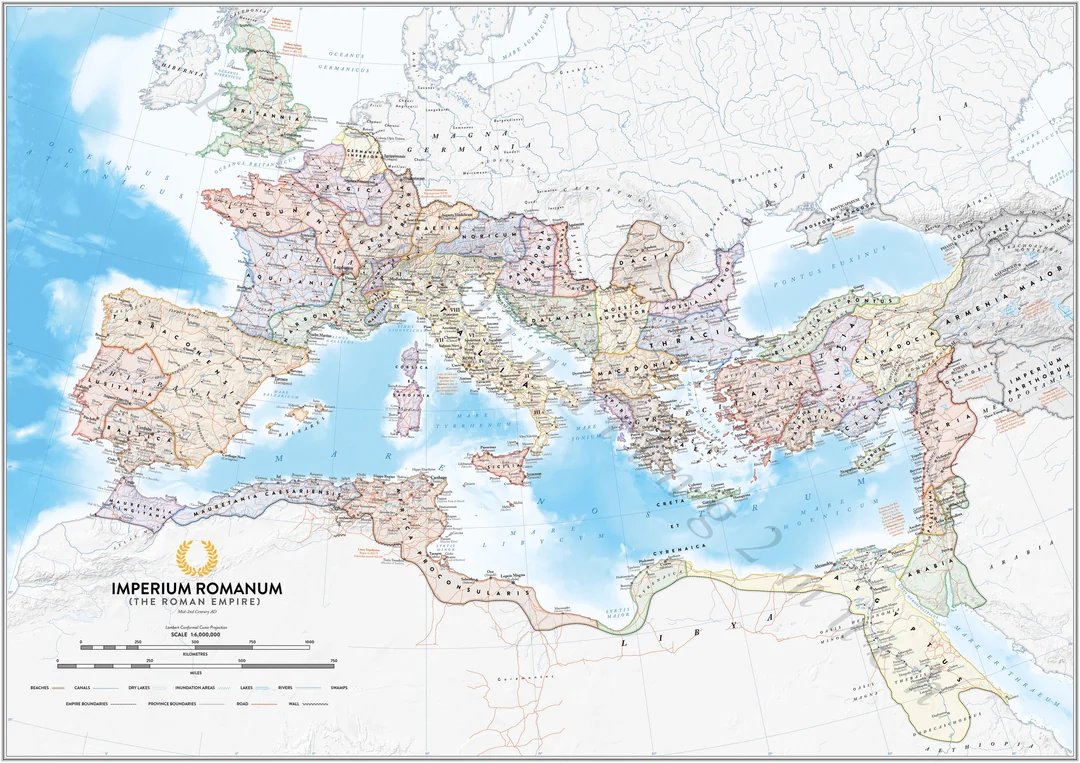
Map of the Roman Empire in the mid-2nd century.
At this point in time the Empire was experiencing the famous Pax Romana (Roman Peace). While wars on the frontiers were still fought often, the internal functions of the Empire was characterized by unprecedented stability, economic prosperity, and architectural achievement.
Some interesting facts about the Pax Romana:
🏺The Empire contained an estimated 50 to 60 million inhabitants, representing roughly one-fifth of the entire global population at the time.
🏺The city of Rome peaked at a population of approximately one million residents, a level of extreme urbanization that would not be seen again in Europe until the Industrial Revolution in the 19th century.
🏺The Roman denarius was the universal silver coin of the realm, enabling a highly integrated, monetized economy that stretched across thousands of miles.
🏺The professional military consisted of roughly 30 active legions. Combined with auxiliary units, the total armed forces numbered between 350,000 and 400,000 men.
🏺The Empire was bound together by over 50,000 miles of paved, highly engineered roads, designed primarily for the rapid deployment of legions rather than civilian travel.
Map Credit: Reddit (procrastinating2much)
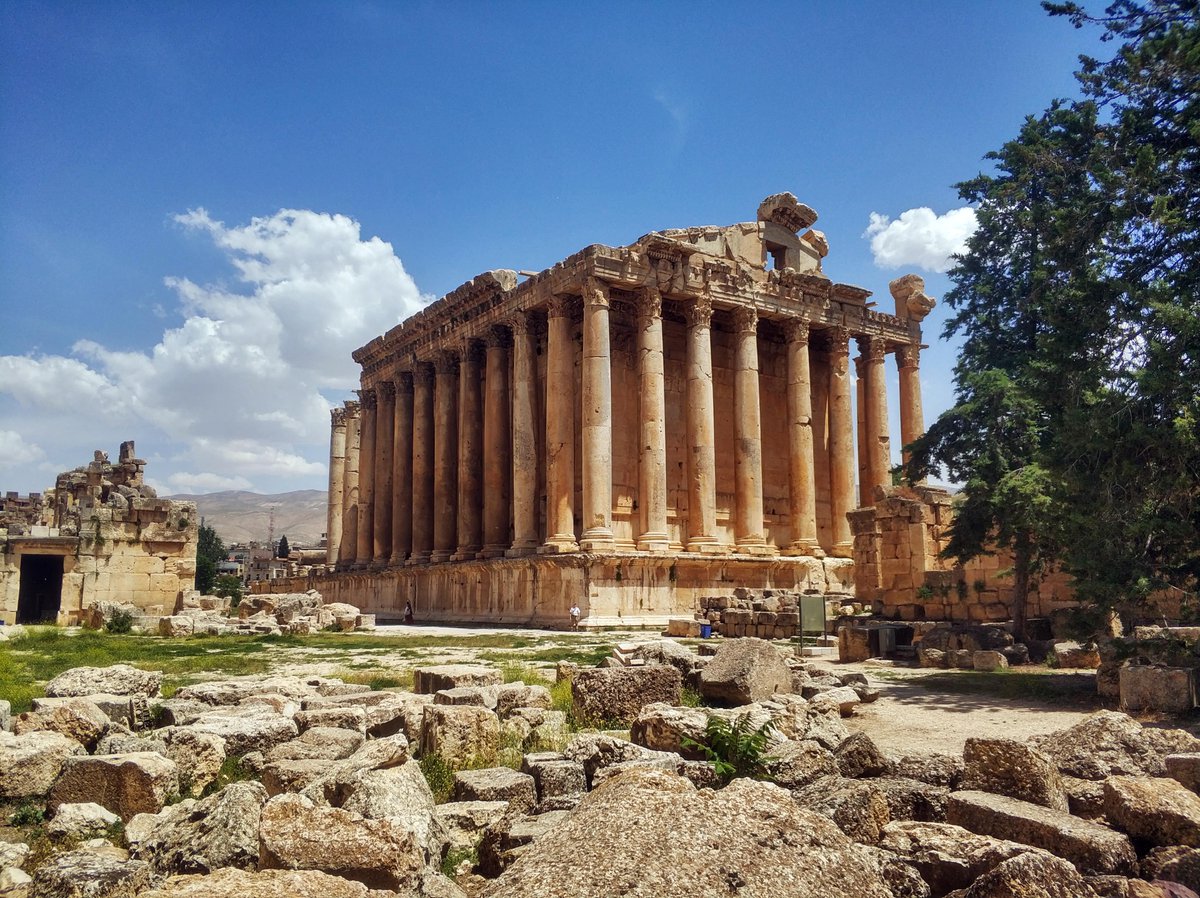
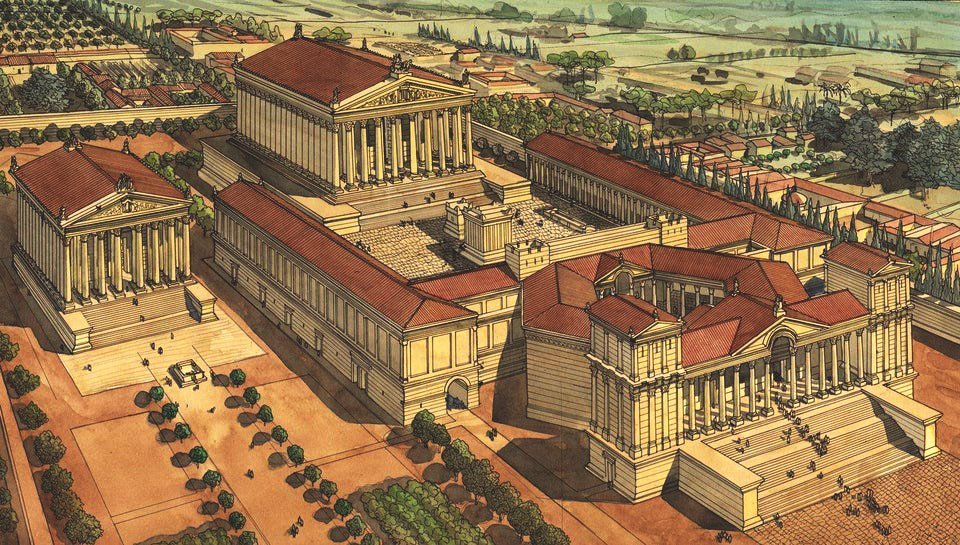
🏺The largest Roman temple ever built stood far beyond Italy, deep in Lebanon’s Beqaa Valley.
Built atop an ancient Phoenician shrine to the storm and sun god Baal, the Temple of Jupiter at Baalbek was largely completed around 60 AD during the reign of Nero, with expansions continuing through the rule of Caracalla.
At its peak, the structure reached over 110 feet in height equivalent to a 10-story building.
Its towering columns remain widely considered the tallest classical pillars ever erected in the Roman Empire, easily dwarfing those of the Pantheon and the Roman Forum.
🏺Leptis Magna was situated on the Mediterranean coast of North Africa in the region of Tripolitania, near modern-day Khoms, Libya.
Its position along a natural harbor made it a critical gateway connecting Trans-Saharan trade routes to the rest of the Roman Mediterranean.
Originally founded as a Phoenician trading post around the 7th century BC, the city grew into an economic powerhouse under Roman rule. It served as a primary export port for olive oil, exotic animals for amphitheater games, grain, and slaves.
The city reached its zenith under Emperor Septimius Severus (reigned 193–211 AD), who was born in Leptis Magna.
At its peak in the early 3rd century AD during the Severan dynasty, Leptis Magna supported an estimated population of 80,000 to 100,000 residents. Making it one of the largest and most prosperous metropolises in Roman North Africa alongside Alexandria.
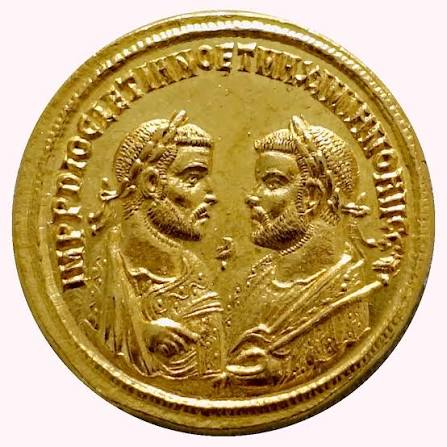
ON THIS DAY IN ROME: Diocletian Appoints Maximian
🏺Faced with widespread rebellions, economic chaos, and foreign invasions across vast frontiers, the Emperor Diocletian realized the Roman Empire was too large for one man to rule alone.
🏺On July 21, 285 AD, Diocletian elevated his trusted military comrade Maximian to the rank of Caesar (junior emperor), granting him control over the western half of the empire while Diocletian retained the east.
🏺This critical decision laid the groundwork for the Tetrarchy ("Rule of Four"), a radical administrative system that temporarily stabilized the empire and brought an end to the chaotic Crisis of the Third Century.
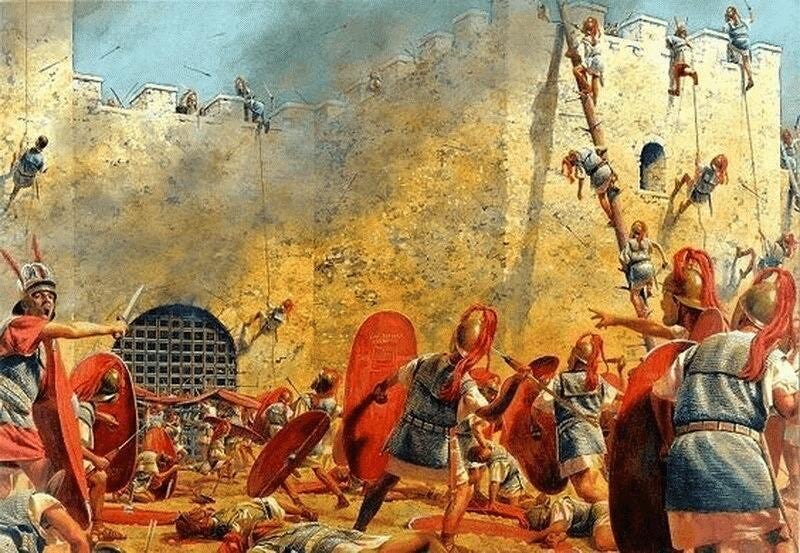
ON THIS DAY IN ROME: On or around July 20th, 70 AD, the Roman army executed a daring assault on the Fortress of Antonia, the massive military stronghold built by Herod the Great that overlooked the north side of the Temple Mount.
For months, the Roman commander Titus (son of the Emperor Vespasian) had his legions pinned down trying to breach the formidable, multi-layered defensive walls of the city to crush the First Jewish-Roman War.
🏺 After repeatedly failing to batter down the walls, a small group of Roman soldiers covertly scaled the ramparts at night, surprised the guards, and secured a foothold.
🏺 The fall of the Antonia fortress stripped away the last major defensive shield protecting the Second Temple. With the fortress captured, the Romans dismantled it to build massive siege ramps directly targeting the inner temple courts, sealing the fate of the city which would fall entirely just weeks later.
On this day, in 1203, the knights of the Fourth Crusade launched a massive assault on the walls of Constantinople.
The Eastern Roman Emperor, Alexios III, panicked and fled the capital into exile.
This shattered the city's reputation of invincibility and marked the beginning of the end for the Eastern Roman Empire.
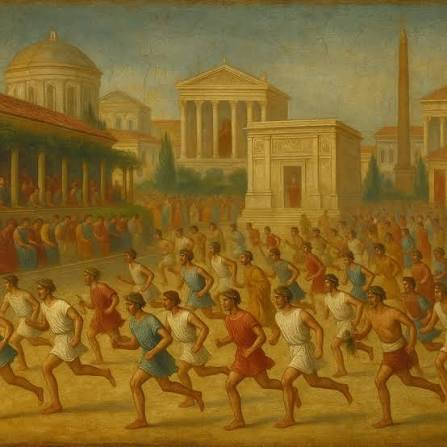
ON THIS DAY IN ROME: Transvectio Equitum: Rome instituted a massive, permanent annual cavalry parade on July 15th to celebrate the victory and honor the Roman knightly class (the Equites).
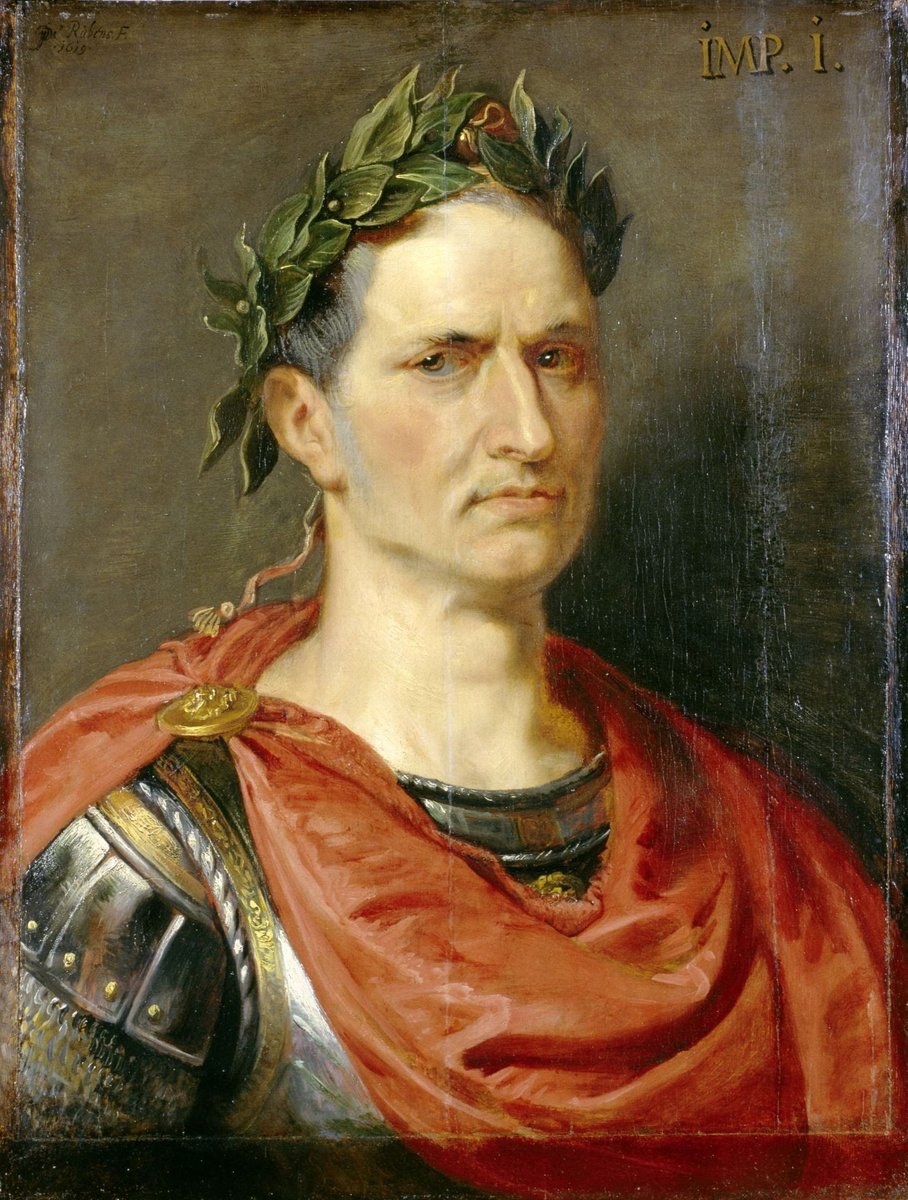
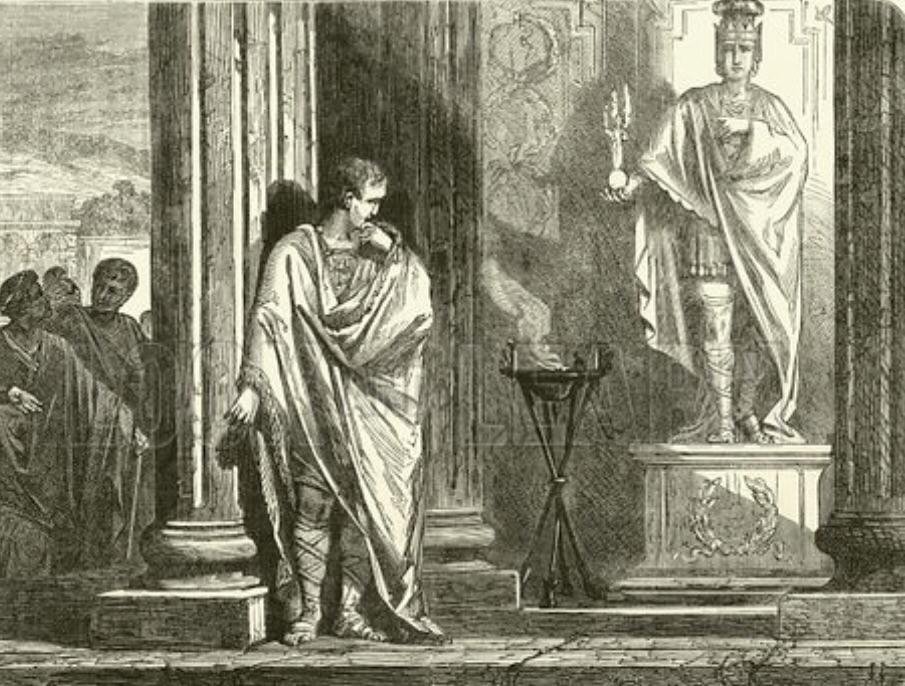
According to Suetonius and Plutarch, Caesar was visiting the city of Gades (modern-day Cádiz) on official business. While there, he visited the famous Temple of Melqart (whom the Romans identified as Hercules).
Inside the temple stood a bronze statue of Alexander the Great.
As Caesar stood looking at the statue, he suddenly broke down and began to weep openly.
When they asked him what was wrong, Caesar sighed deeply and said:
🏺"Do you think I have not just cause to weep, when I consider that Alexander at my age had already conquered so many nations, while I have as yet done nothing memorable?"
ON THIS DAY IN ROME: Caesar Publius Aelius Traianus Hadrianus Augustus (Hadrian) died of chronic heart failure at his luxury imperial villa in Baiae (near modern-day Naples) at the age of 62.
🏺Unlike his predecessor Trajan, who expanded the empire to its absolute geographic peak, Hadrian pivoted inward and fortified Rome's defenses along along the Empires frontiers.
🏺He spent more than half his 21-year reign touring the provinces, standardizing Roman law, and fortifying frontiers.
🏺He famously ordered the construction of a massive stone barrier across northern Britain that still bears his name (Hadrian's Wall).
🏺Hadrian hand-picked his successor, Antoninus Pius, who assumed power on the same day.
🏺Rome entered a 23-year period of unprecedented peace and financial stability under Antoninus Pius, paving the way for the eventual golden age of the philosopher-emperor Marcus Aurelius.
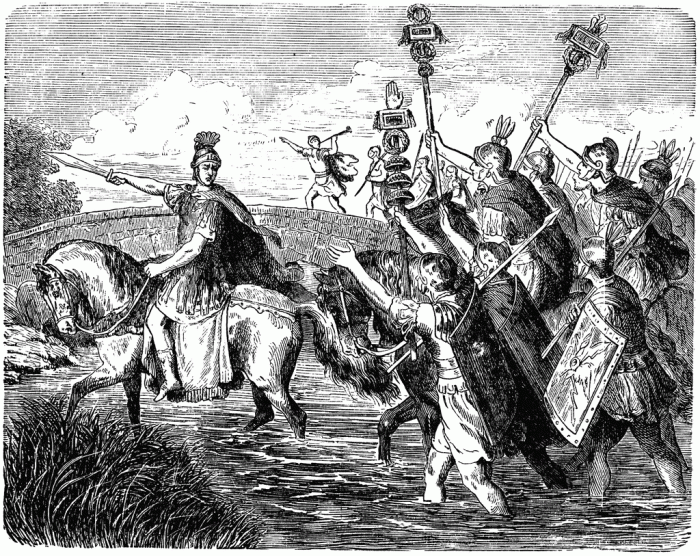
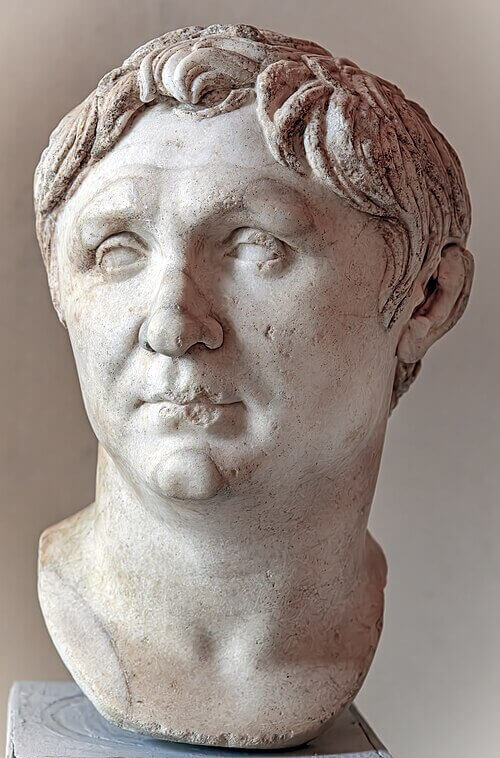
ON THIS DAY IN ROME: On Juy 9th, 48 BC, the Battle of Dyrrhachium (in modern-day Albania) was being fought between Julius Caesar and Pompey the Great. In this Battle Julius Caesar almost lost everything.
Trapped and heavily outnumbered by his fierce rival Pompey the Great, Caesar attempted to build a massive line of fortifications to blockade Pompey's superior forces against the sea.
Pompey exposed a flaw in Caesar's wall, launched a devastating counter-assault, and sent Caesar’s veteran legions into a panicked retreat.
It was the single worst defeat of Caesar's career. According to Plutarch, Caesar famously noted that night:
🏺 "Today the victory would have been the enemy's, if they had a winner for a commander."
Pompey, overly cautious and fearing an ambush, refused to press his advantage and let Caesar slip away into the night.
Pompey's hesitation eventually costed him his life, as he would lose the Battle of Pharsalus in Greece a month later and flee to Egypt where he met his end.
ON THIS DAY IN ROME: July 8th marks the date of a massive military showdown that stands as one of the final grand triumphs of the Komnenian Restoration:
The Battle of Sirmium (July 8, 1167)
By the 12th century, the Eastern Roman Empire was fighting vigorously under the Komnenian dynasty to reclaim its status as the dominant superpower of the Mediterranean and the Balkans.
Emperor Manuel I Komnenos found himself in a bitter, multi-year struggle with the Kingdom of Hungary over control of the western Balkans (modern-day Serbia, Croatia, and Bosnia).
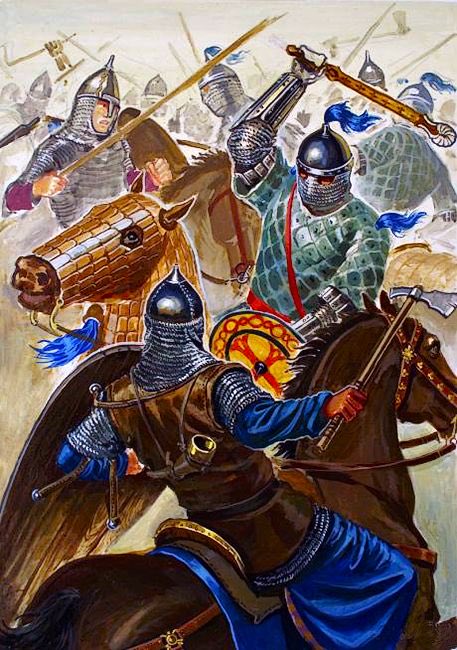
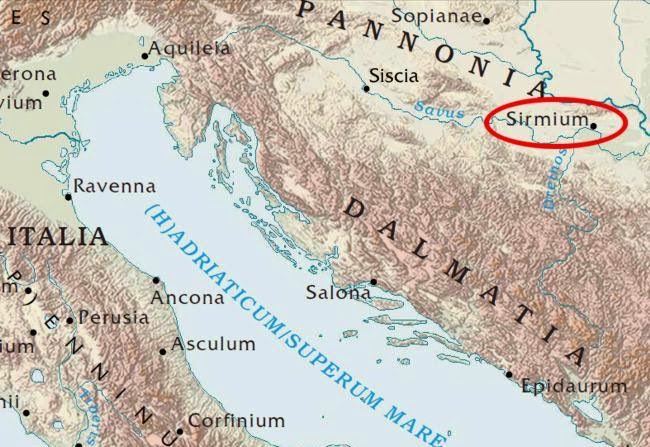
🏺On July 8, 1167, a massive Byzantine field army commanded by Manuel’s general (and nephew) Andronikos Kontostephanos forced a decisive clash near the strategic fortress city of Sirmium (modern Sremska Mitrovica, Serbia).
🏺After the battle, the Hungarian army was shattered. The Romans captured the primary Hungarian war standard, along with 800 elite knights and five senior governors (župans).
🏺The victory at Sirmium was total. It forced King Stephen III of Hungary to sign a humiliating peace treaty on Constantinople's strict terms.
🏺Sirmium secured undisputed Roman hegemony over the entire Adriatic coast and the western Balkans.
ON THIS DAY IN ROME: To commemorate Romulus's disappearance at the Goat's Marsh, and to celebrate a gritty historical victory, Romans celebrated the Nonae Caprotinae (the Fig Festival) on this day.
It was a massive, outdoor picnic holiday with a fascinating twist: it completely inverted Rome's rigid social hierarchy by honoring female slaves (ancillae).
🏺The Legend of the Handmaids: Shortly after the catastrophic Gallic sack of Rome (~390 BC), Rome was left severely weakened.
Sensing vulnerability, a coalition of neighboring Latin tribes marched to the city's borders and demanded that Rome hand over its free-born noble women and virgins as hostages to seal a peace treaty.
ON THIS DAY IN ROME: On July 6th, 118 AD, Emperor Hadrian made his formal entry (adventus) into Rome for the first time since succeeding Trajan the previous year.
🏺Trajan had passed away in Cilicia (modern-day Turkey) in August 117 AD. Hadrian, who was serving as governor of Syria at the time, spent nearly a year securing the eastern frontiers, rolling back some of Trajan's overextended conquests, and solidifying his grip on the legions before traveling west.
🏺His arrival in the capital on this day was a massive public spectacle, crucial for legitimizing his reign to a skeptical Roman Senate.
ON THIS DAY IN ROME: In the traditional Roman calendar, July 5th was the date of the Poplifugia (literally, "the flight of the people"). It was one of the strangest and most archaic festivals on the Roman calendar.
🏺 According to the historian Varro, the festival commemorated a moment of absolute panic shortly after Rome was sacked by the Gauls (around 390 BCE). Seeing Rome devastated and vulnerable, neighboring Latin cities like Ficuleae and Fidenae suddenly took up arms and marched on the city.
🏺 The Roman populace panicked and fled in mass confusion before regrouping, counter-attacking, and securing a desperate victory.
🏺 To remember this, every July 5th, the Romans would stage a ritualized commotion, shouting out traditional, common names in a chaotic frenzy to simulate the day the city almost dissolved in panic.
Map of the Roman Empire in the mid-2nd century.
At this point in time the Empire was experiencing the famous Pax Romana (Roman Peace). While wars on the frontiers were still fought often, the internal functions of the Empire was characterized by unprecedented stability, economic prosperity, and architectural achievement.
Some interesting facts about the Pax Romana:
🏺The Empire contained an estimated 50 to 60 million inhabitants, representing roughly one-fifth of the entire global population at the time.
🏺The city of Rome peaked at a population of approximately one million residents, a level of extreme urbanization that would not be seen again in Europe until the Industrial Revolution in the 19th century.
🏺The Roman denarius was the universal silver coin of the realm, enabling a highly integrated, monetized economy that stretched across thousands of miles.
🏺The professional military consisted of roughly 30 active legions. Combined with auxiliary units, the total armed forces numbered between 350,000 and 400,000 men.
🏺The Empire was bound together by over 50,000 miles of paved, highly engineered roads, designed primarily for the rapid deployment of legions rather than civilian travel.
Map Credit: Reddit (procrastinating2much)
Toward the end of the great civil war between Julius Caesar and Pompey the Great, Caesar was chasing Pompey throughout the Mediterranean ending up in Egypt, where Pompey eventually fled to.
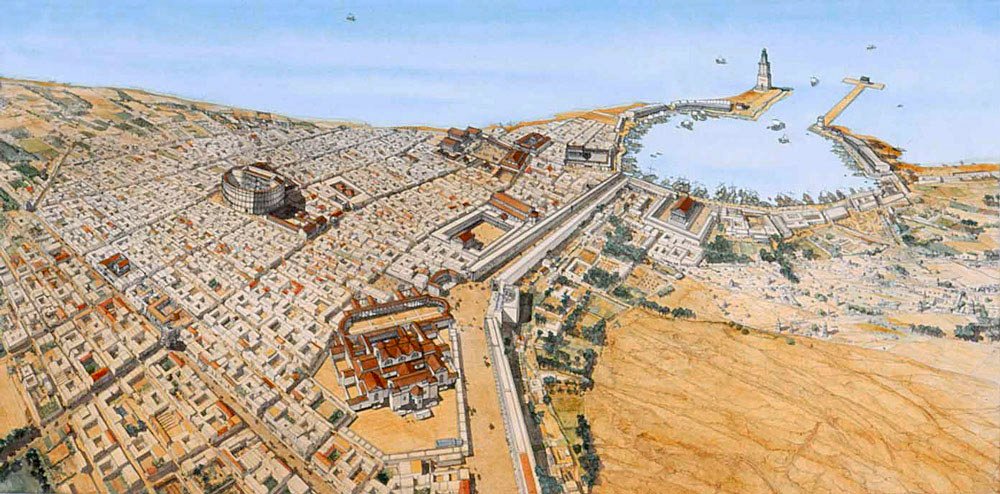
When Julius Caesar arrived in Alexandria in 48 BCE and was presented with the severed head and signet ring of his great rival, Pompey the Great, he did not celebrate.
The Egyptian court, led by advisors to the young Pharaoh Ptolemy XIII, expected Caesar to be thrilled. They had murdered Pompey as he stepped ashore, assuming they were doing Caesar a massive political favor.
However, Ceaser considered this action a great disrespet the Roman people and himself. To Caesar, a Roman citizen—and a patrician of the highest order—should only be judged, defeated, or punished by other Romans.
Caesar’s grief and anger immediately shifted Egyptian politics. He refused to align with Pharaoh Ptolemy XIII, backed Ptolemy's sister Cleopatra instead, and executed the advisors who had planned Pompey's murder.
After over 100 years of conflict the Romans finally defeated their biggest rival in the Mediterranean. The city of Carthage once a dominant maritime power met its end.
When Scipio Aemilianus stood looking at Carthage burning in 146 BCE, he did not celebrate. He wept.
His close friend and mentor, the Greek historian Polybius, was standing right beside him and recorded Scipio's exact reaction. As the city that had survived for 700 years was reduced to ash and its 50,000 surviving citizens were dragged into slavery, Scipio fell into deep melancholy.
He turned to Polybius, gripped his hand, and said:
"A glorious moment, Polybius; but I have a dread foreboding that someday the same doom will be pronounced on my own country."
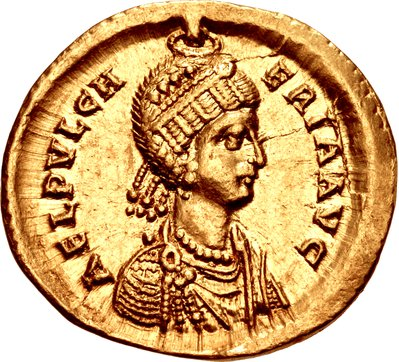
ON THIS DAY IN ROME: On July 4, 414 AD, Aelia Pulcheria was formally granted the imperial title of "Augusta," cementing her role as the regent and de facto co-ruler for her younger brother, Emperor Theodosius II.
🏺Following the death of the previous regent, the Praetorian prefect Anthemius, the administration of the Eastern Empire was left to the 13-year-old Theodosius II. Stepping into the power vacuum, his older sister Pulcheria assumed responsibility for his guardianship and the rearing of the young emperor.
🏺To secure her political position and avoid the destructive rivalries that would arise from a forced marriage, Pulcheria and her sisters took a public vow of chastity. On July 4th, she was officially elevated to the supreme rank of Augusta.
🏺Following her brother's death in 450 AD, she became the first woman to hold the Roman throne, eventually marrying the subsequent emperor, Marcian, while still maintaining her vow of chastity.
#History #AncientRome #4thJuly